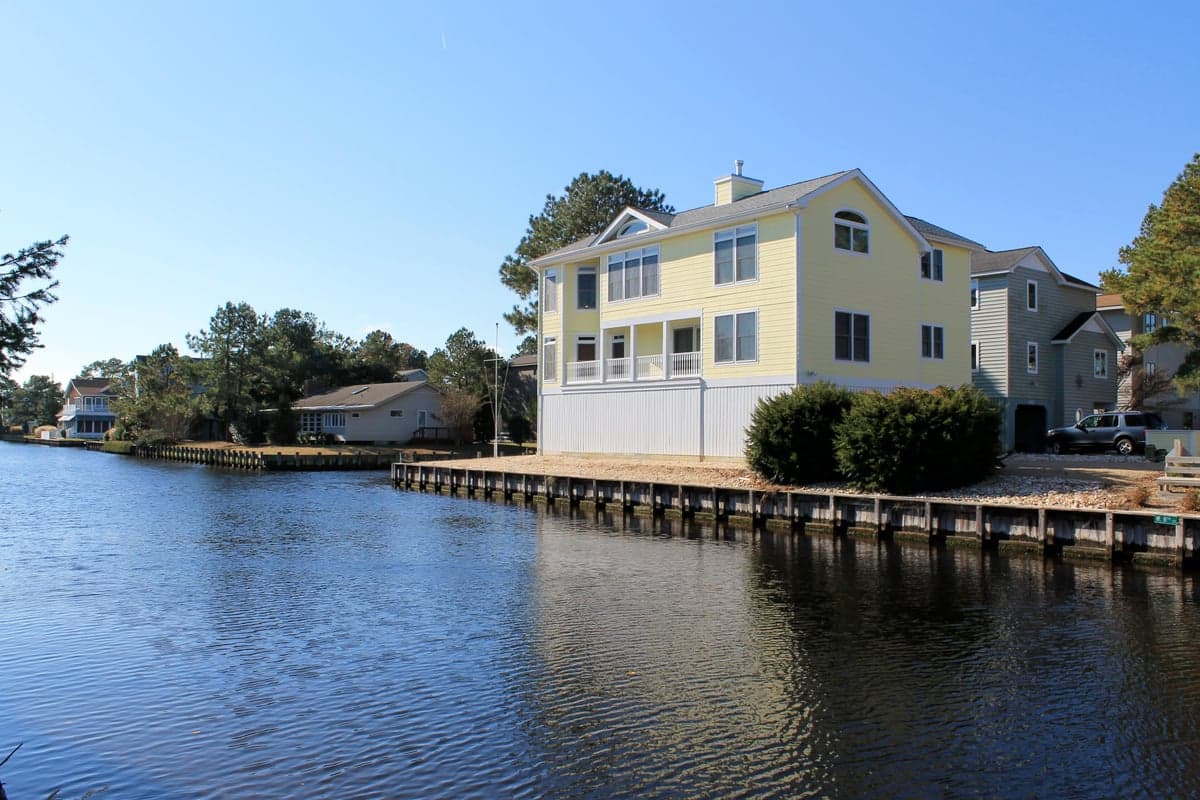
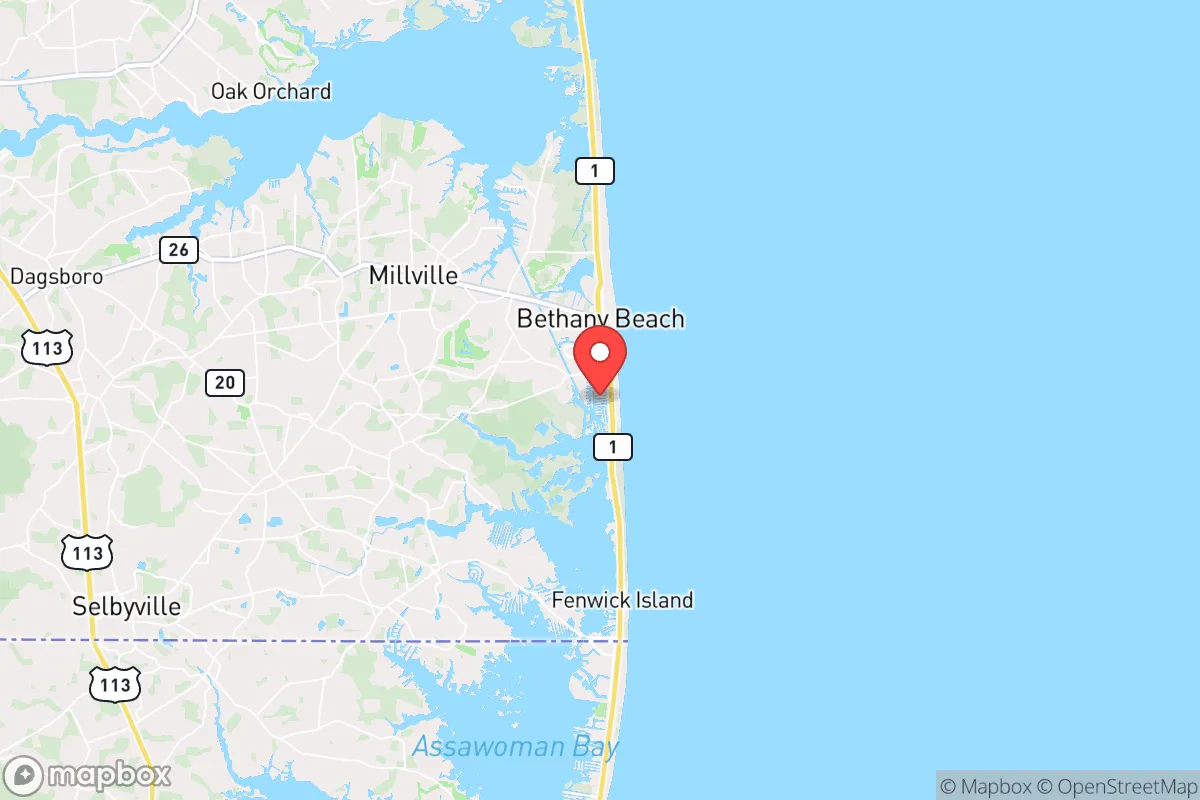
Photo: Wikipedia
Personal Sovereignty in South Bethany, DE
Viable for self-reliance. Generally workable, though some barriers may limit total independence.
What does Personal Sovereignty tell us?
Personal Sovereignty measures your capacity for self-reliance and independence with minimal government friction. Higher scores mean fewer barriers between you and the way you want to live... but it assumes you have the space you need and good neighbors.
What does this tell us?
Personal Sovereignty measures your capacity for self-reliance and independence with minimal government friction. Higher scores mean fewer barriers between you and the way you want to live... but it assumes you have the space you need and good neighbors.
State Policy
Energy independence: Importer (2% of energy produced in-state)
Personal Liberty
Homesteading

Personal Liberty Analysis
South Bethany, Delaware, offers a nuanced environment for personal sovereignty that appeals to those prioritizing autonomy in a coastal setting. While the state leans left politically, this small town in Sussex County benefits from a more conservative local culture and a legal framework that, in several key areas, still respects individual decision-making. For single individuals and parents evaluating relocation from a survivalist or prepper perspective, the key question is whether the town's advantages—low property taxes, a relatively permissive gun culture, and quiet community life—outweigh the creeping influence of state-level regulations that could threaten long-term self-reliance.
Tax burden and regulatory posture in a coastal town
Delaware’s tax structure is a significant draw for those seeking to minimize government extraction. The state has no sales tax, which directly reduces the cost of everyday purchases and prepping supplies. Property taxes in South Bethany are among the lowest in the region, with effective rates often below 0.6% of assessed value, a stark contrast to neighboring Maryland or New Jersey. However, the trade-off is a state income tax that ranges from 2.2% to 6.6%, which is moderate but not negligible. The regulatory posture in South Bethany itself is relatively light compared to northern Delaware or major cities. Zoning is primarily residential, and the town does not impose onerous business licensing or home occupation restrictions that would stifle a side hustle or small-scale trade. That said, the state’s Department of Natural Resources and Environmental Control (DNREC) has broad authority over coastal areas, meaning any significant land modification—like building a berm, installing a rainwater catchment system, or altering drainage—can trigger permitting delays. For a prepper, this is a yellow flag: the state can slow down infrastructure improvements that enhance self-sufficiency.
Self-defense and gun law specifics for residents
Delaware is a shall-issue state for concealed carry, meaning the county sheriff must issue a permit if the applicant meets basic criteria—no subjective "good cause" requirement. This is a solid foundation for personal defense. However, the state has moved in a restrictive direction in recent years. In 2022, Delaware passed a law banning the manufacture and sale of "assault weapons" and high-capacity magazines, and it also raised the purchase age for long guns to 21. These laws are currently being challenged in court, but they represent a clear encroachment on Second Amendment rights. For South Bethany residents, the practical impact is limited: you can still own and carry handguns, and the town itself has no additional firearm ordinances. Stand-your-ground laws apply statewide, so there is no duty to retreat before using deadly force in self-defense. The biggest concern for a prepper is the magazine capacity ban—limiting standard magazines to 17 rounds for handguns and 15 for long guns—which reduces effectiveness in a prolonged defensive scenario. Additionally, Delaware does not recognize all out-of-state concealed carry permits, so visitors or new arrivals from states like Texas or Florida must apply for a Delaware permit within 90 days of establishing residency.
Self-reliance and homesteading viability in a beach community
South Bethany is a dense, built-out beach town, not a rural homesteading paradise. Lot sizes are small—typically 5,000 to 10,000 square feet—and most homes are on slab foundations with limited yard space. This constrains traditional self-reliance activities like large-scale gardening, keeping livestock, or installing a septic system for off-grid water treatment. The town’s zoning code prohibits farm animals, and the homeowners' association (HOA) rules in many neighborhoods restrict visible structures like greenhouses, clotheslines, or solar panels. Off-grid living is effectively impossible within town limits because the town requires connection to municipal water and sewer. For a prepper, this means South Bethany is best viewed as a base for coastal access and community networking, not a standalone survival retreat. The real opportunity lies in the surrounding Sussex County rural areas, where you can find 1- to 5-acre parcels with fewer restrictions. Many preppers adopt a "hub and spoke" model: a small home in South Bethany for beachside living and a larger rural property inland for serious homesteading. The state’s lack of a property tax on food storage or emergency supplies is a plus, but the coastal flood zone designation means you’ll need to factor in flood insurance costs—often $1,000 to $3,000 annually—which is a recurring expense that eats into self-reliance budgets.
Personal liberties: parental rights, medical autonomy, speech, and property
Delaware’s record on parental rights is mixed. The state has a strong public school system, but it also mandates comprehensive sex education and has policies that can override parental consent for certain medical decisions, such as mental health treatment for minors. For parents seeking to opt their children out of specific curricula, the process is cumbersome and often requires legal advocacy. Medical autonomy is a more concerning area. Delaware has a vaccine mandate for school attendance, and during public health emergencies, the governor has broad powers to impose restrictions—as seen during COVID-19 lockdowns. There is no state-level right to refuse medical treatment for religious or philosophical reasons in many contexts, which is a red flag for those prioritizing bodily autonomy. Free speech protections are generally robust, as the state follows federal First Amendment standards, and there are no local ordinances restricting political signage or public assembly in South Bethany. Property rights are strong in terms of ownership, but the state’s environmental regulations can limit what you do with your land—especially near wetlands or waterways. The town’s HOA rules further restrict property use, so buyers should carefully review covenants before purchasing. For a prepper, the key takeaway is that Delaware is not a "live and let live" state in the mold of Idaho or Montana; it is a blue state with moderate-to-high regulation of personal choices, particularly around health and education.
Overall, South Bethany offers a moderate level of personal sovereignty that is best suited for those who value low taxes, a permissive gun culture, and a quiet coastal lifestyle, but who are willing to accept state-level restrictions on medical autonomy, homeschooling flexibility, and off-grid living. Compared to areas like rural Texas or the Florida Panhandle, it falls short on self-reliance potential and regulatory freedom. However, compared to New Jersey, Maryland, or New York, it is a clear step up in terms of tax burden and Second Amendment protections. For a single individual or family with a prepper mindset, South Bethany works best as a strategic coastal outpost—not a full-fledged survival retreat—where you can enjoy the beach and low property taxes while maintaining a secondary property or plan for relocation if state overreach intensifies. The town’s small size and conservative local governance provide a buffer, but the long-term trend in Delaware is toward more regulation, so vigilance and a backup plan are essential.

* Values derived from national, state, county, city and local statistics and may differ in a specific area. Last updated: 2026-04-29T23:39:23.000Z
Narrative content on this page is AI-generated and may contain mistakes. Verify any details that matter before acting on them.
ReloMaps may earn a commission from affiliate links at no extra cost to you.

