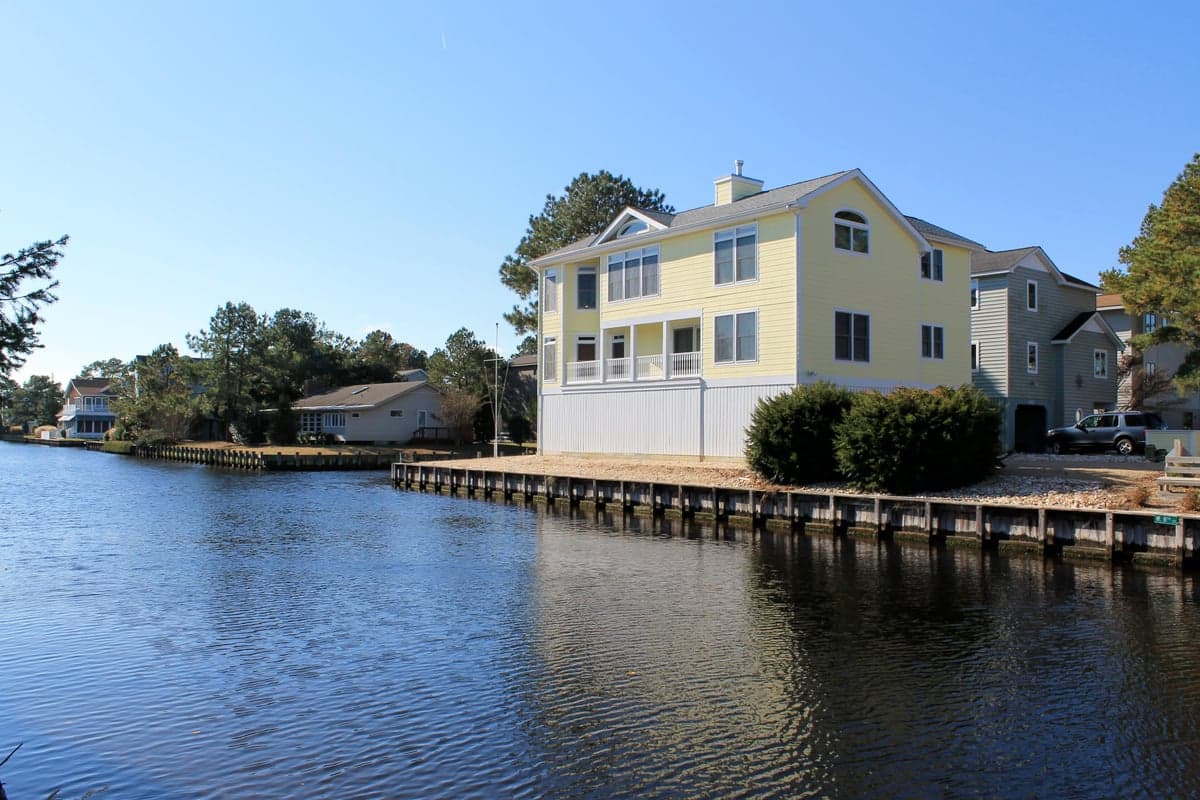
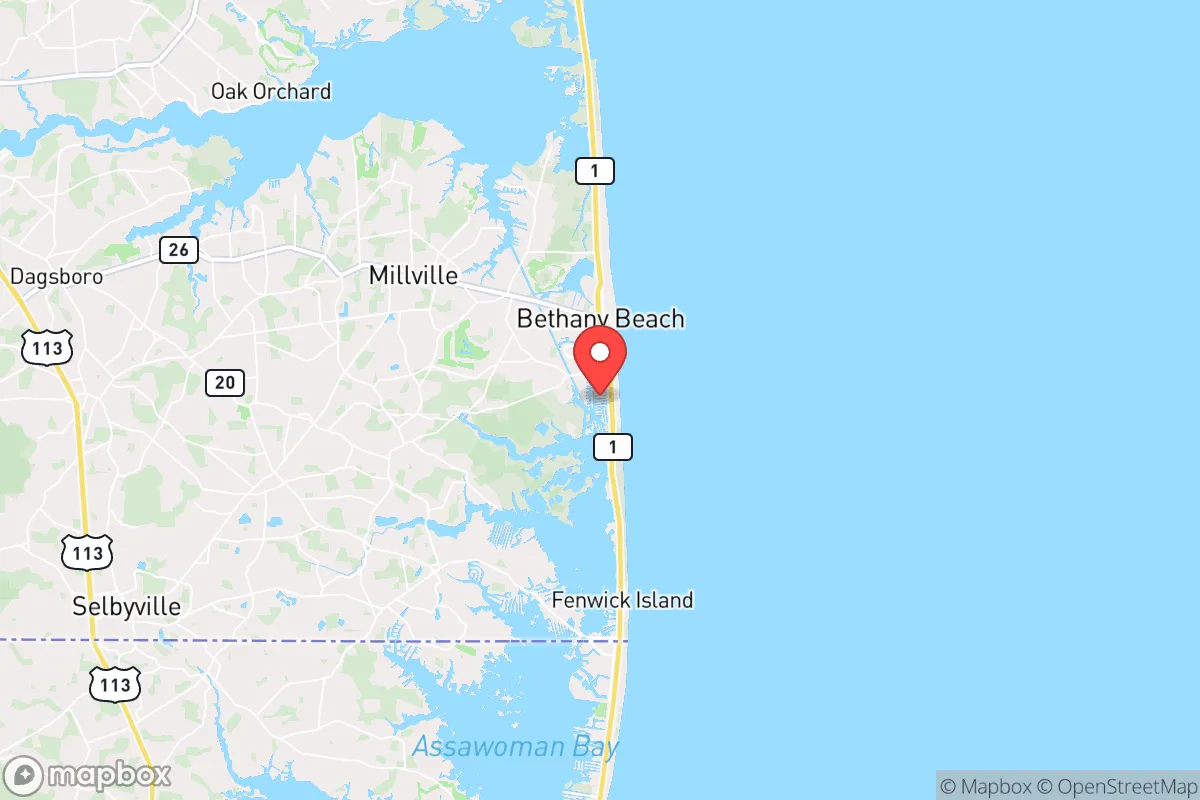
Photo: Wikipedia
Political ClimatePolitical Climate in South Bethany, DE
District shown is the primary district for this city’s centroid. Cities may span multiple districts.
Inherited from parent state — no local data available.
Local Political AnalysisPolitical Analysis of South Bethany, DE
South Bethany, Delaware, sits in a tricky spot politically. On paper, the town itself leans left with a Cook PVI of D+8, but that number doesn’t tell the whole story for anyone who’s lived here a while. The real shift started around 2020, when out-of-state buyers—many from deep-blue areas like New York and northern Virginia—started snapping up beach properties, bringing their voting habits with them. Before that, this was a reliably purple-to-light-red community where folks mostly wanted to be left alone. Now, you’re seeing more progressive energy at the local level, and it’s changing the feel of things faster than many of us are comfortable with.
How it compares
Drive ten miles north to Rehoboth Beach and you’ll find a similar D+8 tilt, but with a much louder activist scene—think rainbow crosswalks and constant council debates over inclusivity ordinances. South Bethany used to be the quiet alternative, more like Fenwick Island just south, which still votes red by a solid margin. Head west into Sussex County’s rural interior, places like Millsboro or Georgetown, and you’re in deep Trump country—R+15 or stronger. That contrast is stark. What worries me is that South Bethany’s coastal politics are starting to mirror Rehoboth’s, with zoning fights over short-term rentals and noise complaints that feel like government meddling in what used to be common-sense personal property rights. The town council elections in 2024 saw a slate of candidates backed by the local Democratic club win three of five seats, and they’ve already floated a rental registration ordinance that would require annual inspections and fees. That’s the kind of overreach that makes you wonder how long before they start telling you what color you can paint your shutters.
What this means for residents
For full-time residents, the biggest practical change is the creeping regulation of everyday life. The new council majority has talked about “sustainability goals” that translate to restrictions on lawn watering, limits on beach access for non-residents, and a push for electric-only landscaping equipment by 2027. If you’re a retiree on a fixed income or a small business owner running a rental property, these mandates hit your wallet and your freedom to manage your own home. Property taxes have stayed relatively flat so far—about 0.45% of assessed value—but the county’s school funding referendums keep passing, and that money has to come from somewhere. The cultural vibe is shifting too: the old “live and let live” attitude is being replaced by a more prescriptive, activist neighborliness. You used to wave at everyone on the beach; now you get side-eye if your dog isn’t on a leash or your kids are playing too loud. It’s not hostile, but it’s less relaxed.
Long-term, I see South Bethany becoming a smaller version of Rehoboth within a decade—more regulations, higher costs, and a political monoculture that punishes dissent. The 2026 midterms will be a test: if the progressive slate holds its seats and the town manager pushes through a comprehensive land-use plan, expect more families and retirees to head west to places like Dagsboro or Frankford, where the tax rate is lower and the county commissioners still believe in property rights. For now, the best advice is to get involved in local meetings before the rules get written. Once they’re on the books, they’re nearly impossible to undo.

State Political ClimatePolitical Climate in Delaware
State Political AnalysisPolitical Environment in the State
Delaware has long been a reliably blue state in presidential elections, voting for Democrats by double digits in every cycle since 2008, but its political climate is far more nuanced than a simple partisan label suggests. The state’s small size and unique geography create a sharp urban-rural split, with the northern corridor—particularly New Castle County—driving the Democratic majority, while the southern counties of Kent and Sussex have been trending redder over the past decade. For a conservative considering relocation, Delaware offers a mixed bag: low taxes and business-friendly policies on one hand, but a steady march toward progressive governance on social and regulatory issues that should give any freedom-minded individual pause.
Urban vs. rural divide
The political map of Delaware is essentially a tale of three counties. New Castle County, home to Wilmington and the sprawling suburbs of Newark and Bear, is the Democratic stronghold, delivering roughly 60-65% of its vote to Democratic candidates. This area is dominated by government workers, university faculty at the University of Delaware, and corporate professionals tied to the financial and legal sectors in Wilmington. In contrast, Sussex County—the beach and agricultural region encompassing Rehoboth Beach, Lewes, and Georgetown—has become increasingly Republican, flipping from a 52-47 Democratic lean in 2008 to a 54-44 Republican advantage by 2024. Kent County, anchored by Dover and Middletown, is the true battleground, swinging between parties but trending slightly redder as retirees and families from the Northeast move into new developments around Middletown and Smyrna. The rural areas of Sussex and Kent are where you’ll find the strongest conservative voices, but they’re outvoted by the dense, left-leaning population in the north.
Policy environment
Delaware’s policy environment is a study in contradictions. On the plus side for conservatives, the state has no sales tax, relatively low property taxes (averaging 0.55% of assessed value), and a corporate-friendly legal framework that attracts businesses—Delaware is the legal home for over 60% of Fortune 500 companies. However, the state’s income tax is steep, with a top marginal rate of 6.6% kicking in at just $60,000 of taxable income, and the estate tax remains a burden for families passing down property. Education policy is heavily centralized, with the state Department of Education exerting strong control over curriculum and school choice is limited—charter schools exist but face bureaucratic hurdles, and there is no robust voucher program. Healthcare is dominated by large systems like ChristianaCare, and the state expanded Medicaid under the Affordable Care Act, which has driven up costs for private insurers. Election laws are concerning for conservatives: Delaware has no voter ID requirement, same-day registration, and no-excuse absentee voting, which critics argue opens the door to fraud. The state also passed the Delaware Voting Rights Act in 2024, which restricts voter roll maintenance and makes it harder to challenge questionable ballots.
Trajectory & freedom
Over the past five years, Delaware has been moving decisively in the direction of expanded government control, not less. The most alarming trend for conservatives is the erosion of Second Amendment rights: in 2022, the legislature passed a ban on so-called “assault weapons” and high-capacity magazines, along with a permit-to-purchase requirement for handguns. These laws were upheld by the state Supreme Court in 2024, despite a federal challenge. Parental rights took a hit with the passage of a 2023 law that requires schools to keep a student’s gender identity and sexual orientation confidential from parents if the student requests it—a direct attack on family authority. Medical autonomy is also shrinking: the state legalized assisted suicide in 2024, and while it expanded abortion access with a 2023 law protecting providers from out-of-state lawsuits, it also mandated that insurance plans cover abortion without copays. Property rights are under pressure from a 2024 zoning reform bill that allows the state to override local land-use decisions to force higher-density housing, which many rural residents see as a loss of local control. The tax burden is creeping upward, with a 2023 gas tax increase and a new 0.4% payroll tax for paid family leave set to take effect in 2026.
Civil unrest & political movements
Delaware has not seen the large-scale civil unrest of bigger states, but there are visible flashpoints. In 2020, Wilmington experienced several nights of protests and property damage following the George Floyd incident, with the city’s Democratic mayor and governor largely sympathetic to the demonstrators. The state’s sanctuary policies are a major concern: Delaware is a “sanctuary state” in practice, with a 2019 executive order limiting cooperation between state police and federal immigration authorities, and a 2023 law that prohibits local law enforcement from inquiring about immigration status. This has led to tensions in Sussex County, where agricultural employers rely on immigrant labor but residents worry about the strain on public services. Election integrity remains a hot-button issue: the 2020 and 2022 elections saw no major scandals, but the lack of voter ID and the state’s aggressive mail-in ballot expansion have fueled distrust among conservatives. Organized conservative groups like the Delaware Family Policy Council and local Republican clubs in Middletown and Georgetown are active but outmatched by well-funded progressive organizations like the Delaware Center for Justice and the ACLU of Delaware. The most visible political movement is the growth of the “Middletown Republican” phenomenon—suburban families moving from New Jersey and Pennsylvania who are fiscally conservative but socially moderate, which dilutes the traditional conservative base.
Projection
Looking ahead five to ten years, Delaware is likely to become more progressive, not less. The demographic trends are clear: New Castle County continues to grow faster than the rest of the state, driven by young professionals and remote workers from the Northeast who bring their left-leaning politics with them. The retirement influx into Sussex County is slowing as housing costs rise, and the new arrivals tend to be wealthier and more moderate than the native population. The state’s Democratic supermajority in the legislature is entrenched, and with no term limits and a gerrymandered map, it’s unlikely to be broken anytime soon. Expect further restrictions on gun rights, expansion of government healthcare, and more mandates on businesses and schools. The one wild card is the potential for a conservative backlash in Kent County, where fast-growing towns like Smyrna and Clayton are attracting families priced out of the north who may vote Republican—but they’ll still be outnumbered statewide. A conservative moving to Delaware today should expect to live in a state where their values are increasingly marginalized, even if their wallet benefits from the low tax structure.
For a new resident, the bottom line is this: Delaware offers genuine financial advantages—no sales tax, low property taxes, and a business-friendly legal system—but those come at the cost of living under a government that is actively expanding its reach into your personal life, your family, and your property. If you’re a conservative who values low taxes above all else and can tolerate a progressive social agenda, the state’s rural areas in Sussex and Kent counties offer a decent quality of life. But if you prioritize gun rights, parental authority, and local control, you’ll find yourself fighting an uphill battle against a well-organized, well-funded progressive machine that shows no signs of slowing down. Choose your county carefully—and understand that the state as a whole is not your ally.
* Values derived from national, state, county, city and local statistics and may differ in a specific area. Last updated: 2026-04-29T23:39:23.000Z
Narrative content on this page is AI-generated and may contain mistakes. Verify any details that matter before acting on them.
ReloMaps may earn a commission from affiliate links at no extra cost to you.

