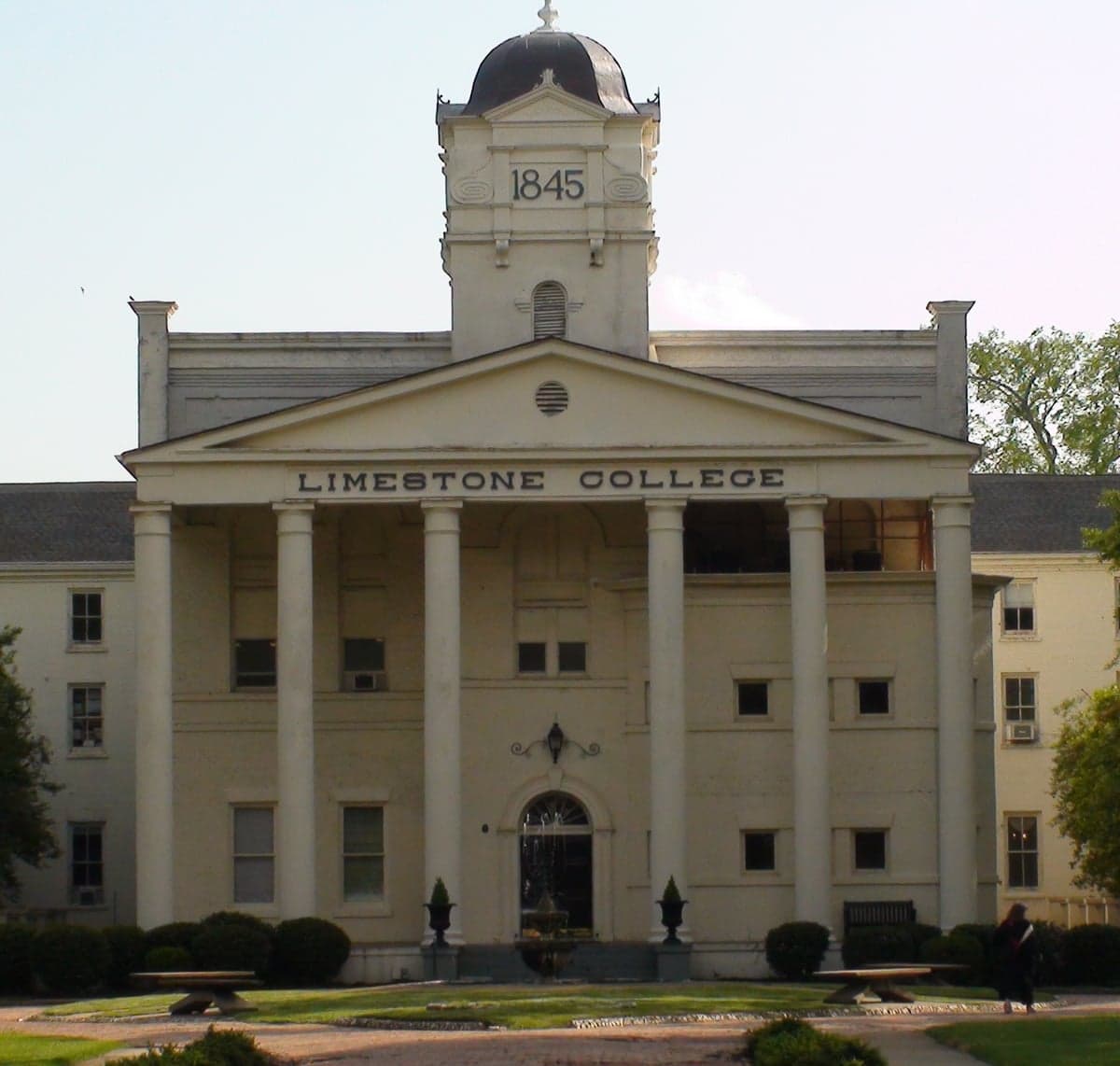
Photo: Wikipedia
Personal Sovereignty in Cherokee County
Viable for self-reliance. Generally workable, though some barriers may limit total independence.
What does Personal Sovereignty tell us?
Personal Sovereignty measures your capacity for self-reliance and independence with minimal government friction. Higher scores mean fewer barriers between you and the way you want to live... but it assumes you have the space you need and good neighbors.
What does this tell us?
Personal Sovereignty measures your capacity for self-reliance and independence with minimal government friction. Higher scores mean fewer barriers between you and the way you want to live... but it assumes you have the space you need and good neighbors.
State Policy
Energy independence: Importer (25% of energy produced in-state)
Personal Liberty
Homesteading

Personal Liberty Analysis
Cherokee County, South Carolina, offers a notably high degree of personal sovereignty compared to much of the urbanized Southeast, making it a strategic relocation target for those prioritizing autonomy over convenience. The county’s political culture, rooted in Upstate conservatism, actively resists the regulatory creep that has eroded freedoms in places like Charlotte or Greenville. For individuals and parents who view government overreach as a primary threat to liberty, Cherokee County provides a legal and social environment where self-reliance is not just tolerated but expected. This analysis examines the specific pillars of that sovereignty—tax burden, self-defense law, homesteading viability, and personal liberties—to give you a clear picture of what life actually looks like on the ground.
Tax burden and regulatory posture: How Cherokee County compares to the Upstate
South Carolina’s state-level tax structure is already favorable to those seeking to keep more of their earnings, and Cherokee County amplifies that advantage. The county’s property tax rate is among the lowest in the Upstate, with owner-occupied residential rates averaging around 0.45% of assessed value—roughly half of what you’d pay in neighboring Spartanburg County. There is no county-level income tax, and the state’s flat income tax rate of 6.4% applies uniformly. More importantly, the regulatory posture in towns like Gaffney (the county seat) and Blacksburg is one of minimal interference. Business licenses are straightforward, zoning ordinances are light, and there is no county-wide building code that would prevent you from constructing a simple workshop or storage shed on your own property without a parade of permits. In contrast, Kings Creek and East Gaffney are even more hands-off, with unincorporated areas where county oversight is practically invisible. This is not a jurisdiction that will send an inspector to check your chicken coop or demand a variance for a rainwater catchment system. For those who view every new regulation as a loss of freedom, Cherokee County’s posture is a clear win.
Self-defense and gun law specifics: What the Second Sanctuary movement means here
Cherokee County is a Second Amendment Sanctuary, a designation that carries real weight in daily life. The county council passed a resolution affirming that no local resources will be used to enforce federal gun laws deemed unconstitutional, and local law enforcement largely operates with that understanding. South Carolina is a permitless (constitutional) carry state, meaning any law-abiding adult 18 or older can carry a concealed firearm without a permit. Cherokee County’s sheriff’s office is known for issuing concealed weapon permits quickly—typically within 30 days—and there is no local hostility toward open carry. In towns like Gaffney, you’ll see firearms displayed in truck racks and holstered on hips without drawing a second glance. The county also has no local ordinances restricting magazine capacity, ammunition types, or where you can carry beyond state preempted restrictions (schools, government buildings). For the prepper mindset, this means your defensive capabilities are limited only by your own training and equipment, not by a city council’s political whims. The legal environment here is designed to maximize individual discretion in self-defense, not to create bureaucratic hurdles.
Self-reliance and homesteading viability: Lot sizes, zoning, and off-grid feasibility
If your vision of sovereignty includes growing your own food, harvesting your own water, and reducing dependence on municipal infrastructure, Cherokee County is one of the most accommodating areas in the Upstate. Minimum lot sizes in unincorporated areas are typically 1 to 2 acres, and many parcels in the western part of the county near Blacksburg and Kings Creek are available in 5- to 20-acre tracts. Zoning in these areas is essentially agricultural-residential, meaning livestock, gardens, and outbuildings are permitted by right. Off-grid living is legally feasible: there are no county ordinances prohibiting rainwater collection, composting toilets, or solar panel installation. The county does not require a connection to municipal water or sewer if you can demonstrate a private well and septic system. In East Gaffney and the rural stretches along Highway 29, you’ll find properties where residents are already living with minimal grid dependency. The only real limitation is that the county does enforce basic septic health codes, but these are straightforward and not onerous. For those who want to build a self-sufficient homestead without fighting a planning board, Cherokee County’s regulatory vacuum is a feature, not a bug.
Personal liberties: Parental rights, medical autonomy, speech, and property
Cherokee County’s culture strongly supports parental authority and medical freedom. The local school board in Gaffney has resisted state-level mandates on curriculum transparency, and parents have significant influence over what their children are taught. There is no county-level health department that aggressively pursues vaccine mandates or medical surveillance—decisions about medical care remain firmly in the hands of families. In terms of speech, the county is a conservative stronghold where political expression, even controversial viewpoints, is protected by both local sentiment and the absence of any local hate speech ordinances. Property rights are similarly robust: eminent domain is rarely used, and the county’s comprehensive plan explicitly prioritizes private property rights over government takings. In Blacksburg, you’ll find a town council that has repeatedly voted down proposals for rental registration and short-term rental restrictions, viewing them as infringements on property use. The overall legal climate is one where the default answer to “can I do this on my land?” is “yes, unless it creates a clear public nuisance.” This stands in stark contrast to the regulatory thicket found in counties closer to Charlotte or Greenville.
When stacked against other relocation destinations in the Southeast, Cherokee County offers a sovereignty profile that is rare and increasingly valuable. The combination of low taxes, permissive gun laws, homestead-friendly zoning, and a culture that respects parental and medical autonomy creates an environment where the individual—not the government—is the primary decision-maker. For the prepper or survivalist who sees the trajectory of the country as one of increasing control and surveillance, Cherokee County represents a strategic redoubt. It is not a utopia—no place is—but it is a place where you can live largely on your own terms, with minimal interference from the state. If you value freedom over convenience, this corner of the Upstate deserves a serious look.

* Values derived from national, state, county, city and local statistics and may differ in a specific area. Last updated: 2026-05-21T02:28:19.000Z
Narrative content on this page is AI-generated and may contain mistakes. Verify any details that matter before acting on them.
ReloMaps may earn a commission from affiliate links at no extra cost to you.

