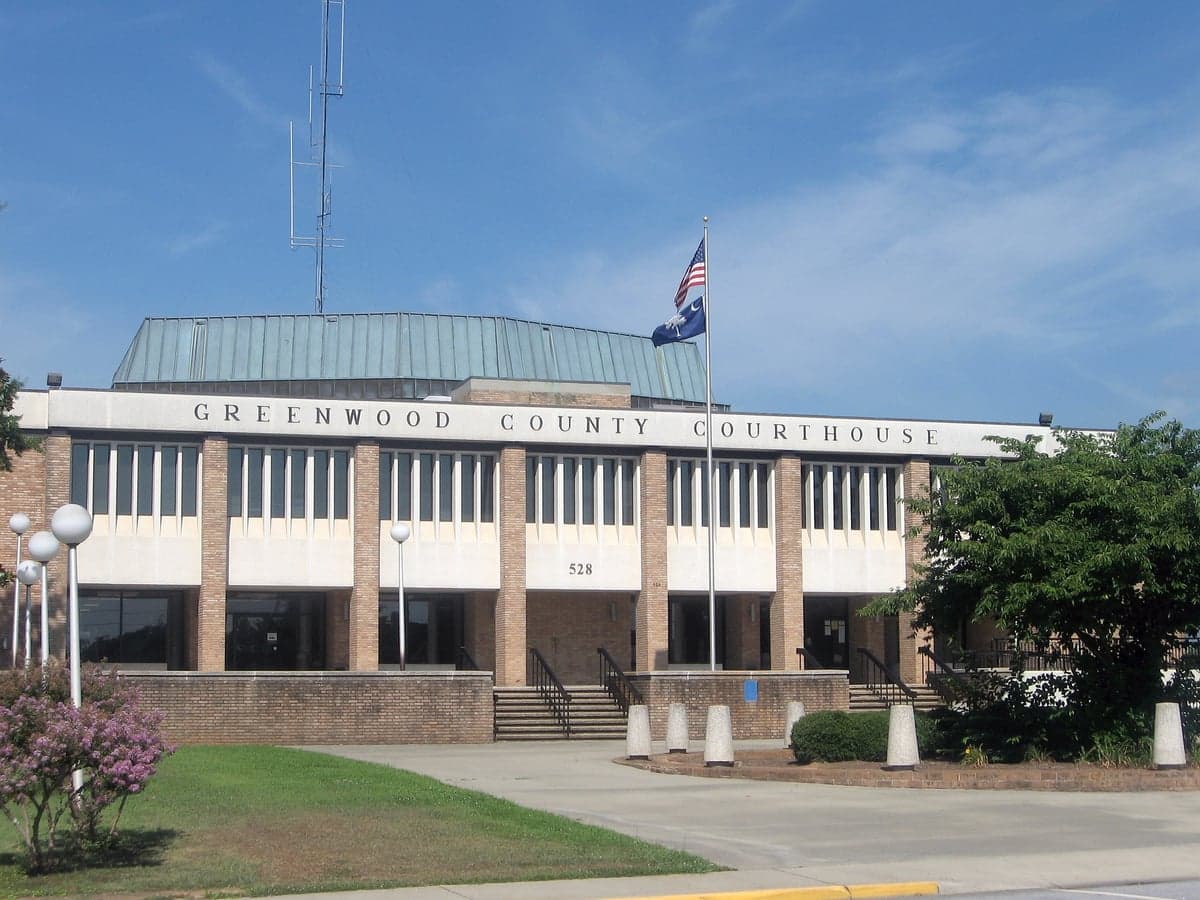
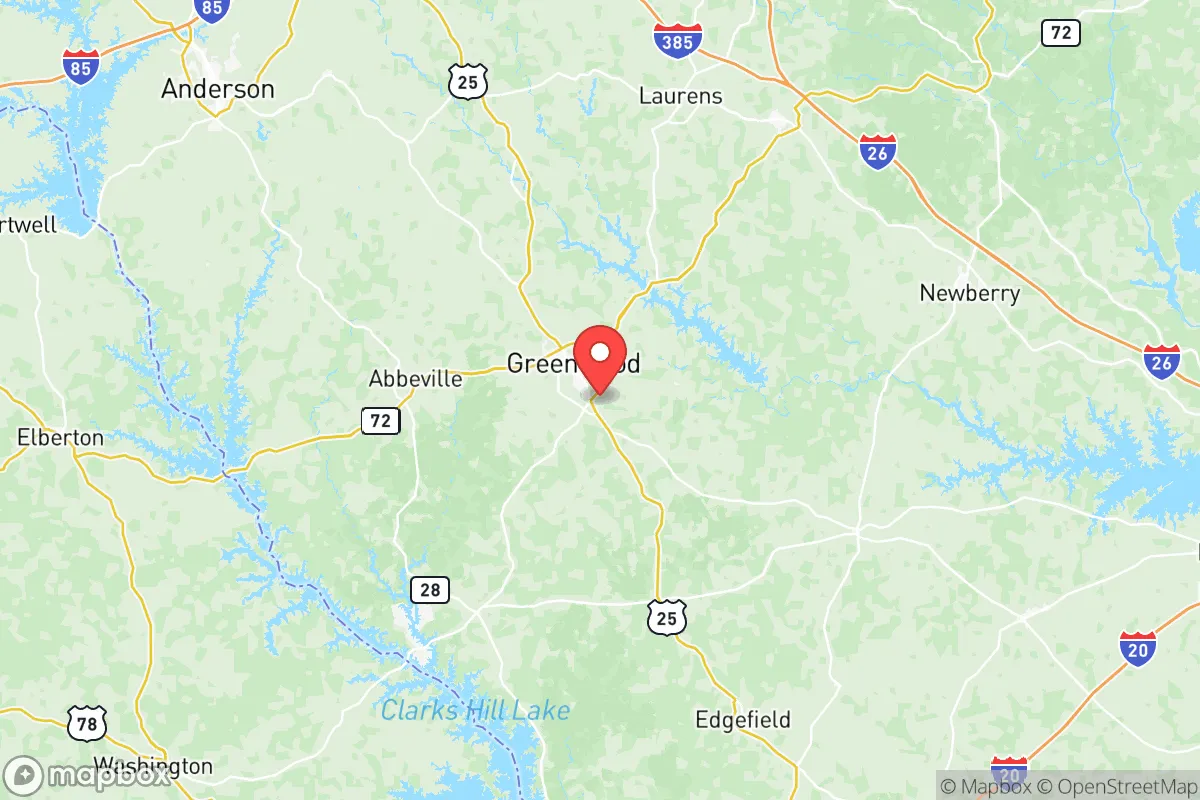
Photo: Wikipedia
Quality of Life in Greenwood County
A livable area that tracks near national norms for affordability, walkability, and neighborhood health.
What does Quality of Life tell us?
Quality of Life measures an area by evaluating factors like cost of living, nearby amenities, country club access, airport proximity, socioeconomic signals and neighborhood character. For large states, this is a general average — quality of life can vary dramatically between metro areas, suburbs, and rural communities within the same state.
What does this tell us?
Quality of Life measures an area by evaluating factors like cost of living, nearby amenities, country club access, airport proximity, socioeconomic signals and neighborhood character. For large states, this is a general average — quality of life can vary dramatically between metro areas, suburbs, and rural communities within the same state.
Cost of Living
31% below national average
107%
The Real Cost of Living in Greenwood County for 2026
| Tier | Individual | Family (4) |
|---|---|---|
| Survival | $14k | $26k |
| Comfortable | $32k | $48k |
| Luxury | $91k+ | $142k+ |
| Elite (Top 5%) | $122k+ | $189k+ |
Quality-of-Life Analysis
Greenwood County offers a diverse quality-of-life spectrum that stretches from the walkable downtown of its county seat to deep rural hamlets and quiet lakefront communities. The county’s overall cost of living index of 69 (31% below the U.S. average) makes it one of South Carolina’s most affordable areas, while an average commute of just 20.1 minutes keeps daily life relaxed. The mix attracts young families seeking starter homes, retirees looking for low property taxes, and outdoor enthusiasts drawn to Lake Greenwood and the Enoree Ranger District of the Sumter National Forest.
Largest town(s) & population centers
Greenwood city is the county’s anchor, home to roughly 23,000 residents and the hub for employment, shopping, and healthcare. Daily life here centers around the revitalized Uptown Greenwood district, which features local restaurants, the Greenwood Community Theatre, and the Greenwood Farmers Market. Major employers include Self Regional Healthcare (the region’s largest hospital), Fujifilm (a major manufacturing plant), and Lander University, a public liberal-arts college with about 3,000 students. The median home value in the city hovers near the county’s $166,400 average, while median rent is just $880, making it a practical choice for first-time buyers and university staff. Lake Greenwood, a 11,400-acre reservoir, lies just east of the city and provides boating, fishing, and waterfront subdivisions that form a suburban-rural fringe.
Smaller towns & rural pockets
Ninety Six, a historic town of about 2,000 residents, is the county’s second-largest incorporated community. It wraps around the Ninety Six National Historic Site, a preserved Revolutionary War battlefield, and retains a compact walkable center. Ware Shoals (partially in Greenwood County) is a former mill town with affordable housing stock and a strong sense of community, though its employment base has shifted toward commuting to Greenwood and Laurens. Hodges, with fewer than 150 residents, sits along Lake Greenwood’s southern shore and serves as a quiet gateway for lake recreation; its handful of stores and marinas cater to seasonal residents. Troy and Bradley are unincorporated crossroads with volunteer fire departments, churches, and no commercial districts — essentially bedroom hamlets where land prices can dip below $100,000 for a full acre. Coronaca, another unincorporated pocket near Greenwood city, offers close access to Highway 25 and the Piedmont Technical College campus. Cokesbury, a historic district just north of Greenwood city, is listed on the National Register and features antebellum homes and a preserved academy building, attracting history-minded buyers willing to renovate.
Cost & lifestyle range
The cost spread across Greenwood County is modest but meaningful. At the low end, rural areas west of Greenwood city — near Bradley and along the Saluda River corridor — offer homes under $120,000 and acreage parcels for under $5,000 per acre. Renters in these pockets can find three-bedroom houses for $700–$800. In contrast, lakefront neighborhoods around the Lake Greenwood State Recreation Area push median home values above $250,000, and newer subdivisions near the Greenwood Country Club command $300,000 or more. The county’s overall COL index of 69 reflects low utility costs, property taxes that average about 0.5% of assessed value, and grocery prices consistently below national averages. The style of life shifts accordingly: lakefront owners prioritize recreation and water views, while Greenwood city residents walk to cafes and attend Lander basketball games, and rural dwellers experience genuine quiet with 15-minute drives to the nearest grocery store. No area of the county feels crowded — even the city’s population density is below 1,500 people per square mile.
Families who value short commutes, low housing costs, and a climate for outdoor recreation will find Greenwood County a practical fit. Retirees on fixed incomes can stretch savings further here than in the coastal or upstate metro areas, while remote workers benefit from the median home price 40% below the state average and growing fiber-optic coverage in the lake region. Those seeking nightlife or dense urban amenities should look elsewhere, but for anyone drawn to a relaxed, affordable, place-based life in the South Carolina Piedmont, Greenwood County delivers a wide range of everyday options within a 20-minute drive.

Crime in Greenwood County
Crime rates similar to the national median for U.S. locations.
Violent CrimeViolent Crime Analysis
Property CrimeProperty Crime Analysis
Crime Analysis
Greenwood County, South Carolina, reports a violent crime rate of 372.5 incidents per 100,000 residents and a property crime rate of 1,640.5 per 100,000, placing it slightly above the national average for both categories. These figures, drawn from the most recent uniform crime reporting data, paint a mixed safety picture: property crime is the more frequent concern for most residents, while violent crime, though elevated compared to the state median, remains concentrated in specific areas rather than spread uniformly across the county.
Crime in context
South Carolina’s statewide violent crime rate hovers around 420 per 100,000, so Greenwood County sits just below that mark, but roughly 40% higher than the national average of about 270 per 100,000. Property crime in the county exceeds both the state average (roughly 1,500 per 100,000) and the national figure (about 1,950 per 100,000), meaning break-ins, theft, and vehicle crime are slightly more prevalent than in neighboring counties such as Abbeville or Laurens. A key factor keeping violent crime in check relative to the state is the absence of a major urban core: the largest jurisdiction, the city of Greenwood, anchors a small metro area of about 45,000 people. By contrast, large metros like Atlanta or Charlotte—where progressive district attorneys and lenient sentencing policies have drawn criticism for releasing repeat offenders—pull regional violent-crime averages upward. In Greenwood County, the 8th Circuit Solicitor’s Office takes a traditional, victim-rights-oriented approach, and judges generally apply conservative sentencing guidelines, which correlates with lower recidivism and fewer violent repeat offenders on the street.
What residents experience
In practice, property crime—especially theft from vehicles and unlocked homes—is the most common safety complaint across the county. The city of Greenwood itself accounts for the majority of reported incidents, particularly in the downtown commercial corridor and neighborhoods near U.S. 25 and U.S. 178. The nearby town of Ninety Six, by contrast, sees negligible violent crime and property crime rates roughly half the county average, making it one of the safer places to live in the region. Hodges and Troy, both small rural communities, similarly report very low incident counts, though residents sometimes deal with agricultural equipment theft. The Lake Greenwood shoreline area, popular with retirees and vacation homeowners, sees seasonal spikes in burglary and theft when homes are unoccupied. Users should note that the county sheriff’s department and the Greenwood Police Department coordinate task forces targeting drug-related property crime, and both emphasize community policing and rapid response times.
Neighborhood-level variation
Safety varies noticeably within a few miles. The west side of the city of Greenwood, around the Greenwood High School area and the residential corridors off Bypass 72, tends to have higher property-crime rates linked to proximity to major thoroughfares. The east side, near the Self Regional Healthcare campus and Lander University, is generally quieter, with lower incident numbers due to a stronger police presence and newer housing stock. In unincorporated areas like Kirksey and Cokesbury, crime is minimal, though residents must travel farther for emergency services. Anyone considering relocation to Greenwood County should prioritize a neighborhood’s local block-level data, as the difference between areas can be stark: a home in Ninety Six or the Lake Greenwood gated communities will experience a far lower risk of victimization than a rental near downtown Greenwood’s commercial strip.
* Values derived from national, state, county, city and local statistics and may differ in a specific area. Last updated: 2026-05-21T00:56:40.000Z
Narrative content on this page is AI-generated and may contain mistakes. Verify any details that matter before acting on them.
ReloMaps may earn a commission from affiliate links at no extra cost to you.

