Photo: Wikipedia
Demographics of Brule County
Affluence Level in Brule County
A middle-class area roughly in line with national averages across income, home values, education, and employment.
People of Brule County
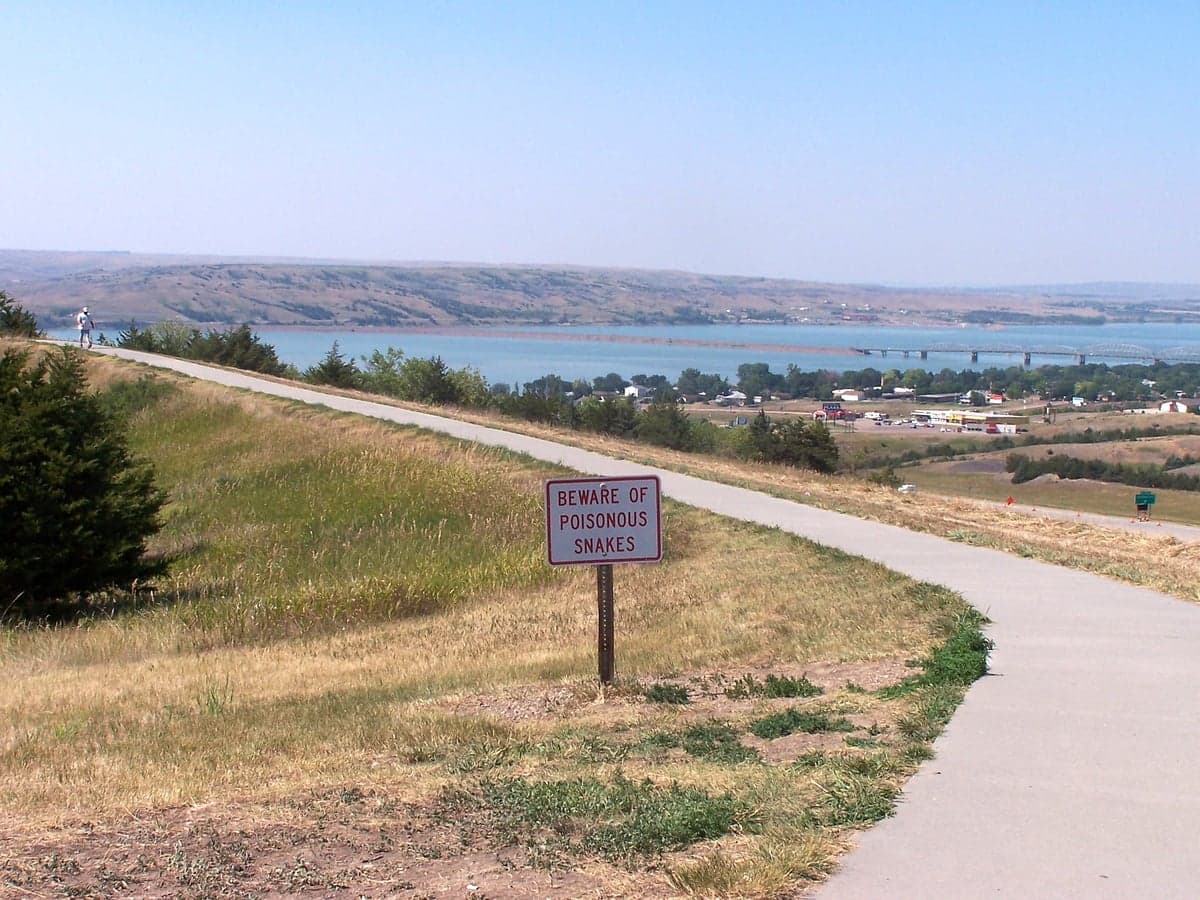
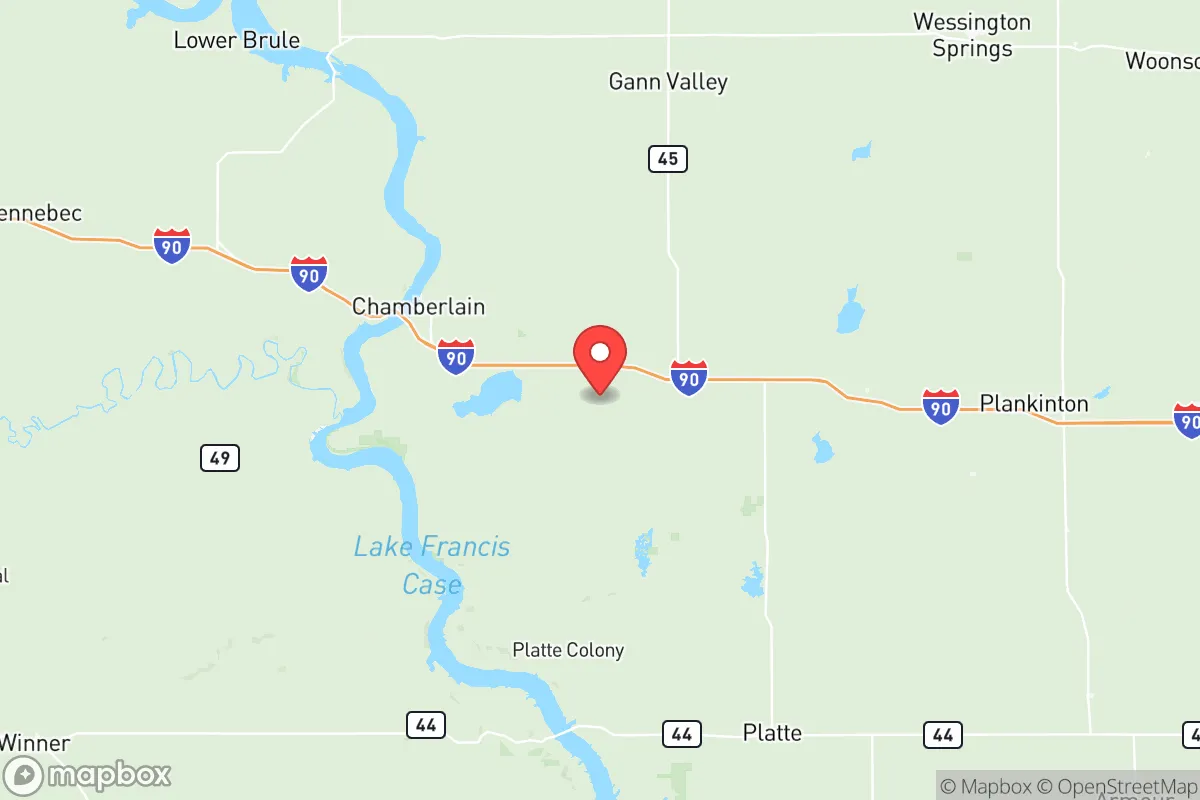
Brule County, South Dakota, is home to 5,261 residents, a population shaped by successive waves of Native American, European, and domestic migration. The county is overwhelmingly white (81.6%) and native-born (99.6% U.S.-born), with a sparse density of roughly 4 people per square mile. Its distinctive identity is rooted in the Missouri River valley, the historic Lakota presence, and the agricultural and railroad-era settlements that dot the landscape—places like Chamberlain, Kimball, and Pukwana.
Settlement & growth (pre-1960)
Long before European contact, the area that is now Brule County was part of the vast territory of the Sioux (Lakota) people, specifically the Lower Brule and Crow Creek bands. The Missouri River formed the eastern boundary of their seasonal hunting grounds, and the name "Brule" itself derives from the French term for the Sicangu Lakota, meaning "burnt thighs." The first non-Native presence came with French fur traders and trappers in the 18th century, but permanent American settlement did not begin until after the 1868 Treaty of Fort Laramie, which initially reserved much of the region for the Lakota. The opening of the Great Sioux Reservation to white settlement in the 1880s, following the Dawes Act and the land rushes, triggered the first major wave of homesteaders.
The primary European groups to arrive between 1880 and 1910 were German-Russian immigrants, followed by Scandinavians (Norwegians and Swedes) and Czechs. These settlers were drawn by the promise of 160-acre homesteads under the Homestead Act and the extension of the Chicago, Milwaukee, St. Paul and Pacific Railroad (the "Milwaukee Road") through the county. The railroad established towns like Chamberlain (the county seat, founded 1881), Kimball (1882), and Pukwana (1883) as grain-shipping and supply centers. German-Russian families, many from the Black Sea region of present-day Ukraine, brought dry-farming techniques suited to the semi-arid plains and became the dominant ethnic group in the county's farmsteads. Smaller numbers of Irish and English settlers also arrived, often working as railroad laborers or merchants in the towns.
By 1900, the county's population had surged to over 5,000, peaking at 6,319 in the 1910 census. The economy was almost entirely agricultural—wheat, corn, and livestock—with Chamberlain serving as the commercial hub and river crossing. The Native American population, meanwhile, was largely confined to the adjacent Crow Creek Reservation (just north of the county line) and the Lower Brule Reservation (west of the Missouri), though some Lakota families remained in the county's rural areas, working as ranch hands or laborers. The Dust Bowl of the 1930s hit Brule County hard, driving out many marginal farmers and accelerating a long-term population decline that continued through the mid-20th century. By 1960, the county's population had fallen to 5,870, as mechanization reduced the need for farm labor and younger generations moved to cities like Sioux Falls or Rapid City.
Modern era (post-1965)
The 1965 Hart-Cellar Act had virtually no direct impact on Brule County. The foreign-born population today stands at just 0.4%, and the county saw no significant wave of post-1965 immigration from Asia, Latin America, or Africa. Instead, the demographic story of the modern era is one of domestic out-migration and gradual aging. Between 1960 and 2020, the county's population declined from 5,870 to 5,261, a loss of roughly 10%. The most notable shift has been the growth of the Native American population, which now makes up about 12.5% of the county's residents (based on 2020 Census data showing 12.5% American Indian/Alaska Native alone). This reflects both higher birth rates among Lakota families and some movement from the nearby reservations into Chamberlain, where housing, schools, and healthcare are more accessible.
The white population, while still dominant at 81.6%, has aged significantly. The median age in Brule County is 43.7, well above the national average of 38.8. Young adults continue to leave for college and urban jobs, while retirees often stay or return to family land. The Hispanic population remains tiny (1.5%), concentrated in a few agricultural labor households. The Black population (1.4%) is almost entirely composed of individuals employed at the state-run South Dakota Developmental Center in Redfield (outside the county) or in transient roles; there is no established Black community. The Asian and Indian-subcontinent populations are effectively zero, reflecting the county's lack of urban employment or university anchors that typically attract these groups.
Suburbanization has not occurred in any meaningful sense. Chamberlain, with about 2,400 residents, remains the only incorporated city of note. Kimball (pop. 700) and Pukwana (pop. 250) are small agricultural service towns. The county has no interstate highway—U.S. Route 16 and State Highway 50 are the main arteries—and no major employer outside of agriculture, healthcare (Sanford Chamberlain Medical Center), and the school system. The county's character remains rural, conservative, and deeply tied to the land.
The future
Brule County's population is projected to continue a slow decline, with the state's official estimates showing a drop to roughly 5,000 by 2040. The county is not homogenizing or tribalizing into distinct enclaves—it is simply thinning out. The Lakota population will likely grow as a share of the total, given higher birth rates and the proximity of reservations, but the white population will continue to age and shrink. There is no sign of significant in-migration from outside the region; the county lacks the job base, housing stock, or cultural amenities to attract newcomers from coastal or urban areas. The few new residents who do arrive are typically retirees returning to family roots or people employed in healthcare or education.
The cultural identity of the county is likely to remain stable: conservative, churchgoing, and agricultural. The Lakota and white communities coexist with a degree of separation—different social networks, schools, and economic spheres—but without the overt tension seen in larger reservation-border towns. For a newcomer, especially a conservative-leaning individual or family, Brule County offers a quiet, low-cost, low-crime environment with strong community ties, but little ethnic diversity or economic dynamism.
This is a place where the past still shapes the present—a county settled by German-Russian homesteaders and Lakota hunters, now slowly emptying as the next generation moves on. For someone moving in now, the appeal is not growth or opportunity, but stability, space, and a way of life that has changed little in a century.

* Values derived from national, state, county, city and local statistics and may differ in a specific area. Last updated: 2026-05-22T12:32:59.000Z
Narrative content on this page is AI-generated and may contain mistakes. Verify any details that matter before acting on them.
ReloMaps may earn a commission from affiliate links at no extra cost to you.

