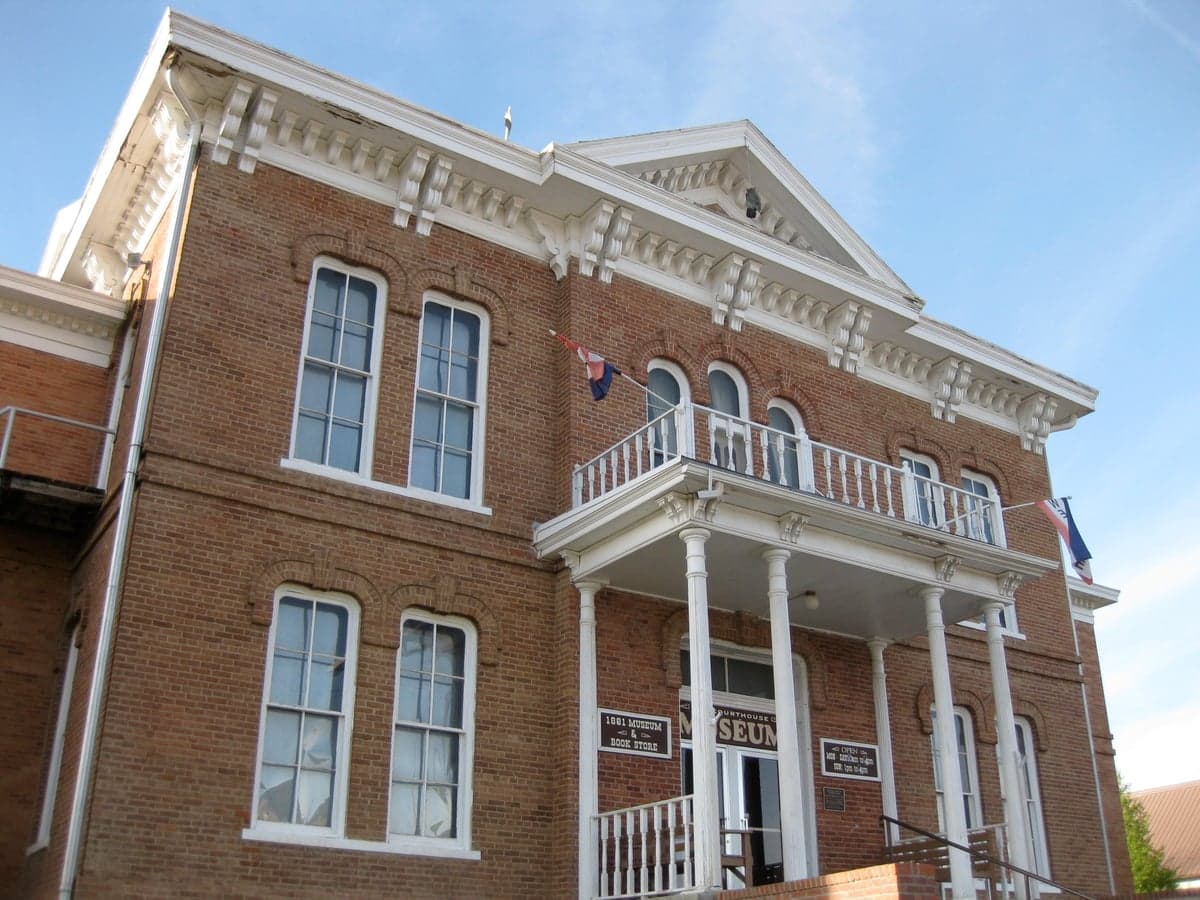
Photo: Wikipedia
Personal Sovereignty in Custer County
Viable for self-reliance. Generally workable, though some barriers may limit total independence.
What does Personal Sovereignty tell us?
Personal Sovereignty measures your capacity for self-reliance and independence with minimal government friction. Higher scores mean fewer barriers between you and the way you want to live... but it assumes you have the space you need and good neighbors.
What does this tell us?
Personal Sovereignty measures your capacity for self-reliance and independence with minimal government friction. Higher scores mean fewer barriers between you and the way you want to live... but it assumes you have the space you need and good neighbors.
State Policy
Energy independence: Importer (35% of energy produced in-state)
Personal Liberty
Homesteading

Personal Liberty Analysis
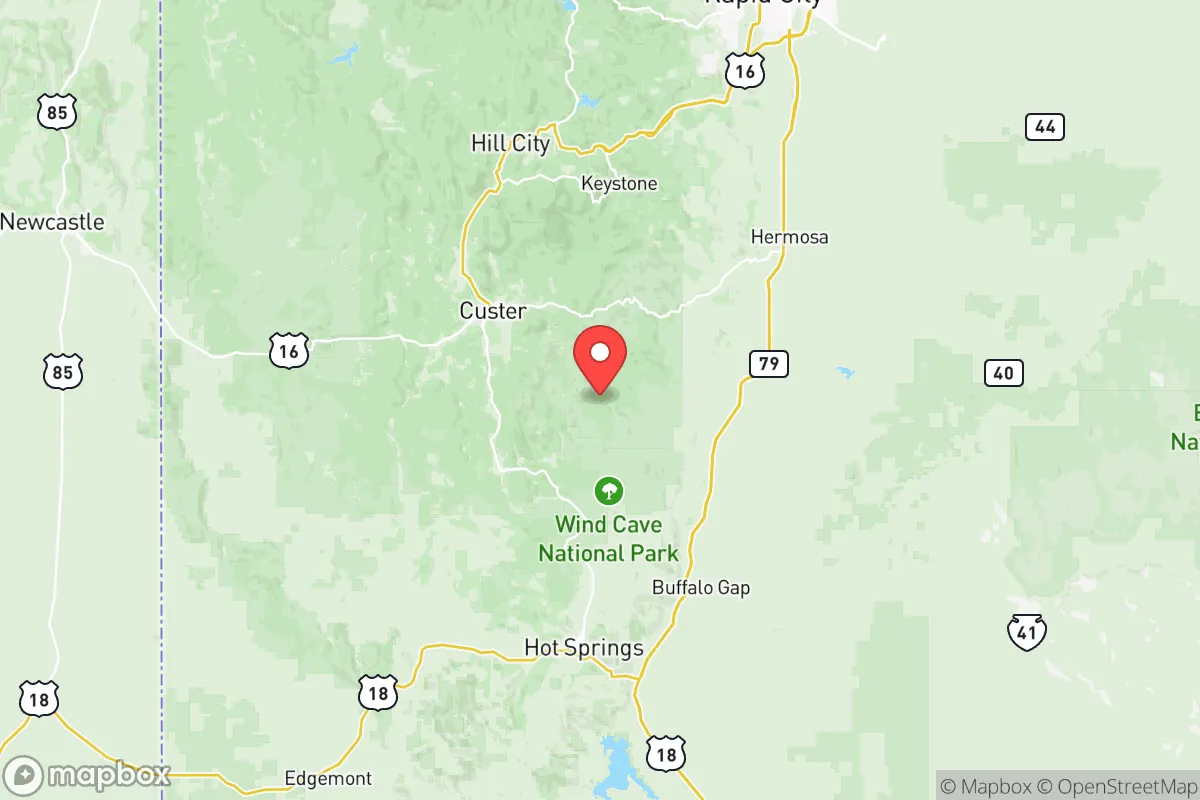
Custer County, South Dakota, stands as one of the most uncompromising environments for personal sovereignty in the northern Plains, offering a level of autonomy that is increasingly rare in the Lower 48. For those who view government overreach as the primary threat to liberty—whether through taxation, regulation, or erosion of self-defense rights—this county delivers a legal and cultural framework that prioritizes individual decision-making over state control. The county’s small population of roughly 8,500, spread across the Black Hills and surrounding prairie, means that community norms still trump bureaucratic dictates, and the state’s constitutional protections create a buffer against federal overreach. From the tourist-heavy streets of Custer City to the remote homesteads near Pringle and Fairburn, the practical expression of freedom varies, but the baseline is consistently high.
Tax burden and regulatory posture: how South Dakota’s policies protect your wallet and choices
South Dakota’s tax structure is a primary pillar of personal sovereignty here, and Custer County residents benefit directly. There is no state income tax, no personal property tax on vehicles or household goods, and no inheritance or estate tax. For a single individual or family, this means every dollar earned stays in your pocket, not funneled to a state bureaucracy. Property taxes in Custer County are moderate, averaging around 1.1% of assessed value, but the county’s assessor’s office is known for reasonable valuations on rural land, especially outside the Custer City limits. The regulatory posture is equally lean: there is no state-level building code enforced in unincorporated areas, and county zoning is minimal outside the designated growth areas around Custer City and the more developed Hermosa corridor. For anyone looking to build a shop, a barn, or a primary residence without a stack of permits, the path is far clearer than in states like Colorado or Oregon. The county commission’s general philosophy is to let landowners manage their own property, provided basic health and safety are respected. This is not a place where a county inspector will question your choice of roofing material or the setback of your fence.
Self-defense and gun law specifics: constitutional carry and stand-your-ground in the Black Hills
Custer County is a stronghold for the Second Amendment, and the legal framework reflects a presumption of self-defense. South Dakota is a constitutional carry state, meaning no permit is required to carry a concealed firearm for anyone legally allowed to possess one. The state also has a stand-your-ground statute with no duty to retreat, which applies fully in Custer County. Local law enforcement, including the Custer County Sheriff’s Office, is known for a pro-owner stance; deputies are unlikely to hassle law-abiding carriers, and the sheriff has publicly stated that his office will not enforce federal gun regulations that conflict with state law. For those who want a permit for reciprocity purposes, the Custer County Sheriff’s Office processes applications efficiently, typically within a week. The county’s geography—heavily forested and remote in areas like the Hell Canyon region and the Buffalo Gap National Grassland—means that carrying a firearm for wildlife defense is a practical necessity, not a political statement. There are no county-level restrictions on magazine capacity, firearm types, or ammunition. The closest gun ranges are in Custer City and near Hermosa, and private shooting on your own land is generally unrestricted, provided you follow basic safety and noise ordinances.
Self-reliance and homesteading viability: lot sizes, zoning, and off-grid feasibility
For the survivalist or prepper, Custer County offers some of the most viable off-grid homesteading opportunities in the region. The key factor is land use regulation: in unincorporated areas, there is no county-wide zoning that dictates minimum lot sizes for agricultural or residential use. However, the county does enforce a 40-acre minimum for new subdivisions in certain areas to prevent rural sprawl, but existing parcels can be as small as 5 acres if they were platted before the rule. For true off-grid living, areas like Pringle and Fairburn are ideal: no building permits required for structures under 120 square feet (sheds, tiny cabins), and no county inspection for alternative energy systems. Solar panels, wind turbines, and rainwater collection are all legal without special permits, though a well permit is required for groundwater extraction—a straightforward process with the state Department of Agriculture. The county does not enforce any ban on composting toilets or greywater systems, making it feasible to live without a septic hookup. For those seeking larger acreage for food production or privacy, the area around Buffalo Gap and Hermosa offers parcels from 20 to 160 acres at prices well below the national average—typically $1,500 to $3,000 per acre for raw land. The growing season is short (about 120 days), but cold-hardy crops and livestock thrive. The county’s attitude is clear: if you can sustain yourself without burdening public services, the government stays out of your way.
Personal liberties: parental rights, medical autonomy, speech, and property
South Dakota has been a battleground for parental rights and medical autonomy, and Custer County reflects that conservative legal environment. The state has a parental rights law that gives parents explicit authority over their children’s education, healthcare, and upbringing, with no county-level interference. Homeschooling is deregulated: no notification, no curriculum approval, no testing requirements. For medical autonomy, the state does not mandate COVID-19 vaccines for any age group, and there is no county health order that can override individual choice. The county’s public health department takes a hands-off approach, focusing on voluntary services. On free speech, Custer County has no local ordinances restricting political expression, signage, or assembly. Property rights are protected by South Dakota’s strong eminent domain laws, which require a public purpose and just compensation, and the county has a reputation for resisting federal land grabs—a relevant issue given the proximity of the Black Hills National Forest and Wind Cave National Park. The county commission has passed resolutions opposing federal overreach on land management, and local sentiment strongly favors private property over government conservation easements.
In the broader landscape of American sovereignty, Custer County ranks among the top tier for those seeking to minimize government intrusion. Compared to states like California, New York, or even Colorado, the difference is night and day: no income tax, no gun control, no zoning tyranny, and a culture that respects the individual’s right to live as they see fit. For the single individual or family with a prepper mindset, this is not a compromise location—it is a deliberate choice to live under a legal framework that treats personal sovereignty as the default, not the exception. The trade-offs are real: limited healthcare access, harsh winters, and a small job market. But for those who value freedom over convenience, Custer County delivers a level of autonomy that few places in America can match.

* Values derived from national, state, county, city and local statistics and may differ in a specific area. Last updated: 2026-05-28T12:05:13.000Z
Narrative content on this page is AI-generated and may contain mistakes. Verify any details that matter before acting on them.
ReloMaps may earn a commission from affiliate links at no extra cost to you.

