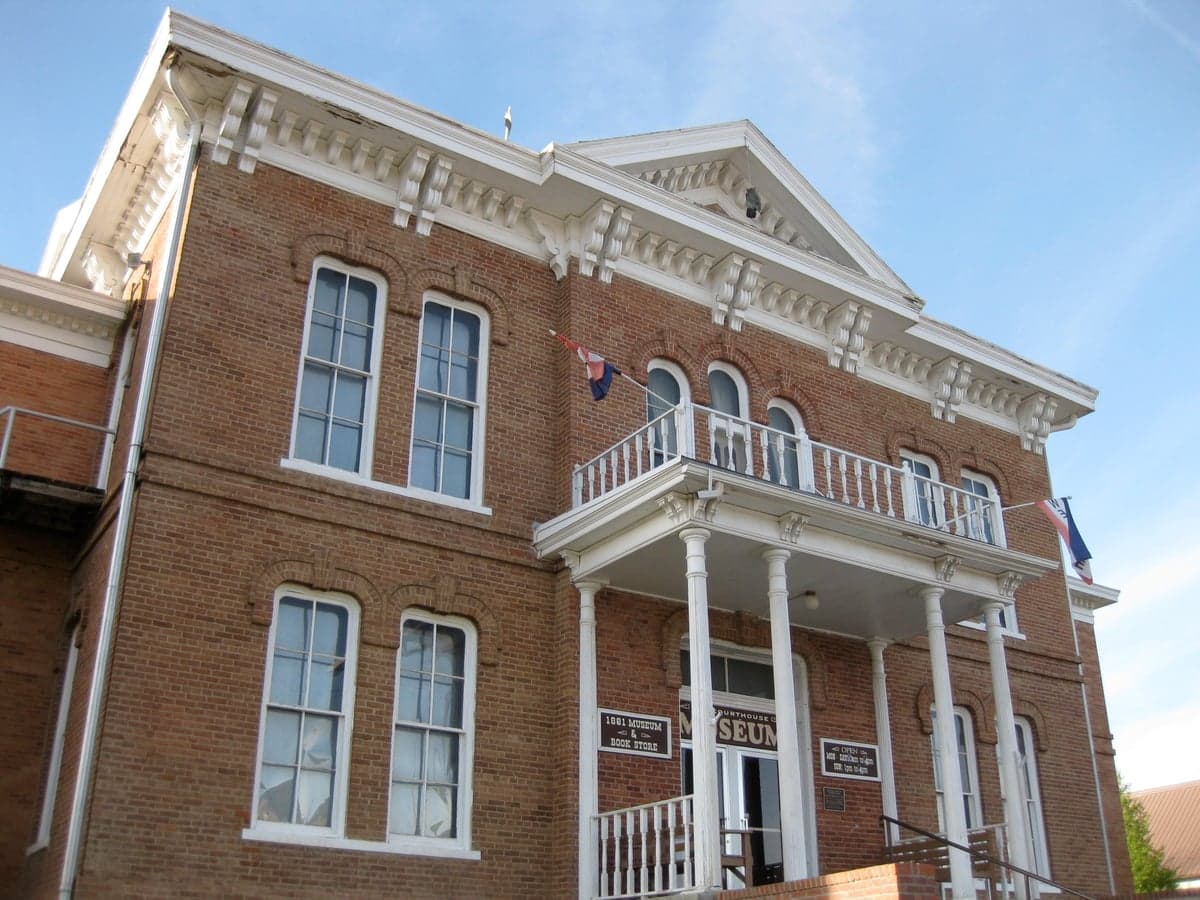
Photo: Wikipedia
Political ClimatePolitical Climate in Custer County
Showing state-level results — no local-only data available.
Local Political AnalysisPolitical Analysis of Custer County
Custer County, South Dakota, is about as solidly conservative as it gets, with a Cook PVI of R+15 that mirrors the state as a whole. This isn't a new trend, either. For decades, this has been a place where folks value their independence and aren't shy about voting that way. The county has consistently backed Republican candidates in presidential races by wide margins, and that pattern holds true down the ballot for local offices. You don't see much political hand-wringing here; it's more of a quiet, settled understanding that the government that governs least governs best.
How it compares to the rest of South Dakota
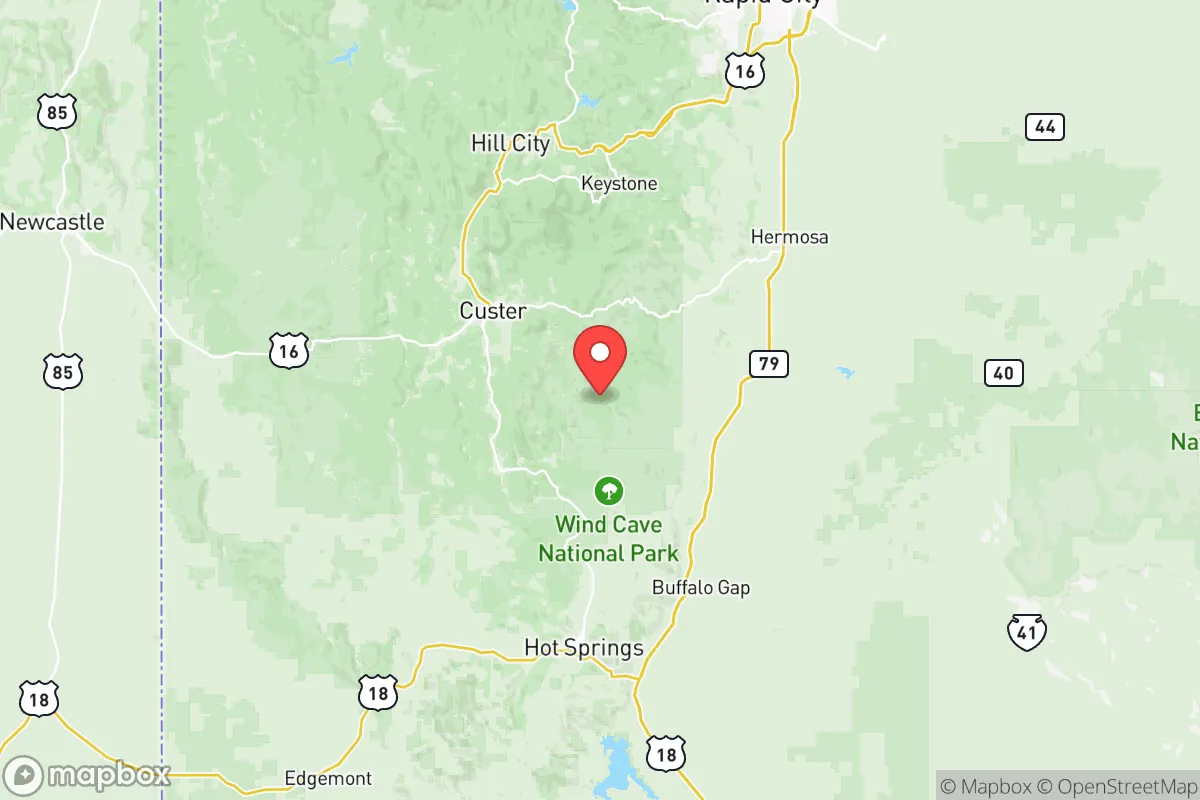
On paper, Custer County and South Dakota share the same R+15 PVI, so you might think they're politically identical. But the reality is a bit more textured. The state's overall number is pulled up by deep-red rural areas like Custer, but it also includes more moderate pockets like Minnehaha County (Sioux Falls) and the occasional blue dot like Brookings. Custer County doesn't have that kind of split. The political landscape here is remarkably uniform. The town of Custer itself leans heavily Republican, while Hermosa and Fairburn are even more so—these are places where a Democrat running for county commission is a rare sight. The only real variation comes from the unincorporated areas around Hill City, where you might find a few more libertarian-leaning voters who split tickets, but they're still solidly on the right side of the aisle. In short, Custer County is a purer expression of the state's conservative character, without the moderating influence of larger cities.
What this means for residents
For someone living here, the political climate translates directly into daily life. There's a strong, unspoken expectation that local government will stay out of your business. Zoning is minimal, property taxes are low relative to the rest of the country, and there's little appetite for new regulations on things like land use or firearms. The county commission and school board meetings are generally quiet affairs, not battlegrounds for ideological fights. This is a place where you can pretty much live your life the way you see fit, as long as you're not hurting your neighbor. The downside, if you can call it that, is that if you're looking for progressive policies—say, expanded public transit or aggressive environmental rules—you'll be disappointed. But for most folks who choose to live here, that's a feature, not a bug.
One thing that's worth watching is the slow creep of outside influence. As more people move in from places like California or Colorado, there's a subtle pressure to adopt some of the "big city" thinking—like stricter building codes or more oversight on short-term rentals. So far, the county has held the line, but it's something longtime residents keep an eye on. The cultural feel is still very much Old West: self-reliance, neighborly help, and a deep skepticism of any politician who promises to fix things with more laws. If you value personal freedom and a government that keeps its distance, Custer County is one of the last strongholds where that's still the norm, not the exception.

State Political ClimatePolitical Climate in South Dakota
State Political AnalysisPolitical Environment in the State
South Dakota is about as solidly Republican as a state gets, with a Cook PVI of R+15 and a political culture that has only hardened in that direction over the past two decades. The dominant coalition is a mix of rural conservatives, libertarian-leaning ranchers, and a growing number of out-of-state transplants fleeing blue states, all united by a deep skepticism of federal overreach and a preference for low taxes and minimal regulation. While the state has always leaned right, the shift since 2010 has been pronounced—Democrats have been virtually wiped out of statewide office, and the legislature has moved aggressively on cultural and economic issues, making it one of the most reliably conservative states in the union.
Urban vs. rural divide
The political map of South Dakota is starkly divided between a few small urban centers and the vast, deeply conservative rural expanse. Sioux Falls, the largest city, is the state's only real blue-leaning area—Minnehaha County has voted for Democratic presidential candidates in recent cycles, though it's still competitive. Rapid City and Pennington County are more mixed, with a libertarian streak that sometimes bucks the party line, but they still lean Republican overall. The real action is in the rural counties: Harding County in the northwest routinely votes 90%+ Republican, and Lake County (Madison) and Brookings County (home to South Dakota State University) are reliably red despite their college-town populations. The divide isn't just about population density—it's cultural. Sioux Falls has a growing professional class and a more diverse economy, while the rest of the state is dominated by agriculture, hunting, and a fierce independence that translates into a "leave us alone" voting pattern.
Policy environment
South Dakota's policy environment is a conservative dream: no state income tax, a flat 4.2% corporate income tax, and some of the lowest property taxes in the region. The regulatory posture is aggressively pro-business—permitting for new construction or business licenses is famously fast, and there's no state-level minimum wage above the federal floor. Education policy is a mixed bag: the state has school choice via open enrollment and a growing charter school presence, but teacher pay remains low and rural districts struggle with funding. Healthcare is a hot-button issue—the state rejected Medicaid expansion until 2022 (it passed via ballot initiative), and the legislature has since tried to attach work requirements. Election laws are among the most secure in the nation: voter ID is required, same-day registration is not allowed, and absentee voting requires an excuse. The state also has a constitutional carry law for firearms, no permit needed to carry concealed, and a strong preemption law that prevents cities like Sioux Falls from enacting their own gun restrictions.
Trajectory & freedom
South Dakota is becoming more free in many respects, but with some concerning caveats. On the positive side, the 2023 legislative session passed a sweeping parental rights bill (HB 1080) that requires schools to notify parents of any curriculum involving sexuality or gender identity, and allows parents to opt their children out. The state also enacted a medical freedom law (SB 46) in 2022 that prohibits employers from mandating COVID-19 vaccines as a condition of employment. Gun rights have expanded: in 2021, the legislature passed a constitutional carry law (HB 1157) that eliminated the permit requirement for concealed carry. However, there are red flags: Governor Kristi Noem's administration has been criticized for using executive power to ban transgender athletes from women's sports (HB 1217, 2022) and for pushing a transgender healthcare ban for minors (SB 43, 2023)—while popular with the base, these moves signal a willingness to use state power aggressively on cultural issues. Property rights remain strong, with no state-level property tax increases without a vote, but the state's reliance on federal farm subsidies and highway funding creates a subtle dependency that some libertarians find troubling.
Civil unrest & political movements
Political activism in South Dakota is relatively low-key compared to coastal states, but there have been flashpoints. The Dakota Access Pipeline protests in 2016-2017 near the Standing Rock Reservation drew national attention, with thousands of activists clashing with law enforcement—a rare moment of visible civil unrest in the state. More recently, the Noem administration's handling of COVID-19 (she refused to issue a statewide mask mandate and kept businesses open) sparked small but vocal protests in Sioux Falls and Rapid City from both anti-lockdown and pro-mask groups. The state has seen a rise in county-level Second Amendment sanctuary resolutions, with over half of counties passing them in response to federal gun control proposals. Immigration politics are less heated than in border states, but there's a growing tension in Sioux Falls and Brookings as meatpacking plants and tech firms attract more immigrant labor—some locals worry about cultural change, while others see it as economic necessity. Election integrity controversies are minimal; the state's small population and paper ballot system have kept fraud allegations at bay.
Projection
Over the next 5-10 years, South Dakota is likely to become even more conservative, driven by two forces: in-migration of conservatives from blue states (especially California and Minnesota) and the continued exodus of young liberals to larger cities. The state's population is growing at about 1% annually, with most growth in the Sioux Falls metro and the Black Hills region around Rapid City. This influx is already shifting the political center of gravity—new arrivals tend to be more culturally conservative than the old-school libertarian ranchers, meaning we'll likely see more legislation on school choice, transgender issues, and gun rights. The biggest wildcard is the state's budget: as federal farm subsidies decline and the agricultural economy faces climate pressures, the state may need to consider a sales tax increase or other revenue measures, which could fracture the current low-tax consensus. For a new resident, expect a state that remains deeply red, with a government that is generally hands-off on economic matters but increasingly willing to intervene on cultural and social issues—a place where your personal freedom is broad, but the community's values are enforced through law.
For someone moving to South Dakota, the bottom line is this: you'll find a state that respects your right to live as you see fit, as long as you don't expect the government to stay out of the culture wars. The tax burden is low, the gun laws are among the best in the nation, and the schools are decent if you're willing to navigate the rural-urban divide. But if you're looking for a place where the government truly stays out of your life on every front, you'll need to keep an eye on Pierre—the legislature is increasingly willing to use its power to enforce a specific vision of family and community. For conservatives who want a state that's actively fighting the progressive tide, South Dakota is a solid bet. For libertarians who want pure hands-off governance, it's a good start, but not a finished product.
* Values derived from national, state, county, city and local statistics and may differ in a specific area. Last updated: 2026-05-28T12:05:13.000Z
Narrative content on this page is AI-generated and may contain mistakes. Verify any details that matter before acting on them.
ReloMaps may earn a commission from affiliate links at no extra cost to you.

