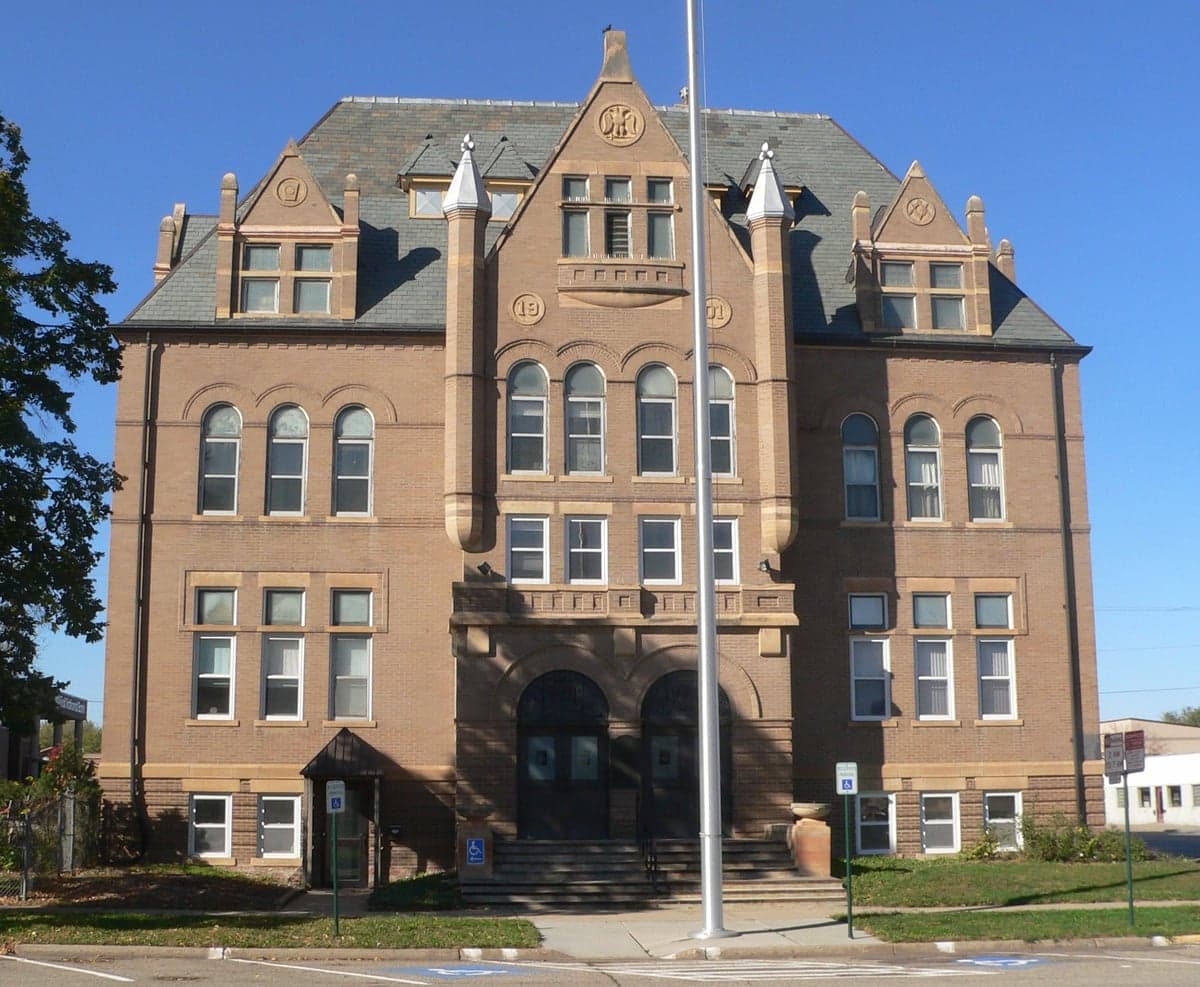
Photo: Wikipedia
Political ClimatePolitical Climate in Yankton County
Showing state-level results — no local-only data available.
Local Political AnalysisPolitical Analysis of Yankton County
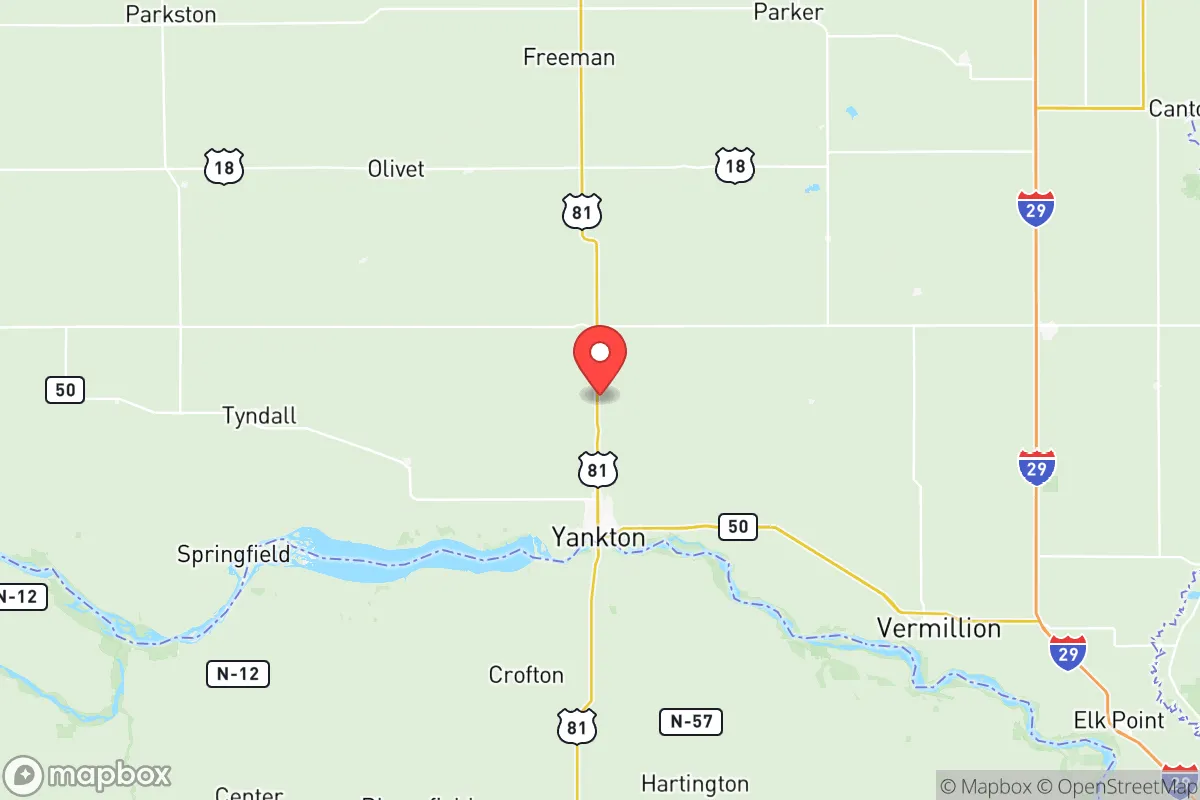
Yankton County leans solidly Republican, with a Cook Partisan Voter Index of R+15 that matches the state of South Dakota exactly. But if you've lived here as long as I have, you know that number doesn't tell the whole story on the ground. The county's political gravity is definitely red, but Yankton city itself has some blue-leaning pockets — particularly around Mount Marty University and the medical district — while the small towns like Volin, Utica, and Gayville are deep, deep red. Mission Hill and Lesterville are where you'll find the real swing precincts; those races can flip a county commission seat if turnout is low.
How it compares
On paper, Yankton County and South Dakota are identical — both R+15. But the difference is how those votes are distributed. The rest of the state has wide expanses of almost unanimous red, especially out west around Rapid City and the ranching counties. Here in the southeast corner, we're more diverse. Yankton city gets a decent number of transplants from Minnesota and Iowa, some of whom bring more moderate or even liberal views on things like property rights and local control. That said, the county commission and school board have stayed reliably conservative, which I consider a good thing — we've held the line on tax increases and kept zoning minimal. The state legislature, dominated by rural Republicans, generally leaves us alone, which is how we like it.
What this means for residents
For someone moving here, the short version is: you'll experience less government overreach than in most of the country. No mask mandates were ever seriously enforced in the county, and the school board never pushed critical race theory or radical DEI programming. That said, I watch the Yankton City Council meetings online, and there are occasional attempts to import progressive ideas — like a short-lived "hate speech" resolution a couple years back that got shot down fast. The real concern is the long-term demographic shift. If the university grows and more remote workers move in from blue states, we could see the county's political culture drift left. The 2024 election results showed a slight uptick in Democratic votes in Yankton city precincts, but the rural towns actually got redder. So for now, the balance holds.
Culturally, Yankton County is more pragmatic than ideological. We care about Second Amendment rights — no permits needed for concealed carry — and we're suspicious of any new state or federal mandates on land use or energy. The Missouri River recreation economy (fishing, boating, the state park) keeps us grounded in local issues, not national culture wars. But I'd be lying if I said I wasn't watching the school board races more closely every cycle. If that flips, you'll see the local chapter of Moms for Liberty step up, and we'll have a real fight on our hands. For now, though, Yankton County is still very much the kind of place where the government stays small and leaves you alone — and that's exactly why most of us are here.

State Political ClimatePolitical Climate in South Dakota
State Political AnalysisPolitical Environment in the State
South Dakota has been one of the most reliably Republican states in the union for generations, with a Cook PVI of R+15 that reflects its deeply conservative rural character. The dominant coalition here is a practical, live-and-let-live mix of ranchers, small-town business owners, and evangelical Christians who have kept state politics squarely to the right for decades. Over the past 10 to 20 years, though, a subtle shift has appeared: the statewide conservative majority remains rock-solid, but the growing metros of Sioux Falls and, to a lesser extent, Rapid City have started to pull local races and some social policy debates in a slightly more moderate direction, especially on cultural issues.
Urban vs. rural divide
If you look at the political map, it's a classic story of a deep-red rural heartland with two blue-purple islands. The vast majority of South Dakota's counties vote Republican by 40, 50, even 60 points. Places like Butte County (northwest) and Corson County (on the Standing Rock Reservation) are exceptions, with the reservation areas leaning Democrat due to tribal politics. The real action is in Minnehaha County, home to Sioux Falls, which has trended blue over the last three cycles. In 2024, Minnehaha County went for the Republican presidential candidate by only about 8 points, down from 18 points in 2012. That's a major change for the state's population center. Pennington County, where Rapid City sits, is more of a toss-up county in local races but still leans Republican in statewide contests. The old agricultural towns like Mitchell, Brookings, and Vermillion are conservative but have university populations that add a small progressive sliver. If you're moving here for conservative values, you'll feel right at home outside of the downtown cores of Sioux Falls and Rapid City.
Policy environment
The state's policy environment is about as friendly to limited government as you'll find in the country. There's no state income tax, no personal property tax, and the sales tax is a moderate 4.5% (with local add-ons). The regulatory posture is light-touch across the board, especially for small businesses, agriculture, and energy development. On education, South Dakota has embraced school choice and has a well-funded ESA program that lets parents use state dollars for private or homeschool expenses. The state's "Parental Bill of Rights" (SB 186, passed in 2021) is one of the strongest in the nation, giving parents explicit authority over their children's education and medical decisions. Healthcare policy leans toward market-driven solutions: there's no state-run insurance exchange, and the state has resisted Medicaid expansion until 2022, when a ballot measure forced it. That expansion is still controversial among conservatives. Election laws are secure but not onerous: voter ID is required, no-excuse absentee voting is allowed, and the state has not gone down the road of mass mail-in ballots or ballot harvesting. For a conservative newcomer, the policy environment is a major draw.
Trajectory & freedom
The trajectory in South Dakota is staying the course on personal freedom, with a few notable expansions that will please conservatives. The 2019 permitless carry law was a huge deal here — you don't need a permit to carry a concealed firearm anymore, which the state's gun owners appreciate. On parental rights, the legislature has repeatedly strengthened protections, including a 2023 law that requires schools to get parental consent before any "social-emotional" or mental health screenings. The state was a leader in resisting COVID mandates: Governor Kristi Noem never imposed a lockdown, and the legislature passed a law in 2021 banning proof of vaccination for government services. There's a strong property rights culture here too — the state has a robust right-to-farm law and rigorous protections against eminent domain abuse. The one area where freedom has arguably contracted is around transgender medical procedures for minors: in 2023, South Dakota banned them outright, which is a restriction many conservatives see as protecting children rather than limiting freedom. For a newcomer, the message is clear: your liberty is respected here, and the trend is toward more, not less, personal autonomy.
Civil unrest & political movements
South Dakota is not a state known for street protests or civil unrest. The most visible flashpoints in recent years have centered on tribal sovereignty and pipeline disputes, particularly the Keystone XL pipeline, which was canceled in 2021. You'll see occasional protests on the reservation borders, especially around Mission and the Pine Ridge Reservation, but these tend to be localized. There was a small "Land Back" movement in the Black Hills, with activists occupying a few federal sites, but it hasn't gained mainstream traction. On the right, the most organized movement is the state's strong Second Amendment community, which holds regular rallies at the capitol. There's also a vocal election integrity group that, while active, hasn't found evidence of widespread fraud — the state's system is clean by all accounts. You won't see riots or daily political confrontations here. The biggest visible tension is the cultural divide between the conservative ranching communities and the more progressive university towns, but it's a quiet, neighborly disagreement, not a source of unrest.
Projection
Over the next 5 to 10 years, South Dakota's political trajectory is likely to remain solidly conservative, but with a growing contrast between the rural areas and the urbanizing metros. In-migration from states like California, Colorado, and Minnesota is accelerating, particularly in Sioux Falls and the Black Hills area around Rapid City. Many of these newcomers are moving for the low taxes and freedom but bringing cultural attitudes that are less conservative on social issues. You're already seeing it in school board races in communities like Harrisburg and Tea, where ideological outsiders have occasionally won seats. However, the state's legislative districts are heavily weighted toward rural areas, and the rural population is not declining significantly. The legislature will likely stay supermajority-Republican for the foreseeable future. The biggest wildcard is the county-level shift in Minnehaha County: if that becomes reliably blue, the governor's race and Senate races could become competitive. For a new resident planning to put down roots, expect the state to remain a conservative haven for at least another decade, but with an increasingly vocal minority in the urban centers.
For someone moving to South Dakota, the bottom line is straightforward: you get some of the lowest taxes and highest personal freedoms in the nation, a government that respects your right to live your life without interference, and a community that shares those values in all but a few pockets. Just understand that the fast-growing suburbs around Sioux Falls are where the political culture is most likely to change first. Get involved early in your local school board and county commission if you want a say in how that change looks.
* Values derived from national, state, county, city and local statistics and may differ in a specific area. Last updated: 2026-05-27T19:50:13.000Z
Narrative content on this page is AI-generated and may contain mistakes. Verify any details that matter before acting on them.
ReloMaps may earn a commission from affiliate links at no extra cost to you.

