Photo: Wikipedia
Strategic Assessment of South Jordan, UT
Workable tactical position. Some exposure to population density or targets, but generally defensible in a crisis.
What does the Strategic Assessment tell us?
Our Strategic Assessment grades tactical survivability of an area. Major population centers, military targets, fallout zones, natural disasters, and border exposure all drive risk — lower exposure means a more defensible position in a crisis.
This is heavily inspired by Joel Skousen's Strategic Relocation book. Highly recommended you checkout the book ($)What does this tell us?
Our Strategic Assessment grades tactical survivability of an area. Major population centers, military targets, fallout zones, natural disasters, and border exposure all drive risk — lower exposure means a more defensible position in a crisis.
This is heavily inspired by Joel Skousen's Strategic Relocation book. Highly recommended you checkout the book ($)Strategic Pillars

Key Distances
Regional Safe Places
Below is our recommended "safe zones" in Utah and the surrounding area based on our strategic heuristics. For most people, it's unrealistic to live in a “safe zone” full-time due to work, family or other personal reasons. They tend to be more rural. However, many of these areas are perfect for second homes and retreat properties that double as a vacation home or even a short-term rental.


Important Note: For informational purposes only. This does not mean nothing bad ever happens in the green zones. Please use common sense. This is based on public data and modeled with AI. We tried to take a conservative approach but mistakes happen. We update this regularly as new information becomes available.
Solar Generator Recommendations
Backup power matters more here than in safer locations. We've picked three solar generators across budgets and capacity tiers — start with the budget unit if you only need a few essentials, or step up if you want to run a fridge and HVAC for days at a time.

Jackery Portable Power Station Explorer 300
Budget OptionPower on the Go: Weighing only 11 lbs, it's convenient to set up and store with book-sized foldable solar panels

BLUETTI Portable Power Station AC180
Designed for both indoor and outdoor scenarios, AC180 is highly capable as it has a robost capacity and continuous output power.

EF ECOFLOW DELTA Pro Ultra Power Station
Upgraded PickEcoFlow DELTA Pro Ultra is a whole-home energy system designed to grow with your family. Integrated with the Smart Home Panel 2, it scales to meet your evolving energy needs — keeping your home powered, intelligent, and secure through every stage of life.
We earn a commission, at no additional cost to you.
Strategic Assessment Analysis
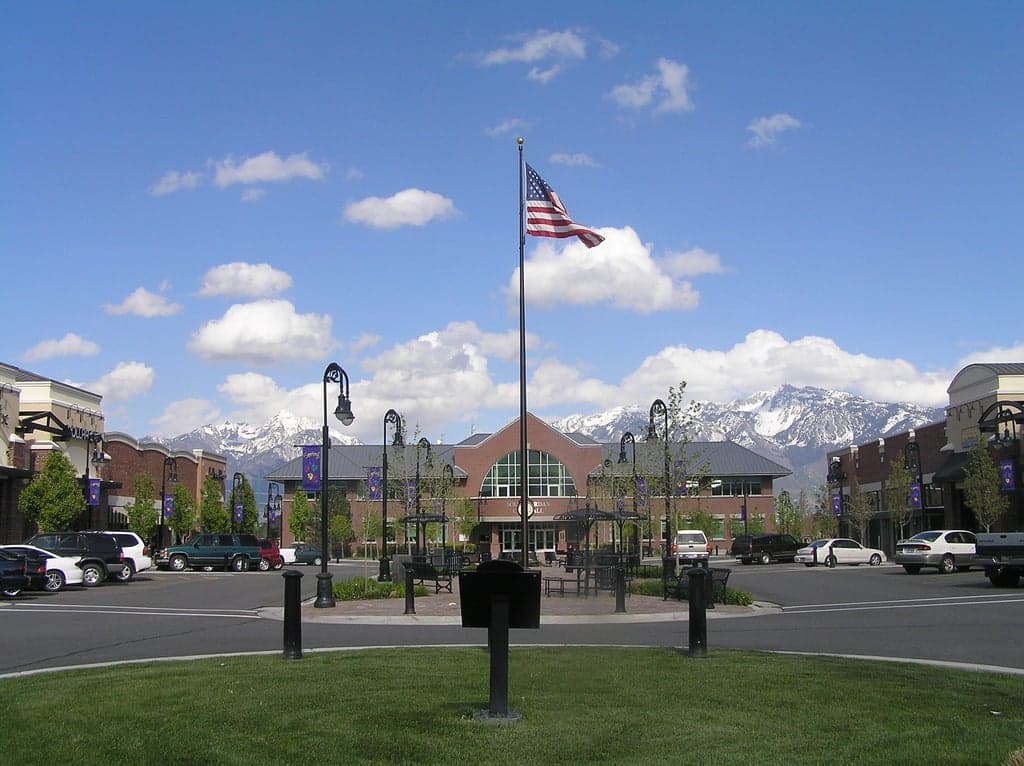
South Jordan, Utah, sits in a precarious but potentially advantageous position for those prioritizing long-term resilience and strategic relocation. Its location within the Salt Lake Valley offers proximity to resources, but its proximity to major population centers and critical infrastructure introduces significant vulnerabilities that any serious prepper must weigh. The city’s growth trajectory—from a small farming community to a suburban hub of over 80,000—reflects both opportunity and risk, as the very factors that make it attractive also create dependencies that could fail in a crisis.
Geographic position and natural advantages for long-term stability
South Jordan’s geography is defined by the Wasatch Front, a narrow corridor between the Wasatch Mountains to the east and the Great Salt Lake to the west. This positioning provides a natural buffer against certain threats. The mountains offer defensible terrain and potential retreat routes into the Uinta-Wasatch-Cache National Forest, which is less than a 30-minute drive from most parts of the city. The Jordan River runs through the western edge of the city, providing a surface water source, though its quality and reliability in a prolonged emergency are questionable. The area’s elevation—around 4,500 feet—means a semi-arid climate with cold winters and hot, dry summers, which reduces the risk of hurricanes, tornadoes, and flooding common in other regions. However, the valley’s bowl-like shape can trap inversions and poor air quality, a long-term health concern that could compound respiratory issues during a grid-down scenario. The city’s position on the eastern bench of the Oquirrh Mountains also offers some seismic stability compared to areas directly on the Wasatch Fault, which runs through the valley floor. For a relocator, the key natural advantage is the ability to move east into higher, more defensible terrain if needed, while still having access to the valley’s resources during stable periods.
Risks, exposures, and proximity to fallout-relevant landmarks
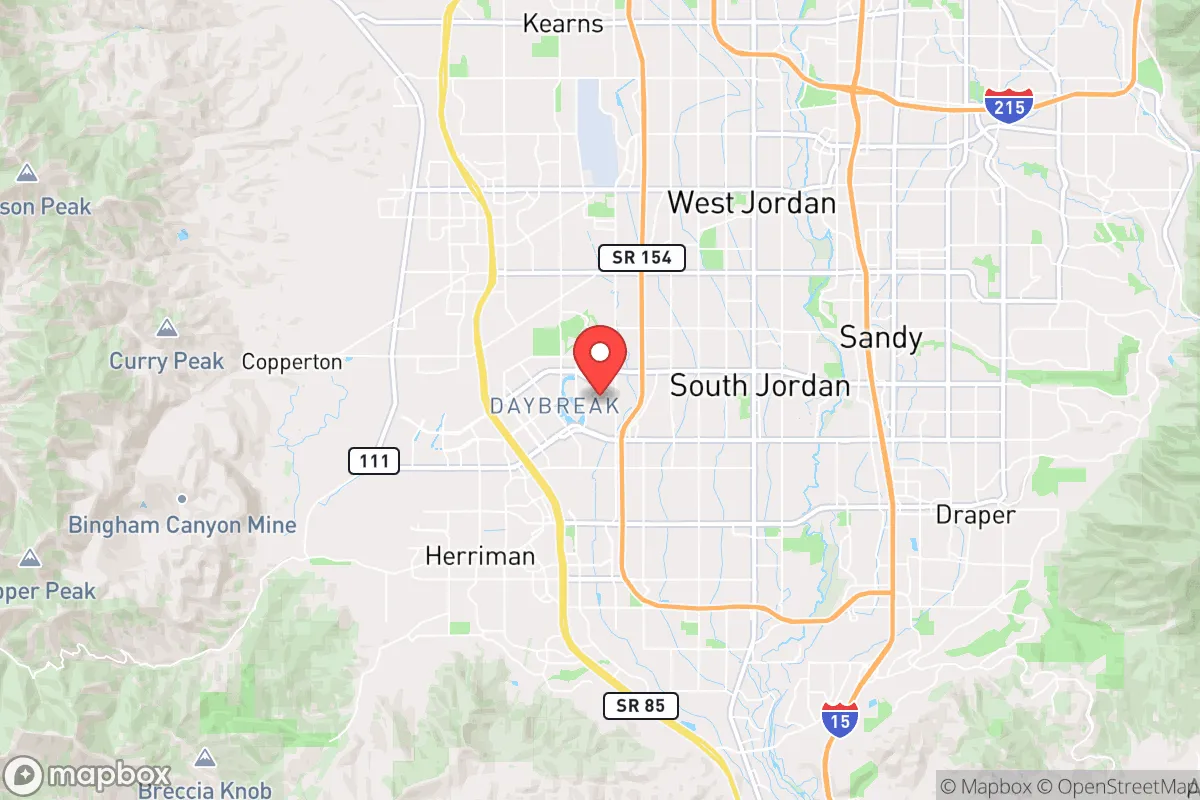
The most glaring vulnerability for South Jordan is its location within the Salt Lake City metropolitan area, which has a population of over 1.2 million. In a scenario involving civil unrest, supply chain collapse, or a mass casualty event, this population density becomes a liability. The city is less than 20 miles from Salt Lake City International Airport, a major transportation hub that could become a target or a choke point. More critically, South Jordan is within 30 miles of Hill Air Force Base, a strategic military installation that houses nuclear-capable aircraft and is a likely target in any conflict involving the United States. The nearby Tooele Army Depot, which stores chemical munitions, is roughly 40 miles west, and the Kennecott Copper Mine—one of the largest open-pit mines in the world—is just 15 miles southwest. A catastrophic event at any of these sites could render large portions of the valley uninhabitable for extended periods. Additionally, the Wasatch Fault runs directly through the valley, and a major earthquake (estimated at 7.0 or higher) would devastate infrastructure, including the aging water and sewer systems that many residents rely on. The city’s rapid development has also placed many homes in floodplains along the Jordan River, and the area’s reliance on the Colorado River system for water—via the Central Utah Project—creates a long-term vulnerability as the Southwest faces persistent drought. For the prepper, the calculus is clear: South Jordan offers a decent base camp, but the risks from nearby military and industrial targets, combined with seismic and water supply issues, demand a robust plan for evacuation or sheltering in place.
Practical resilience for a relocator: food, water, energy, and defensibility
For a single individual or family looking to establish a resilient lifestyle, South Jordan presents a mixed bag. The city’s water supply comes primarily from the Jordan Valley Water Conservancy District, which draws from the Provo River and Deer Creek Reservoir. In a grid-down scenario, municipal water would likely fail within days, so a private well is a must for any serious prepper. However, drilling a well in the valley can cost $15,000–$30,000, and water rights are tightly regulated. Rainwater collection is legal in Utah but limited to 2,500 gallons per property, and the arid climate means you’ll need substantial storage to get through a dry summer. Food production is feasible but requires effort: the growing season is short (roughly 120–150 days), and the soil in many subdivisions is compacted fill, not native loam. Community gardens exist, but they’re not a reliable source in a crisis. Energy-wise, the area has strong solar potential—over 250 sunny days per year—and many homes are already wired for solar, but net metering policies are subject to change, and battery storage is essential for off-grid capability. Natural gas is widely available, but the pipeline network is vulnerable to seismic disruption. Defensibility is a challenge: South Jordan is a typical suburban grid of cul-de-sacs and arterial roads, making it difficult to secure a perimeter. The city’s police force is well-funded and responsive, but in a widespread collapse, they would be overwhelmed. The best strategy is to choose a home on the eastern bench, near the mountain foothills, where you have a clear line of sight to the valley and a quick escape route into the backcountry. The local prepper community is active, with several survivalist groups and preparedness fairs, but it’s not a tight-knit network like you’d find in rural Idaho or Montana. For the relocator, South Jordan is a compromise: it offers access to urban amenities and a decent baseline of resources, but it requires significant investment in self-sufficiency to weather a prolonged crisis.
The overall strategic picture for South Jordan is one of calculated risk. It’s not a bug-out location in the traditional sense—it’s too close to too many targets and too dependent on fragile infrastructure. But for someone who needs to maintain a career or family ties in the Salt Lake Valley while building a resilient lifestyle, it’s one of the better options in the region. The key is to treat South Jordan as a base of operations, not a final redoubt. Invest in a home with a well, solar panels, and a defensible layout. Build relationships with neighbors who share your mindset. Keep a vehicle capable of navigating mountain roads and a cache of supplies in a secure location east of the city. And always have a plan for the day when the valley becomes untenable—because in a world of increasing instability, that day may come sooner than expected. South Jordan can work, but only if you treat it as a starting point, not a destination.

* Values derived from national, state, county, city and local statistics and may differ in a specific area. Last updated: 2026-04-21T09:15:47.000Z
Narrative content on this page is AI-generated and may contain mistakes. Verify any details that matter before acting on them.
ReloMaps may earn a commission from affiliate links at no extra cost to you.

