Photo: Wikipedia
Demographics of South Jordan, UT
Affluence Level in South Jordan, UT
An upper-middle-class area. Household wealth, education levels, and homeownership run ahead of national benchmarks.
People of South Jordan, UT
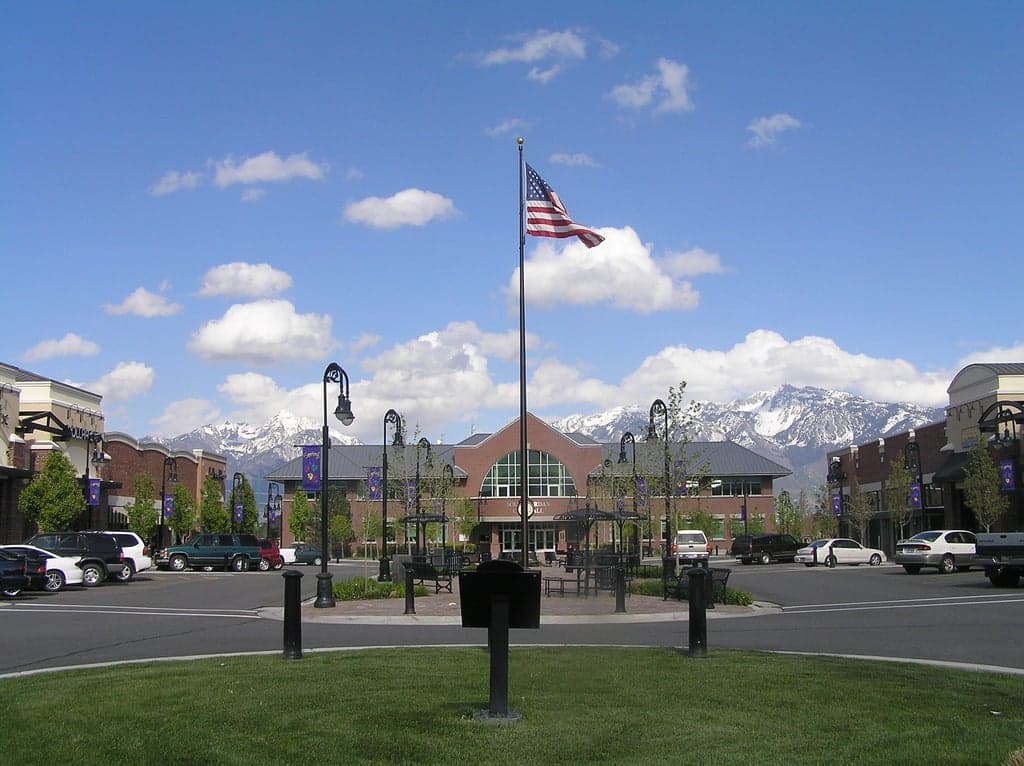
The people of South Jordan, Utah, are predominantly white (81.0%), highly educated (46.5% hold a bachelor's degree or higher), and family-oriented, with a strong Latter-day Saint cultural influence that shapes the city's character. With a population of 80,331, the city is denser than many Utah suburbs, yet retains a distinct sense of community rooted in its agricultural past. The city's identity is marked by a blend of established multi-generational Mormon families and a growing influx of tech and professional workers drawn by the nearby Silicon Slopes economy. South Jordan is not a diverse melting pot but rather a largely homogeneous, stable community where new residents are expected to integrate into existing social and religious structures.
How the city was settled and grew
South Jordan's human history begins with Mormon pioneers dispatched by Brigham Young in the 1850s to settle the Jordan River valley. The original settlers were predominantly converts from the British Isles and Scandinavia, who were assigned land under the Mormon settlement system. They established small farms along the river, with the first permanent homes clustered in what is now the Historic South Jordan district, centered around 10600 South and 2700 West. The town was officially incorporated in 1935, but remained a sparsely populated farming community for decades. The Jordan Hills area, with its higher elevation, was developed later by later generations of these same families, who subdivided their agricultural holdings into residential lots. The population grew slowly, reaching only about 2,500 by 1960, and was almost entirely white and LDS.
Modern era (post-1965)
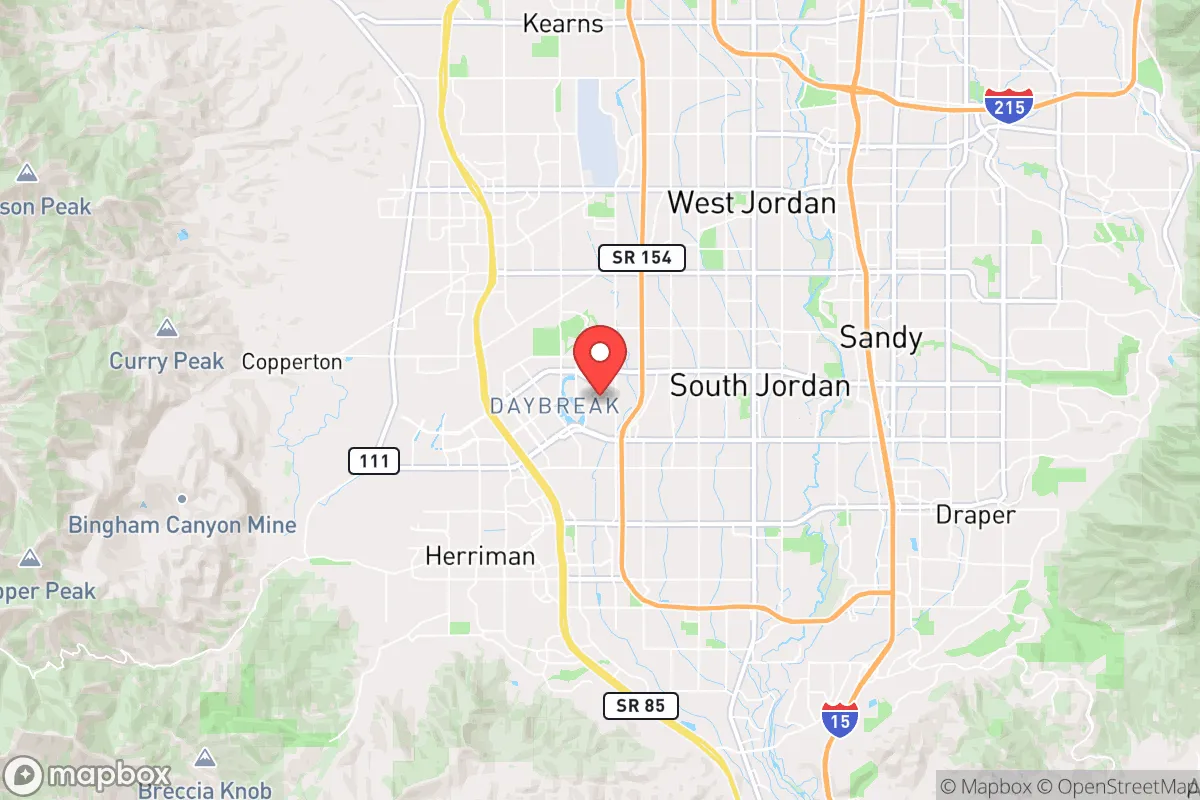
The post-1965 era brought no significant immigration wave to South Jordan; the city's foreign-born population remains very low at just 3.3%. Instead, the major demographic shift was domestic in-migration driven by suburbanization. The opening of the Bangerter Highway in the 1990s and the extension of the TRAX light rail line in 2011 transformed South Jordan into a commuter suburb for Salt Lake City and the burgeoning tech corridor in Lehi. The Daybreak master-planned community, launched in 2004, became the primary engine of growth, attracting young families and professionals with its modern homes, parks, and transit access. Daybreak's population is notably whiter and more affluent than the city average, with a high concentration of college-educated residents. The older South Jordan Heights neighborhood, built in the 1980s and 1990s, absorbed a mix of move-up buyers and second-generation residents. The city's Hispanic population (9.2%) is concentrated in older, more affordable housing stock near the historic core, while the small East/Southeast Asian (2.1%) and Indian (2.5%) communities are dispersed, often drawn by tech-sector employment. The Black population remains negligible at 0.3%.
The future
South Jordan's population trajectory points toward continued homogenization rather than diversification. The city is nearly built out, with Daybreak nearing completion, limiting future growth to infill and redevelopment. The foreign-born share is unlikely to rise significantly given the high cost of housing and the city's lack of ethnic enclaves or immigrant-serving institutions. The Hispanic population is growing slowly through natural increase and some in-migration, but remains a small minority. The East/Southeast Asian and Indian communities, while growing in absolute numbers due to tech hiring, are small and highly assimilated, with no distinct ethnic neighborhoods forming. The dominant trend is the aging of the white LDS population, with younger families increasingly priced out and moving to farther suburbs like Herriman and Tooele. The Riverbend area, with its newer apartments and townhomes, may see a slight uptick in single professionals and empty-nesters, but the overall demographic profile will remain stable.
For a conservative-leaning individual or family moving to South Jordan today, the city offers a predictable, safe, and culturally cohesive environment. The population is overwhelmingly white, religiously observant, and politically conservative, with a strong emphasis on family, community, and self-reliance. The city is not becoming more diverse in any meaningful sense, and newcomers should expect to integrate into a pre-existing social fabric rather than find distinct ethnic or cultural enclaves. South Jordan is a place where the past and present are closely aligned, and the future will look much like today.

* Values derived from national, state, county, city and local statistics and may differ in a specific area. Last updated: 2026-04-21T09:15:47.000Z
Narrative content on this page is AI-generated and may contain mistakes. Verify any details that matter before acting on them.
ReloMaps may earn a commission from affiliate links at no extra cost to you.

