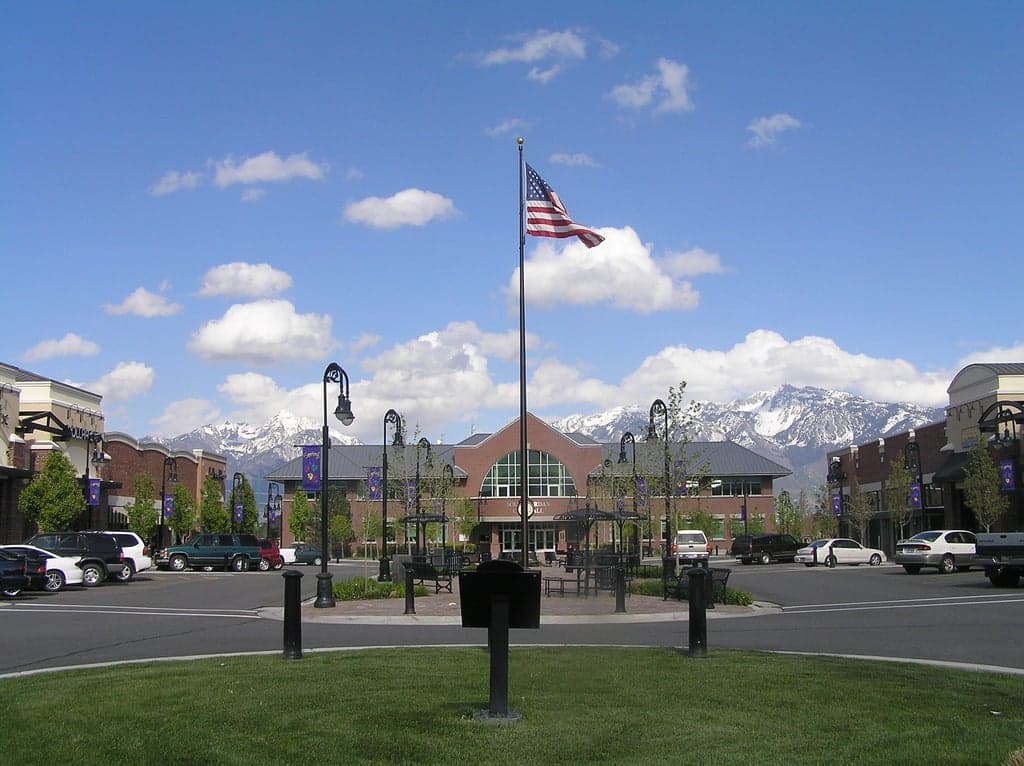
Photo: Wikipedia
Political ClimatePolitical Climate in South Jordan, UT
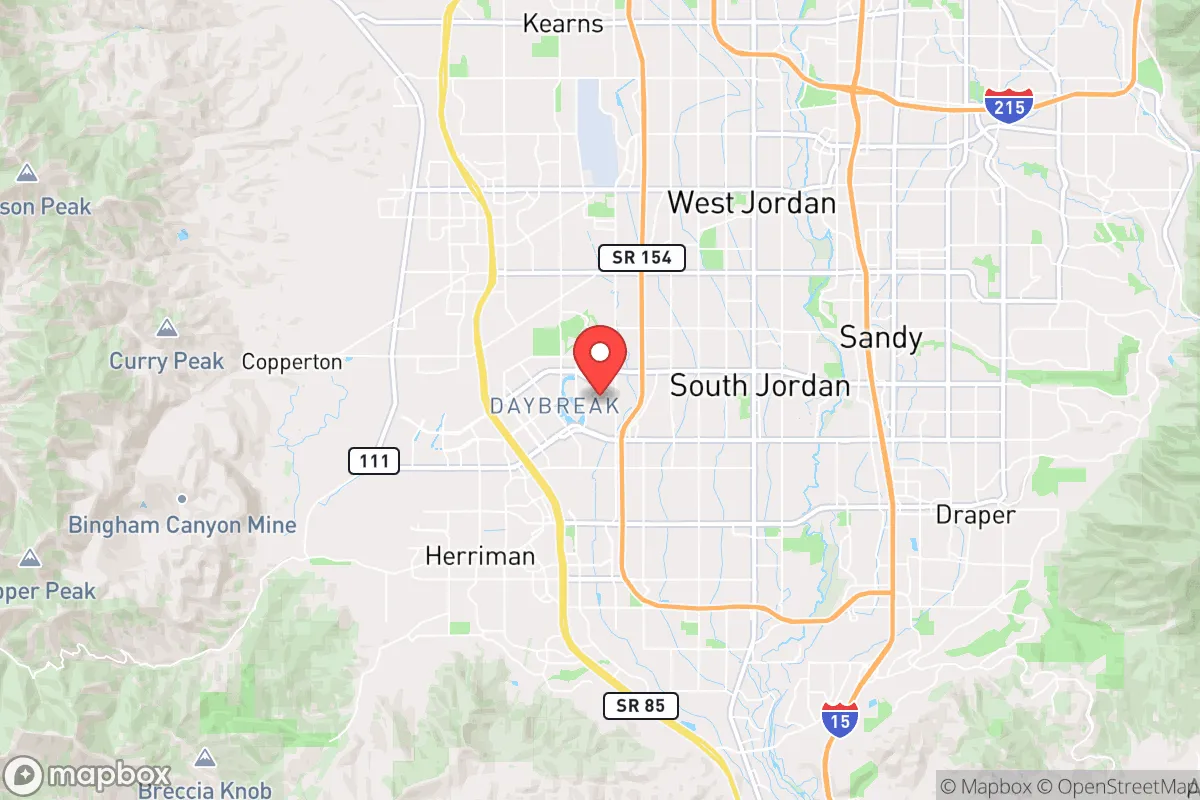
District shown is the primary district for this city’s centroid. Cities may span multiple districts.
Local Political AnalysisPolitical Analysis of South Jordan, UT
South Jordan has long been a solidly conservative community, and that hasn't changed much despite the rapid growth. The Cook PVI of R+14 tells you the basics—this is a place where Republican candidates routinely win by comfortable margins, and the local culture reflects that. But if you've been here a while, you'll notice the political vibe isn't quite as uniform as it was even ten years ago. The city itself is still reliably red, but the surrounding areas tell a more interesting story, and the shifts happening in Salt Lake County as a whole are worth keeping an eye on.
How it compares
Drive ten minutes north to West Jordan or Sandy, and you'll start to see a different picture. Those areas have been trending more purple, especially in recent election cycles, with some precincts flipping blue in 2020 and 2024. South Jordan, by contrast, has held its ground. The difference is partly demographic—South Jordan has a higher concentration of young families and LDS households that lean conservative—and partly a matter of local leadership. The city council and mayor's office have remained firmly in Republican hands, and there's been little appetite for the kind of progressive policy experiments you see in Salt Lake City proper. That said, the countywide shift toward the left is real, and it's something longtime residents talk about over coffee (or, more likely, over a Diet Coke at the local Maverik). If you're coming from a deep-blue state, South Jordan will feel like a breath of fresh air. But if you're used to the old Utah—the one where every race was a foregone conclusion—you might notice the ground shifting under your feet.
What this means for residents
For the average person living here, the political climate translates into a few concrete things. First, taxes stay relatively low, and the city government tends to take a hands-off approach to business and property rights. You won't see the kind of overreach that's become common in places like Portland or Denver—no heavy-handed zoning mandates, no forced density schemes, no nonsense about banning gas stoves or telling you what you can plant in your front yard. Second, the schools (Jordan School District) still emphasize traditional values, and there's been strong pushback against critical race theory and gender ideology in the curriculum. Third, the Second Amendment is respected here. You can carry without a permit, and the local sheriff's office isn't interested in enforcing federal overreach. That said, there are warning signs. The influx of out-of-state transplants—many from California and the Pacific Northwest—has brought with it a slow creep of progressive attitudes. You see it in the local Nextdoor groups, in the occasional city council meeting where someone tries to push a "diversity, equity, and inclusion" resolution, and in the growing number of yard signs for Democratic candidates. It's not a crisis yet, but it's something to watch.
What makes South Jordan different
Culturally, South Jordan still feels like the Utah of twenty years ago in the best ways. The Daybreak community, with its planned walkability and HOA rules, is the one exception—it's a bit more progressive-leaning and attracts a younger, more transient crowd. But the older neighborhoods, the ones with big lots and mature trees, are where the conservative heart of the city beats strongest. The local political discourse is still civil, but the edges are getting sharper. If you value personal freedom, limited government, and a community that doesn't try to micromanage your life, South Jordan is still a good bet. Just don't expect it to stay exactly the same forever. The long-term trajectory depends on who moves in next—and whether the people already here stay engaged enough to keep the city on the right track.

State Political ClimatePolitical Climate in Utah
State Political AnalysisPolitical Environment in the State
Utah has long been one of the most reliably conservative states in the Union, with a Republican trifecta that has held for decades and a cultural DNA deeply rooted in the LDS Church’s emphasis on family, self-reliance, and community. The state voted +20 points for Donald Trump in 2024, down slightly from 2020’s +21, but still a rock-solid red anchor in the Mountain West. Over the past 10-20 years, the dominant coalition has been a blend of traditional Mormon conservatism and a newer wave of libertarian-leaning transplants drawn by the state’s low taxes and outdoor lifestyle, though a slow but steady in-migration from California and the West Coast is beginning to nudge the Wasatch Front toward a more purple hue.
Urban vs. rural divide
The political map of Utah is a tale of two landscapes. The Wasatch Front—Salt Lake City, Provo, Ogden, and their suburbs—is where the vast majority of the population lives, and it’s where the real action is. Salt Lake City itself is a deep blue island in a red sea, voting for Joe Biden by 40 points in 2020 and Kamala Harris by a similar margin in 2024. But drive 20 minutes south to Utah County, anchored by Provo and Orem, and you’re in one of the most conservative metro areas in the country—Trump won Utah County by 30 points in 2024, powered by BYU’s influence and a dense concentration of LDS families. The rural counties—like San Juan, Kane, and Garfield—are even redder, often voting 70-80% Republican, driven by ranching, mining, and a fierce independence from federal land management. The real story is the suburban ring around Salt Lake: places like Sandy, Draper, and Lehi are where the political future is being fought. These areas are still solidly red, but the margin is shrinking as tech workers from Silicon Slopes (Lehi’s booming tech corridor) bring more moderate or libertarian-leaning views, especially on social issues like marijuana and LGBTQ rights.
Policy environment
Utah’s policy environment is a dream for conservatives who value low taxes and limited government—at least on paper. The state has a flat income tax rate of 4.65%, no state-level property tax on vehicles, and a sales tax that hovers around 6-7% depending on the county. The regulatory posture is business-friendly, with a right-to-work law and minimal red tape for startups, which is why Silicon Slopes has exploded with companies like Qualtrics, Domo, and Pluralsight. Education policy is a mixed bag: Utah spends among the least per pupil in the nation, but it also has a robust school choice system, including a new universal school voucher program (HB 215, passed in 2023) that gives families up to $8,000 per child for private or homeschool expenses. On healthcare, the state rejected Medicaid expansion until a 2018 ballot initiative forced it through, and even then, the legislature added work requirements. Election laws are tight: voter ID is required, same-day registration is limited, and the state uses a mail-in ballot system that has been praised for security but criticized by some on the right for potential fraud—though no major scandals have emerged. The biggest red flag for a conservative moving here is the growing influence of the LDS Church’s leadership, which has occasionally pushed for moderate positions on immigration (supporting a path to citizenship) and environmental stewardship, creating tension with the more libertarian and Trump-aligned wings of the party.
Trajectory & freedom
Utah is becoming more free in some areas and less free in others, and the trend lines are worth watching. On the plus side, the state has aggressively expanded gun rights: permitless carry was signed into law in 2021 (HB 60), and there are no magazine capacity limits or red flag laws. Property rights are strong, with a 2023 law (HB 462) that limits the ability of HOAs to restrict solar panels and xeriscaping, a nod to both freedom and water conservation. Parental rights got a major boost with the 2023 passage of HB 477, which requires schools to notify parents of any changes in a student’s emotional or physical health, effectively banning secret gender transitions. On the downside, the state’s war on drugs remains aggressive—possession of even small amounts of marijuana is a criminal offense, and the medical cannabis program is so restrictive that many patients still drive to Colorado. The biggest freedom concern is the state’s growing surveillance apparatus: Utah has one of the most aggressive license plate reader networks in the country, and the legislature has shown a willingness to use emergency powers (like during the 2020 pandemic) to shut down businesses and churches, though that was met with fierce backlash. The 2024 legislative session saw a push for a “parental bill of rights” that would have restricted school library content, but it failed, signaling that the culture war battles are far from over.
Civil unrest & political movements
Utah is not a hotbed of civil unrest, but the tensions are simmering beneath the surface. The most visible flashpoint in recent years has been the debate over public lands and the federal government’s control of 63% of the state’s territory. The “Sagebrush Rebellion” is alive and well here, with local activists in rural counties like Emery and Carbon pushing for the transfer of federal lands to state control, and the state legislature has passed multiple resolutions demanding it. Immigration politics are quieter than in Texas or Arizona, but there’s a growing undercurrent of concern: the state has a sanctuary city ban (HB 497, 2023) that prohibits any local government from adopting “sanctuary” policies, and the Utah Highway Patrol has been criticized for cooperating with ICE. The most organized activist movement on the right is the Utah Parents United group, which has mobilized thousands of parents around school curriculum and library book challenges, particularly in conservative strongholds like Davis County and Utah County. On the left, the Salt Lake City protests over the 2020 George Floyd killing were large and peaceful, but they also exposed a deep divide between the city’s progressive activists and the state’s conservative legislature, which responded by passing a bill (HB 63) that increased penalties for rioting and blocking highways. Election integrity is a live issue: the 2020 election saw Trump’s legal team file a lawsuit in Utah over mail-in ballot procedures, though it was dismissed, and the state’s Republican Party has since pushed for stricter signature verification and ballot tracking. A new resident would notice the lack of visible political violence, but the cultural divide between the urban Wasatch Front and the rural rest of the state is palpable—drive from Salt Lake City to St. George, and you’ll see the yard signs shift from “In This House We Believe” to “Don’t Tread on Me.”
Projection
Over the next 5-10 years, Utah is likely to remain a conservative state, but the flavor of that conservatism will shift. The in-migration from California, Washington, and Oregon is accelerating—Utah’s population grew by 18% between 2010 and 2020, and it’s projected to add another 1 million people by 2035. These newcomers tend to be younger, more secular, and more libertarian than the traditional LDS base, which means the Republican Party will face increasing pressure to moderate on social issues like marijuana legalization and LGBTQ rights. The Wasatch Front suburbs—places like Lehi, Saratoga Springs, and Herriman—are where the demographic battle will be fought. These areas are still red, but the margins are shrinking: in 2024, Trump won Utah County by 30 points, down from 35 in 2020. The rural counties will stay deep red, but they’re losing population, so their political weight is diminishing. The biggest wildcard is the LDS Church: as its membership becomes more diverse and less dominant (the share of Utahns who are LDS dropped from 70% in 2000 to 60% in 2020), its political influence may wane, opening the door for a more secular, libertarian conservatism that prioritizes economic freedom over social conformity. A conservative moving here now should expect to find a state that is still very friendly to traditional values, but with a growing libertarian streak that could lead to surprising policy shifts—like a potential medical marijuana expansion or a relaxation of alcohol laws—within the next decade.
Bottom line for a new resident: Utah is a safe bet for conservatives who value low taxes, strong families, and a business-friendly environment, but don’t expect a monolithic red state. The Wasatch Front is becoming more diverse and politically complex, and the culture war battles over schools, land, and personal freedom are only going to intensify. If you’re moving here for the politics, you’ll find plenty of allies, but you’ll also need to be engaged—the state’s future is being shaped by the clash between its traditional Mormon roots and the libertarian-leaning newcomers who are changing the landscape. Keep an eye on the suburbs of Salt Lake City and the tech corridor in Lehi; that’s where the next decade’s political battles will be won or lost.
* Values derived from national, state, county, city and local statistics and may differ in a specific area. Last updated: 2026-04-21T09:15:47.000Z
Narrative content on this page is AI-generated and may contain mistakes. Verify any details that matter before acting on them.
ReloMaps may earn a commission from affiliate links at no extra cost to you.

