Photo: Wikipedia
Personal Sovereignty in South Plainfield, NJ
Viable for self-reliance. Generally workable, though some barriers may limit total independence.
What does Personal Sovereignty tell us?
Personal Sovereignty measures your capacity for self-reliance and independence with minimal government friction. Higher scores mean fewer barriers between you and the way you want to live... but it assumes you have the space you need and good neighbors.
What does this tell us?
Personal Sovereignty measures your capacity for self-reliance and independence with minimal government friction. Higher scores mean fewer barriers between you and the way you want to live... but it assumes you have the space you need and good neighbors.
State Policy
Energy independence: Importer (8% of energy produced in-state)
Personal Liberty
Homesteading

Personal Liberty Analysis
South Plainfield, New Jersey, presents a challenging environment for personal sovereignty, where state-level policies significantly constrain individual autonomy despite the town's relatively moderate local character. For those prioritizing self-reliance, minimal government interference, and the ability to prepare for uncertain times, this Middlesex County suburb ranks poorly compared to states with stronger protections for gun rights, lower tax burdens, and broader parental authority. The overarching reality is that New Jersey's regulatory apparatus—from its strict firearms laws to its high property taxes—creates a system where the state's authority frequently overrides personal choice, making South Plainfield a location best approached with clear-eyed awareness of these limitations.
Tax burden and regulatory posture: What you pay for limited freedom
New Jersey's tax burden is the highest in the nation, and South Plainfield residents feel this acutely. The effective property tax rate hovers around 2.3% of assessed home value, meaning a $400,000 home carries roughly $9,200 in annual property taxes—money that funds a state government known for expansive regulatory reach. Income taxes are progressive, with a top rate of 10.75% for high earners, and the state's sales tax is 6.625%. This fiscal environment directly impacts personal sovereignty: every dollar earned is heavily taxed before you can decide how to spend, save, or invest it. The regulatory posture extends beyond taxes. New Jersey mandates strict environmental and building codes, limits on land use, and a powerful state police apparatus. For a prepper or survivalist, this means fewer opportunities to modify property without permits, higher costs for any construction, and a general atmosphere where the state's permission is required for many routine decisions. The state's Public Health Emergency powers, exercised broadly during COVID-19, serve as a recent example of how quickly individual liberties can be curtailed. South Plainfield's local government is generally more moderate than the state's progressive leadership, but it operates within a framework that leaves little room for true autonomy.
Self-defense and gun law specifics: A heavily restricted environment
New Jersey's gun laws are among the most restrictive in the United States, and South Plainfield residents must navigate a complex, permission-based system to exercise their Second Amendment rights. The state requires a Firearms Purchaser Identification Card (FPID) for long guns and a separate permit for each handgun purchase, with a 30-day waiting period between handgun purchases. Concealed carry is a "may-issue" regime, meaning local police chiefs have discretion to deny permits, and the 2022 Supreme Court decision in NYSRPA v. Bruen has led to ongoing legal battles but not yet to a truly "shall-issue" system. As of 2026, obtaining a carry permit in South Plainfield still requires demonstrating "justifiable need," a subjective standard that effectively bars most law-abiding citizens. Magazine capacity is capped at 10 rounds, and "assault weapons" are broadly defined and banned. For self-defense in the home, a handgun or shotgun is legally accessible after the permitting process, but the barriers are high. Stand-your-ground laws do not exist in New Jersey; residents have a duty to retreat before using deadly force, even in their own home in some interpretations. This legal landscape means that a prepper's ability to defend their family or property is severely constrained by state law. The practical advice for anyone moving to South Plainfield: expect to invest significant time and money in legal compliance, and understand that your self-defense options are far narrower than in states like Texas, Florida, or Pennsylvania.
Self-reliance and homesteading viability: Lot sizes, zoning, and off-grid feasibility
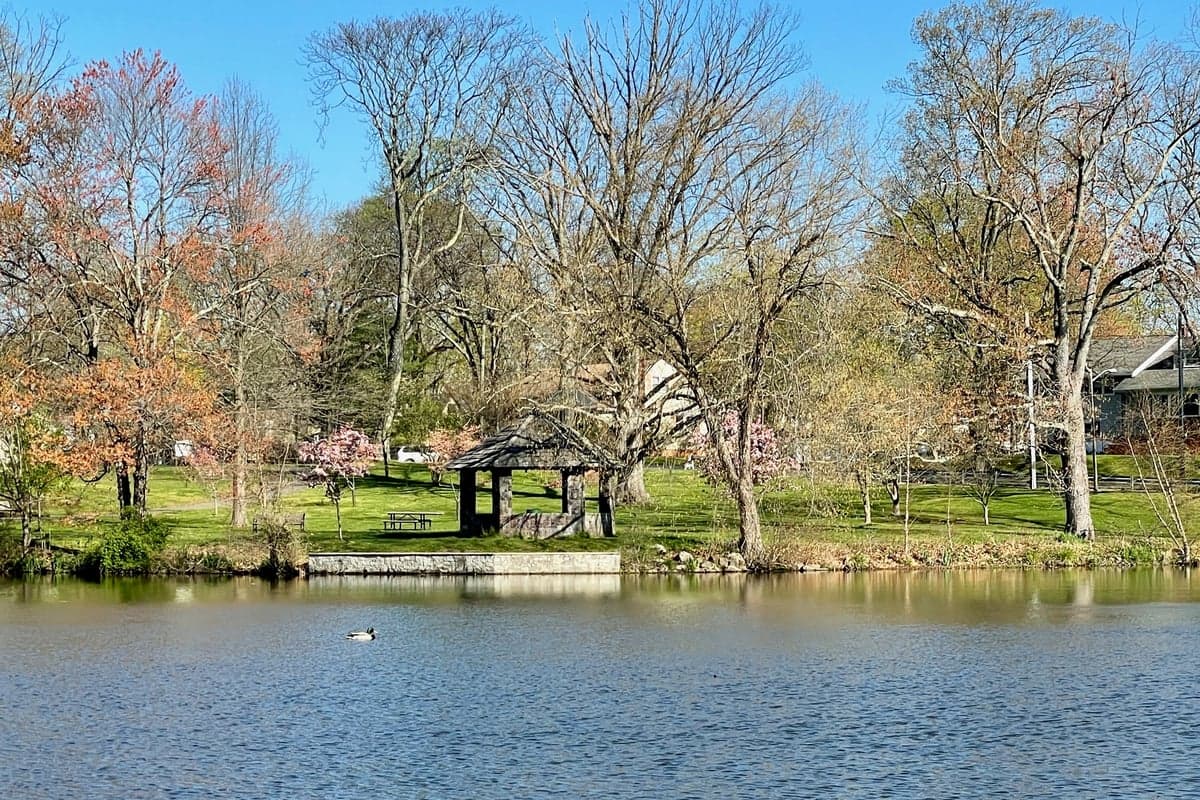
South Plainfield is a densely developed suburban town of roughly 8 square miles, with a population density of about 2,500 people per square mile. Typical residential lots range from 0.1 to 0.25 acres, making serious homesteading or off-grid living nearly impossible. Zoning regulations are strict: backyard chickens are permitted with a permit and specific coop requirements, but larger livestock like goats or pigs are prohibited in most residential zones. Rainwater collection is not explicitly banned but is subject to state water rights laws, and solar panel installation requires municipal approval and compliance with historic district rules in some areas. For a survivalist seeking food independence, the small lot sizes mean you'll be limited to container gardening, small raised beds, and perhaps a few fruit trees. Off-grid living is effectively illegal—the town requires connection to municipal water and sewer, and building codes mandate grid-tied electrical systems. The local soil is generally good for gardening, with a growing season from April to October, but the suburban environment means noise, light, and chemical pollution from neighbors are constant factors. The best strategy for self-reliance in South Plainfield is to focus on skills rather than land: food preservation, first aid, and community networking. For those serious about homesteading, the rural areas of Hunterdon or Warren Counties, 30-45 minutes west, offer larger lots (1-5 acres) with more permissive zoning, though still within New Jersey's restrictive state framework.
Personal liberties: Parental rights, medical autonomy, speech, and property
Parental rights in New Jersey are under consistent pressure from state mandates. The state requires comprehensive sex education in public schools, including LGBTQ+ topics, with no opt-out for parents—only an opt-out for the "sensitive" portions, which is subject to school district interpretation. Medical autonomy is similarly constrained: COVID-19 vaccine mandates for school attendance were enforced, and while currently relaxed, the legal framework for future mandates remains in place. The state's medical marijuana program exists but is tightly regulated, and recreational cannabis is legal for adults 21+, though local municipalities can ban dispensaries (South Plainfield has not opted in). Free speech is protected under the First Amendment, but New Jersey has broad hate speech statutes and public nuisance laws that can be used to limit protest or expression. Property rights are weak: the state's eminent domain powers are expansive, and the New Jersey Supreme Court has upheld the use of eminent domain for private economic development (as in the Kelo-like case of Gallenthin Realty v. Borough of Paulsboro). This means your property could be taken for a private developer's project if the town deems it beneficial. For a conservative concerned with government overreach, these factors create an environment where personal liberties are conditional and subject to state approval. The best defense is local engagement—attending town council meetings, joining the school board, and building relationships with neighbors who share your values.
Overall, South Plainfield offers a low-to-moderate level of personal sovereignty relative to other areas in the United States. It ranks below most of the South, Midwest, and Mountain West in terms of gun rights, tax burden, and regulatory freedom. Within New Jersey, it is typical—not the worst (that would be Newark or Jersey City) but far from the best (rural Sussex or Salem Counties offer slightly more breathing room). For a prepper or survivalist, the strategic calculus is clear: South Plainfield is a place to live if you must be in the New York-Philadelphia corridor for work or family, but it is not a location where you can build a self-reliant, low-government lifestyle. The high taxes, restrictive gun laws, and dense suburban zoning create a system where the state is a constant partner in your daily decisions. If relocation is possible, states like New Hampshire, Idaho, or Tennessee offer far greater personal sovereignty. If you are committed to South Plainfield, the key is to focus on legal compliance, build strong local networks, and invest in skills that don't require land or permits—because in New Jersey, the government's permission is always required for the big things.

* Values derived from national, state, county, city and local statistics and may differ in a specific area. Last updated: 2026-05-05T11:16:19.000Z
Narrative content on this page is AI-generated and may contain mistakes. Verify any details that matter before acting on them.
ReloMaps may earn a commission from affiliate links at no extra cost to you.

