Photo: Wikipedia
Demographics of South Portland, ME
Affluence Level in South Portland, ME
A middle-class area roughly in line with national averages across income, home values, education, and employment.
People of South Portland, ME
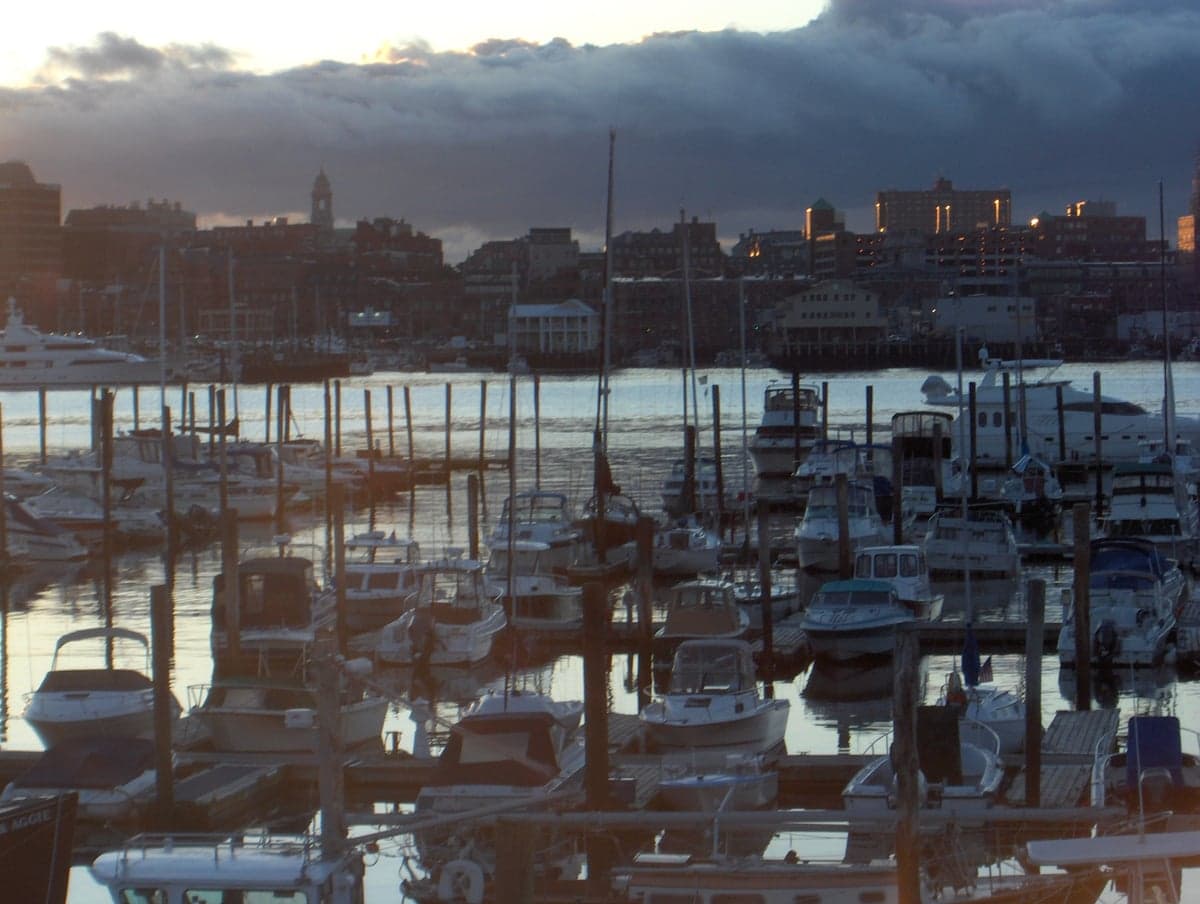
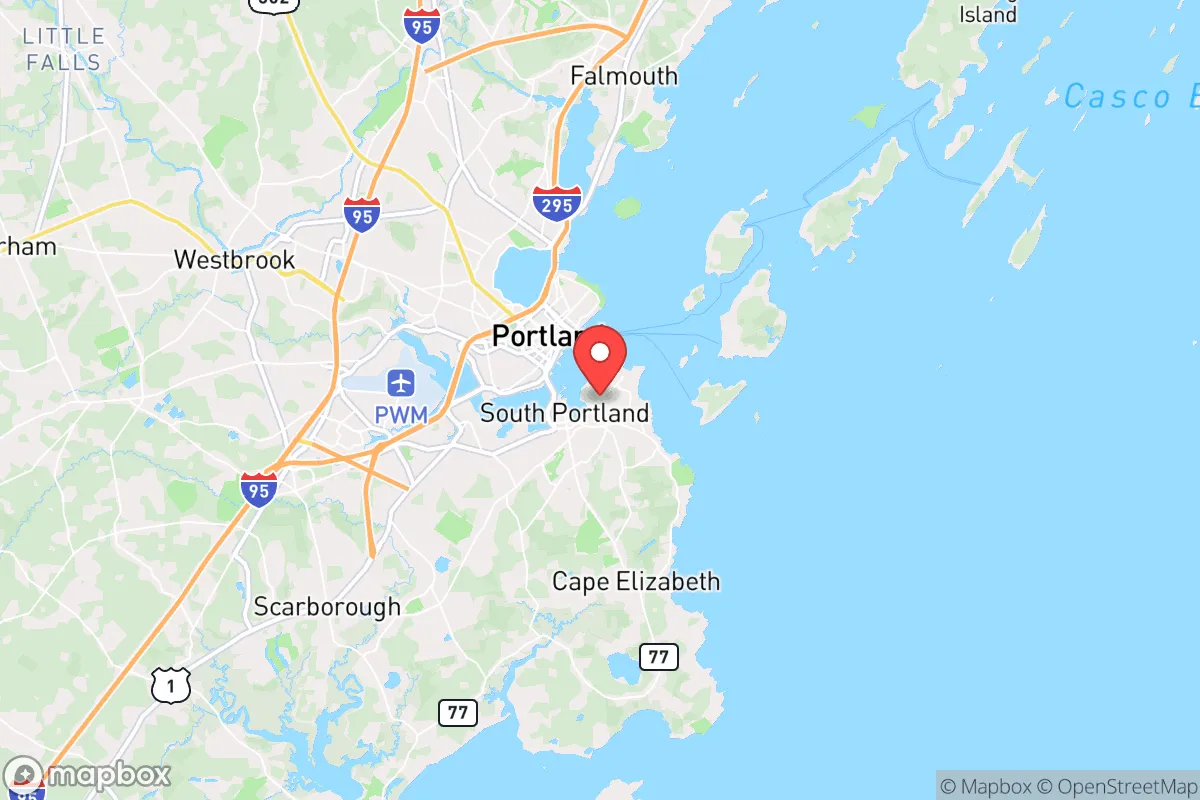
South Portland, Maine, is a compact, densely settled city of 26,780 residents that feels more like an urban suburb than a small town. Its population is predominantly white (82.5%), but it holds a notable diversity edge over neighboring Portland, with a higher share of Black (6.4%) and East/Southeast Asian (2.8%) residents, alongside a small but established Hispanic community (3.3%) and a negligible Indian-subcontinent population (0.1%). Nearly half of adults hold a college degree (49.3%), reflecting a well-educated workforce tied to the region’s healthcare, maritime, and tech sectors. The city’s identity is shaped by its working-class shipbuilding roots, its role as a bedroom community for Portland, and a recent influx of refugees and professionals that has quietly diversified its neighborhoods.
How the city was settled and grew
South Portland’s human history begins not with colonial settlement but with industrial opportunity. Originally part of Cape Elizabeth, the area remained sparsely populated farmland until the late 19th century, when the Portland Company shipyard and the Maine Central Railroad terminus drew Irish and French-Canadian laborers to the waterfront. These workers built the first dense neighborhoods—Ferry Village, along the Fore River, became the heart of the Irish Catholic community, while French-Canadian families clustered in Willard Square, near the trolley lines and the shipyard gates. By 1898, the city incorporated as South Portland, its population swelling with Scandinavian and German immigrants who worked the dry docks and rail yards. The 1920s brought a second wave of French-Canadians from Quebec, settling in Meeting House Hill, where they built St. John the Evangelist Church and a parallel parish school system. The city’s population peaked at roughly 26,000 by 1960, driven by the World War II shipbuilding boom at the New England Shipbuilding Corporation, which employed over 30,000 workers and drew African American migrants from the rural South to the Redington Village area, a small but historically Black enclave near the shipyard.
Modern era (post-1965)
The post-1965 immigration reforms reshaped South Portland’s demographics more gradually than in larger cities. The city’s foreign-born population today stands at 5.8%, a modest share but one concentrated in specific waves. The first major post-1965 group was Vietnamese refugees, who arrived after the fall of Saigon in 1975 and settled in Mill Creek, a mid-century suburban neighborhood of ranch houses and garden apartments. They were followed in the 1990s and 2000s by Somali and Sudanese refugees, who clustered in the Cash Corner district, near the bus lines and the city’s social service offices. These African communities now form the core of South Portland’s Black population (6.4%), with Somali-owned businesses along Broadway and a mosque in the former Knights of Columbus hall. Meanwhile, domestic in-migration from Boston and New York accelerated after 2010, as young professionals priced out of Portland bought homes in Pleasantdale, a leafy neighborhood of Cape Cods and ranches near the Maine Mall. This group is overwhelmingly white and college-educated, and their arrival has raised the city’s educational attainment to 49.3% with a bachelor’s degree or higher, up from 38% in 2010. The East/Southeast Asian population (2.8%) is a mix of older Vietnamese families and newer Chinese and Korean professionals working in Portland’s biotech and finance sectors, concentrated in the newer subdivisions off Route 1.
The future
South Portland’s population is trending toward greater educational and economic stratification rather than rapid racial diversification. The white share (82.5%) has declined only modestly since 2010, as the city’s growth has come primarily from domestic migration of white professionals, not international immigration. The Black population has plateaued, as Somali and Sudanese families have begun moving to cheaper suburbs like Westbrook and Biddeford. The Hispanic share (3.3%) is growing slowly, driven by Puerto Rican and Mexican families working in the region’s hospitality and construction sectors, but remains small. The East/Southeast Asian community is stable, with second-generation Vietnamese youth assimilating into the broader workforce. The Indian-subcontinent population (0.1%) is negligible and shows no sign of growth. The most significant demographic shift is generational: the city’s median age has risen to 41, as older homeowners age in place and younger families struggle with housing costs that have doubled since 2020. New construction is limited to high-end townhouses near the waterfront, reinforcing a divide between the established working-class neighborhoods of Ferry Village and Cash Corner and the newer professional enclaves of Pleasantdale and Mill Creek.
For a conservative-leaning mover, South Portland is becoming a place of stable, modest diversity—not a melting pot, but a city where distinct ethnic neighborhoods persist without significant tension. The city’s schools are well-regarded, its crime rate is low, and its tax burden is higher than surrounding towns but lower than Portland’s. The next decade will likely see continued white professional in-migration, a slow decline in the refugee population as families disperse, and little change in the overall racial mix. It is a practical, unpretentious city for someone who values proximity to Portland’s economy without its cultural turbulence.

* Values derived from national, state, county, city and local statistics and may differ in a specific area. Last updated: 2026-05-02T01:37:09.000Z
Narrative content on this page is AI-generated and may contain mistakes. Verify any details that matter before acting on them.
ReloMaps may earn a commission from affiliate links at no extra cost to you.

