
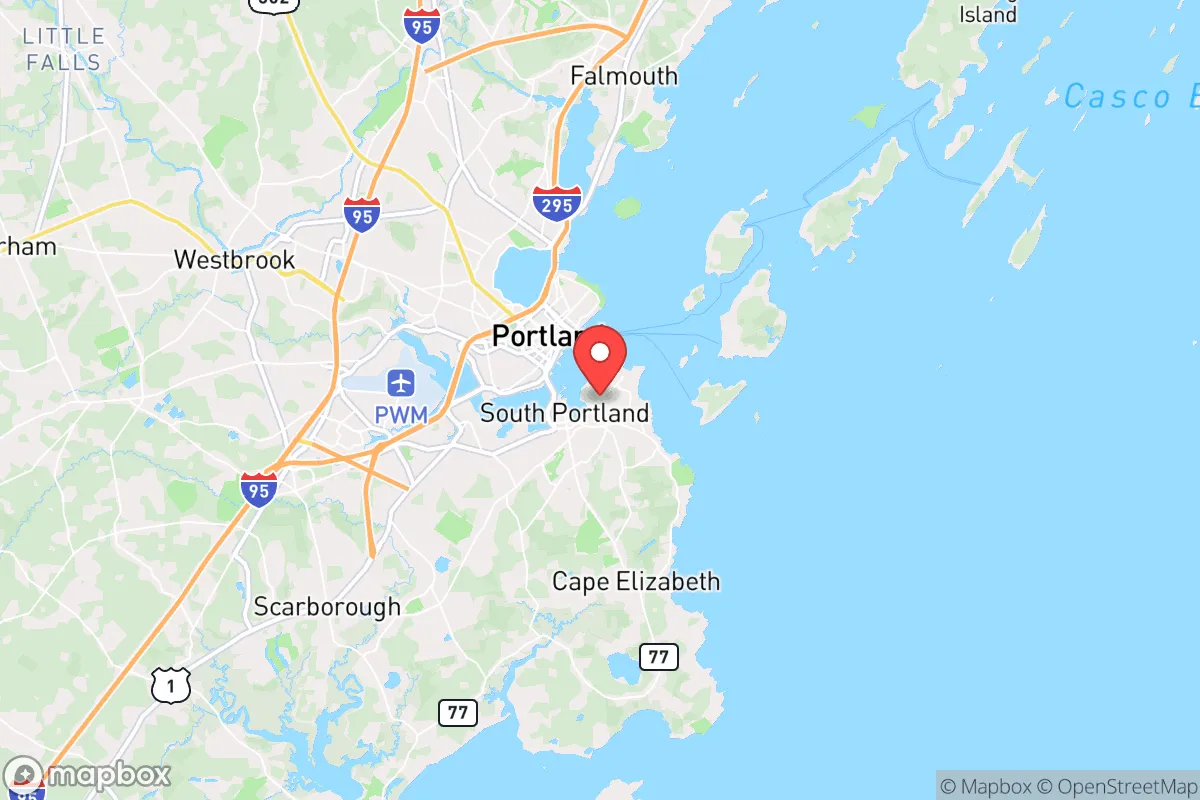
Photo: Wikipedia
Personal Sovereignty in South Portland, ME
Viable for self-reliance. Generally workable, though some barriers may limit total independence.
What does Personal Sovereignty tell us?
Personal Sovereignty measures your capacity for self-reliance and independence with minimal government friction. Higher scores mean fewer barriers between you and the way you want to live... but it assumes you have the space you need and good neighbors.
What does this tell us?
Personal Sovereignty measures your capacity for self-reliance and independence with minimal government friction. Higher scores mean fewer barriers between you and the way you want to live... but it assumes you have the space you need and good neighbors.
State Policy
Energy independence: Importer (30% of energy produced in-state)
Personal Liberty
Homesteading

Personal Liberty Analysis
South Portland, Maine, presents a complex environment for personal sovereignty that demands careful scrutiny from anyone prioritizing autonomy, self-reliance, and minimal government overreach. While Maine’s national reputation leans libertarian-leaning in some respects—think “Live Free or Die” energy with a coastal New England accent—the reality on the ground in South Portland is more constrained, particularly for those with a survivalist or prepper mindset. The city’s proximity to Portland, its dense suburban layout, and state-level regulations create a patchwork where some freedoms are robust while others are significantly curtailed, making it a location that requires strategic trade-offs rather than a wholesale embrace of liberty.
Tax burden and regulatory posture: how much of your income and property stays yours
Maine’s tax burden is among the highest in the nation, and South Portland residents feel this acutely. The state levies a progressive income tax with a top marginal rate of 7.15% on income over $58,050 (single filers) as of 2025, and property taxes in South Portland average around 1.2% of assessed value, which is moderate for the region but still significant when combined with state-level burdens. Sales tax is 5.5%, but it applies broadly, including to many groceries and prepared foods. For a conservative-leaning individual or family, this means a substantial portion of your earnings is redirected to state programs—including expanded Medicaid and renewable energy mandates—that may not align with your values. The regulatory posture in South Portland is notably pro-environment and pro-development control, with strict zoning laws that limit industrial or commercial expansion in residential areas. The city’s Climate Action Plan, adopted in 2021, includes mandates for energy efficiency upgrades in new construction and major renovations, adding compliance costs for anyone building or remodeling. For a prepper, this translates to less financial runway for stockpiling supplies, land purchases, or off-grid investments, as the tax and regulatory overhead eats into disposable income.
Self-defense and gun law specifics: what you can own and where you can carry
Maine is generally considered a gun-friendly state, but South Portland’s local ordinances and state-level shifts create friction for those prioritizing armed self-defense. Maine is a “shall-issue” state for concealed carry permits, with no permit required for open carry, and the state does not have a universal background check law or an assault weapons ban as of 2025. However, South Portland has a local ordinance that prohibits the discharge of firearms within city limits except at approved ranges, effectively banning target practice or defensive use on private property in most residential zones. This is a significant constraint for preppers who want to train on their own land or maintain a defensive capability without traveling to a range. Additionally, Maine’s “yellow flag” law—enacted in 2020—allows law enforcement to temporarily seize firearms from individuals deemed a threat by a mental health professional, a provision that raises concerns about due process and potential overreach. For a survivalist, the ability to own standard-capacity magazines and AR-15 platforms remains intact at the state level, but the local discharge ban and the yellow flag mechanism mean that exercising your Second Amendment rights in South Portland requires careful legal navigation and a willingness to drive to rural areas for practice.
Self-reliance and homesteading viability: lot sizes, zoning, and off-grid feasibility
South Portland’s suburban density is a major obstacle for anyone seeking self-reliance through homesteading or off-grid living. The city’s zoning code mandates minimum lot sizes of 5,000 to 10,000 square feet for single-family homes, with most lots in established neighborhoods falling on the smaller end. This severely limits space for gardens, livestock, or rainwater catchment systems. Raising chickens is permitted with a permit, but no pigs, goats, or larger livestock are allowed in residential zones. Off-grid living is effectively illegal: the city requires connection to municipal water and sewer systems in most areas, and building codes mandate grid-tied electrical connections for new construction. Solar panels are allowed but must be grid-tied, meaning you cannot disconnect from the utility without special exemptions that are rarely granted. For a prepper, this means South Portland is a location for urban survivalism—focusing on stockpiling, community networking, and bug-out planning—rather than true self-sufficiency. The nearby rural towns of Scarborough or Gorham offer larger lots and fewer restrictions, but they come with longer commutes and their own tax burdens. If your vision of sovereignty includes growing your own food, harvesting rainwater, or living off-grid, South Portland is a poor fit; it’s better viewed as a base for economic opportunity with a planned retreat elsewhere.
Personal liberties: parental rights, medical autonomy, speech, and property
Maine’s state-level policies on parental rights and medical autonomy are a mixed bag that will concern conservative parents and individuals. The state has a robust vaccine mandate for school attendance, with no philosophical exemption—only medical and religious exemptions are allowed, and the religious exemption has been narrowed by court rulings. This means that parents who object to mandatory vaccines on principle face significant hurdles enrolling their children in public schools. Additionally, Maine’s “right-to-repair” law for medical devices is weak compared to other states, limiting your ability to maintain your own medical equipment or stockpile prescription medications without a doctor’s oversight. On speech and property rights, Maine has no specific laws restricting political speech, but the state’s “hate crime” statute and anti-discrimination laws can be used to penalize certain expressions, particularly around gender identity and sexual orientation, which may chill speech for those with traditional views. Property rights are relatively strong: Maine does not have a statewide rent control law, and South Portland does not impose rent control, though the city has a “just cause” eviction ordinance that limits a landlord’s ability to non-renew leases without stated reasons. For a survivalist, this means you can own and use your property largely as you see fit, but you must navigate a legal landscape that increasingly prioritizes collective health mandates over individual choice.
Overall, South Portland offers a moderate level of personal sovereignty that is heavily mediated by state-level taxation, local zoning, and progressive social policies. Compared to rural Maine or states like New Hampshire or Texas, it falls short on tax burden, homesteading viability, and medical autonomy, but it outperforms many coastal cities on gun rights and property use. For a conservative-leaning individual or family with a prepper mindset, South Portland is best approached as a strategic compromise: it provides access to a strong job market and coastal resources, but it requires a deliberate plan to mitigate the erosion of personal freedoms through legal compliance, financial discipline, and a clear bug-out strategy. If your priority is maximum autonomy with minimal government interference, you will find better options in northern New England or the interior West, but if you need to stay in southern Maine for work or family, South Portland is a manageable—if imperfect—base for navigating an increasingly regulated world.

* Values derived from national, state, county, city and local statistics and may differ in a specific area. Last updated: 2026-05-02T01:37:09.000Z
Narrative content on this page is AI-generated and may contain mistakes. Verify any details that matter before acting on them.
ReloMaps may earn a commission from affiliate links at no extra cost to you.

