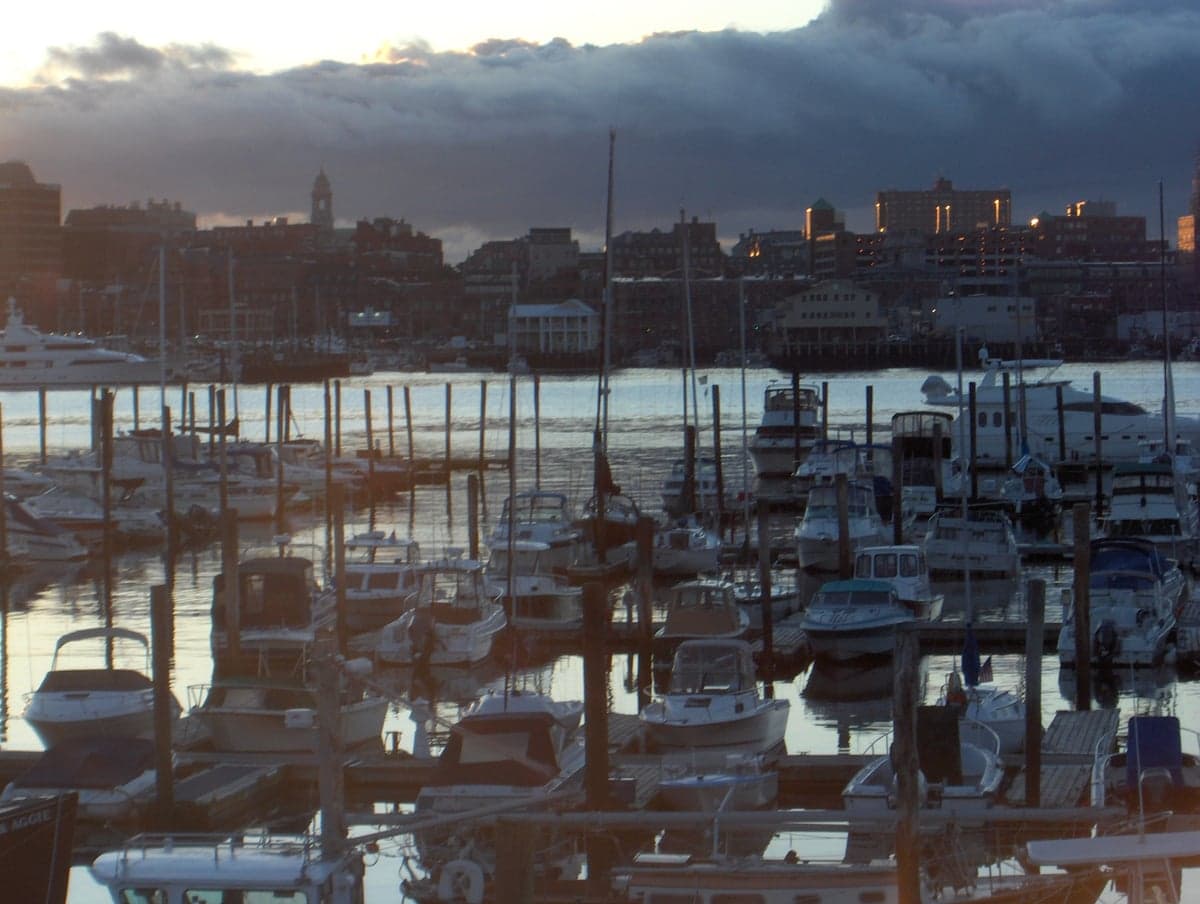
Photo: Wikipedia
Political ClimatePolitical Climate in South Portland, ME
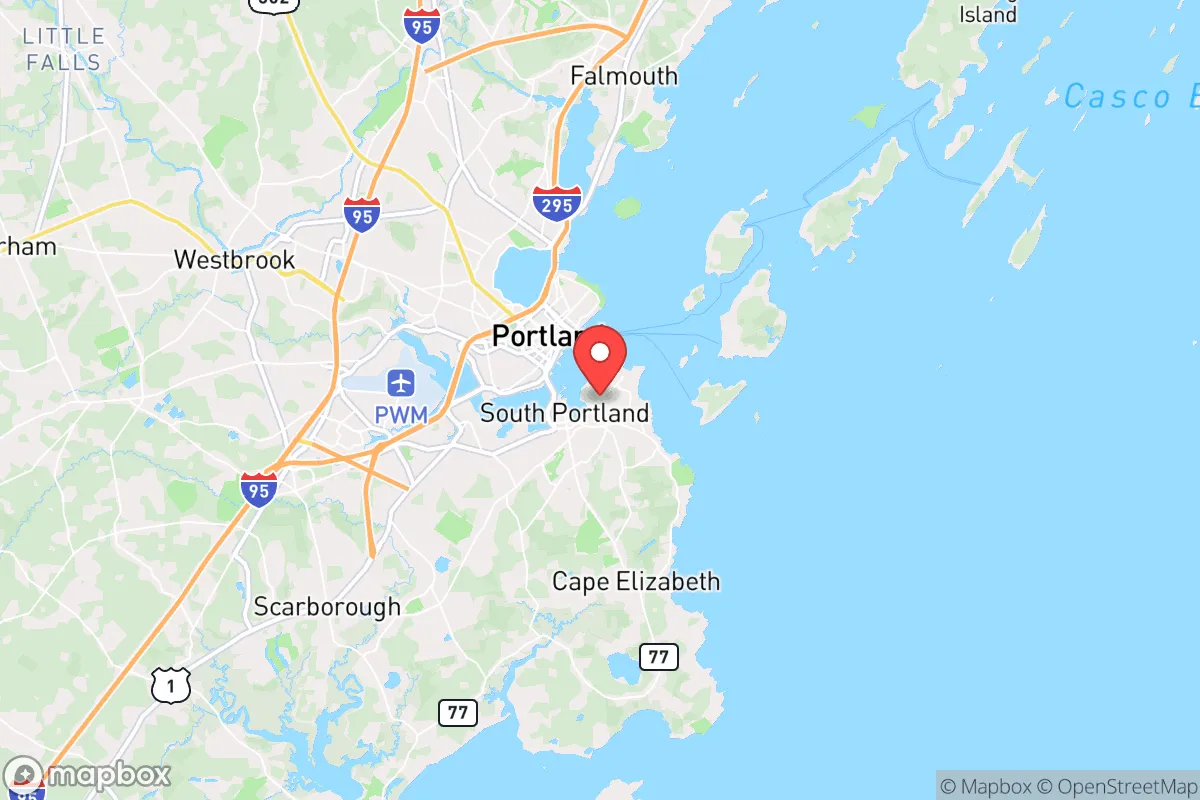
District shown is the primary district for this city’s centroid. Cities may span multiple districts.
Local Political AnalysisPolitical Analysis of South Portland, ME
South Portland, Maine, leans heavily Democrat, with a Cook PVI of D+11, meaning it votes about 11 points more Democratic than the national average. That’s a stark shift from what many of us remember even 20 years ago, when the city was a working-class, independent-minded place where folks voted for the person, not the party. Today, the local political machine is firmly progressive, and the trajectory is toward even more uniformity. If you’re looking for a place where your vote might feel like it actually matters in a competitive race, this isn’t it.
How it compares
To understand South Portland’s politics, you have to look at its neighbors. Just across the Fore River, Portland is even more progressive, with a D+30 lean and a city council that’s openly pushing things like rent control, sanctuary city policies, and defunding police programs. Head north to Scarborough or west to Gorham, and you’ll find more moderate, tax-conscious voters who still value personal freedom over government programs. Even Cape Elizabeth, which is also blue, has a more restrained, “live and let live” vibe than South Portland. The contrast is sharp: in South Portland, you’re increasingly expected to fall in line with the progressive agenda, or at least keep your mouth shut about it.
What this means for residents
For a longtime resident, the biggest concern is how this political climate affects daily freedoms. The city council has been aggressive on zoning and land use, pushing higher-density housing mandates that override neighborhood preferences. There’s a growing list of “feel-good” ordinances—like plastic bag bans and restrictions on gas-powered leaf blowers—that feel less like community choices and more like top-down lifestyle management. Property taxes have climbed steadily to fund expanded city services and school programs that many residents didn’t ask for. And if you’re a small business owner or landlord, you’ve likely felt the squeeze from new regulations and tenant protections that tilt the balance away from property rights. The long-term trend is clear: more government involvement in your home, your business, and your daily choices.
On the cultural side, South Portland has become a place where public dissent from the progressive orthodoxy is risky. School board meetings and city council sessions can get heated, but the dominant voices are uniformly left-leaning. There’s little room for the old-school Maine pragmatism that used to say, “I don’t care what you do, just don’t tell me how to live.” If you value personal liberty, fiscal restraint, and a government that stays out of your way, South Portland is moving in the wrong direction. The next few years will likely bring more of the same—more regulations, higher taxes, and a tighter political consensus that leaves little room for the independent spirit that once defined this city.

State Political ClimatePolitical Climate in Maine
State Political AnalysisPolitical Environment in the State
Maine has long been a political paradox, leaning Democratic in presidential elections but with a fiercely independent streak that often defies national party labels. Over the past 20 years, the state has shifted from a purple battleground to a reliably blue state at the federal level, but that masks a deep internal split: the southern coastal counties and Portland metro area have grown more progressive, while the vast, rural northern and eastern regions have become increasingly Republican. For a conservative considering relocation, the key takeaway is that Maine is not a monolith—your experience will depend heavily on whether you land in Portland or Presque Isle.
Urban vs. rural divide
The political map of Maine is essentially a story of two states. The Portland metro area, including Cumberland County and parts of York County, drives the state’s Democratic lean. Portland itself is a progressive stronghold, with city council resolutions on sanctuary policies and climate activism that would make a conservative’s head spin. In the 2020 presidential election, Cumberland County gave Joe Biden over 60% of the vote, while rural Piscataquis County went for Trump by a similar margin. The divide is stark: Bangor, the third-largest city, is a purple island in a red sea, while Lewiston and Auburn have become swing areas with a growing immigrant population that has shifted local politics. The real action, however, is in the so-called "2nd Congressional District," which covers the northern and eastern two-thirds of the state. This district has voted for Trump twice and is one of the few rural, white, working-class regions in the Northeast that has moved rightward. Towns like Caribou, Presque Isle, and Ellsworth are now reliably Republican, driven by opposition to gun control, energy regulations, and the coastal elite’s cultural dominance.
Policy environment
Maine’s state-level policy is a mixed bag that should give a conservative pause. The tax burden is high: the state has a progressive income tax with a top rate of 7.15%, and property taxes are among the highest in the nation, especially in rural areas where school funding relies heavily on local levies. On the plus side, Maine has no sales tax on groceries or clothing, and the estate tax exemption is only $5.8 million, which can hit family farms and small businesses. The regulatory environment is burdensome, particularly for land use and energy development. The state’s Land Use Planning Commission has broad authority over the unorganized territories, making it difficult to build or develop in the north woods. Education policy is dominated by teachers’ unions, and the state has adopted the controversial "Maine Learning Results" standards, which many conservatives view as progressive indoctrination. Healthcare is heavily regulated, with a state-run insurance exchange and Medicaid expansion under the Affordable Care Act. Election laws are relatively open: same-day voter registration is allowed, and no voter ID is required, which has led to ongoing concerns about election integrity among conservatives. The state also uses ranked-choice voting for federal and state primaries, a system that many on the right view as a tool to dilute conservative votes.
Trajectory & freedom
Over the last decade, Maine has moved decisively in a less free direction, particularly on personal liberties that conservatives value. The most glaring example is gun rights: in 2023, after the Lewiston mass shooting, the legislature passed a suite of restrictions including a 72-hour waiting period for firearm purchases, expanded background checks for private sales, and a "red flag" law that allows courts to temporarily seize guns from individuals deemed a risk. This was a major blow to the state’s long tradition of hunting and gun ownership. On parental rights, the state has moved in the opposite direction of places like Florida: in 2021, Maine passed a law allowing minors as young as 14 to access mental health and substance abuse treatment without parental consent, and schools are not required to notify parents if a child changes their gender identity or pronouns. The state also has a "shield law" protecting providers who perform gender-affirming care for out-of-state minors. On medical freedom, Maine imposed some of the longest-lasting COVID-19 mandates in the Northeast, including a vaccine mandate for healthcare workers that remained in effect until 2023. Property rights are under constant pressure from environmental regulations, particularly the Maine DEP’s Site Location of Development Law, which gives the state broad discretion to block or delay projects. The overall trajectory is clear: the state government in Augusta is expanding its reach into areas that many conservatives consider private or local matters.
Civil unrest & political movements
Maine has seen its share of political flashpoints, though they tend to be more subdued than in larger states. The most significant recent unrest was the Lewiston mass shooting in October 2023, which killed 18 people and sparked intense debate over gun laws. The shooter, an Army reservist with a history of mental health issues, had been reported to law enforcement but was not disarmed under the state’s weak pre-existing laws. The aftermath saw massive protests from gun control advocates in Portland and Augusta, while rural counties held counter-protests defending the Second Amendment. The state also has a growing "Maine 2nd Amendment Coalition" that has become a powerful lobbying force. On the left, the Maine People’s Alliance and the Sierra Club are highly active, pushing for renewable energy mandates and opposing the proposed CMP corridor, a hydropower transmission line from Quebec that became a major political battleground. Immigration politics have flared in Lewiston, where a surge of Somali and African immigrants over the past decade has strained social services and schools, leading to tensions that have been exploited by both sides. The state has a sanctuary policy in Portland and several other cities, meaning local law enforcement does not cooperate with ICE detainers. Election integrity remains a hot-button issue: in 2020, Maine was one of the few states to use ranked-choice voting for the presidential election, and the 2nd Congressional District race was decided by just 6,000 votes, leading to ongoing calls for reform from the right.
Projection
Looking ahead 5-10 years, the trends are not favorable for conservatives moving to Maine. The state is experiencing a demographic shift driven by in-migration from Massachusetts, New York, and other blue states, particularly to the southern coast and the Portland suburbs. These newcomers tend to be wealthier, more educated, and more progressive, and they are voting in ways that reinforce the coastal blue dominance. Meanwhile, the rural northern counties are losing population as young people leave for jobs elsewhere, which will only shrink the Republican base. The state’s tax and regulatory environment is unlikely to improve, as the Democratic majority in Augusta shows no appetite for cutting taxes or rolling back regulations. The gun rights battle is likely to continue, with further restrictions possible after the Lewiston tragedy. On the positive side for conservatives, the 2nd Congressional District will remain competitive, and the state’s independent streak means that a strong Republican candidate can still win statewide office, as Governor Paul LePage did for two terms. But the long-term trajectory is toward a more progressive, government-heavy state, particularly on social issues and personal freedoms.
For a conservative considering a move to Maine, the bottom line is this: choose your location carefully. If you want a community that aligns with your values, look to the rural north and east—places like Houlton, Dover-Foxcroft, or Machias—where the culture is still rooted in self-reliance, hunting, and local control. Avoid the Portland metro area and the southern coast unless you are prepared to be a political minority. Be aware that the state government will continue to push policies that restrict your freedoms, from gun ownership to parental rights to property use. Maine is a beautiful state with a strong sense of place, but it is not the libertarian paradise some imagine. It is a state where you will need to fight for your values at the local level, and where the political winds are blowing against you. If you are willing to engage in that fight, you will find kindred spirits. If you are looking for a state that already reflects your worldview, you may want to look further south or west.
* Values derived from national, state, county, city and local statistics and may differ in a specific area. Last updated: 2026-05-02T01:37:09.000Z
Narrative content on this page is AI-generated and may contain mistakes. Verify any details that matter before acting on them.
ReloMaps may earn a commission from affiliate links at no extra cost to you.

