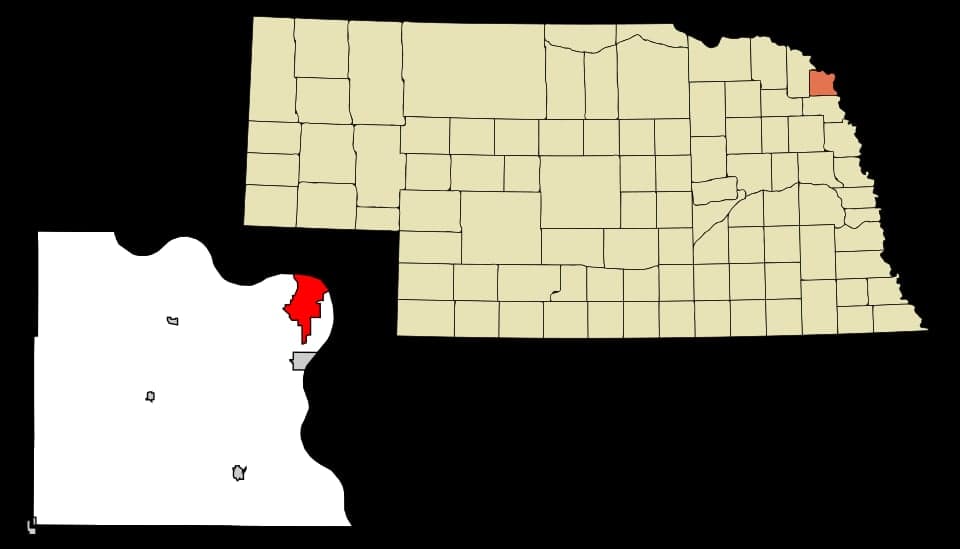
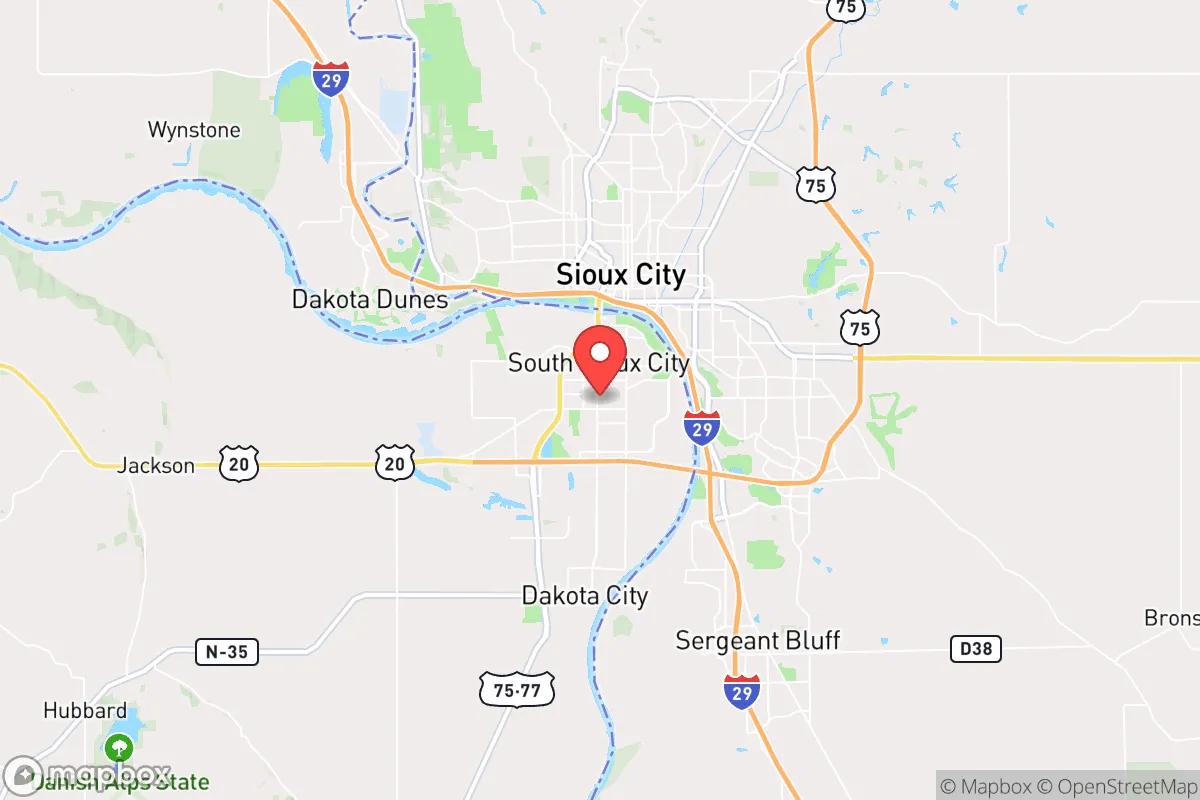
Photo: Wikipedia
Strategic Assessment of South Sioux City, NE
Workable tactical position. Some exposure to population density or targets, but generally defensible in a crisis.
What does the Strategic Assessment tell us?
Our Strategic Assessment grades tactical survivability of an area. Major population centers, military targets, fallout zones, natural disasters, and border exposure all drive risk — lower exposure means a more defensible position in a crisis.
This is heavily inspired by Joel Skousen's Strategic Relocation book. Highly recommended you checkout the book ($)What does this tell us?
Our Strategic Assessment grades tactical survivability of an area. Major population centers, military targets, fallout zones, natural disasters, and border exposure all drive risk — lower exposure means a more defensible position in a crisis.
This is heavily inspired by Joel Skousen's Strategic Relocation book. Highly recommended you checkout the book ($)Strategic Pillars

Key Distances
Regional Safe Places
Below is our recommended "safe zones" in Nebraska and the surrounding area based on our strategic heuristics. For most people, it's unrealistic to live in a “safe zone” full-time due to work, family or other personal reasons. They tend to be more rural. However, many of these areas are perfect for second homes and retreat properties that double as a vacation home or even a short-term rental.
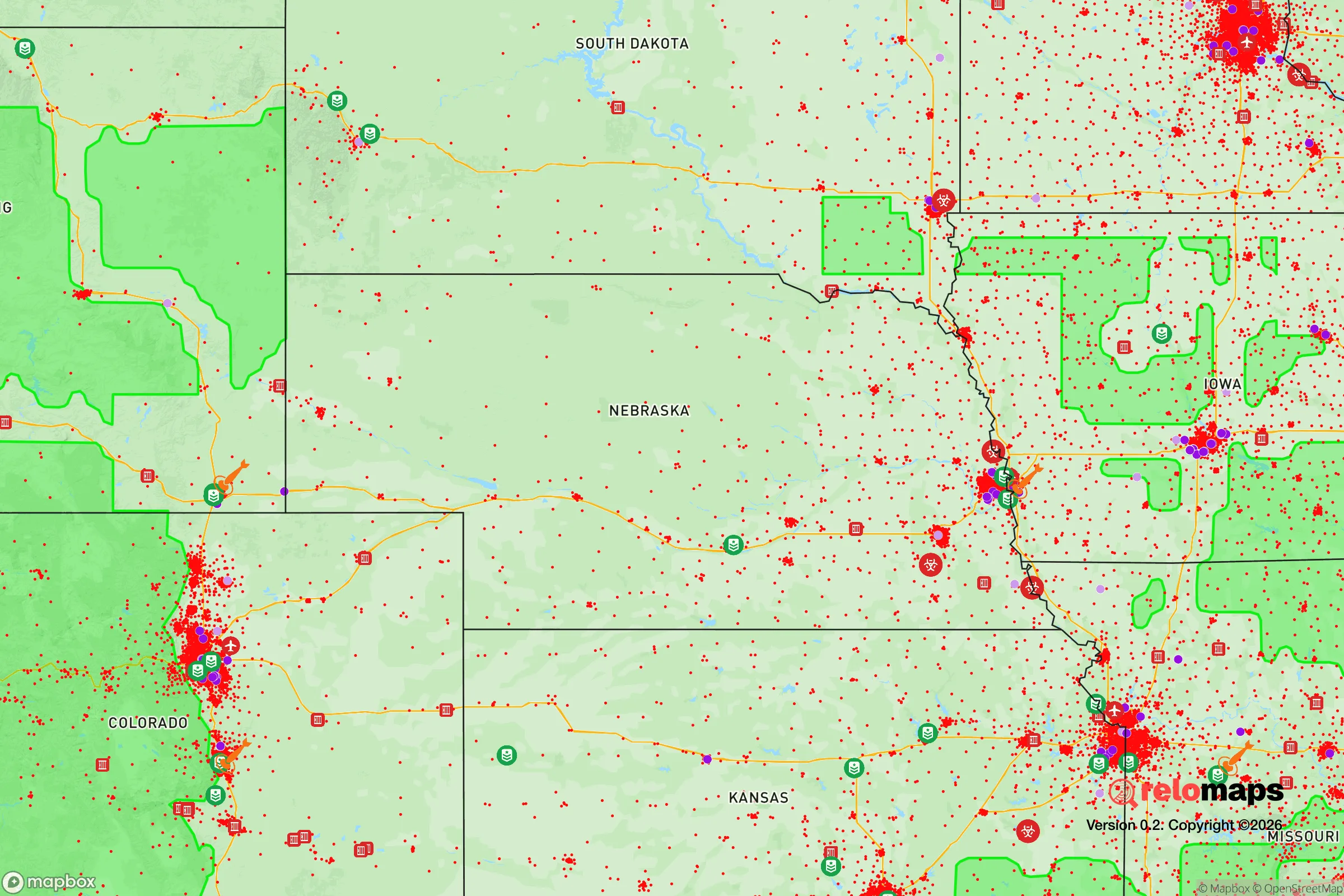
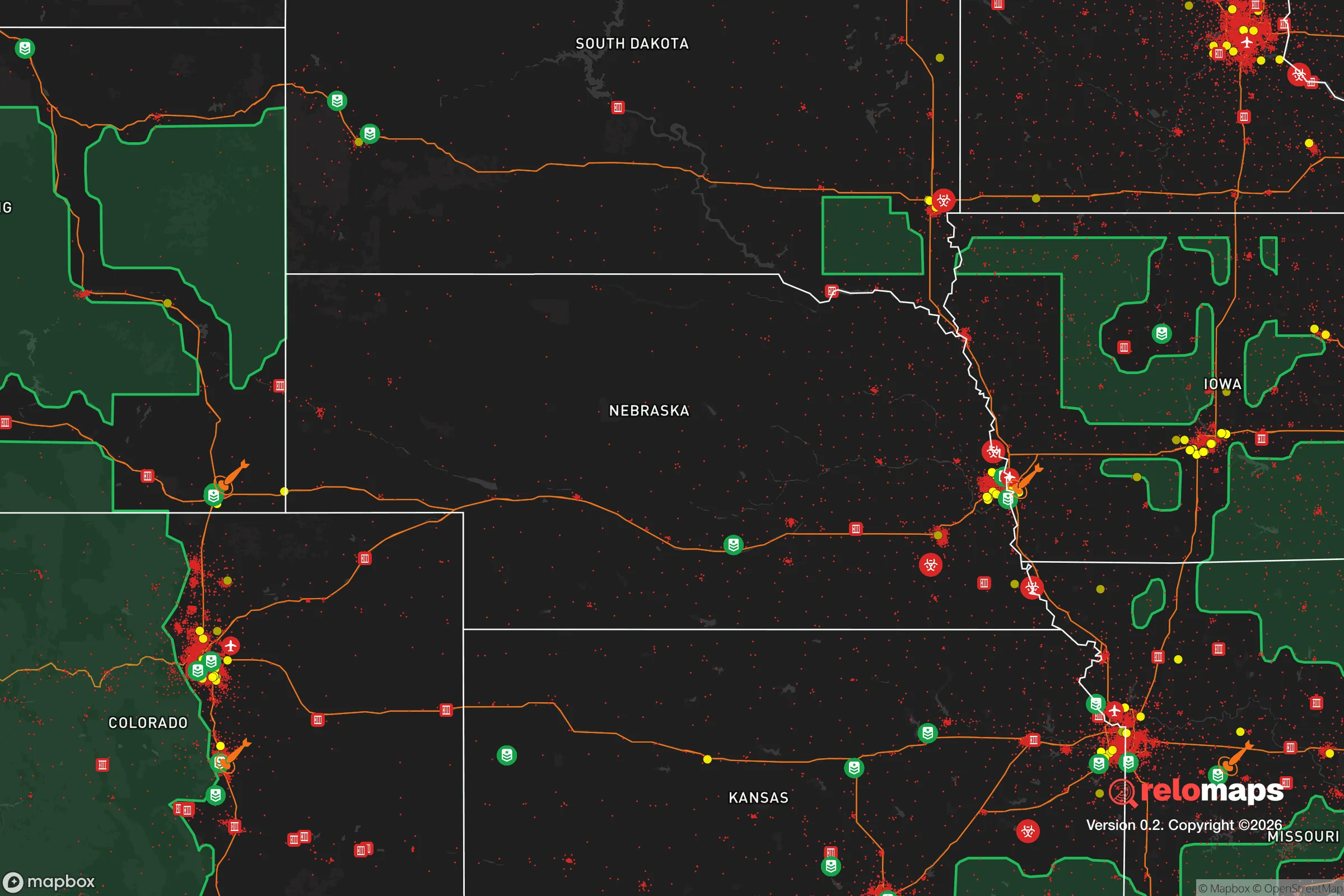


Important Note: For informational purposes only. This does not mean nothing bad ever happens in the green zones. Please use common sense. This is based on public data and modeled with AI. We tried to take a conservative approach but mistakes happen. We update this regularly as new information becomes available.
Solar Generator Recommendations
Backup power matters more here than in safer locations. We've picked three solar generators across budgets and capacity tiers — start with the budget unit if you only need a few essentials, or step up if you want to run a fridge and HVAC for days at a time.

Jackery Portable Power Station Explorer 300
Budget OptionPower on the Go: Weighing only 11 lbs, it's convenient to set up and store with book-sized foldable solar panels

BLUETTI Portable Power Station AC180
Designed for both indoor and outdoor scenarios, AC180 is highly capable as it has a robost capacity and continuous output power.

EF ECOFLOW DELTA Pro Ultra Power Station
Upgraded PickEcoFlow DELTA Pro Ultra is a whole-home energy system designed to grow with your family. Integrated with the Smart Home Panel 2, it scales to meet your evolving energy needs — keeping your home powered, intelligent, and secure through every stage of life.
We earn a commission, at no additional cost to you.
Strategic Assessment Analysis
South Sioux City, Nebraska, sits in a strategic sweet spot that few relocators fully appreciate: it offers the logistical muscle of a regional transportation hub while remaining physically removed from the high-risk density of major metropolitan targets. The city’s position along the Missouri River, directly across from Sioux City, Iowa, gives it access to interstate commerce and emergency supply chains, yet its Nebraska-side location keeps it out of the immediate blast radius of any theoretical strike on Sioux City’s rail yards or industrial facilities. For someone thinking in terms of long-term resilience—whether from civil unrest, supply chain collapse, or a mass casualty event—this is a place where you can keep one foot in the working world and one foot in a prepared posture.
Geographic position and natural advantages for long-term survival
The Missouri River valley provides a natural defensive corridor and a reliable freshwater source, both of which are non-negotiable in a prolonged disruption scenario. South Sioux City sits on the Nebraska side of the river, which means it benefits from the agricultural output of the surrounding Dakota County—corn, soybeans, and livestock operations are within a 20-minute drive in any direction. The land is flat but not featureless; the river bluffs to the east offer elevated vantage points and some natural cover, while the floodplain to the west gives you room to spread out if you need to establish a garden or a small holding. The climate is continental, with cold winters that act as a natural population filter—people who aren’t serious about staying tend to leave. That’s a feature, not a bug, for anyone looking to build a resilient community. The area is also far enough from the major fault lines and hurricane zones that you’re not dealing with recurring natural disasters that could wipe out your infrastructure in a single season.
Risks, exposures, and proximity to fallout-relevant landmarks
Let’s be honest about the downsides. South Sioux City is about 90 miles from Offutt Air Force Base near Omaha, which is a Strategic Command (STRATCOM) headquarters—that’s a Tier 1 target in any major conflict. If things go kinetic at the national level, the fallout plume from a strike on Offutt could theoretically drift northwest, but prevailing winds in this region typically push eastward, which puts South Sioux City on the safer side of that equation. Closer to home, the rail lines running through Sioux City proper are a concern: they carry hazardous materials, and a derailment or intentional sabotage could create a localized chemical or fire hazard. The city’s wastewater treatment plant and the ethanol facilities in the broader Siouxland area are also potential points of failure. But compared to living within the blast radius of a major city like Chicago, Denver, or even Omaha itself, the exposure here is manageable. The real risk is less about a single catastrophic event and more about the cascading effects of a regional grid failure—if the power goes down for weeks, you’ll need to be self-sufficient, because the local grocery stores won’t be restocked from a national supply chain that’s already broken.
Practical resilience for a relocator: food, water, energy, and defensibility
For someone serious about prepping, South Sioux City checks several hard boxes. Water is abundant—the Missouri River is a year-round source, and the local aquifer is deep and reliable. You’ll want a good filtration system (the river carries agricultural runoff), but the raw availability is better than 90% of the country. Food production is straightforward: the growing season runs from late April to early October, and the soil in the river valley is rich loam. You can put in a substantial garden on a half-acre lot, and there are dozens of small farms within a 10-mile radius that will sell you eggs, meat, and produce directly if you build relationships now. Energy resilience is the weak spot. The grid here is tied to the regional MISO system, which has had reliability issues during extreme cold snaps—the 2021 winter storm that knocked out power across the Plains hit this area hard. Solar is viable (about 200 sunny days per year), but you’ll want battery storage and a backup generator, preferably dual-fuel. Defensibility is decent but not fortress-level. The city itself is laid out in a grid, which makes it hard to secure a perimeter, but the surrounding rural areas offer better options. Look at properties along the river bluffs or on the outskirts toward Jackson or Emerson—those give you standoff distance and natural chokepoints on the roads. The local law enforcement presence is thin (Dakota County has about 20 deputies for the whole county), so in a breakdown scenario, you’re largely on your own. That’s not necessarily a negative if you’re prepared, but it means you need to be your own first responder.
The overall strategic picture for South Sioux City is one of calculated trade-offs. You’re not in a remote mountain redoubt, and you’re not in a fortified compound—you’re in a working-class river town that sits at the intersection of agricultural abundance and industrial vulnerability. The upside is that you can live a normal life here while maintaining a high level of readiness. The downside is that you’re close enough to a regional population center (Sioux City metro, about 180,000 people) that a major civil unrest event could spill over the bridge. But if you’re willing to put in the work—dig a well, stockpile supplies, build community with like-minded neighbors—this area offers a realistic path to long-term survival without the isolation that drives most people out of the prepper lifestyle within two years. It’s not a bug-out location; it’s a live-in location that gives you a fighting chance when things go sideways.

* Values derived from national, state, county, city and local statistics and may differ in a specific area. Last updated: 2026-04-19T07:51:22.000Z
Narrative content on this page is AI-generated and may contain mistakes. Verify any details that matter before acting on them.
ReloMaps may earn a commission from affiliate links at no extra cost to you.

