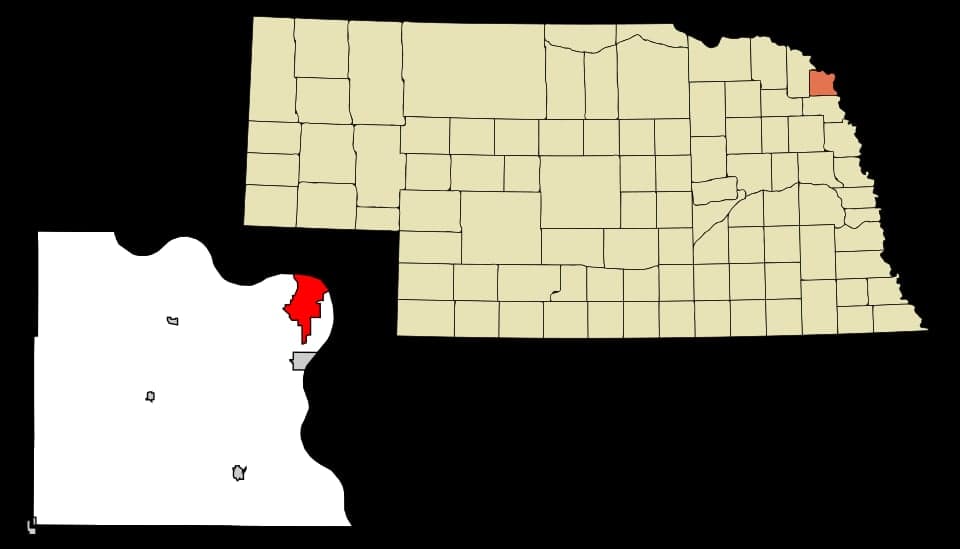
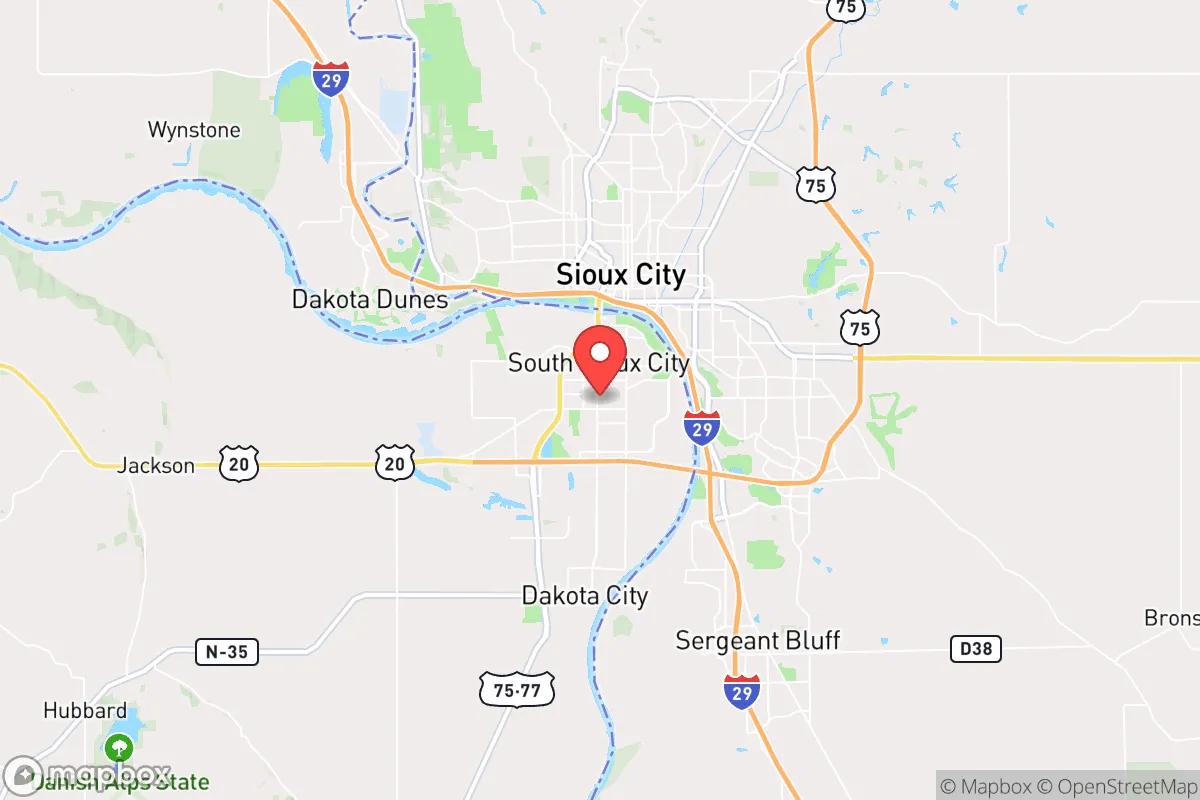
Photo: Wikipedia
Quality of Life in South Sioux City, NE
A high quality of life with strong walkability, manageable living costs, healthy neighborhood signals, and solid amenity access.
What does Quality of Life tell us?
Quality of Life blends cost of living, nearby amenities, socioeconomic signals, and neighborhood character. City-level scores represent the whole municipality; individual neighborhoods can differ.
What does this tell us?
Quality of Life blends cost of living, nearby amenities, socioeconomic signals, and neighborhood character. City-level scores represent the whole municipality; individual neighborhoods can differ.
Cost of Living
21% below national average
The Real Cost of Living in South Sioux City, NE for 2026
| Tier | Individual | Family (4) |
|---|---|---|
| Survival | $17k | $32k |
| Comfortable | $31k | $46k |
| Luxury | $92k+ | $143k+ |
| Elite (Top 5%) | $109k+ | $168k+ |
149%
The Area Signal
A metric tracking the socioeconomic signals of the area.


Hobbies
Explore the areaGroceries
5 within 10 miles
Gas
0 within 10 miles
Hospital
3 within 20 miles
Airport
MCI — Kansas City International
Post Office
USPS — Sioux City, IA
Critical Amenities
Quality-of-Life Analysis
South Sioux City, Nebraska, offers a notably affordable quality of life that attracts a mix of working families, first-time homebuyers, and retirees seeking a lower cost of living without sacrificing proximity to a mid-sized metro area. With a cost-of-living index of 79 (well below the U.S. average of 100), the city provides a financial cushion that is increasingly rare in the broader region. The population skews younger and more diverse than the state average, with a significant Hispanic community and a growing number of commuters who work across the Missouri River in Sioux City, Iowa, but prefer Nebraska’s lower property taxes and quieter residential streets.
How housing costs and everyday expenses compare to nearby cities
The most compelling draw for new residents is the housing market. The median home value in South Sioux City sits at $160,900, roughly 35% lower than the national median and significantly cheaper than comparable homes in Sioux City, Iowa, where the median hovers around $185,000. Renters also benefit: the median rent of $1,083 is about $200 less per month than the national average, making it feasible for single-income households and young professionals to live comfortably. Utilities, groceries, and transportation costs all track below the national index, with the average commute clocking in at just 19 minutes — a short, stress-free drive that contrasts sharply with the 30-minute-plus commutes common in larger Nebraska metros like Omaha or Lincoln. For buyers, the trade-off is a smaller inventory of newer construction; many homes are older ranch-style or split-level properties, though recent developments near Dakota Avenue have added more modern options.
What daily life is like for families: schools, parks, and local amenities
Daily life in South Sioux City revolves around a compact, car-dependent layout with most errands concentrated along the Dakota Avenue corridor. The South Sioux City Community School District serves the area with four elementary schools, one middle school, and South Sioux City High School, which offers dual-credit programs and a strong athletics reputation. For recreation, the city maintains several parks — Riverfront Park along the Missouri River provides walking trails, a splash pad, and seasonal events like the annual Riverfront Festival. Grocery shopping, dining, and retail are limited compared to a larger metro, but residents drive 10 minutes into Sioux City, Iowa, for big-box stores, the Southern Hills Mall, and the Sioux City Explorers minor-league baseball games. Healthcare access is solid: UnityPoint Health — St. Luke’s and MercyOne Siouxland Medical Center are both within a 15-minute drive. The overall rhythm is quiet and family-oriented, with a slower pace than Sioux City proper but enough nearby amenities to avoid feeling isolated.
South Sioux City is best suited for cost-conscious households who prioritize affordability and a short commute over urban density or high-end retail. First-time homebuyers, young families, and retirees on fixed incomes will find the low housing costs and 19-minute average commute especially attractive. Those seeking vibrant nightlife, extensive cultural venues, or walkable neighborhoods should look to larger cities, but for anyone wanting a stable, budget-friendly base within easy reach of a regional job market, South Sioux City delivers a practical and comfortable lifestyle.

Crime in South Sioux City, NE
Generally safer than 57% of comparable U.S. locations.
Violent CrimeViolent Crime Analysis
Property CrimeProperty Crime Analysis
Crime Analysis
South Sioux City, Nebraska, presents a mixed safety profile for prospective residents. The city’s violent crime rate of 165.7 incidents per 100,000 residents is notably lower than the national average, but its property crime rate of 1,959.5 per 100,000 significantly exceeds both state and national benchmarks. While the risk of violent victimization is relatively low, the elevated property crime numbers point to a persistent issue with theft, burglary, and vehicle-related offenses that demands attention from anyone considering a move to the area.
Crime in context
When compared to Nebraska’s statewide violent crime rate of roughly 280 per 100,000, South Sioux City’s figure of 165.7 is about 40% lower, placing it among the safer communities in the state for violent offenses. However, the property crime rate of 1,959.5 per 100,000 is nearly double the Nebraska average of approximately 1,100 per 100,000 and well above the national median. This disparity is significant: a resident’s likelihood of experiencing a property crime in South Sioux City is substantially higher than in most other Nebraska communities of similar size. The city’s position as a border community adjacent to Sioux City, Iowa, and its role as a regional commercial hub likely contribute to these elevated property crime figures, as transient populations and cross-border activity can increase opportunities for theft.
What residents experience
Daily life for South Sioux City residents is shaped more by property crime concerns than by fear of violent attack. The most common incidents reported include thefts from vehicles, burglaries of unoccupied homes and storage units, and occasional shoplifting at retail locations along the Dakota Avenue corridor. Violent crime, while present, tends to be concentrated in specific circumstances rather than random acts against the public. Residents typically report feeling safe walking in their neighborhoods during daylight hours, though caution is advised after dark in areas with lower foot traffic. The local police department maintains a visible presence and has implemented community policing initiatives, but the sheer volume of property crime calls can stretch resources thin. For families, the primary practical concern is securing homes, vehicles, and outdoor belongings against theft rather than worrying about personal safety while out and about.
Neighborhood-level variation in crime is notable but not extreme. Areas closer to the Missouri River and the downtown core near the interstate exchange tend to report higher concentrations of both property and violent incidents, while the newer residential subdivisions on the city’s western and northern edges see fewer calls for service. The Dakota County Sheriff’s Office also provides supplemental patrols in unincorporated areas just outside city limits, where crime rates are generally lower. Prospective renters and homebuyers should examine block-level crime maps and consider visiting potential neighborhoods at different times of day to gauge activity levels and lighting conditions. Overall, South Sioux City offers a relatively safe environment for those who take standard precautions, but the elevated property crime rate is a legitimate factor to weigh in any relocation decision.
* Values derived from national, state, county, city and local statistics and may differ in a specific area. Last updated: 2026-04-19T07:51:22.000Z
Narrative content on this page is AI-generated and may contain mistakes. Verify any details that matter before acting on them.
ReloMaps may earn a commission from affiliate links at no extra cost to you.

