
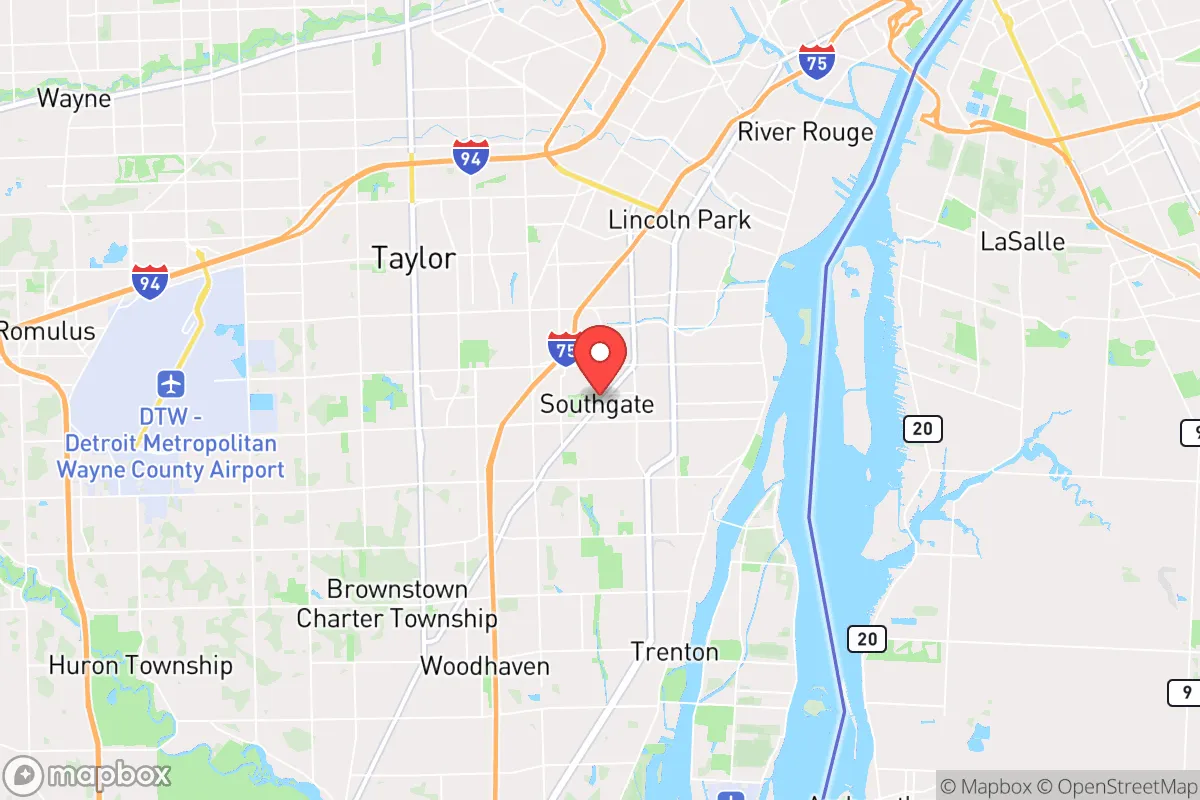
Photo: Wikipedia
Personal Sovereignty in Southgate, MI
Strong independent fundamentals that actively favor personal liberty and low regulation.
What does Personal Sovereignty tell us?
Personal Sovereignty measures your capacity for self-reliance and independence with minimal government friction. Higher scores mean fewer barriers between you and the way you want to live... but it assumes you have the space you need and good neighbors.
What does this tell us?
Personal Sovereignty measures your capacity for self-reliance and independence with minimal government friction. Higher scores mean fewer barriers between you and the way you want to live... but it assumes you have the space you need and good neighbors.
State Policy
Energy independence: Importer (20% of energy produced in-state)
Personal Liberty
Homesteading

Personal Liberty Analysis
Southgate, Michigan, sits within a state that has increasingly centralized authority in Lansing, creating a mixed environment for personal sovereignty that demands careful evaluation. While the city itself does not impose the most aggressive restrictions found in larger urban centers like Detroit or Ann Arbor, residents must navigate a web of state-level mandates that limit autonomy in areas from taxation to self-defense. For those prioritizing maximum personal freedom and minimal government overreach, Southgate offers a baseline of stability within a state that has trended toward progressive control, but it is far from a libertarian haven. The key is understanding where local conditions can be leveraged to preserve independence despite broader state policies.
Tax burden and regulatory posture in Southgate and Michigan
Michigan’s tax structure imposes a significant drag on personal sovereignty, with a flat state income tax of 4.25% and a sales tax of 6% that apply uniformly across Southgate. Property taxes in the city are levied at roughly 1.5% of assessed value, which is moderate by national standards but still represents a substantial annual cost for homeowners. The state’s regulatory posture is characterized by heavy oversight in areas like environmental rules, building codes, and business licensing, which can frustrate those seeking to operate independently. Southgate itself maintains a standard municipal code with zoning and permit requirements that limit what residents can do on their own property without approval. For a survivalist mindset, the cumulative tax burden—combined with state fees for vehicle registration, driver’s licenses, and professional certifications—reduces the disposable income available for self-reliance investments like land, supplies, or off-grid infrastructure. Compared to states with no income tax like Texas or Florida, Michigan’s fiscal environment is a clear disadvantage for those seeking to maximize financial autonomy.
Self-defense rights and gun law specifics in Southgate
Michigan’s gun laws have tightened considerably in recent years, directly impacting personal sovereignty for Southgate residents. The state now requires a license to purchase a handgun (purchase permit or concealed pistol license), universal background checks for all firearm sales, and a 30-day waiting period for handgun purchases. Open carry is legal without a permit, but local ordinances in Southgate may restrict carrying in certain public buildings or parks. The state also has a red flag law (extreme risk protection order) that allows authorities to seize firearms based on a civil complaint without a criminal conviction—a major concern for those wary of government overreach. Concealed carry requires a license, which involves a background check, fingerprinting, and a training course, but Michigan is a shall-issue state, meaning permits are granted if statutory requirements are met. Stand-your-ground laws are not explicitly codified in Michigan, but the state does have a castle doctrine that protects the use of deadly force in one’s home. For preppers, the trend is clear: Michigan is moving toward more restrictions, not less, and Southgate residents must comply with state mandates that erode the ability to arm themselves without bureaucratic hurdles. Neighboring Ohio or Indiana offer more permissive environments for those willing to relocate.
Self-reliance and homesteading viability in Southgate
Southgate is a densely developed inner-ring suburb of Detroit, with typical residential lot sizes ranging from 0.1 to 0.25 acres—far too small for meaningful homesteading or self-sufficiency. Zoning regulations restrict livestock, with chickens often requiring special permits and larger animals like goats or pigs outright prohibited. The city’s code also limits the construction of accessory structures like sheds or greenhouses without permits, and off-grid systems such as solar panels or rainwater collection must meet municipal and state standards that can be costly and bureaucratic. Soil quality in the area is variable, with many lots having compacted urban fill that makes gardening challenging without raised beds. For those serious about food production, water independence, or energy autonomy, Southgate is not viable. The best option within Michigan is to look north or west to rural townships in counties like Lapeer, Livingston, or Washtenaw, where acreage is affordable and zoning is more permissive. Within Southgate, the focus must shift to urban prepping—stockpiling supplies, building community networks, and securing a home with defensible features—rather than land-based self-reliance. The city’s proximity to the Detroit River also raises concerns about water quality and infrastructure vulnerability, which a survivalist must factor into any long-term plan.
Personal liberties: parental rights, medical autonomy, speech, and property
Parental rights in Michigan have been under pressure, with state mandates on school curriculum, vaccination requirements, and health policies that override family decisions. Southgate Community Schools follow state directives, including comprehensive sex education standards and COVID-era masking or vaccine mandates that many parents found intrusive. Medical autonomy is similarly constrained: Michigan has a broad vaccine mandate for school attendance, and the state’s emergency powers during the pandemic allowed the governor to impose lockdowns, business closures, and gathering limits that were among the strictest in the Midwest. Free speech is protected under the First Amendment, but local ordinances in Southgate regulate noise, signage, and public assembly, which can be used to limit protest or expression. Property rights are subject to eminent domain and zoning restrictions that give the city broad authority over land use, including the ability to condemn properties deemed blighted. For those who value maximum personal liberty, Michigan’s legal framework is increasingly hostile to individual choice, particularly in health and education. Southgate’s local government has not been notably aggressive in pushing these limits, but it also offers no buffer against state-level overreach. The overall environment is one where residents must be vigilant and proactive to preserve their rights, especially as state policies continue to trend toward centralized control.
In the broader context of personal sovereignty, Southgate ranks as a moderate-to-low option for those with a survivalist or prepper mindset. The city provides basic stability and a relatively safe suburban environment, but the combination of Michigan’s tax burden, restrictive gun laws, limited homesteading potential, and eroding personal liberties creates a net negative for anyone seeking true autonomy. For comparison, moving to a state like Tennessee, Idaho, or Montana would offer significantly more freedom in taxation, self-defense, and regulatory independence. Within Michigan, rural counties north of the 45th parallel provide better opportunities for self-reliance, though they come with their own state-level constraints. Southgate can work as a temporary base for those tied to the Detroit metro area for work or family, but it is not a long-term destination for anyone serious about maximizing personal sovereignty in an era of increasing government overreach.

* Values derived from national, state, county, city and local statistics and may differ in a specific area. Last updated: 2026-04-30T02:53:12.000Z
Narrative content on this page is AI-generated and may contain mistakes. Verify any details that matter before acting on them.
ReloMaps may earn a commission from affiliate links at no extra cost to you.

