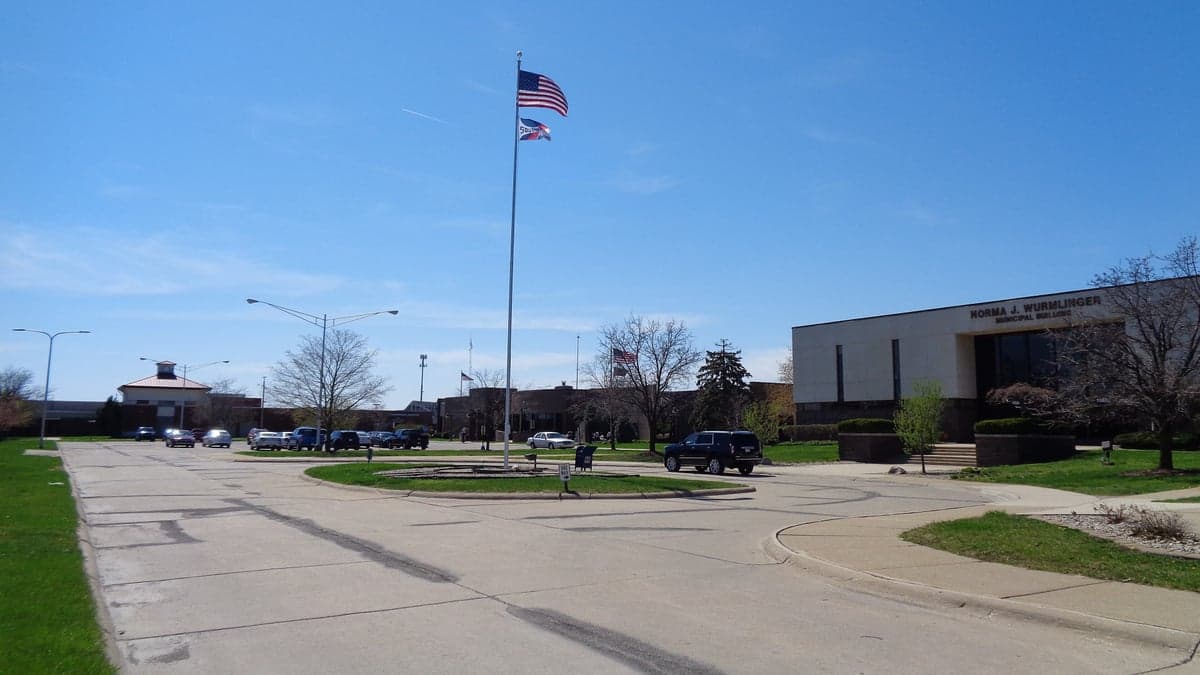
Photo: Wikipedia
Political ClimatePolitical Climate in Southgate, MI
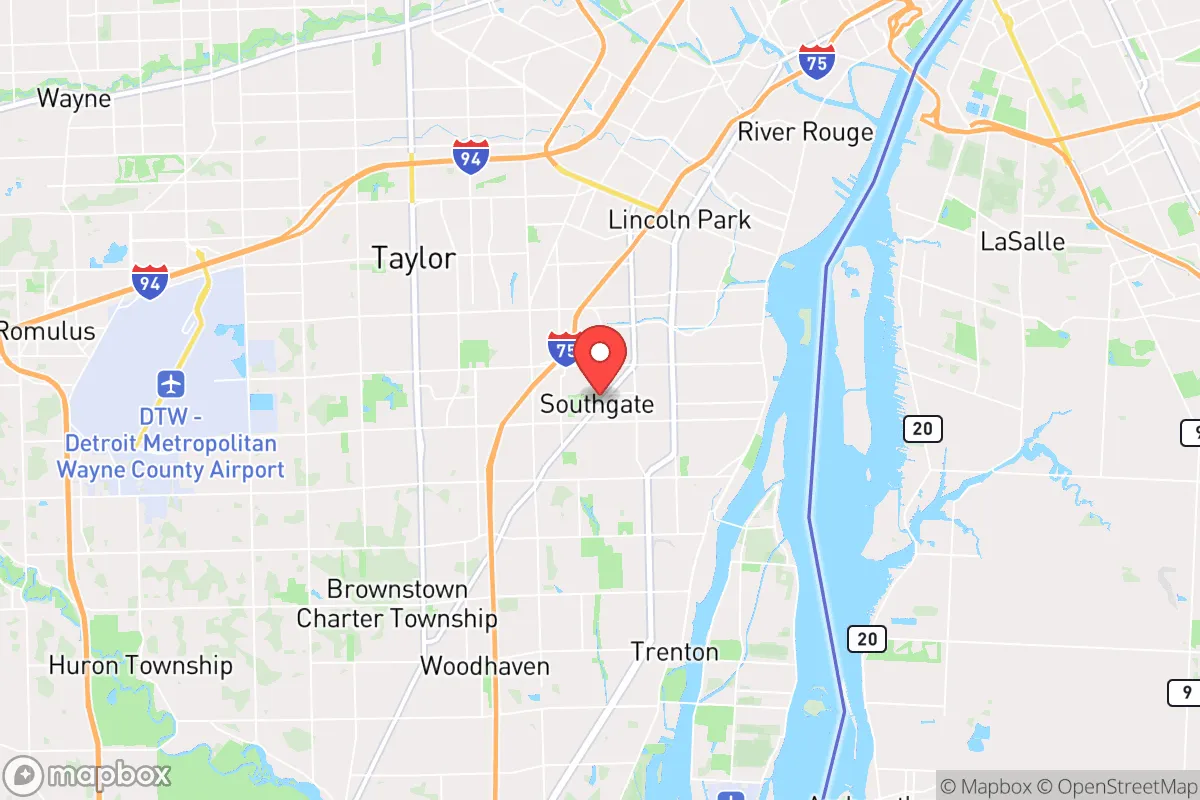
District shown is the primary district for this city’s centroid. Cities may span multiple districts.
Local Political AnalysisPolitical Analysis of Southgate, MI
Southgate, Michigan, sits in a deep blue pocket of Wayne County with a Cook PVI of D+22, meaning it votes about 22 points more Democratic than the national average. That’s not just a number—it’s a reality you feel in local elections, school board meetings, and even how the city handles everyday ordinances. For a long time, this was a working-class, union-heavy town where folks voted Democrat out of habit and loyalty, not because they loved every progressive idea coming down the pike. But over the last decade or so, you’ve seen a quiet shift: more residents grumbling about taxes, zoning overreach, and a sense that the city’s leadership is drifting leftward on social issues, even if the old guard still holds the titles.
How it compares
Drive ten minutes west to Allen Park or fifteen minutes south to Brownstown Township, and you’ll hit communities that lean more conservative—places where the 2020 election results flipped closer to 50-50 or even red. Southgate, by contrast, remains a Democratic stronghold, but it’s not monolithic. The city’s precincts show a split: the older, more established neighborhoods near the Ecorse Creek tend to vote more moderate, while the apartment-heavy areas closer to I-75 and the Downriver corridor lean hard blue. Surrounding towns like Wyandotte and Trenton have their own political flavors, but Southgate stands out for its consistent, almost stubborn Democratic tilt—even as neighboring communities have inched rightward on issues like school choice and property tax caps.
What this means for residents
If you’re a conservative-leaning resident, the political climate here can feel like a slow squeeze. The city council and school board have pushed through policies that raise eyebrows—like expanded public funding for programs that feel more like social engineering than education, and zoning changes that prioritize dense, multi-unit housing over single-family lots, which some see as a backdoor to higher taxes and less local control. Property taxes in Wayne County are already among the highest in the state, and Southgate hasn’t been shy about using them to fund initiatives that don’t always align with traditional values. The real concern, though, is the trajectory: as younger, more progressive transplants move in from Detroit and Ann Arbor, the local government’s appetite for regulation—on everything from short-term rentals to lawn care—seems to grow. It’s not a red flag yet, but it’s a yellow one.
On the cultural side, Southgate still holds onto some of its old-school charm. The annual Heritage Days festival and the strong presence of local churches—like St. Pius X and First Presbyterian—offer a counterweight to the progressive drift. But you’ll notice the city’s messaging has shifted: more emphasis on diversity, equity, and inclusion initiatives in public spaces, and less on the kind of straightforward, no-nonsense governance that older residents remember. The police department, for instance, has faced pressure to adopt de-escalation training and community oversight boards, which some see as necessary reforms and others view as unnecessary bureaucracy that ties officers’ hands. For now, Southgate remains a place where you can still have a backyard barbecue without worrying about noise complaints, but the political winds are blowing in a direction that makes you wonder how long that will last. If you value personal freedom and limited government, keep an eye on the next few election cycles—the old guard is retiring, and the new faces aren’t shy about their priorities.

State Political ClimatePolitical Climate in Michigan
State Political AnalysisPolitical Environment in the State
Michigan has shifted from a reliably purple battleground to a state where Democrats now control all levers of power, winning the governorship, both legislative chambers, and the Supreme Court in the 2022 midterms. The state’s overall partisan lean is now a narrow Democratic tilt — roughly D+3 to D+4 in presidential races — but that masks a deep and growing urban-rural chasm. Over the last 10-20 years, the collapse of union-heavy manufacturing and the hollowing out of Detroit’s population have been offset by explosive Democratic growth in the suburbs and the rise of a progressive machine in Lansing, leaving conservatives with a shrinking, though still formidable, base in the exurbs and rural north.
Urban vs. rural divide
The political map of Michigan is a tale of two states. The Democratic coalition is anchored by the “Big Three” metros: Detroit (Wayne County, which alone delivers 20% of the state’s vote and goes 70%+ Democratic), Ann Arbor (Washtenaw County, home to the University of Michigan and a deep-blue enclave), and Grand Rapids (Kent County, which flipped from red to blue in 2020 and has stayed there as the city’s west-side growth has attracted younger, more liberal transplants). On the other side, the Republican base is concentrated in the rural “Thumb” region, the western lakeshore counties like Ottawa and Allegan, and the northern Lower Peninsula — places like Traverse City and Cadillac that vote 60-65% Republican. The critical swing territory is the ring of suburban counties around Detroit — Macomb, Oakland, and Livingston — where Macomb’s blue-collar, Reagan Democrat legacy has been steadily trending left, while Livingston remains a deep-red holdout. The 2022 governor’s race saw Gretchen Whitmer win by 10 points statewide, but she lost Livingston by 18 points and Macomb by only 2, showing how thin the Democratic margin is in these battlegrounds.
Policy environment
Michigan’s policy environment has taken a sharp progressive turn since Democrats won unified control in 2023. The state income tax is a flat 4.25%, but the legislature has repealed the retirement tax and expanded the Earned Income Tax Credit, effectively shifting the tax burden onto higher earners and businesses. Regulatory posture is aggressively pro-union: in 2023, Democrats repealed the state’s “right-to-work” law (which had been in place since 2012) and restored prevailing wage requirements for public construction projects. On education, the state has eliminated the “Read by Grade Three” retention law and expanded school funding formulas that favor traditional public districts over charters and private schools. Healthcare policy is dominated by the expansion of Medicaid under the Affordable Care Act, which now covers 1.2 million Michiganders, and a new state-level prescription drug affordability board that can cap prices. Election laws have been overhauled: Proposal 2 in 2022 enshrined nine days of early voting, automatic voter registration, and no-excuse absentee voting into the state constitution, making Michigan one of the most accessible voting states in the Midwest. For a conservative, the policy environment is increasingly hostile to school choice, labor freedom, and election integrity.
Trajectory & freedom
Michigan is becoming less free by any standard measure of personal liberty, especially for gun owners, parents, and taxpayers. In 2023, the legislature passed a package of gun control laws that include universal background checks, safe storage requirements, and a “red flag” law allowing courts to temporarily confiscate firearms from individuals deemed a threat — all signed by Governor Whitmer. On parental rights, the state has codified LGBTQ+ inclusive curriculum standards and expanded access to abortion through the Reproductive Health Act of 2023, which repealed a 1931 abortion ban and removed nearly all restrictions. Medical autonomy was further constrained by a new law requiring insurance coverage for gender-affirming care, overriding parental consent in some cases. Property rights took a hit with the passage of a new “clean energy” siting law that allows the state to override local zoning for wind and solar projects, effectively stripping townships of control over their own land use. Tax freedom is eroding: while the income tax rate hasn’t increased, the elimination of the retirement tax means the state is now taxing more income overall. The only bright spot for conservatives is the passage of a 2024 law expanding the homestead property tax exemption for seniors, but that’s a small concession in a sea of progressive legislation.
Civil unrest & political movements
Michigan has been a flashpoint for political activism on both sides. The most visible recent unrest was the 2020 “Operation Gridlock” protest at the state capitol in Lansing, where thousands of armed protesters, many from the “Michigan Liberty Militia” and other groups, demonstrated against Whitmer’s COVID-19 lockdown orders. That event, along with the foiled 2020 kidnapping plot against Whitmer, put Michigan at the center of the national debate over government overreach. Since then, the left has organized aggressively: the “Michigan Democratic Party” has built a permanent field operation in the suburbs, while groups like “Progress Michigan” and “Michigan United” push for rent control, police reform, and sanctuary policies. Immigration politics are relatively quiet compared to border states, but Detroit and Ann Arbor have declared themselves “sanctuary cities,” limiting cooperation with ICE. Election integrity remains a hot-button issue: the 2020 and 2022 elections saw numerous lawsuits over absentee ballot procedures, and the 2024 cycle is already seeing Republican-led calls for stricter voter ID laws, which Democrats have blocked. The “Michigan Conservative Coalition” and “Moms for Liberty” chapters are active in school board races, particularly in Macomb and Oakland counties, where fights over library books and curriculum have become regular news.
Projection
Over the next 5-10 years, Michigan is likely to continue its slow drift leftward, driven by demographic shifts in the suburbs and the continued growth of the Ann Arbor and Grand Rapids metro areas. The state is attracting in-migration from blue states like California and Illinois, particularly to Grand Rapids and Traverse City, which is diluting the traditional Republican base. The Republican Party in Michigan is fractured between the establishment wing (centered around former Congressman Fred Upton) and the Trump-aligned “MAGA” wing (led by figures like Matt DePerno and Kristina Karamo), and this infighting is costing them winnable races. The 2024 presidential election will be a test: if Trump loses Michigan again, the state will be seen as safely Democratic for the foreseeable future. For a conservative moving in now, expect to see continued expansion of government programs, tighter gun laws, and a public school system that increasingly reflects progressive values. The only potential brake is the state Supreme Court, which has a 4-3 Democratic majority but could flip with a single retirement. Realistically, Michigan is becoming a blue state in the mold of Minnesota or Illinois, not a purple one.
Bottom line for a new resident: If you value low taxes, school choice, gun rights, and local control over land use, Michigan is moving in the wrong direction. The state’s natural beauty and Great Lakes access are undeniable, but the policy environment is increasingly hostile to conservative values. You’ll find like-minded communities in Livingston County, the Thumb, and the northern Lower Peninsula, but you’ll be fighting a losing battle at the state level. If you’re considering a move, look closely at the specific county and school district — the difference between Oakland County and Macomb County is the difference between a blue suburb and a purple one, and that matters for your daily life.
* Values derived from national, state, county, city and local statistics and may differ in a specific area. Last updated: 2026-04-30T02:53:12.000Z
Narrative content on this page is AI-generated and may contain mistakes. Verify any details that matter before acting on them.
ReloMaps may earn a commission from affiliate links at no extra cost to you.

