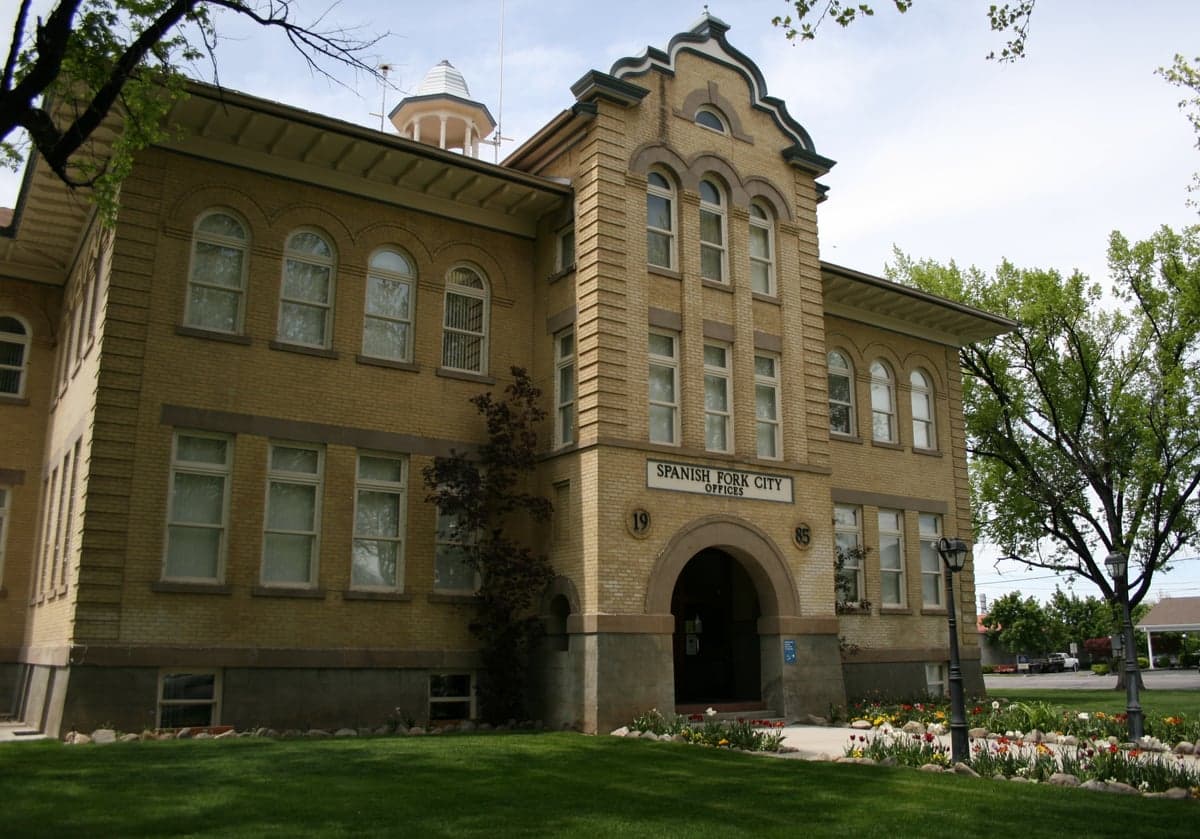
Photo: Wikipedia
Find The Best Places To Live
in Spanish Fork
PRO TIP! You can paste a Zillow or Redfin link to get info on that property.
What It's Like Living in Spanish Fork, UT
Spanish Fork, Utah, feels like a place that grew up fast but held onto its small-town instincts. You’ll see young families pushing strollers past new subdivisions, high school kids in letterman jackets filling up the Maverik, and a downtown that’s quietly trying to find its footing between old feed stores and newer coffee shops. It’s a community where the median age is just 27.2, the median household income sits at $98,497, and the median home value has climbed to $444,200—a clear sign that this is a bedroom community for Provo and Orem, but one with its own distinct, slightly more laid-back identity.
Daily Rhythm: Work, School, and the 19-Minute Commute
Most mornings in Spanish Fork start early. The average commute clocks in at just over 19 minutes, which means people actually have time for breakfast before heading north to jobs at companies like Vivint, Ancestry, or the sprawling BYU campus in Provo. The commute is short enough that you don’t feel like you’re wasting your life in traffic, but long enough that you’re reminded you’re living in a suburb, not a city center. For those who work locally, Spanish Fork has its own employment anchors—Nebo School District is a major employer, and the Spanish Fork Hospital provides steady healthcare jobs. The cost of living index is 136, noticeably above the national average, which stings most at the grocery store and the gas pump. Locals grumble about housing prices—up sharply since 2020—but they’ll also tell you that a $444,200 home still gets you a newer four-bedroom with a yard, something you’d pay half a million more for in Salt Lake County.
Weekends here revolve around the kids. Soccer games at Canyon View Park, baseball at the Spanish Fork Sports Park, and the constant hum of Maple Mountain High School and Spanish Fork High School athletics. The schools are the social hub—football games on Friday nights draw crowds that rival small college games, and the rivalry between the two high schools is genuine, not manufactured. If you don’t have school-age kids, you might feel a little left out; the social calendar is heavily dictated by the school year.
Sports, Festivals, and What People Actually Do for Fun
Sports are a big deal here, but it’s high school and college sports that get the love, not pro teams. The BYU Cougars are the de facto local team—you’ll see flags flying for them far more than the Utah Jazz or Real Salt Lake. The Spanish Fork Dons and Maple Mountain Golden Eagles pack bleachers for football and basketball, and the community genuinely shows up. For outdoor recreation, you’re 20 minutes from Provo Canyon and the Uinta-Wasatch-Cache National Forest, where hiking, fishing, and snowshoeing are the default weekend activities. The Spanish Fork River Trail is a paved, flat path that runs through town—great for a family bike ride or a morning run, but it’s not wilderness.
The biggest cultural event is the Spanish Fork Fiesta Days in July, a week-long celebration with a rodeo, parade, carnival, and enough fireworks to make you think the town is under siege. It’s genuinely well-attended and feels like the kind of small-town festival that’s disappearing elsewhere. There’s also the Spanish Fork Steel Days (yes, two summer festivals—locals will argue which is better). For food, the standouts are Jake’s Over the Top for burgers and shakes, Los Hermanos for reliable Mexican food, and Strawberry’s for breakfast. The bar scene is minimal—this is a predominantly LDS community, so alcohol is not a centerpiece of social life. There are a couple of spots like The Garage on Main that serve beer and food, but don’t expect a nightlife district. If you want a proper bar scene, you’re driving to Provo or Salt Lake.
Who Fits In—and Who Might Struggle
Spanish Fork works best for people who are in the family-raising stage of life. The median age of 27.2 is young because of the high number of married couples in their late 20s and early 30s with toddlers. If you’re a single professional without kids, you might find the social scene limited—most events are family-oriented, and the dating pool is shallow. The 38.2% college-educated rate is respectable but not elite; you’ll find plenty of tradespeople, nurses, and remote workers alongside the BYU-educated crowd. Affluence is middle-to-upper-middle class—the $98,497 median income supports a comfortable lifestyle, but the high cost of living means most families are budgeting carefully.
The cultural quirk you notice immediately is how central the LDS Church is to daily life. Ward boundaries shape neighborhoods, church activities fill weekday evenings, and the town essentially shuts down on Sunday mornings. Non-members or those outside the faith can absolutely live here comfortably—there’s a growing population of non-LDS families—but you’ll need to be okay with being in the minority. The upside is a very low crime rate (violent crime at 79.3 per 100,000, well below national averages) and a general sense that people look out for each other. The downside is a certain social pressure to conform, and a lack of diversity in both demographics and viewpoints.
Pros and Cons of Living in Spanish Fork
- Pro: The commute is genuinely short—19 minutes on average—and you can be in Provo or Orem quickly without feeling like you’re in a traffic nightmare.
- Con: Housing costs have risen fast. A $444,200 median home value is steep for a town that’s still mostly bedroom community, and renters feel the squeeze even more.
- Pro: The schools are solid, and the community invests heavily in youth sports and activities. If you have kids, you’ll find a built-in social network.
- Con: The social scene is narrow. If you’re not LDS, not married, or not into high school sports, you may find weekends quiet to the point of boring.
- Pro: Outdoor access is excellent—mountains, rivers, and trails are minutes away, and the air quality is better than Salt Lake Valley (though inversions still happen).
- Con: The cost of living index of 136 means everyday expenses—groceries, utilities, gas—are noticeably higher than the national average, even if housing is slightly more affordable than Provo proper.
Spanish Fork is not a place for everyone. It’s a place for people who want a safe, predictable, family-centered life where you know your neighbors and the biggest decision of the week is which park to hit on Saturday. If that sounds like a good trade for less nightlife and less diversity, you’ll probably love it here.

* Values derived from national, state, county, city and local statistics and may differ in a specific area. Last updated: 2026-04-21T07:25:44.000Z
Narrative content on this page is AI-generated and may contain mistakes. Verify any details that matter before acting on them.
ReloMaps may earn a commission from affiliate links at no extra cost to you.

