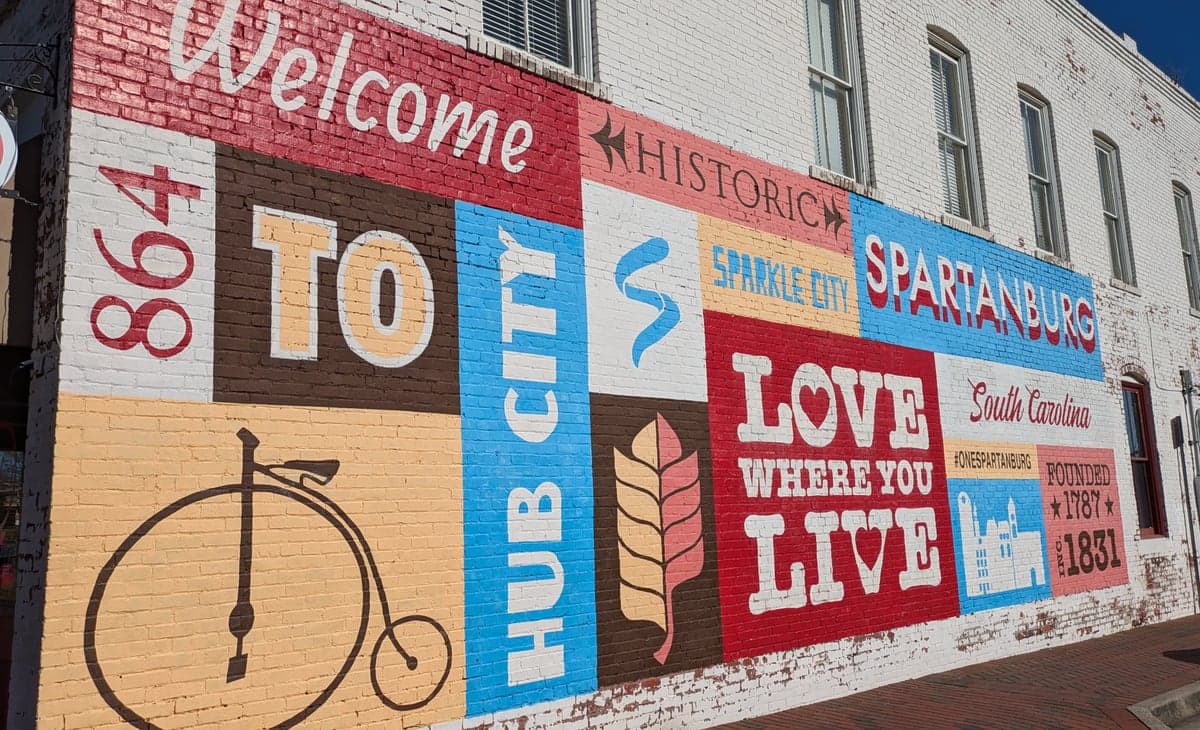
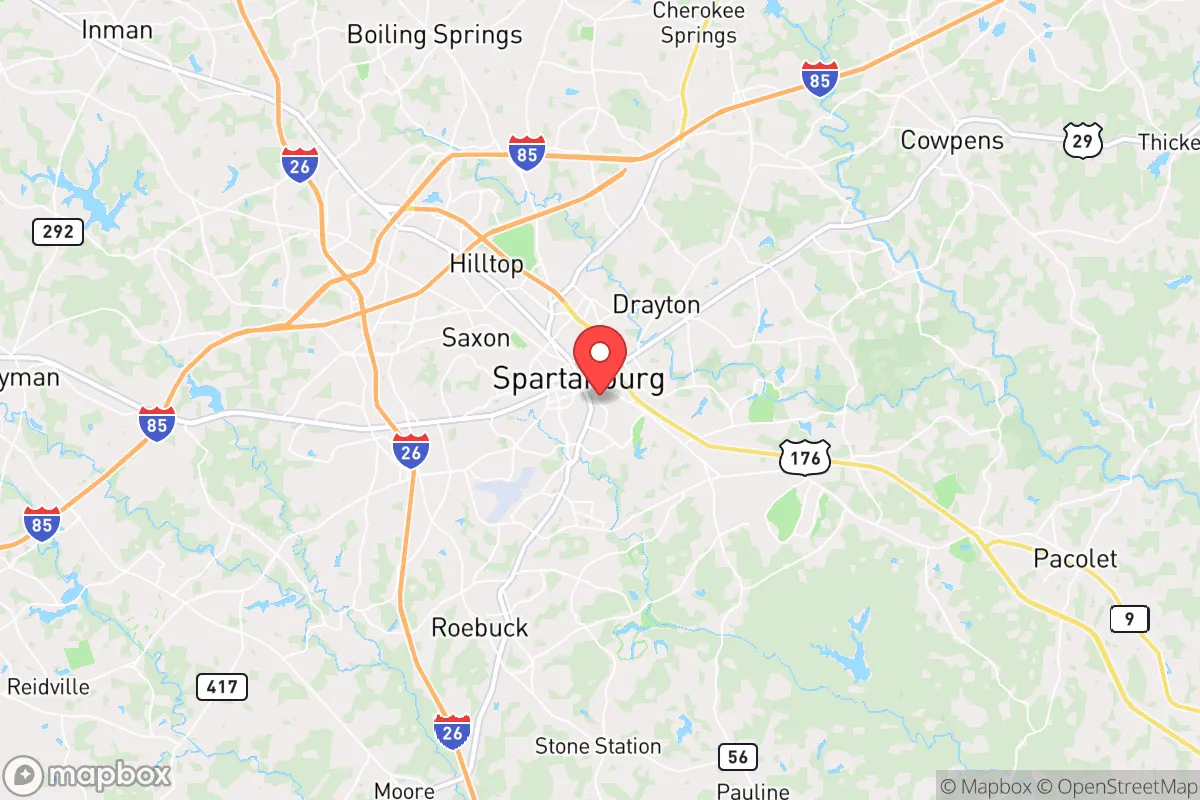
Photo: Wikipedia
Quality of Life in Spartanburg, SC
A high quality of life with strong walkability, manageable living costs, healthy neighborhood signals, and solid amenity access.
What does Quality of Life tell us?
Quality of Life blends cost of living, nearby amenities, socioeconomic signals, and neighborhood character. City-level scores represent the whole municipality; individual neighborhoods can differ.
What does this tell us?
Quality of Life blends cost of living, nearby amenities, socioeconomic signals, and neighborhood character. City-level scores represent the whole municipality; individual neighborhoods can differ.
Cost of Living
20% below national average
The Real Cost of Living in Spartanburg, SC for 2026
| Tier | Individual | Family (4) |
|---|---|---|
| Survival | $17k | $31k |
| Comfortable | $36k | $53k |
| Luxury | $92k+ | $143k+ |
| Elite (Top 5%) | $135k+ | $209k+ |
97%
The Area Signal
A metric tracking the socioeconomic signals of the area.
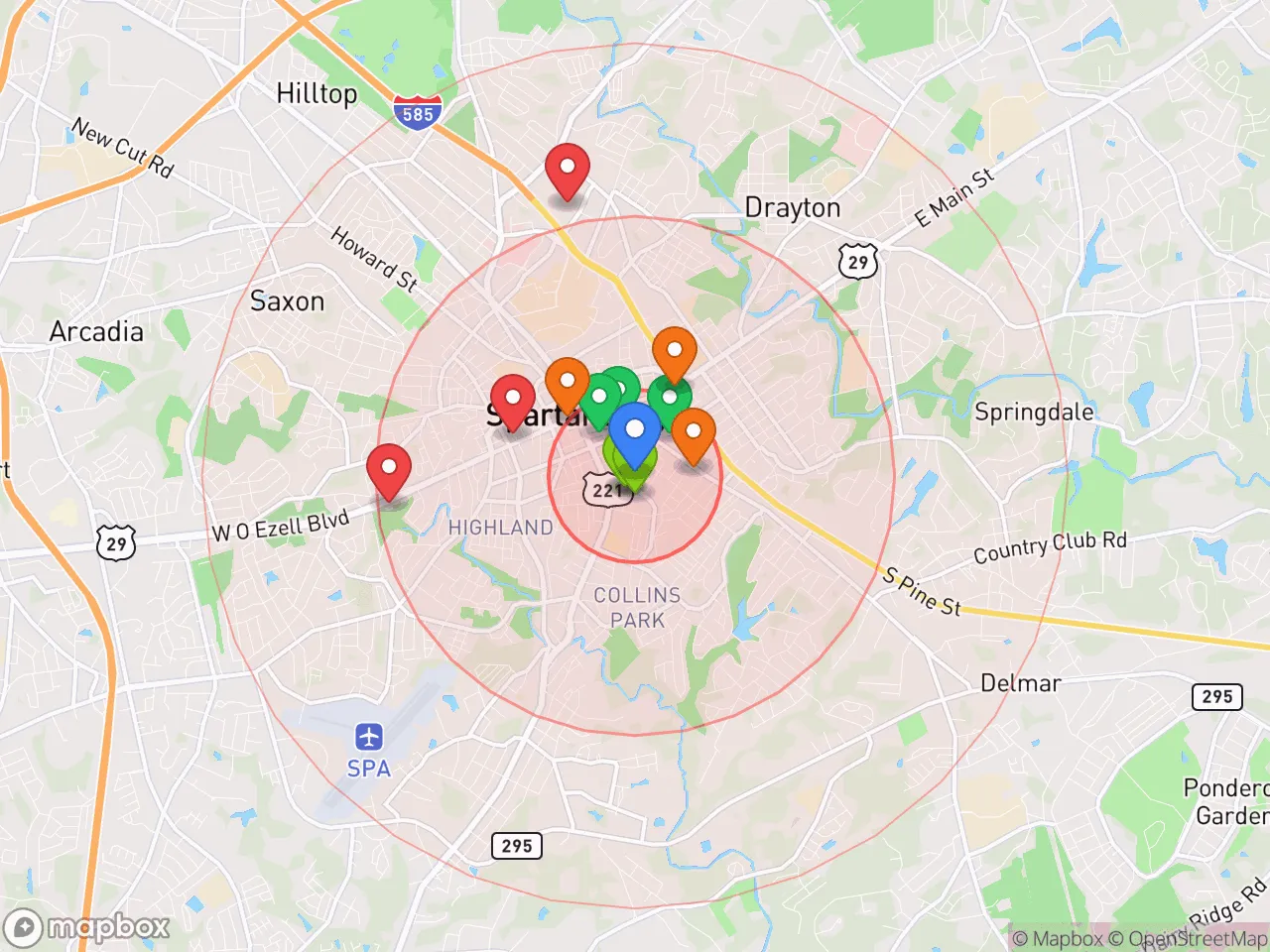
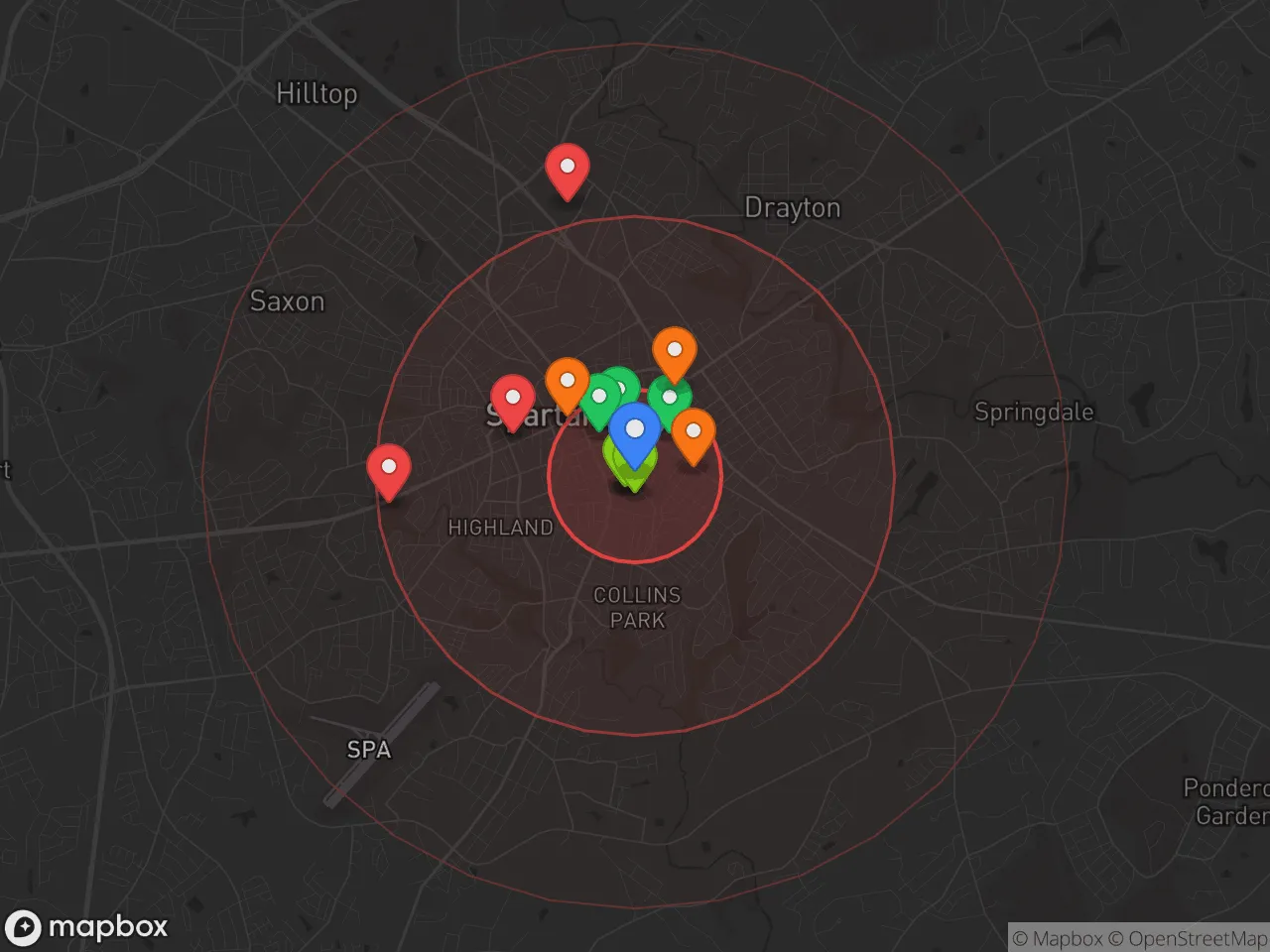
Hobbies
Explore the areaGroceries
7 within 10 miles
Gas
20 within 10 miles
Hospital
6 within 20 miles
Airport
CLT — Charlotte Douglas International
Post Office
USPS — Spartanburg, SC
Critical Amenities
Quality-of-Life Analysis
Spartanburg, South Carolina, offers a quality of life defined by strong affordability and a growing, diversifying economy, attracting a mix of young professionals, families, and retirees seeking lower costs without sacrificing urban amenities. The city’s cost of living index of 80 (20% below the U.S. average) and a median home value of $185,300 place it as one of the more accessible markets in the rapidly growing Upstate region. This combination of economic opportunity and financial breathing room creates a distinct lifestyle that appeals to those priced out of Charlotte or Greenville but still wanting a vibrant, mid-sized city.
Cost of living, housing, and how Spartanburg compares to Greenville and Charlotte
Spartanburg’s housing market is the primary driver of its affordability advantage. With a median home value of $185,300 and median rent of $1,043, homeownership and rental costs are roughly 35-40% lower than in nearby Greenville and more than 50% lower than in Charlotte, North Carolina. The overall cost of living index of 80 reflects savings across groceries, utilities, and transportation. The average commute of 20.9 minutes is notably shorter than the national average of 26 minutes and significantly less than the 30+ minute commutes common in Charlotte or Atlanta. This shorter drive time, combined with lower fuel costs, further stretches household budgets. While property taxes in Spartanburg County are moderate (around 0.6% of assessed value), buyers should note that South Carolina’s tax structure favors primary residences with a special assessment ratio, keeping annual tax bills on a $185,300 home typically under $1,200.
What daily life is like: amenities, schools, and the local rhythm
Daily life in Spartanburg centers on a walkable downtown anchored by the Hub City Railroad Museum, the Chapman Cultural Center, and a growing roster of independent restaurants and breweries. The city’s public school system, Spartanburg County School District 7, has invested heavily in magnet programs and early college options, though families often compare options with the highly rated Spartanburg Day School (private) and the well-regarded District 6 schools in the western suburbs. The local rhythm is slower than Charlotte’s but more energetic than a typical small town, with events like Music on Main and Spring Fling drawing consistent crowds. Outdoor access is a major perk: the Mary Black Rail Trail connects downtown to the Cottonwood Trail system, and Lake Bowen and Lake Blalock are within a 20-minute drive for boating and fishing. Healthcare is anchored by Spartanburg Regional Medical Center, a major employer and Level I trauma center that also supports a robust network of specialists.
This quality of life is best suited for value-conscious buyers who want urban energy without the premium price tag. Young professionals working at BMW’s Spartanburg plant, Michelin’s North American headquarters, or the growing Milliken & Co. campus will find the commute and housing costs particularly attractive. Retirees on fixed incomes benefit from the low property taxes and mild climate, while families appreciate the shorter school commutes and access to both nature and cultural amenities. The trade-off is a less polished downtown than Greenville’s and fewer high-end retail options, but for those prioritizing financial flexibility and a manageable pace, Spartanburg delivers a compelling balance.

Crime in Spartanburg, SC
Higher crime rates than 70% of comparable U.S. locations.
Violent CrimeViolent Crime Analysis
Property CrimeProperty Crime Analysis
Crime Analysis
Spartanburg, South Carolina, reports a violent crime rate of 800.3 incidents per 100,000 residents and a property crime rate of 2,227.7 per 100,000, figures that place it among the higher-crime cities in the state. These rates significantly exceed both the South Carolina averages and national benchmarks, indicating a safety environment that demands careful consideration from potential residents. The city's crime challenges are compounded by its position within a larger metropolitan corridor, where progressive prosecutorial policies in the region have been linked to elevated recidivism and reduced public safety outcomes.
Crime in context
Spartanburg's violent crime rate of 800.3 per 100,000 is roughly double the national average of approximately 380 per 100,000 and well above South Carolina's statewide rate of about 510 per 100,000. Property crime, at 2,227.7 per 100,000, also surpasses the national average of roughly 1,950 per 100,000. These statistics place Spartanburg in the top 15% of U.S. cities for violent crime and the top 25% for property crime. The city's proximity to the larger Greenville-Spartanburg metro area means it is subject to the same regional justice system trends, where district attorneys in nearby counties have adopted progressive policies—such as reduced cash bail and diversion programs for repeat offenders—that critics argue undermine deterrence and public safety.
What residents experience
For residents, the high crime rates translate into tangible daily concerns. Violent offenses, including aggravated assault and robbery, are the most frequently reported, with aggravated assault alone accounting for over 60% of violent incidents. Property crimes like burglary and motor vehicle theft are also common, particularly in areas near commercial corridors and lower-income neighborhoods. Residents often report feeling unsafe walking alone after dark in central districts, and many rely on home security systems and neighborhood watch programs. The presence of progressive judges in the local circuit courts has been associated with lighter sentencing for property and drug offenders, contributing to a perception that the justice system prioritizes offender rehabilitation over victim protection and community safety.
Neighborhood-level variation is significant. Areas west of downtown, such as the city's historic districts and newer developments near the University of South Carolina Upstate, tend to have lower crime rates, while neighborhoods east of Interstate 85 and along the Asheville Highway corridor experience the highest concentrations of violent and property crime. Crime is not uniform across Spartanburg; prospective residents should research specific census tracts and consult local police department crime maps. Gated communities and suburban annexations like the Hillcrest area offer substantially lower risks, but the city's overall safety profile remains a serious concern for anyone evaluating relocation to Spartanburg.
* Values derived from national, state, county, city and local statistics and may differ in a specific area. Last updated: 2026-04-30T02:03:59.000Z
Narrative content on this page is AI-generated and may contain mistakes. Verify any details that matter before acting on them.
ReloMaps may earn a commission from affiliate links at no extra cost to you.

