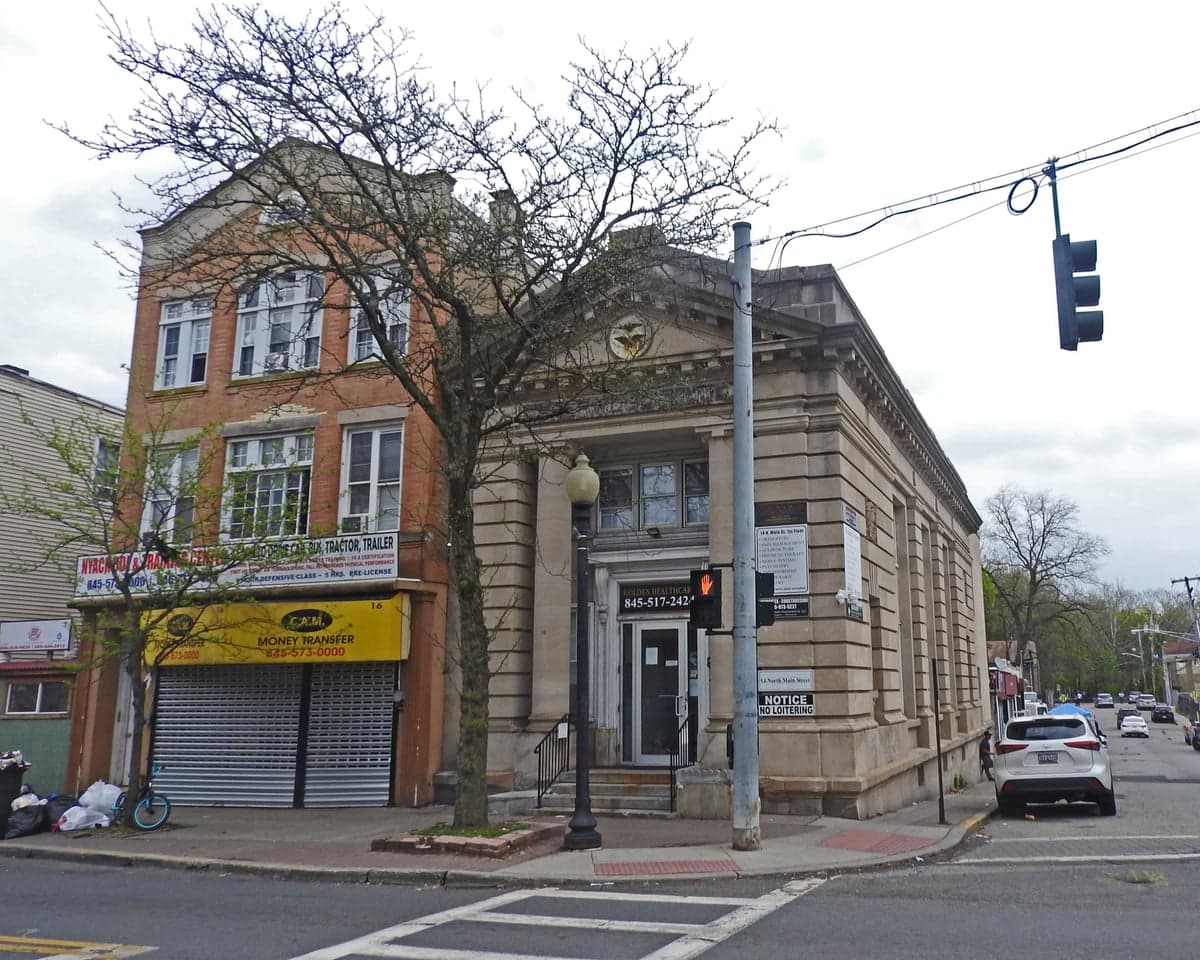
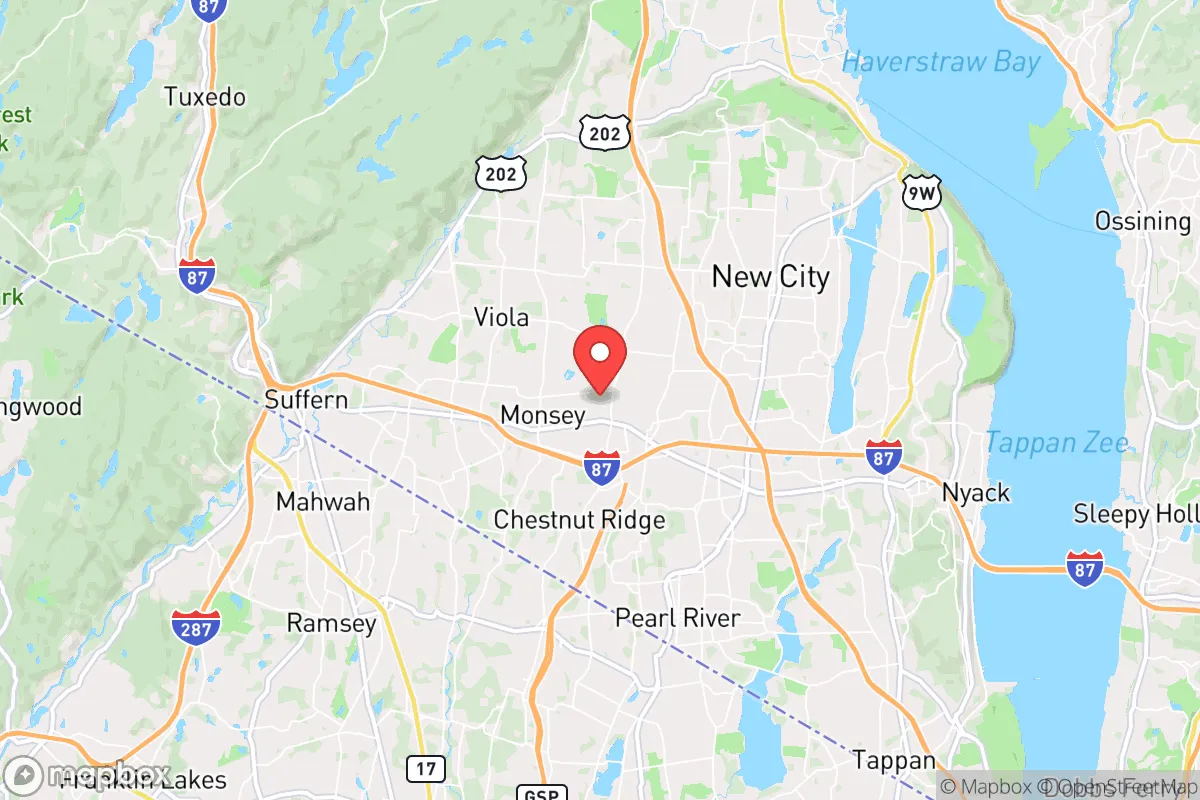
Photo: Wikipedia
Personal Sovereignty in Spring Valley, NY
Moderate friction. Expect trade-offs in some aspect of personal liberty and independence.
What does Personal Sovereignty tell us?
Personal Sovereignty measures your capacity for self-reliance and independence with minimal government friction. Higher scores mean fewer barriers between you and the way you want to live... but it assumes you have the space you need and good neighbors.
What does this tell us?
Personal Sovereignty measures your capacity for self-reliance and independence with minimal government friction. Higher scores mean fewer barriers between you and the way you want to live... but it assumes you have the space you need and good neighbors.
State Policy
Energy independence: Importer (12% of energy produced in-state)
Personal Liberty
Homesteading

Personal Liberty Analysis
Spring Valley, New York, presents a challenging environment for personal sovereignty, where state-level policies significantly constrain individual autonomy despite the village's own local character. As a conservative-leaning individual or parent evaluating relocation, you must contend with New York's dense regulatory framework, which systematically prioritizes collective mandates over personal choice. The autonomy landscape here is defined by high taxes, restrictive gun laws, and limited homesteading potential, making it a location where self-reliance requires navigating substantial government overreach rather than enjoying the freedom to live undisturbed.
Tax burden and regulatory posture: what you pay for limited freedom
New York's tax burden is among the highest in the nation, and Spring Valley residents feel this acutely. Property taxes in Rockland County are notoriously steep, often exceeding 2.5% of assessed home value, which directly impacts your ability to build wealth and maintain self-sufficiency. The state income tax is progressive, with rates reaching 10.9% for top earners, and sales tax in Spring Valley adds another 8.375% to everyday purchases. Beyond taxes, the regulatory posture is aggressive: New York's building codes, environmental regulations, and business licensing requirements are among the most stringent in the Northeast. For a prepper or survivalist, this means that even basic improvements—like installing a backup generator, building a root cellar, or adding a rainwater catchment system—can trigger permit delays, inspections, and fees. The state's climate leadership and community protection act (CLCPA) further complicates any off-grid energy projects, as net metering rules and interconnection standards are tightly controlled by utilities. In short, you pay a premium for the privilege of living here, and the government extracts that premium while simultaneously limiting your ability to adapt your property for resilience.
Self-defense and gun law specifics: what you can and cannot own
New York's gun laws are among the most restrictive in the United States, and Spring Valley offers no refuge from them. The state requires a permit to purchase a handgun, and the process involves a background check, fingerprinting, a firearms safety course, and a character reference—all subject to local sheriff discretion. In Rockland County, the issuing authority is the county clerk, and wait times can stretch for months. The SAFE Act, passed in 2013, bans so-called "assault weapons" and limits magazine capacity to ten rounds. For self-defense, carrying a concealed firearm requires a "proper cause" showing, which in practice means you must demonstrate a specific threat, not just a general desire for protection. This effectively eliminates the constitutional carry model that many conservative-leaning individuals prefer. Long guns are less restricted, but purchasing a semi-automatic rifle still requires a background check and a 30-day waiting period. For parents, this means your ability to defend your home or family is heavily mediated by state bureaucracy. Stand-your-ground laws do not exist in New York; instead, you have a duty to retreat before using deadly force, even in your own home, if it is safe to do so. This legal framework places the burden of proof on you, not the aggressor, which is a significant erosion of personal sovereignty in a crisis.
Self-reliance and homesteading viability: lot sizes, zoning, and off-grid feasibility
Spring Valley is a densely populated suburban village, and homesteading viability is extremely limited. Typical residential lots range from 5,000 to 10,000 square feet, with many homes on quarter-acre parcels. Zoning is predominantly R-1 (single-family residential), but the village code restricts accessory structures, livestock, and agricultural activities. Keeping chickens is allowed only with a permit and strict coop requirements; larger livestock like goats or pigs are prohibited. Off-grid feasibility is nearly impossible: New York law requires all habitable dwellings to be connected to the electrical grid and municipal water or a state-approved private well. Solar panels are permitted but must be grid-tied, and battery storage systems face fire code restrictions. Rainwater harvesting is legal only for non-potable uses, and you must obtain a permit from the Rockland County Department of Health. For a prepper seeking true self-reliance—growing your own food, generating your own power, and storing water—Spring Valley is a poor fit. The regulatory environment is designed to enforce dependence on centralized systems, not to encourage individual resilience. If you are serious about homesteading, you would need to look north to Sullivan County or west to Orange County, where lot sizes are larger and zoning is more permissive.
Personal liberties: parental rights, medical autonomy, speech, and property
Personal liberties in Spring Valley are heavily shaped by New York's progressive governance. Parental rights have been a flashpoint: the state mandates vaccination for school attendance, and during the COVID-19 pandemic, Rockland County was one of the most aggressive in enforcing mask and vaccine mandates for children. Medical autonomy is similarly constrained; New York's public health law gives the state broad authority to compel treatment and quarantine, and the recent expansion of "physician-assisted suicide" (Medical Aid in Dying Act) reflects a state-level prioritization of medical bureaucracy over individual conscience. Free speech is protected under the First Amendment, but New York's hate crime laws and social media regulations create a chilling effect for those expressing dissenting views on topics like immigration, gender ideology, or public health. Property rights are the most compromised: the state's rent stabilization laws, which apply to many multi-family buildings in Spring Valley, limit what landlords can charge and how they can evict tenants. For homeowners, the state's power of eminent domain is broad, and environmental regulations can restrict land use without compensation. The overall message is clear: your rights as a parent, patient, speaker, and property owner are subordinate to state-defined "public welfare."
Compared to other areas in the Northeast, Spring Valley offers a moderate baseline of personal sovereignty—better than New York City or Westchester County, but far worse than rural Pennsylvania, New Hampshire, or upstate counties like Allegany or Lewis. The tax burden is crushing, the gun laws are hostile to self-defense, and the regulatory environment stifles homesteading and off-grid living. For a conservative-leaning individual or parent prioritizing autonomy, Spring Valley is a location to approach with caution, best suited for those whose careers or family ties demand proximity to New York City but who are willing to accept significant government overreach in exchange. If your goal is to maximize personal sovereignty, you would be better served by looking to states with lower taxes, constitutional carry, and more permissive zoning—places where the government's role is limited and your ability to live as you see fit is protected by law, not eroded by it.

* Values derived from national, state, county, city and local statistics and may differ in a specific area. Last updated: 2026-05-01T10:30:58.000Z
Narrative content on this page is AI-generated and may contain mistakes. Verify any details that matter before acting on them.
ReloMaps may earn a commission from affiliate links at no extra cost to you.

