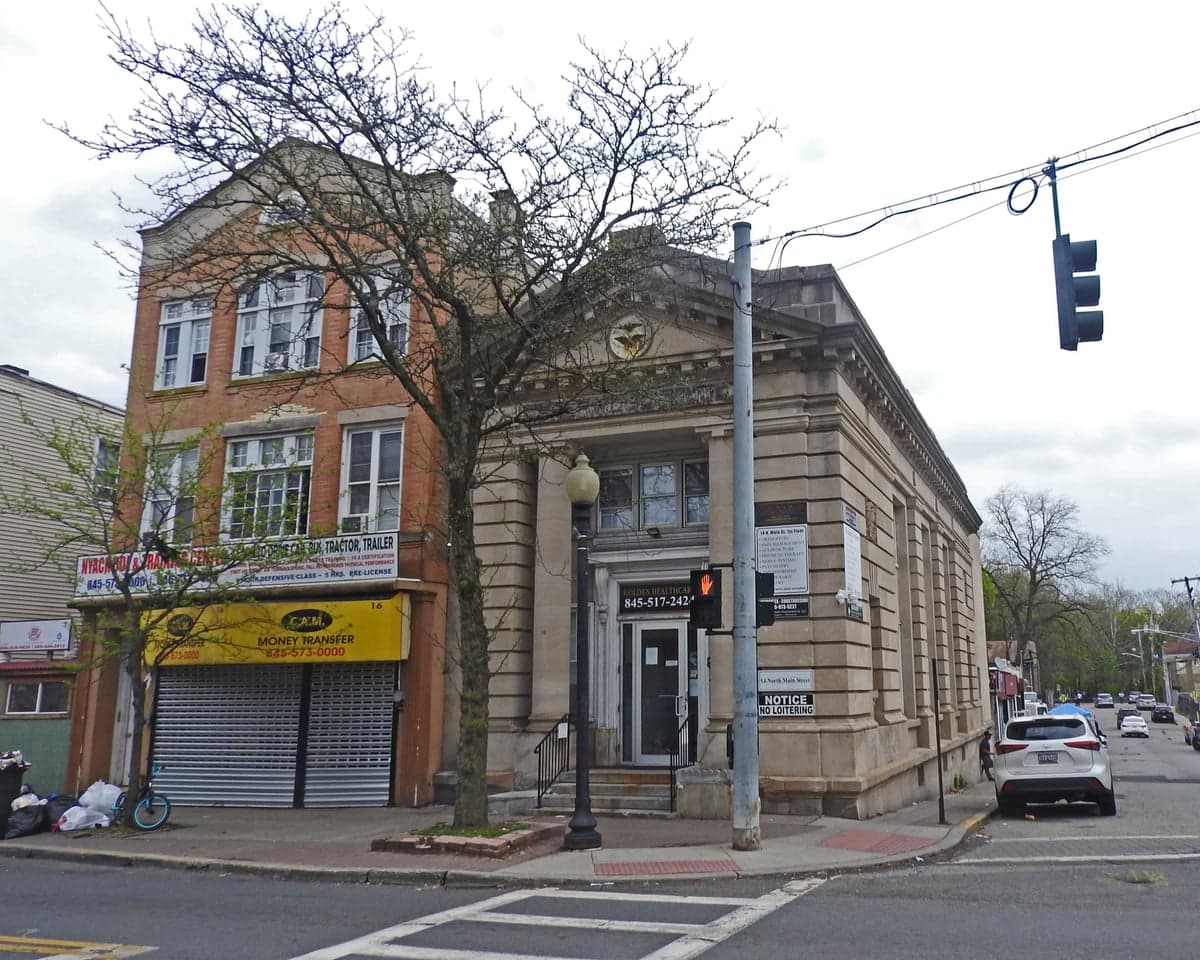
Photo: Wikipedia
Quality of Life in Spring Valley, NY
A high quality of life with strong walkability, manageable living costs, healthy neighborhood signals, and solid amenity access.
What does Quality of Life tell us?
Quality of Life blends cost of living, nearby amenities, socioeconomic signals, and neighborhood character. City-level scores represent the whole municipality; individual neighborhoods can differ.
What does this tell us?
Quality of Life blends cost of living, nearby amenities, socioeconomic signals, and neighborhood character. City-level scores represent the whole municipality; individual neighborhoods can differ.
Cost of Living
36% above national average
The Real Cost of Living in Spring Valley, NY for 2026
| Tier | Individual | Family (4) |
|---|---|---|
| Survival | $27k | $50k |
| Comfortable | $68k | $100k |
| Luxury | $101k+ | $157k+ |
| Elite (Top 5%) | $130k+ | $202k+ |
56%
The Area Signal
A metric tracking the socioeconomic signals of the area.
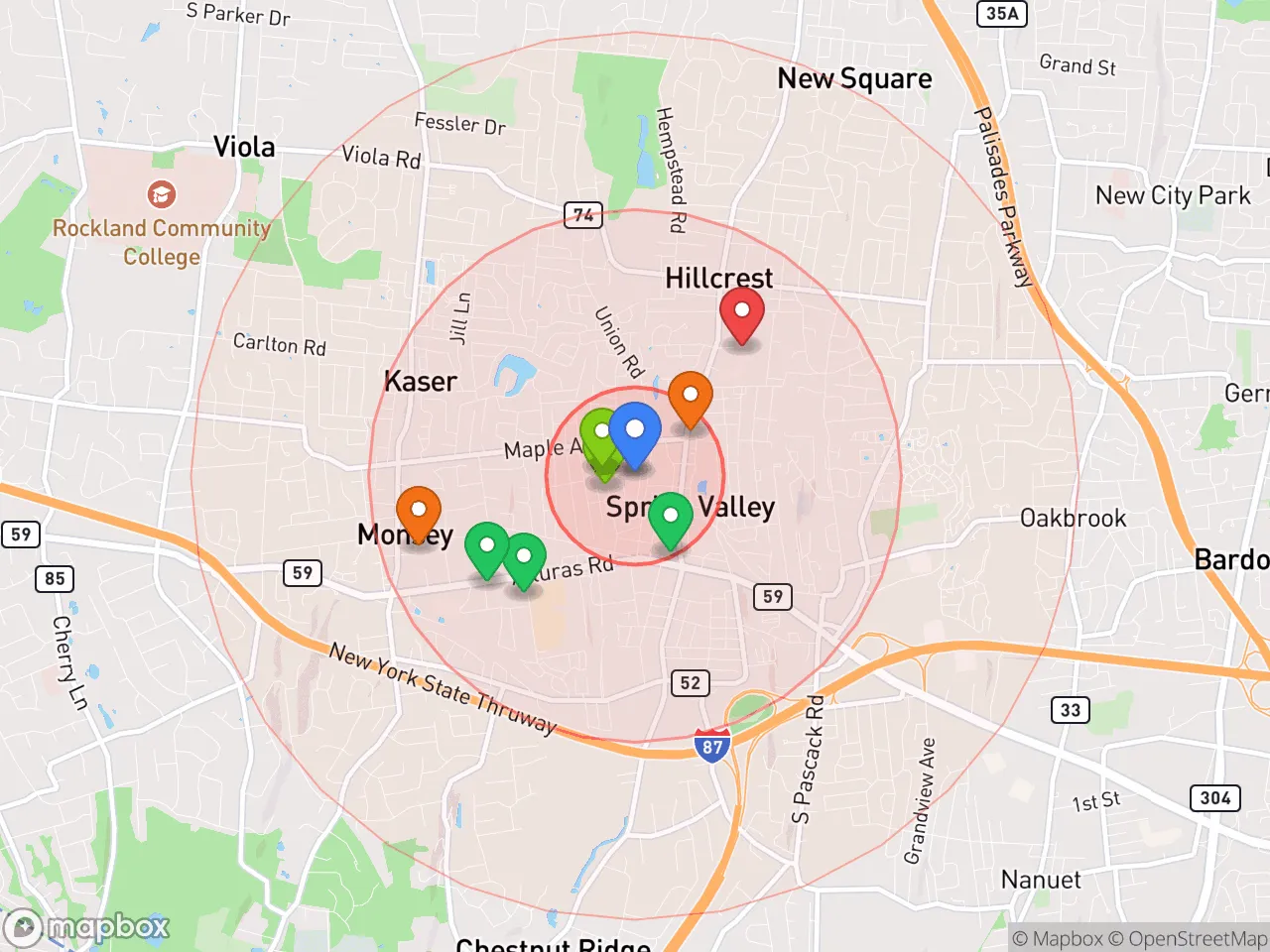
Hobbies
Explore the areaGroceries
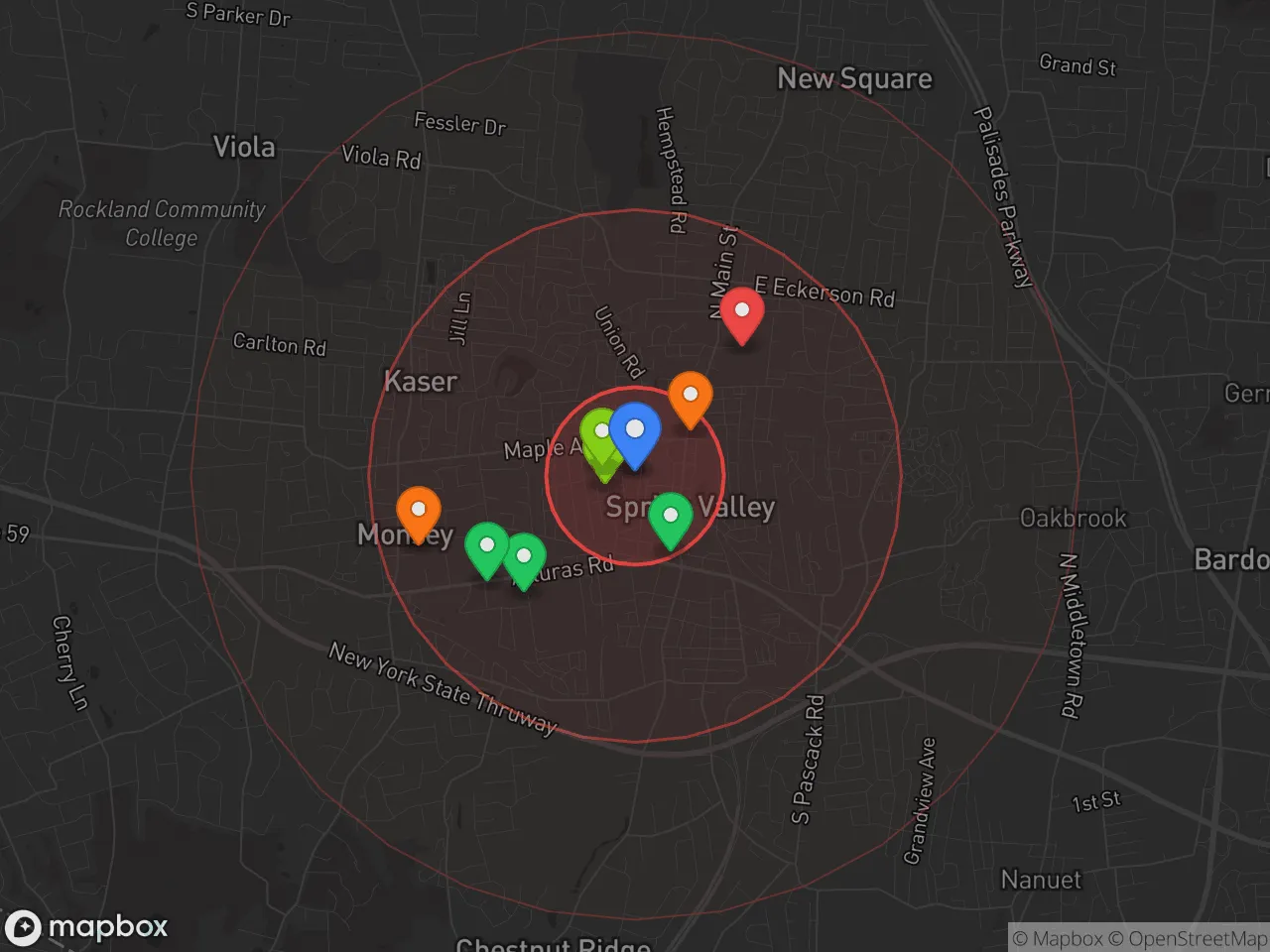
7 within 10 miles
Gas
20 within 10 miles
Hospital
20 within 20 miles
Airport
EWR — Newark Liberty International
Post Office
USPS — Spring Valley, NY
Critical Amenities
Quality-of-Life Analysis
Spring Valley, New York, presents a quality of life defined by suburban affluence and cultural diversity, with a cost of living index of 136—36% above the national average—reflecting its position as a desirable commuter hub in Rockland County. The village attracts a mix of established families, Orthodox Jewish communities, and professionals who work in New York City, drawn by its relative affordability compared to Manhattan and lower Westchester, yet still commanding a premium over national norms. With a median home value of $351,500 and median rent of $1,673, Spring Valley offers a more accessible entry point into the New York metropolitan area than many neighboring towns, though residents must navigate higher-than-average taxes and utility costs.
How housing costs and affordability compare to nearby towns
Spring Valley’s housing market sits in a competitive middle ground within Rockland County. The median home value of $351,500 is significantly lower than in nearby Nyack ($520,000) or New City ($480,000), making it one of the more affordable options for buyers seeking a single-family home within commuting distance of Manhattan. Renters face a median of $1,673 per month, which is roughly 15% below the county average of $1,970, though still well above the national median of $1,200. Property taxes in Spring Valley are a notable burden—Rockland County’s effective tax rate hovers around 2.5% of assessed value—meaning a $351,500 home carries annual taxes of approximately $8,800. For comparison, the same home in nearby Bergen County, New Jersey, would see taxes closer to $7,000. The average commute of 25 minutes is a key trade-off: residents gain a shorter drive than those in outer suburbs like Monroe or Middletown, but pay a premium for that proximity. Utility costs, including electricity and heating oil, run about 15% above the national average, further squeezing household budgets.
What daily life is like for families: schools, shopping, and recreation
Daily life in Spring Valley centers on a dense, walkable village core surrounded by suburban residential streets. The East Ramapo Central School District serves the area, though it has faced significant fiscal and administrative challenges in recent years, leading many families to opt for private or parochial schools—particularly within the large Orthodox Jewish community, which supports several yeshivas and day schools. Shopping is anchored by the Spring Valley Marketplace, a major retail hub with a Walmart Supercenter, Home Depot, and a multiplex cinema, while smaller ethnic groceries and kosher markets dot the commercial corridors along Route 45 and Main Street. Recreation includes the 200-acre Kakiat County Park, offering hiking trails and a waterfall, and the nearby Palisades Interstate Park for more extensive outdoor activities. The village’s rhythm is distinctly family-oriented: weekends see packed playgrounds at Kennedy Park and community events at the Martin Luther King Jr. Center. Dining leans heavily toward kosher pizzerias, Middle Eastern grills, and Latin American bakeries, reflecting the area’s diverse population. The 25-minute average commute to White Plains or the George Washington Bridge makes Spring Valley viable for professionals who need to reach Manhattan in under an hour via NJ Transit or the Short Line bus, though rush-hour traffic on the Palisades Parkway can stretch that to 45 minutes.
Spring Valley is best suited for families and professionals who prioritize space and community over urban amenities, and who are willing to accept higher taxes and a modestly challenging school district in exchange for a shorter commute and lower home prices than in pricier Rockland towns. The village’s strong cultural identity—particularly within its Orthodox Jewish and Hispanic communities—creates a tight-knit feel that appeals to those seeking a neighborhood with character rather than a generic suburb. Singles and young professionals may find the social scene limited compared to Nyack or Piermont, but for buyers and renters who need access to the New York metro without Manhattan-level costs, Spring Valley offers a pragmatic, family-friendly compromise.

Crime in Spring Valley, NY
Crime rates similar to the national median for U.S. locations.
Violent CrimeViolent Crime Analysis
Property CrimeProperty Crime Analysis
Crime Analysis
Spring Valley, New York, presents a crime profile that warrants careful consideration for potential residents. The village reports a violent crime rate of 310.6 incidents per 100,000 residents and a property crime rate of 1,017.6 per 100,000. These figures place Spring Valley in a higher-risk category compared to many other communities in Rockland County and the broader New York metropolitan area, driven in part by the progressive criminal justice policies prevalent in the region.
Crime in context
Spring Valley's violent crime rate of 310.6 per 100,000 is significantly elevated relative to the national average of roughly 380 per 100,000, but it is notably higher than the average for small cities in New York State. The property crime rate of 1,017.6 per 100,000 also exceeds the national median. These numbers reflect a community where crime is a tangible concern. The surrounding county and state have adopted progressive justice reforms, including bail reform and sentencing guidelines that prioritize diversion over incarceration. While intended to reduce mass incarceration, these policies have been criticized for contributing to higher recidivism rates and a perception that offenders face few consequences, which can embolden criminal activity and undermine public safety.
What residents experience
Residents of Spring Valley frequently report concerns about property crimes such as burglary, vehicle theft, and larceny, which are the most common offenses. The village's dense, diverse population and proximity to New York City create conditions where opportunistic crime can flourish. Violent incidents, while less frequent, do occur and often involve disputes or drug-related activity. The local police department works to address these issues, but the broader legal environment—including the actions of district attorneys and judges who may prioritize rehabilitation over punishment—can limit the effectiveness of enforcement. For families and individuals, this means a higher likelihood of encountering repeat offenders in the community, as progressive policies often result in shorter sentences and fewer pretrial detentions.
Neighborhood-level variation
Safety in Spring Valley is not uniform across the village. Areas closer to the downtown commercial corridor, particularly near Main Street and the intersection of routes 45 and 59, tend to see higher concentrations of both property and violent crime. In contrast, quieter residential neighborhoods on the village's eastern and southern edges, such as those near the border with Chestnut Ridge, generally report lower crime rates. However, no part of Spring Valley is immune from the effects of the county's progressive justice system, which can lead to a sense of insecurity even in lower-crime pockets. Prospective residents are advised to research specific blocks and speak with local police about recent incident data, as the village's overall statistics mask significant internal variation.
* Values derived from national, state, county, city and local statistics and may differ in a specific area. Last updated: 2026-05-01T10:30:58.000Z
Narrative content on this page is AI-generated and may contain mistakes. Verify any details that matter before acting on them.
ReloMaps may earn a commission from affiliate links at no extra cost to you.

