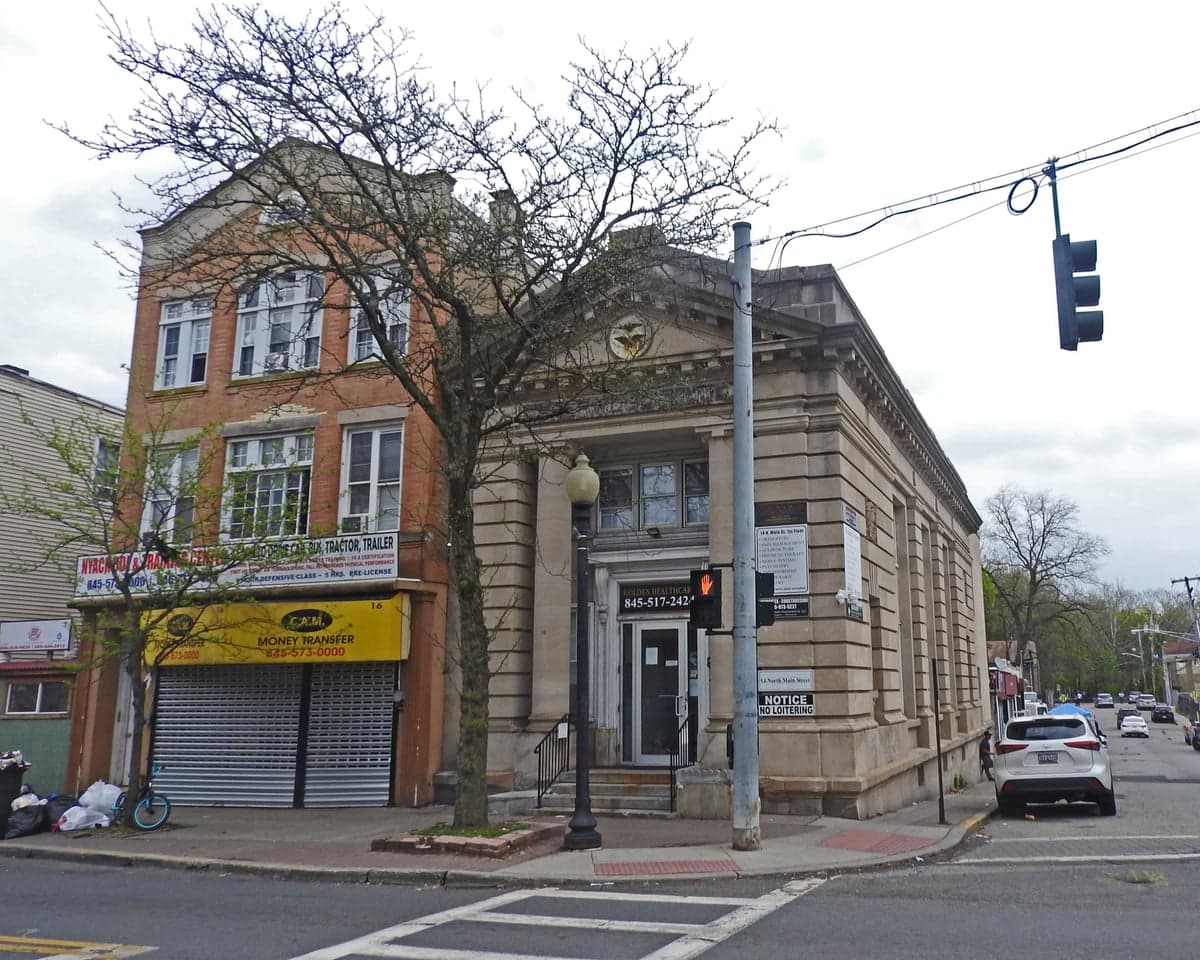
Photo: Wikipedia
Political ClimatePolitical Climate in Spring Valley, NY
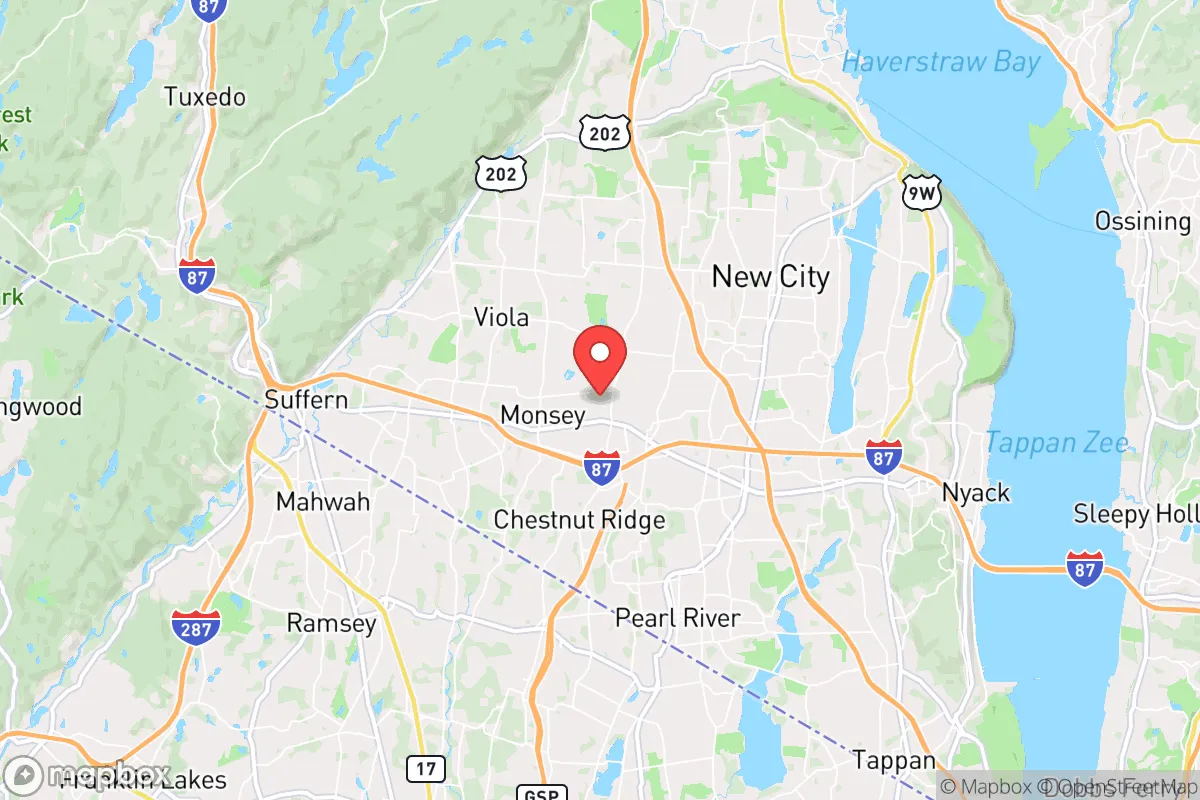
District shown is the primary district for this city’s centroid. Cities may span multiple districts.
Local Political AnalysisPolitical Analysis of Spring Valley, NY
Spring Valley, New York, has a Cook PVI of D+1, meaning it leans slightly Democratic, but that number doesn't tell the whole story of a community that's been shifting under the surface. For a long time, this was a reliably moderate, working-class village where folks just wanted to be left alone to raise their families and run their small businesses. But over the last decade or so, you've seen the local politics get pulled further left, with a growing influence from county-level progressive policies that don't always match what people here actually want. The real concern isn't the party label—it's the creeping sense that government is getting too involved in decisions that used to be left to families and local shop owners.
How it compares
Drive ten minutes west to Monsey or New Square, and you'll find communities that are far more conservative, with a strong emphasis on religious freedom and local control—exactly the kind of values that used to define Spring Valley. Head east toward Nyack or New City, and you're in territory that's more reliably progressive, with higher taxes and more zoning restrictions that make it harder for a small business to get off the ground. Spring Valley sits right in the middle, but the pressure is coming from the east. The county government in Rockland has pushed through policies on housing mandates and environmental regulations that feel like they're designed for a dense city, not a village with a lot of single-family homes and mom-and-pop stores. Property taxes have climbed steadily, and while services haven't improved proportionally, the burden on homeowners has gotten heavier. That D+1 rating masks a real tension: a lot of residents vote Democratic out of habit or family tradition, but they're increasingly frustrated with the direction of local governance.
What this means for residents
For someone living here, the most noticeable effect is the slow erosion of personal freedom in everyday life. New zoning laws have made it harder to run a home-based business or add a small rental unit to your property without jumping through bureaucratic hoops. There's been talk of expanding rent control measures, which sounds good on paper but usually means landlords sell off or stop maintaining properties, shrinking the housing supply for everyone. The school board has also seen a push toward more centralized curriculum mandates from Albany, leaving less room for local parents to have a say in what their kids are taught. If you're the kind of person who values being able to make your own choices without a government official signing off on them, these trends are a red flag. The village board meetings have gotten longer and more contentious, with debates over everything from mask mandates to small business licensing fees dragging on for hours.
What sets Spring Valley apart culturally
One thing that still sets Spring Valley apart is its strong sense of neighborly independence—people here still help each other out without waiting for a government program to step in. You see it in the volunteer fire departments, the local churches and synagogues that run food drives, and the way folks will lend a hand to a neighbor fixing a fence or shoveling a driveway. But that culture is under pressure. The push for more progressive policies—like stricter enforcement of short-term rental bans or higher fees for small contractors—feels like it's coming from people who don't quite understand how the community actually works. Looking ahead, the long-term trajectory depends on whether enough residents show up to local elections and push back against the idea that more government oversight equals better quality of life. If the trend continues, Spring Valley could lose the very character that made it a place people wanted to settle down in the first place.

State Political ClimatePolitical Climate in New York
State Political AnalysisPolitical Environment in the State
New York State has been a reliably blue stronghold for decades, but the picture is more complicated than a simple partisan label. The state’s overall lean is heavily Democratic, driven by New York City and its immediate suburbs, but the rest of the state—especially Upstate—has been trending redder over the last 10-20 years. The 2024 presidential election saw the state vote +12 for the Democratic candidate, but that margin has narrowed from +23 in 2016, as rural and exurban counties like Erie, Monroe, and even parts of the Hudson Valley have shifted right. The dominant coalition is a mix of NYC progressives, suburban moderates, and a shrinking but vocal conservative base in places like Staten Island, the Southern Tier, and the North Country.
Urban vs. rural divide
The political map of New York is a tale of two states. New York City—Manhattan, Brooklyn, Queens, the Bronx—is the engine of Democratic dominance, with precincts routinely voting 80-90% blue. The immediate suburbs, like Westchester, Nassau, and Suffolk counties on Long Island, are more competitive but still lean Democratic, though Nassau and Suffolk have inched rightward in recent cycles. In contrast, Upstate New York is a patchwork of red and purple. Erie County (Buffalo) flipped from blue to red in 2020 and stayed there in 2024, while Monroe County (Rochester) is now a toss-up. The Southern Tier—places like Chemung, Steuben, and Allegany counties—votes solidly Republican, as does the North Country (Jefferson, St. Lawrence counties). The Hudson Valley is a microcosm: Dutchess and Ulster counties lean blue, but Columbia and Greene counties are trending red. The divide is stark: the five boroughs and their inner-ring suburbs produce about 60% of the state’s vote, meaning the rest of the state’s conservative lean is effectively drowned out.
Policy environment
New York’s policy environment is aggressively progressive, and that’s a major concern for conservative-leaning residents. The state has one of the highest tax burdens in the nation: combined state and local income taxes can exceed 12% for top earners, and property taxes are among the highest in the country, especially in places like Westchester, Nassau, and Erie counties. The regulatory posture is heavy—businesses face stringent environmental, labor, and zoning rules, which has driven manufacturing and logistics jobs to neighboring Pennsylvania and Ohio. Education policy is dominated by the teachers’ unions and progressive curriculum mandates, including the state’s “Dignity for All Students Act” and expansive sex education standards. Healthcare is heavily regulated, with the state expanding Medicaid and pushing for a single-payer system (the New York Health Act) that has stalled but remains a goal. Election laws are among the most liberal: no-excuse absentee voting, early voting, and same-day registration are all in place, which conservatives argue undermines election integrity. Gun laws are among the strictest in the nation, including the SAFE Act (2013) and the 2022 “Concealed Carry Improvement Act,” which restricted where licensed gun owners can carry.
Trajectory & freedom
New York is becoming less free, and the trend is accelerating. The 2022 Concealed Carry Improvement Act, passed after the Supreme Court’s Bruen decision, created a “sensitive places” list so broad it effectively bans carry in most of the state—including Times Square, public transit, and private businesses unless the owner explicitly allows it. Parental rights have been eroded by the state’s “Gender Expression Non-Discrimination Act” (GENDA) and guidance from the State Education Department that allows students to change their names and pronouns without parental consent. Medical autonomy took a hit with the state’s COVID-19 vaccine mandates for healthcare workers and school staff, which remain in effect for some settings. Property rights are constrained by rent control laws in New York City and parts of the Hudson Valley, and by the state’s “Good Cause Eviction” law (2024) that limits landlords’ ability to non-renew leases. On the plus side, the state has not enacted a broad “sanctuary” policy for illegal immigrants beyond existing “Trust Act” limits on local police cooperation with ICE, but New York City’s sanctuary policies are far more aggressive. The trajectory is clear: personal liberty is contracting, especially around guns, education, and property.
Civil unrest & political movements
New York has a long history of political activism, and recent years have seen flashpoints on both sides. The 2020 George Floyd protests in New York City, Buffalo, and Rochester were large and sometimes violent, leading to property damage and a lasting distrust of law enforcement in some communities. The “defund the police” movement had real impact: the NYPD budget was cut by $1 billion in 2020, though much of it was later restored. On the right, the “Second Amendment sanctuary” movement has gained traction in rural counties—over 30 counties, including Erie, Oneida, and Chemung, have passed resolutions declaring themselves “Second Amendment sanctuaries” in defiance of state gun laws. Immigration politics are a constant flashpoint: New York City’s “right to shelter” law has been overwhelmed by the influx of asylum seekers since 2022, leading to tensions in neighborhoods and school districts. Election integrity remains a hot-button issue, with Republican-led counties like Nassau and Suffolk challenging the state’s mail-in voting procedures. The “New York State of Mind” secession movement—proposing that Upstate counties break away from the state—has fizzled but still surfaces in local GOP platforms. A new resident would notice the visible political polarization: “Trump 2024” flags in rural areas, “Abolish ICE” signs in Brooklyn, and constant arguments over taxes and mandates.
Projection
Over the next 5-10 years, New York will likely become even more polarized. Demographic trends favor the Democrats: New York City continues to attract young, progressive transplants, while Upstate’s population is aging and shrinking. In-migration from other states is net negative—New York loses residents to Florida, Texas, and the Carolinas every year—but those leaving are disproportionately conservative-leaning. The state’s tax burden and regulatory climate are unlikely to change significantly, as the legislature is firmly controlled by Democrats and the governor (currently Kathy Hochul) is a moderate progressive. The most likely scenario is that New York becomes a one-party state in practice, with Republicans confined to a few rural strongholds and the occasional suburban swing district. Expect further gun control, expansion of “sanctuary” policies, and continued erosion of parental rights in schools. The only wildcard is a potential federal shift: if a conservative Supreme Court or Congress strikes down some of New York’s laws (like the Concealed Carry Improvement Act), the state could be forced to moderate. But for now, the trajectory is toward less freedom for conservatives.
For a conservative-leaning individual or family considering a move to New York, the bottom line is this: you can find like-minded communities in places like Staten Island, the Southern Tier, or the North Country, but you will be living under state laws that are increasingly hostile to your values. The tax burden is heavy, gun rights are severely restricted, and your children’s education will be shaped by progressive mandates. If you value personal liberty, low taxes, and local control, New York is a tough sell—unless you’re willing to fight for every inch of ground in your local school board and county legislature. It’s a beautiful state with incredible natural resources, but the political climate is a headwind you’ll need to be ready for.
* Values derived from national, state, county, city and local statistics and may differ in a specific area. Last updated: 2026-05-01T10:30:58.000Z
Narrative content on this page is AI-generated and may contain mistakes. Verify any details that matter before acting on them.
ReloMaps may earn a commission from affiliate links at no extra cost to you.

