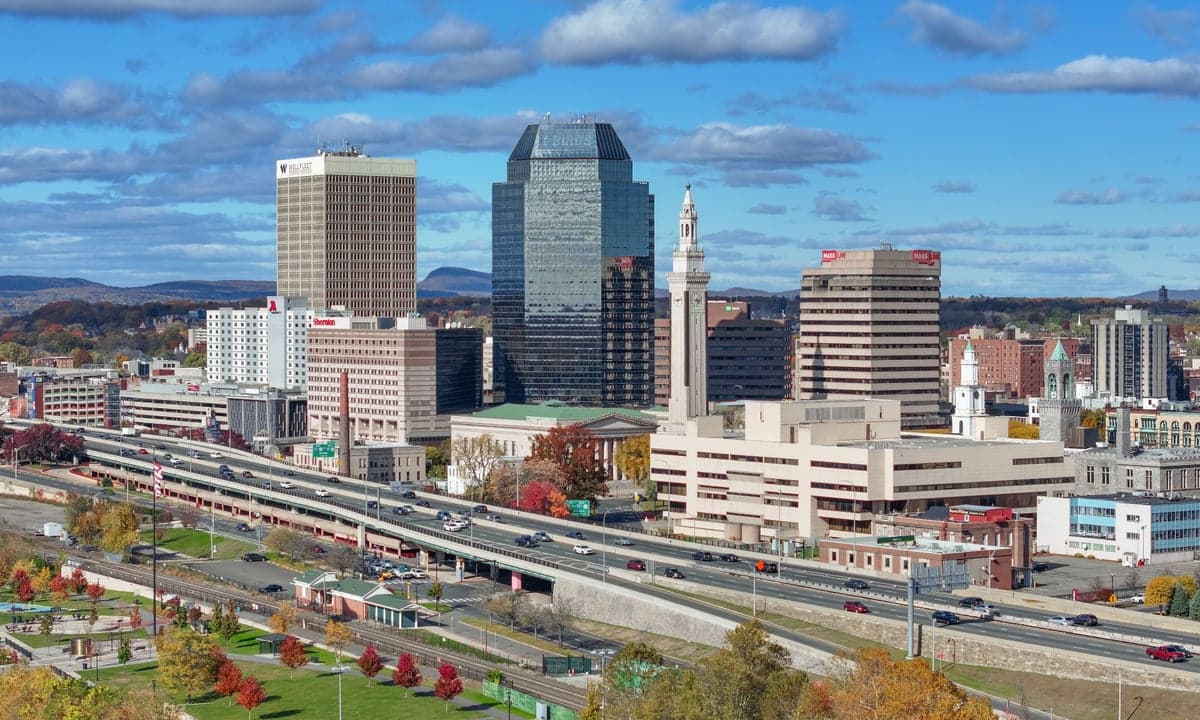
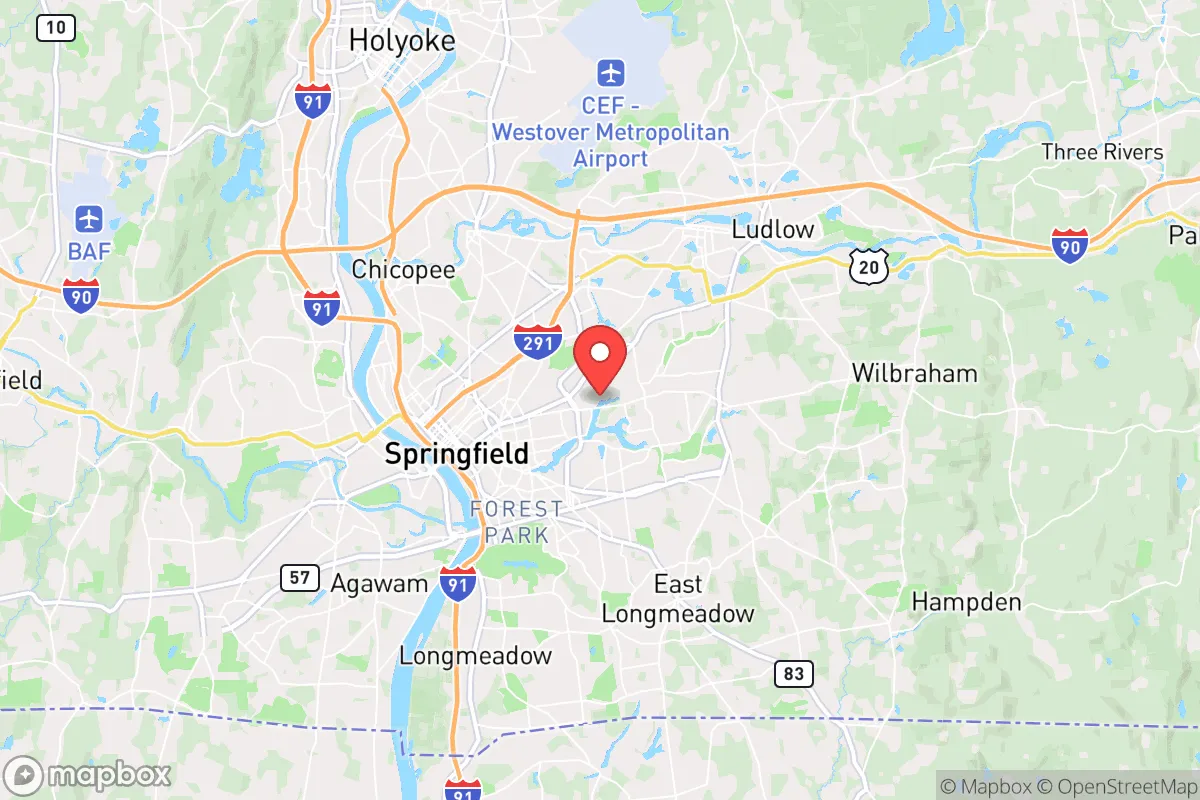
Photo: Wikipedia
Quality of Life in Springfield, MA
A high quality of life with strong walkability, manageable living costs, healthy neighborhood signals, and solid amenity access.
What does Quality of Life tell us?
Quality of Life blends cost of living, nearby amenities, socioeconomic signals, and neighborhood character. City-level scores represent the whole municipality; individual neighborhoods can differ.
What does this tell us?
Quality of Life blends cost of living, nearby amenities, socioeconomic signals, and neighborhood character. City-level scores represent the whole municipality; individual neighborhoods can differ.
Cost of Living
11% below national average
The Real Cost of Living in Springfield, MA for 2026
| Tier | Individual | Family (4) |
|---|---|---|
| Survival | $18k | $33k |
| Comfortable | $43k | $64k |
| Luxury | $93k+ | $144k+ |
| Elite (Top 5%) | $113k+ | $176k+ |
81%
The Area Signal
A metric tracking the socioeconomic signals of the area.
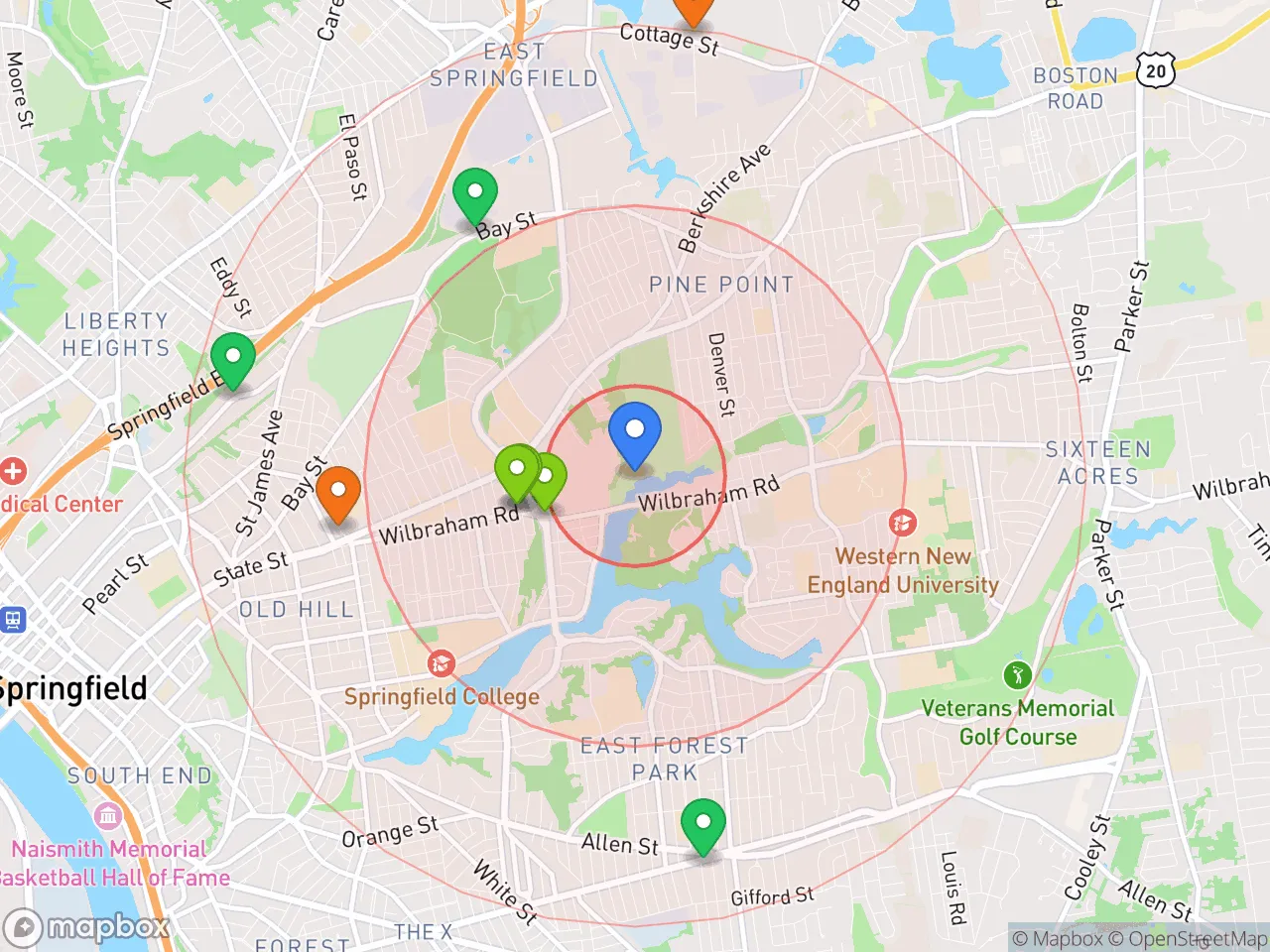
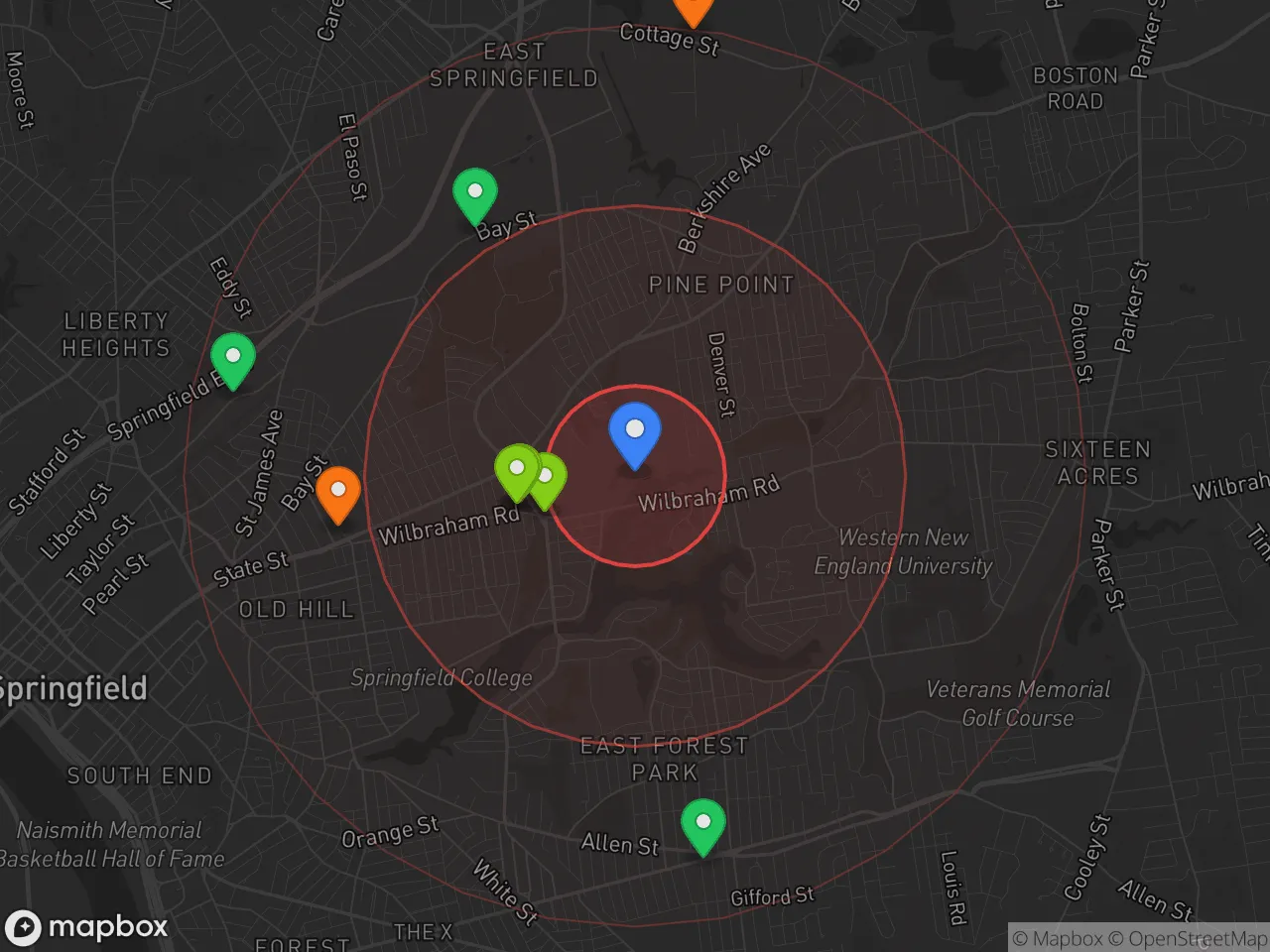
Hobbies
Explore the areaGroceries
5 within 10 miles
Gas
20 within 10 miles
Hospital
17 within 20 miles
Airport
JFK — John F. Kennedy International
Post Office
USPS — Springfield, MA
Critical Amenities
Quality-of-Life Analysis
Springfield, Massachusetts, presents a quality-of-life profile defined by its status as a more affordable urban anchor in a region where housing costs escalate sharply just 25 miles east. With a cost-of-living index of 89 (11% below the national average), the city attracts a diverse mix of working-class families, first-generation immigrants, and students drawn to its five colleges and universities. The population skews younger and more ethnically varied than the surrounding Pioneer Valley, creating a community fabric that is both economically grounded and culturally vibrant.
How housing costs and daily expenses compare to Boston and Hartford
Springfield’s affordability is its most defining quality-of-life feature, especially when measured against nearby metro areas. The median home value of $222,700 is less than one-third of Boston’s median and roughly 40% lower than in Hartford, Connecticut. Median rent sits at $1,114, a figure that undercuts the national median by about $200 and makes the city one of the most accessible rental markets in the Northeast for households earning the area’s median income of roughly $45,000. The average commute of 20.9 minutes is notably short for a mid-sized city, reflecting the fact that many residents work within Hampden County or at major employers like Baystate Health, MassMutual, and the Springfield Public Schools. However, property taxes in Massachusetts are relatively high—averaging about 1.1% of assessed value—which partially offsets the low purchase price for homeowners. Renters benefit from a market where vacancy rates hover around 5%, giving them more leverage than in Boston’s hyper-competitive landscape.
What daily life is like for families: schools, parks, and local amenities
Daily life in Springfield centers on a compact, walkable downtown core and a network of neighborhood commercial corridors such as Main Street and State Street. The city operates 44 public schools, with standout magnet programs like the Springfield Renaissance School and the High School of Commerce drawing families seeking specialized curricula. For recreation, the 735-acre Forest Park offers a zoo, golf course, and ice skating rink, while the Connecticut Riverwalk provides a 4.5-mile paved trail for cycling and jogging. Cultural amenities include the Springfield Museums—a consortium of five museums under one admission fee—and the MassMutual Center, which hosts minor-league hockey and concerts. Grocery access is adequate, with Big Y and Stop & Shop locations spread across the city, though some neighborhoods in the South End and Mason Square are classified as food deserts, requiring a car or bus trip for fresh produce. The Pioneer Valley Transit Authority runs bus routes that cover most of the city, but service frequency drops after 8 p.m., making car ownership nearly essential for evening activities.
Springfield is best suited for cost-conscious families, young professionals starting their careers, and retirees on fixed incomes who value urban amenities without Boston-level price tags. The city’s low housing costs and short commute times offer a tangible trade-off for those willing to navigate a school system with mixed performance ratings and a property tax burden that is higher than in neighboring states like New Hampshire. For someone who prioritizes walkable neighborhoods, cultural institutions, and a diverse population over suburban sprawl or elite school rankings, Springfield delivers a grounded, accessible quality of life that is increasingly rare in the Northeast corridor.

Crime in Springfield, MA
Significantly higher crime rates than 80% of comparable U.S. locations.
Violent CrimeViolent Crime Analysis
Property CrimeProperty Crime Analysis
Crime Analysis
Springfield, Massachusetts, faces a serious public safety challenge, with crime rates that significantly exceed both state and national averages. The city's violent crime rate stands at 807 incidents per 100,000 residents, while property crime occurs at a rate of 2,300 per 100,000. These figures place Springfield among the higher-risk urban centers in New England, a reality shaped by a combination of socioeconomic factors and, critically, the prevailing progressive judicial philosophy in Hampden County.
Crime in context
To understand the scale of the problem, Springfield's violent crime rate is roughly 2.2 times the national average and more than 3 times the Massachusetts state average. The property crime rate, while less extreme, still runs about 30% above the national benchmark. These numbers are not abstract statistics; they reflect a tangible environment where residents face elevated risks of robbery, assault, burglary, and theft. The city's location within a large metro area (the Springfield-Holyoke-Chicopee corridor) compounds the issue, as criminal activity often flows across municipal lines. A major contributing factor is the liberal prosecutorial approach in Hampden County, where district attorneys and judges have, in recent years, prioritized diversion programs, reduced bail requirements, and avoided harsh sentencing for repeat offenders. While intended to reduce incarceration, this approach has a direct, negative consequence: more criminals on the street, eroding deterrence and undermining justice for victims and the law-abiding public.
What residents experience
For those living in Springfield, the high crime rate translates into daily vigilance. Property crime—including vehicle break-ins, home burglaries, and package theft—is a persistent nuisance and financial burden. Violent crime, while less frequent, is more concentrated and can be unpredictable. Residents report feeling unsafe in certain commercial corridors and public transit hubs after dark. The progressive justice policies in the region mean that even when arrests are made, offenders often face minimal consequences. Repeat property criminals and those charged with non-violent offenses are frequently released on personal recognizance or given short, suspended sentences, creating a revolving-door effect that frustrates victims and emboldens criminals. This dynamic is particularly acute in a mid-sized city like Springfield, where police resources are stretched thin and the court system is overwhelmed by cases that lack meaningful follow-through.
Neighborhood-level variation
Safety is not uniform across Springfield. The Forest Park, Sixteen Acres, and East Forest Park neighborhoods generally experience lower crime rates, offering a more suburban feel with better-maintained properties and stronger community watch efforts. In contrast, the Old Hill, Mason Square, and McKnight areas see the highest concentrations of violent crime and gang activity. The downtown core and the area around Union Station also have elevated property crime and occasional violent incidents. Prospective residents should research specific blocks and talk to local police precincts, as a street-level difference of two blocks can mean the difference between a quiet block and a high-risk corridor. The safest strategy is to choose a home in the city's southern or eastern neighborhoods, or to consider nearby communities like Longmeadow or East Longmeadow, which offer dramatically lower crime rates due to more conservative local governance and policing policies.
* Values derived from national, state, county, city and local statistics and may differ in a specific area. Last updated: 2026-05-01T21:25:33.000Z
Narrative content on this page is AI-generated and may contain mistakes. Verify any details that matter before acting on them.
ReloMaps may earn a commission from affiliate links at no extra cost to you.

