 Popular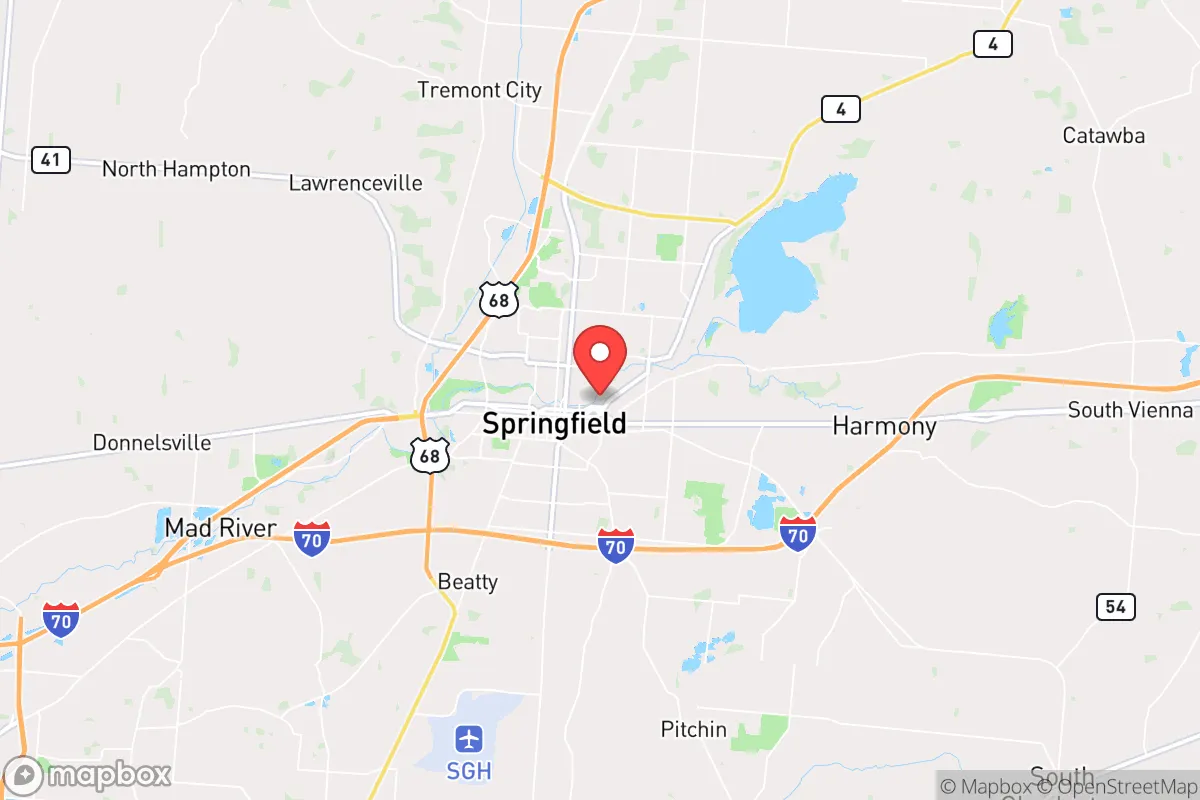
Photo: Wikipedia
Personal Sovereignty in Springfield, OH
Viable for self-reliance. Generally workable, though some barriers may limit total independence.
What does Personal Sovereignty tell us?
Personal Sovereignty measures your capacity for self-reliance and independence with minimal government friction. Higher scores mean fewer barriers between you and the way you want to live... but it assumes you have the space you need and good neighbors.
What does this tell us?
Personal Sovereignty measures your capacity for self-reliance and independence with minimal government friction. Higher scores mean fewer barriers between you and the way you want to live... but it assumes you have the space you need and good neighbors.
State Policy
Energy independence: Importer (40% of energy produced in-state)
Personal Liberty
Homesteading

Personal Liberty Analysis
Springfield, Ohio, offers a mixed but increasingly favorable environment for personal sovereignty, particularly for those who prioritize self-reliance and minimal government interference in daily life. While Ohio is not a libertarian paradise, Springfield’s position in a politically competitive state—where Republicans control the legislature and governorship as of 2026—has created a legal landscape that generally respects individual autonomy more than coastal or deep-blue jurisdictions. For a survivalist or prepper mindset, the key question is whether local and state policies allow you to live, defend, and provide for yourself without excessive bureaucratic friction. The answer is cautiously optimistic: Springfield provides a solid foundation for personal freedom, but requires vigilance against creeping overreach, especially at the municipal level.
Tax burden and regulatory posture: How much of your income and time does the state take?
Ohio’s tax structure is moderate compared to high-tax states, but it’s not a zero-tax haven. The state income tax is a flat rate of 2.75% as of 2026, down from a progressive system in prior years—a clear win for earners and small business owners. Property taxes in Clark County, where Springfield sits, average around 1.5% of assessed home value, which is slightly above the national median but manageable for a modest homestead. Sales tax in Springfield is 7.25% (state plus local), which is reasonable. The regulatory posture in Ohio has shifted notably toward deregulation under recent administrations: occupational licensing requirements have been reduced for several trades, and the state has preempted many local ordinances on matters like plastic bag bans and minimum wage hikes. This means Springfield’s city council has less room to impose burdensome local rules that would hamper a self-reliant lifestyle. However, property taxes can rise with school levies and bond issues—voters in Clark County have approved several in recent years—so a prepper should budget for potential increases. Overall, the tax burden here is not oppressive, and the regulatory climate respects individual economic freedom more than in states like New York or California.
Self-defense and gun law specifics: Can you legally protect yourself and your family?
Ohio is a strong Second Amendment state, and Springfield reflects that. As of 2026, Ohio is a constitutional carry state—no permit is required to carry a concealed handgun for anyone 21 or older who is legally allowed to possess a firearm. This is a direct result of the 2022 permitless carry law, which survived legal challenges. Open carry is also legal without a permit, though local law enforcement may still respond to calls about armed individuals in public—a reality that requires situational awareness. Stand-your-ground laws are in effect: there is no duty to retreat before using deadly force if you are lawfully present and believe force is necessary to prevent death or great bodily harm. This is crucial for a survivalist mindset, as it removes legal ambiguity in a home defense or self-defense scenario. Castle doctrine applies to your home and vehicle. Magazine capacity is not restricted, and there is no state-level assault weapons ban. The only notable restriction is that private sales of handguns require a background check through a licensed dealer—a compromise from the 2022 law. For preppers, the ability to stockpile ammunition and maintain a defensive arsenal without state interference is a major plus. However, Springfield is in Clark County, which has a Democratic-leaning prosecutor’s office; while gun laws are state-preempted, local enforcement attitudes can vary. A responsible gun owner should stay informed about local court dynamics.
Self-reliance and homesteading viability: Lot sizes, zoning, and off-grid feasibility
Springfield and its surrounding rural areas in Clark County offer genuine opportunities for self-reliance, but the city itself is less accommodating. Within Springfield’s city limits, zoning is typical of a mid-sized Rust Belt town: residential lots are often small (0.1 to 0.25 acres), and keeping livestock like chickens or goats is restricted or requires a permit. The city also enforces building codes that can complicate off-grid setups like composting toilets or rainwater collection systems. However, the real opportunity lies just outside the city. Unincorporated Clark County and nearby townships have much looser zoning: you can find parcels of 1 to 5 acres for under $20,000, and many allow chickens, goats, and even small-scale farming without special permits. Off-grid living is feasible in these areas—solar panels, well water, and septic systems are common, and the county does not aggressively enforce building codes on rural properties. Ohio’s net metering laws are favorable for solar, and there are no state-level restrictions on rainwater harvesting. For a prepper, the strategy is clear: buy land outside Springfield’s jurisdiction, where you can build a self-sufficient homestead with minimal government oversight. The city’s water and sewer utilities are reliable but expensive; going off-grid in the county avoids those monthly bills. The main regulatory hurdle is the Ohio Environmental Protection Agency’s rules on septic systems, which require permits and inspections, but these are manageable for a determined homesteader.
Personal liberties: Parental rights, medical autonomy, speech, and property
Ohio has become a battleground for personal liberties, and Springfield sits in a region where conservative values dominate. Parental rights are strongly protected: Ohio law requires parental consent for minors’ medical procedures, including vaccinations and gender-related care, and the state has passed a Parents’ Bill of Rights that gives parents access to school curricula and the ability to opt their children out of objectionable material. This is a significant win for families who want to shield their children from progressive indoctrination. Medical autonomy is more complicated. Ohio does not have a state-level vaccine mandate for adults, but employers and healthcare systems can still require them. The state banned COVID-19 vaccine passports in 2022, but private businesses can still ask. For a prepper, the key is that you can refuse medical treatments without facing state penalties, though you may face social or employment pressure. Free speech is robust: Ohio has no hate speech laws that criminalize political or religious expression, and Springfield’s public forums are generally open to conservative viewpoints. Property rights are strong, with no statewide rent control and limited eminent domain abuse—though the city has used tax increment financing to lure development, which can raise property taxes for existing homeowners. The biggest concern for personal sovereignty is the potential for federal overreach, but at the state and local level, Springfield offers a relatively free environment for those who want to live according to their own values.
Compared to other areas in the Midwest, Springfield provides a solid balance of low taxes, strong gun rights, and homesteading potential, but it is not the most sovereign-friendly locale in Ohio. Rural counties like Holmes or Knox offer even less regulation and lower taxes, while cities like Columbus or Cincinnati have more progressive ordinances that erode personal freedoms. For a survivalist or prepper with a conservative perspective, Springfield is a viable base of operations—especially if you live just outside city limits—but you must remain engaged in local politics to prevent the erosion of the liberties that currently exist. The state’s trajectory is positive, but vigilance is the price of freedom.

* Values derived from national, state, county, city and local statistics and may differ in a specific area. Last updated: 2026-04-21T19:28:11.000Z
Narrative content on this page is AI-generated and may contain mistakes. Verify any details that matter before acting on them.
ReloMaps may earn a commission from affiliate links at no extra cost to you.

