 Popular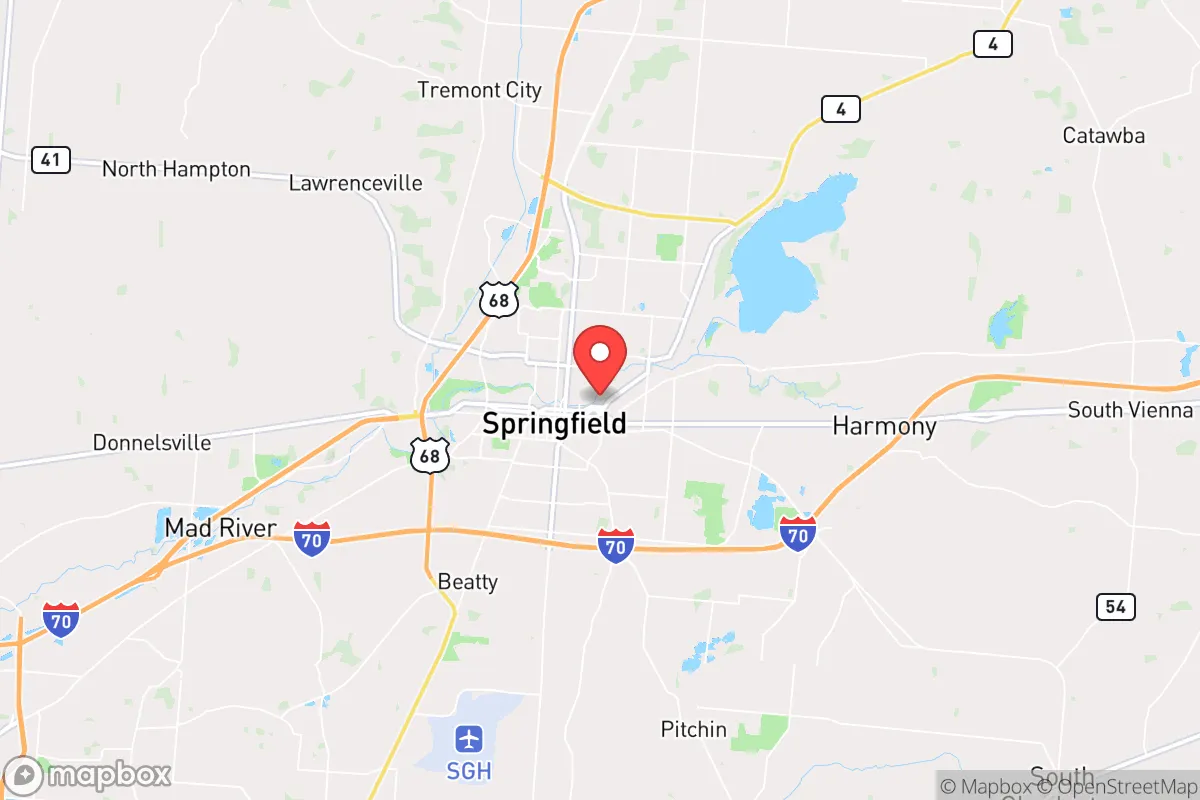
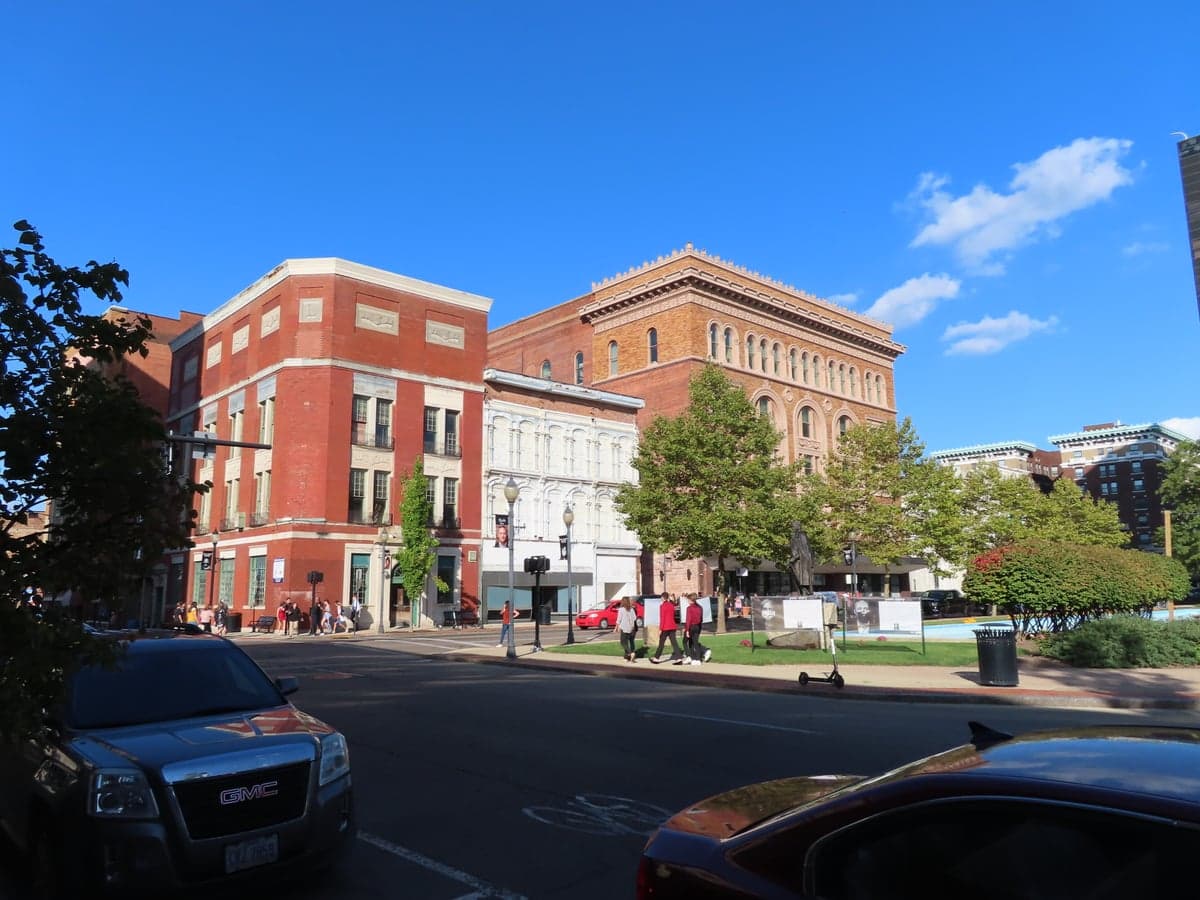
Photo: Wikipedia
Political ClimatePolitical Climate in Springfield, OH
District shown is the primary district for this city’s centroid. Cities may span multiple districts.
Local Political AnalysisPolitical Analysis of Springfield, OH
Springfield, Ohio, has long been a solidly conservative community, and that hasn't changed much despite some national trends. The Cook PVI rating of R+3 tells you the district leans Republican by a modest but consistent margin, and you feel it in the local culture and voting patterns. But if you’ve lived here as long as I have, you’ve seen the political ground shift under your feet—not in who wins elections, but in what the fights are about. It used to be about taxes and roads; now it’s about whether the government should have a say in your kids’ education, your business, or your backyard.
How it compares
Drive thirty minutes south to Dayton, and you’re in a different world politically—Dayton’s urban core leans heavily Democratic, with a Cook PVI of D+8. Columbus, an hour east, is even bluer. But Springfield sits in Clark County, surrounded by small towns like New Carlisle and South Vienna that vote reliably red. The contrast is stark: while Dayton and Columbus have embraced progressive policies on housing, policing, and public health mandates, Springfield has largely held the line. That said, the pressure is real. You see it in school board meetings where parents are suddenly the enemy, and in city council debates where “equity” language creeps into zoning laws. The surrounding rural areas are still rock-ribbed conservative, but Springfield itself is a battleground where the old-school live-and-let-live ethos is being challenged by folks who think government should manage more of your daily choices.
What this means for residents
For the average family here, the political climate means you still have a fair amount of breathing room—for now. Property taxes are reasonable, zoning isn’t a nightmare, and you can run a small business without drowning in red tape. But the warning signs are there. The push for “equity” in local hiring and contracting is a backdoor way to impose quotas, and it’s already showing up in city RFPs. The school board has had heated debates over curriculum transparency, and some parents are worried about critical race theory creeping into lesson plans. If you value personal freedom—the right to decide what your kids learn, what medical choices you make, and how you run your own property—you need to stay engaged. The progressive wave that’s washed over bigger cities hasn’t fully hit Springfield yet, but the tide is rising. Local elections matter more than ever because that’s where the real overreach starts: a zoning change here, a diversity mandate there, and suddenly you’re asking permission to put up a fence or teach your kid math the old-fashioned way.
One thing that still sets Springfield apart is its stubborn, practical streak. People here don’t like being told what to do by either party. The local gun culture is strong, and the Second Amendment isn’t a talking point—it’s a way of life. You’ll also find a deep skepticism of mask mandates, vaccine passports, and any government program that claims to know what’s best for you. The city’s history as a manufacturing hub means there’s a blue-collar independence that resists nanny-state policies. But the demographic shift is real: new arrivals from Columbus and Dayton bring different ideas, and the old guard is aging out. If I had to guess, Springfield will stay R+3 for a while, but the fights will get uglier. The best advice I can give is to keep your ear to the ground at city council meetings and school board sessions—that’s where your freedoms will be won or lost, one ordinance at a time.

State Political ClimatePolitical Climate in Ohio
State Political AnalysisPolitical Environment in the State
Ohio has long been the quintessential bellwether state, but over the past decade it has shifted from a classic purple swing state to a reliably red-leaning one, with Republicans now holding every statewide office and commanding supermajorities in the state legislature. The 2024 presidential election saw Donald Trump carry Ohio by roughly 11 points, a stark contrast to the 8-point margin in 2020 and the 8-point loss in 2012, cementing a rightward trajectory that has accelerated since the 2016 realignment. This shift is driven by a potent mix of working-class defections from the Democratic coalition in the industrial north and a rapidly growing conservative exurban and rural base, though the state’s major cities—Columbus, Cleveland, and Cincinnati—remain deeply blue, creating a political landscape that is increasingly defined by geography and culture.
Urban vs. rural divide
The political map of Ohio is a textbook study in the urban-rural chasm. The three major metros—Cuyahoga County (Cleveland), Franklin County (Columbus), and Hamilton County (Cincinnati)—cast roughly 40% of the state’s vote and consistently deliver Democratic margins of 15 to 30 points. But outside those islands, the rest of the state has become a Republican fortress. The Appalachian southeast, the rural northwest, and the sprawling exurbs of Columbus and Cincinnati have all shifted hard right. A telling example is Delaware County, just north of Columbus: once a swing suburb, it now votes Republican by 20+ points, driven by families fleeing the city for lower taxes and better schools. Meanwhile, Mahoning County (Youngstown) and Trumbull County (Warren) have flipped from reliably Democratic to competitive or even red, as union households abandoned the party over cultural and economic issues. The divide is starkest in the I-71 corridor, where the liberal bubbles of Columbus and Cincinnati are separated by hundreds of miles of deep-red countryside.
Policy environment
Ohio’s policy environment is a mixed bag for conservatives, with notable wins and persistent frustrations. The state has a flat income tax rate of 3.5% (down from 4.997% in 2021), and the legislature is actively working to phase it out entirely, with a goal of zero income tax by 2030. Property taxes are moderate, but recent reappraisals have caused sticker shock in fast-growing suburbs like Dublin and Mason, where assessments jumped 30-40% in 2023. On education, Ohio has a robust school choice system, including the EdChoice voucher program that allows students in underperforming districts to attend private schools—a policy that has expanded significantly under Governor Mike DeWine. However, the state also adopted the Common Core standards and has a state-run academic content board that sometimes clashes with local control. Healthcare is a sore spot: Ohio expanded Medicaid under the Affordable Care Act, and the program now covers over 3 million residents, a fact that rankles fiscal conservatives. Election laws have tightened: the 2023 law requiring photo ID for voting and limiting drop boxes was a win for election integrity advocates, though critics argue it suppresses turnout. Overall, the state leans conservative on taxes and education but remains moderate on healthcare and regulation.
Trajectory & freedom
Ohio’s trajectory on personal freedom is a study in contrasts—some areas are expanding liberty, while others are seeing concerning encroachments. On the positive side, constitutional carry became law in 2022, allowing law-abiding adults to carry a concealed firearm without a permit, a major win for Second Amendment advocates. The state also passed a parental rights bill in 2023 that requires schools to notify parents of any changes to a student’s health or well-being, including gender identity discussions, and gives parents the right to opt their children out of certain curricula. However, the same legislature passed a transgender sports ban and a ban on gender-affirming care for minors, which, while popular with the base, has drawn federal lawsuits and corporate backlash. On medical freedom, Ohio’s Issue 2 in 2023 legalized recreational marijuana, a move that libertarians cheered but social conservatives lamented. The biggest red flag for freedom-minded residents is the state’s eminent domain record: the Ohio Supreme Court has repeatedly sided with local governments in land-use disputes, particularly around the Intel semiconductor plant in Licking County, where officials used eminent domain to seize farmland for the project. Property rights advocates are watching this closely. Overall, Ohio is becoming freer on guns and parental rights but less so on property and medical autonomy.
Civil unrest & political movements
Ohio has seen its share of political flashpoints, though the intensity has cooled since the 2020 protests. The 2020 George Floyd protests in Columbus and Cleveland led to property damage and a heavy police response, but the state avoided the prolonged unrest seen in Portland or Seattle. More recently, the 2023 East Palestine train derailment in Columbiana County became a national rallying cry for both environmentalists and critics of corporate regulation, with local residents feeling abandoned by both parties. Immigration politics are relatively muted compared to border states, but the 2024 Springfield, Ohio controversy—where false claims about Haitian migrants eating pets went viral—highlighted the cultural tensions in smaller industrial cities. On the right, the Ohio Freedom Alliance and local Moms for Liberty chapters have been active in school board races, pushing for curriculum transparency and parental rights. On the left, the Ohio Student Association and Progressive Democrats of America have organized around voting rights and police reform. Election integrity remains a live issue: the 2020 election saw Trump’s legal team challenge results in Ohio, but the state’s Republican Secretary of State Frank LaRose certified the results without major controversy. The most visible flashpoint for a new resident would be the yard sign wars in suburban neighborhoods—expect to see a lot of Trump flags and “Fuck Biden” banners in rural areas, and “In This House We Believe” signs in liberal enclaves like Yellow Springs or Shaker Heights.
Projection
Looking ahead 5-10 years, Ohio is likely to become more conservative, but not uniformly so. The in-migration pattern is telling: people are moving to the Columbus exurbs (Delaware, Licking, Union counties) and the Cincinnati suburbs (Warren, Butler counties), which are overwhelmingly Republican-leaning. Meanwhile, the Rust Belt cities like Youngstown, Canton, and Toledo are losing population, which further dilutes the Democratic base. The Intel plant in Licking County is expected to bring 3,000 high-paying jobs and tens of thousands of construction workers, many of whom will be younger and more diverse, potentially shifting the politics of that area slightly left. But the dominant trend is a continued rural and exurban consolidation of Republican power. The state’s gerrymandered legislative maps (currently being challenged in court) will likely keep the GOP supermajority intact through 2030. On policy, expect further income tax cuts, expanded school choice, and continued battles over abortion rights (the 2023 Issue 1 enshrined abortion access in the state constitution, but the legislature is exploring ways to limit it). The wild card is the 2026 gubernatorial race: if a hardline conservative replaces the relatively moderate DeWine, the state could see a sharper turn on social issues. For someone moving in now, expect Ohio to feel like a solidly red state in a decade, with the blue cities becoming smaller, more isolated, and more culturally distinct.
For a conservative single person or parent considering a move to Ohio, the bottom line is this: you’ll find a state that broadly aligns with your values on taxes, guns, and parental rights, but you’ll need to pick your location carefully. The exurbs of Columbus and Cincinnati offer the best combination of low taxes, good schools, and like-minded neighbors, while the rural counties provide even deeper red politics but fewer amenities. Avoid the urban cores unless you’re prepared for higher taxes, progressive policies, and a different cultural vibe. The state is trending in the right direction on most fronts, but the fight over property rights and medical freedom is far from over. If you value a place where your vote counts and your voice is heard, Ohio is a solid bet—just don’t expect it to be a libertarian paradise anytime soon.
* Values derived from national, state, county, city and local statistics and may differ in a specific area. Last updated: 2026-04-21T19:28:11.000Z
Narrative content on this page is AI-generated and may contain mistakes. Verify any details that matter before acting on them.
ReloMaps may earn a commission from affiliate links at no extra cost to you.

