Photo: Wikipedia
Demographics of Springville, UT
Affluence Level in Springville, UT
An upper-middle-class area. Household wealth, education levels, and homeownership run ahead of national benchmarks.
People of Springville, UT
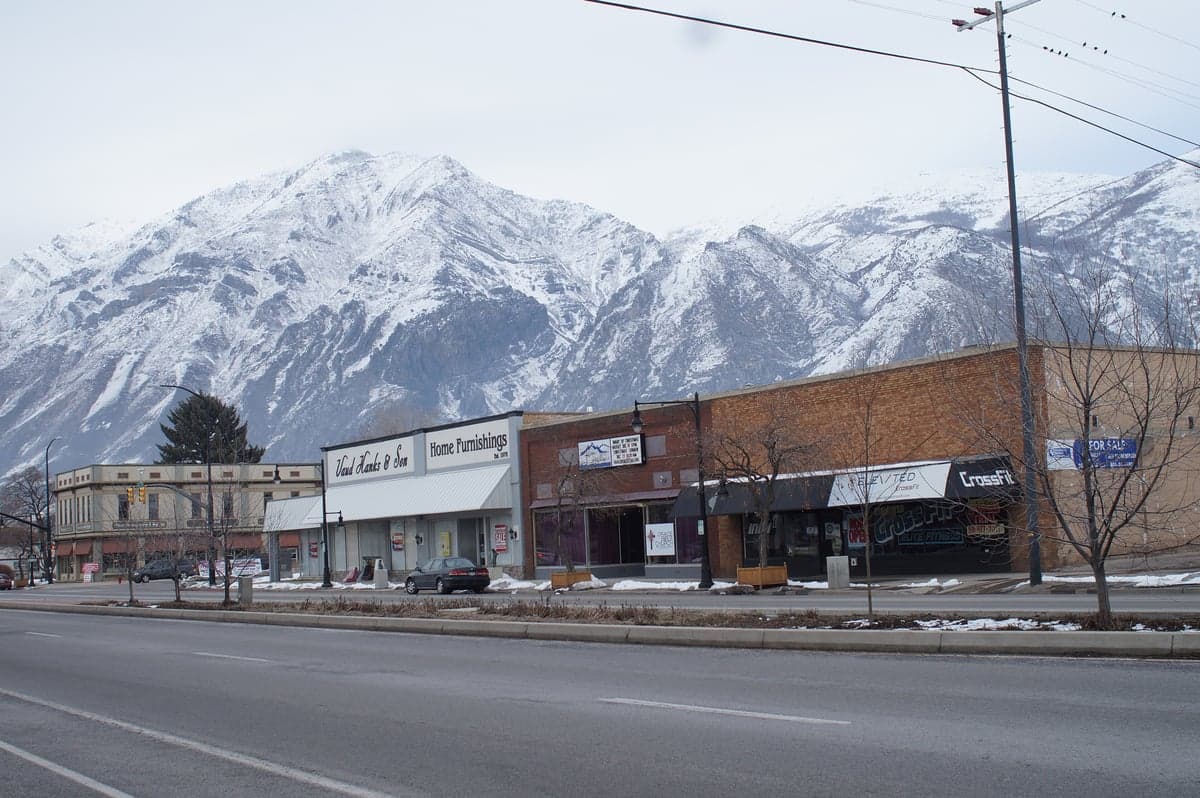
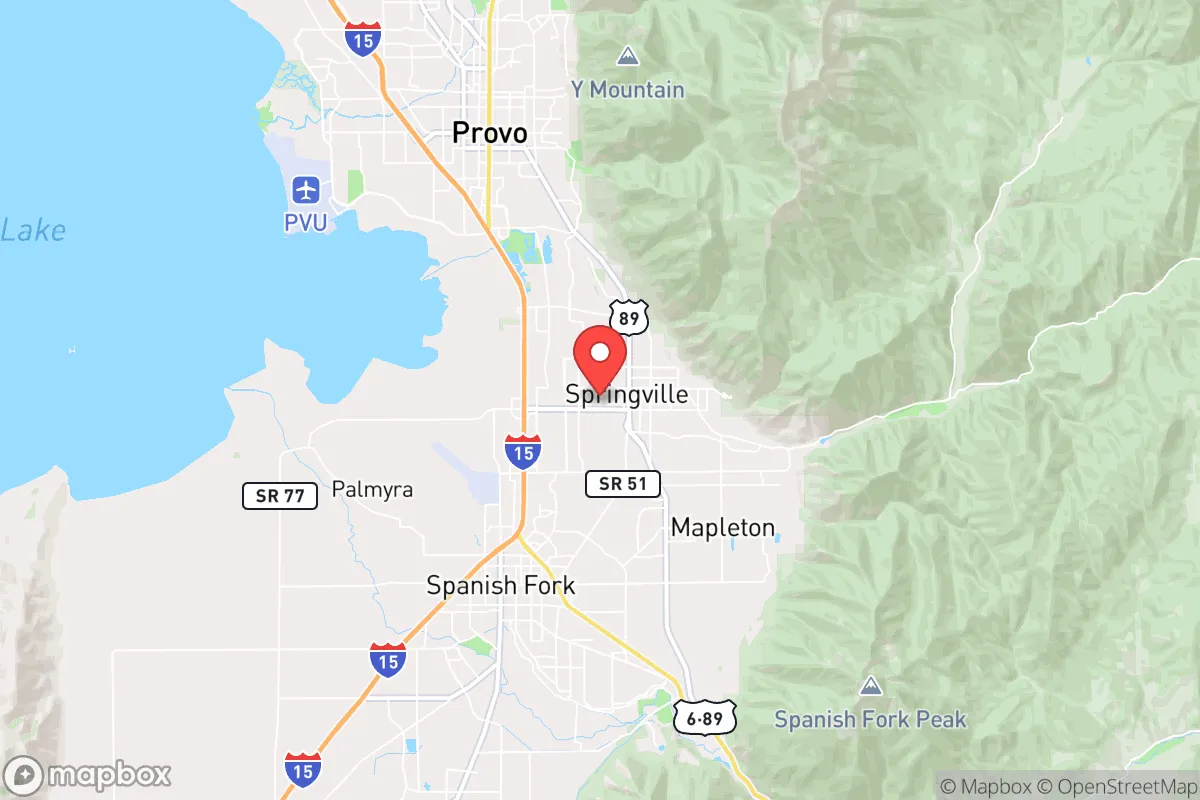
Springville, Utah, is a predominantly white, family-oriented city of 35,474 residents, where a strong Latter-day Saint cultural influence and a growing Hispanic community (17.9%) define its character. The city is notably less diverse than the national average, with a foreign-born population of just 5.5%, and its residents are slightly more college-educated (38.9%) than the state median. Distinct neighborhoods like the historic Art City district and newer subdivisions in West Springville reflect the city's evolution from a tight-knit pioneer settlement into a commuter suburb of Provo.
How the city was settled and grew
Springville was settled in 1850 by Mormon pioneers dispatched by Brigham Young to establish an agricultural outpost along the Hobble Creek drainage. The original settlers were primarily families from the British Isles and Scandinavia who had converted to the LDS Church, and they laid out the city in a grid pattern centered on Main Street and Center Street. The Historic Downtown neighborhood, with its 19th-century homes and the Springville Museum of Art, was built by these early farming families and later by Italian and Greek immigrants who arrived to work in the local sugar beet industry and railroad construction in the 1890s. By 1900, the population had reached roughly 2,000, and the city's identity as "Art City" emerged from the cultural institutions these early settlers established. The Hobble Creek Canyon area became a summer retreat for these founding families, while the East Bench neighborhood remained largely undeveloped ranchland until the mid-20th century.
Modern era (post-1965)
After the 1965 Immigration and Nationality Act, Springville saw only modest demographic change compared to larger Utah cities. The city's growth through the 1970s and 1980s was driven by domestic in-migration from other parts of Utah and the Mountain West, as families sought affordable housing near Provo's expanding tech and education sectors. The West Springville neighborhood, developed primarily from the 1990s onward, absorbed most of this domestic influx, with large single-family subdivisions attracting white, LDS families from within Utah County. The Hispanic population began growing noticeably in the 2000s, concentrated in older rental stock near 400 South and Main Street, as immigrant workers found jobs in construction, landscaping, and the nearby Nebo School District support services. Today, the Hispanic share (17.9%) is roughly double the state average, but the Black (0.3%), East/Southeast Asian (0.8%), and Indian subcontinent (0.4%) populations remain very small, reflecting limited professional immigration to this part of Utah County. The Art City neighborhood has seen some gentrification, with younger professionals renovating historic homes, but it remains overwhelmingly white.
The future
Springville's population is projected to continue growing, driven by natural increase among the large LDS families and ongoing domestic migration from other parts of Utah. The Hispanic community is likely to grow slowly but steadily, as second-generation families move into West Springville subdivisions and the older Downtown rental corridor becomes more established. However, the city shows no signs of rapid diversification: the East/Southeast Asian and Indian populations are expected to remain below 1% each, as high-tech job growth concentrates in neighboring Provo and Lehi. The city is homogenizing in terms of religion and political affiliation—over 80% of residents are LDS—but tribalizing slightly along income lines, with West Springville becoming more affluent and the Historic Downtown retaining a mix of working-class and artist residents. The next decade will likely see continued suburban infill, with new developments pushing toward the I-15 corridor on the city's western edge.
For a conservative-leaning family or individual moving to Springville today, the city offers a stable, culturally cohesive environment with a growing Hispanic minority and very little racial or ethnic diversity beyond that. The population is becoming more suburban and car-dependent, with the historic core gentrifying slowly while new subdivisions absorb most growth. It is a place where LDS cultural norms remain dominant, and newcomers should expect a community that values tradition, family, and local institutions over rapid demographic change.

* Values derived from national, state, county, city and local statistics and may differ in a specific area. Last updated: 2026-05-03T20:35:00.000Z
Narrative content on this page is AI-generated and may contain mistakes. Verify any details that matter before acting on them.
ReloMaps may earn a commission from affiliate links at no extra cost to you.

