Photo: Wikipedia
Political ClimatePolitical Climate in Springville, UT
District shown is the primary district for this city’s centroid. Cities may span multiple districts.
Local Political AnalysisPolitical Analysis of Springville, UT
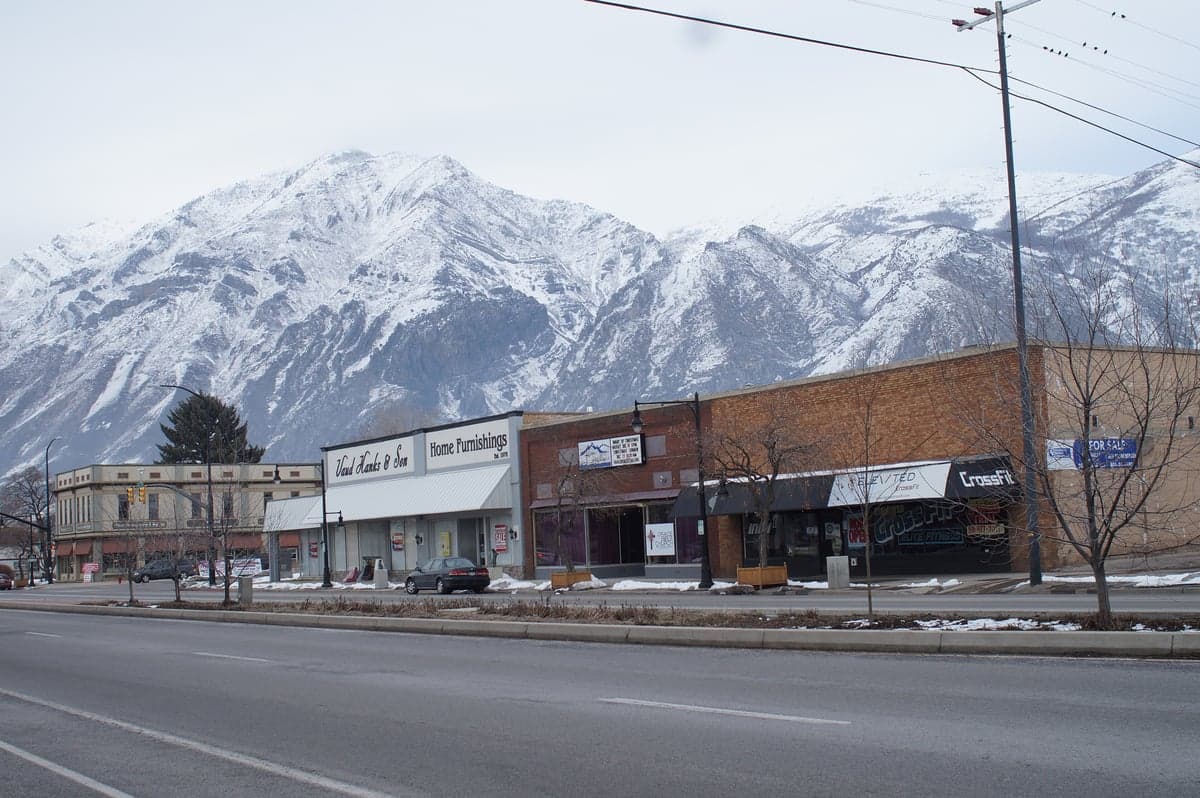
Springville, Utah, is about as solidly conservative as it gets, with a Cook PVI of R+10 that tells you the town leans hard red, and it’s been that way for as long as anyone can remember. But if you’ve lived here a while, you’ve noticed the political climate isn’t quite the same as it was twenty years ago—it’s still deeply Republican, but the flavor is shifting, and not everyone is thrilled about it. The local elections and school board races are where you really see the tension, with a growing push from a small but vocal group that wants to nudge things toward a more progressive agenda, especially on land use and education. For most folks, though, Springville remains a place where the Second Amendment is respected, taxes are kept low, and the government is expected to stay out of your backyard.
How it compares
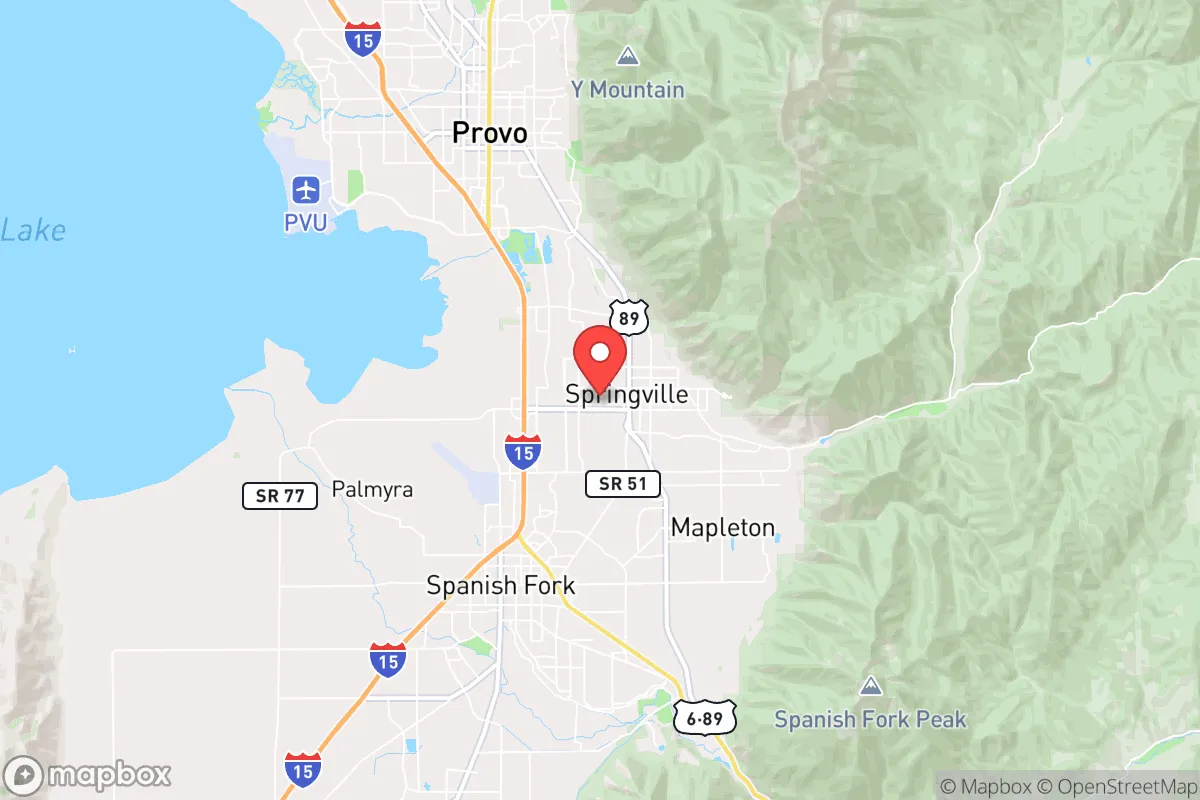
Drive ten minutes north to Provo, and you’ll find a younger, more transient population that’s starting to lean a little more moderate, especially around the university. Head south to Spanish Fork, and it’s a similar story to Springville—strongly conservative, but with a bit more of a rural, hands-off vibe. The real contrast is with Salt Lake City, about an hour north, where the politics are practically a different country: progressive policies on everything from zoning to public health mandates. Springville residents tend to look at that and shake their heads, grateful that their city council still prioritizes local control and personal responsibility over top-down directives. The R+10 rating doesn’t just mean Republicans win here—it means the community actively resists the kind of government overreach that’s become common in bigger cities, like mask mandates or business closures that felt more like control than safety.
What this means for residents
For the average family in Springville, the conservative tilt means you’re not constantly fighting city hall over how to raise your kids or run your business. Property taxes stay reasonable, the police focus on real crime instead of nuisance ordinances, and you can count on the school board to keep curriculum focused on basics rather than social experiments. That said, there’s a growing concern among long-time residents that the influx of new people from out of state—especially from California and the Pacific Northwest—is slowly watering down the local culture. You see it in small ways: a push for more bike lanes that eat up road space, or a proposal to add a “diversity committee” to the city council that feels like a solution in search of a problem. Most folks here still believe the best government is the one that governs least, and they’re keeping a close eye on any candidate who talks about “equity” or “inclusion” as a priority—because that usually comes with more rules and less freedom.
One thing that sets Springville apart is its strong sense of community self-reliance. There’s no appetite for the kind of progressive policies that have turned nearby Salt Lake City into a bureaucratic maze of permits and fees. The city’s annual Art City Days celebration is a perfect example: it’s run by volunteers, funded by local businesses, and the government’s role is mostly just to close the streets. That’s the Springville way—people take care of each other without needing a government program. If you’re looking for a place where your personal rights aren’t treated as negotiable, and where the political climate still values common sense over ideology, this is it. Just keep an eye on the city council meetings—because the fight to keep it that way is ongoing, and it’s worth showing up for.

State Political ClimatePolitical Climate in Utah
State Political AnalysisPolitical Environment in the State
Utah has long been one of the most reliably conservative states in the Union, with a Republican trifecta controlling the governorship and both legislative chambers for decades. The state’s dominant political coalition is a blend of traditional Mormon values, fiscal conservatism, and a strong libertarian streak on land use and gun rights. Over the past 10-20 years, the trajectory has been a slow but noticeable shift: the Wasatch Front metros have become more purple, while rural counties have hardened into deep red strongholds. The 2024 election saw Donald Trump win Utah by about 21 points, down from 37 points in 2016, signaling a realignment driven by suburban moderates and a growing independent vote.
Urban vs. rural divide
The political map of Utah is a tale of two landscapes. The Wasatch Front—home to Salt Lake City, Provo, and Ogden—is where the state’s political battles are fought. Salt Lake County, which holds about 40% of the state’s population, has trended blue in presidential elections, voting for Joe Biden in 2020 and Hillary Clinton in 2016. Provo and Utah County remain deeply conservative, anchored by Brigham Young University and a dense LDS population, but even there, younger voters are drifting left on social issues. Rural Utah is a different world: Moab, St. George, and Cedar City are overwhelmingly Republican, with counties like Kane and Garfield routinely voting 80%+ for GOP candidates. The divide is stark—drive 30 minutes outside any Wasatch Front city, and you’ll find “Trump 2024” signs on every ranch gate and a deep distrust of Salt Lake City’s growing progressive influence.
Policy environment
Utah’s policy environment is a mixed bag for conservatives. On the plus side, the state has no income tax on Social Security benefits, a flat 4.65% income tax rate, and a relatively low property tax burden. The regulatory posture is business-friendly, with right-to-work laws and minimal zoning restrictions outside of Salt Lake City proper. Education policy is a flashpoint: the state passed a universal school voucher program in 2023 (HB 215), allowing families to use public funds for private or homeschool expenses—a major win for school choice advocates. However, the state also mandates sex education in public schools (though with an opt-out provision), and the legislature has resisted efforts to ban critical race theory outright, instead passing a watered-down “divisive concepts” law in 2021. Election laws are solid: voter ID is required, no-excuse mail-in voting is standard (which some conservatives view as a vulnerability), and the state has a nonpartisan redistricting commission that has kept maps relatively fair. Healthcare is a sore spot—Utah expanded Medicaid under the Affordable Care Act in 2019, a move that rankled fiscal conservatives but was sold as a way to keep federal dollars in-state.
Trajectory & freedom
On personal liberty, Utah is a study in contradictions. The state is a Second Amendment haven: constitutional carry passed in 2021 (HB 60), and there are no magazine capacity limits or red flag laws. Property rights are strong, with the state’s “private property protection” laws limiting eminent domain abuse. But the government has recently expanded its reach in ways that worry liberty-minded residents. The 2023 “social media regulation” law (SB 152) requires parental consent for minors to use platforms like TikTok and Instagram—popular with parents but seen by some as a First Amendment overreach. Medical autonomy took a hit with the 2024 ban on gender-affirming care for minors (HB 257), which conservatives cheered but libertarians questioned as a state intervention into family medical decisions. On taxation, the 2023 property tax reform (SB 115) capped annual increases at 3% for primary residences, a win for homeowners. The overall trajectory is toward more government involvement in social issues, even as economic freedom expands—a pattern that mirrors the national conservative shift toward “common good” conservatism.
Civil unrest & political movements
Utah is not a hotbed of civil unrest, but there are visible flashpoints. The most organized activist movements are on the right: the Utah Patriot Coalition and local chapters of Moms for Liberty have been vocal in school board meetings, pushing for book bans and parental rights. On the left, the Salt Lake City chapter of Black Lives Matter held large protests in 2020, and the city’s “sanctuary city” resolution (later repealed by the state legislature) sparked a backlash. Immigration politics are relatively quiet—Utah has no sanctuary policies, and the state’s agricultural and tourism sectors rely heavily on immigrant labor, creating a pragmatic tolerance. Election integrity controversies are minimal; the state’s mail-in voting system is widely trusted, though some rural counties have complained about ballot drop-box security. The most visible political movement is the “Utah Compact” coalition, a group of business and religious leaders who advocate for a moderate, pro-immigration, pro-business conservatism that often clashes with the more populist wing of the state GOP.
Projection
Over the next 5-10 years, Utah will likely become more politically competitive, but not necessarily more liberal. The key demographic driver is in-migration: St. George and Lehi are growing fast, attracting conservative families from California and the Pacific Northwest who are fleeing high taxes and progressive policies. These newcomers tend to be more libertarian than traditional Utah Republicans, favoring lower taxes and less government intervention on social issues. Meanwhile, Salt Lake City’s urban core is becoming younger, more secular, and more left-leaning, driven by tech workers and out-of-state transplants. The net effect is a state that remains Republican but with a more fractured coalition—expect more intra-party fights over education, land use, and immigration. The rural-urban divide will widen, with rural counties pushing for more local control and the Wasatch Front suburbs becoming swing districts. A new resident moving in now should expect a state that is still conservative, but where the definition of “conservative” is increasingly up for debate.
Bottom line for a new resident: If you’re moving to Utah for freedom, you’ll find plenty—low taxes, strong gun rights, and a culture of self-reliance. But don’t expect a libertarian paradise. The state government is active in social policy, and the growing urban population is slowly pulling the state toward the center. Pick your county carefully: Utah County and Washington County are your best bets for a traditional conservative environment, while Salt Lake County and Summit County are trending purple. The next decade will be a tug-of-war between the old guard and the new arrivals, but the state’s fundamental character—independent, family-oriented, and wary of federal overreach—is likely to endure.
* Values derived from national, state, county, city and local statistics and may differ in a specific area. Last updated: 2026-05-03T20:35:00.000Z
Narrative content on this page is AI-generated and may contain mistakes. Verify any details that matter before acting on them.
ReloMaps may earn a commission from affiliate links at no extra cost to you.

