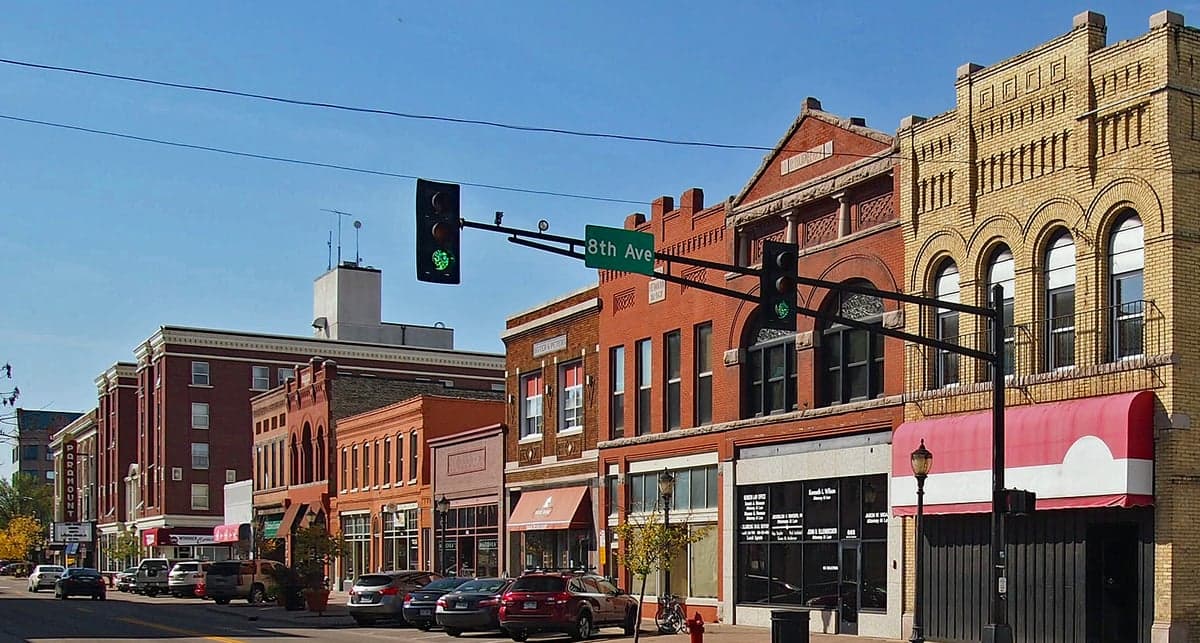
Photo: Wikipedia
Strategic Assessment of St Cloud, MN
Workable tactical position. Some exposure to population density or targets, but generally defensible in a crisis.
What does the Strategic Assessment tell us?
Our Strategic Assessment grades tactical survivability of an area. Major population centers, military targets, fallout zones, natural disasters, and border exposure all drive risk — lower exposure means a more defensible position in a crisis.
This is heavily inspired by Joel Skousen's Strategic Relocation book. Highly recommended you checkout the book ($)What does this tell us?
Our Strategic Assessment grades tactical survivability of an area. Major population centers, military targets, fallout zones, natural disasters, and border exposure all drive risk — lower exposure means a more defensible position in a crisis.
This is heavily inspired by Joel Skousen's Strategic Relocation book. Highly recommended you checkout the book ($)Strategic Pillars

Key Distances
Regional Safe Places
Below is our recommended "safe zones" in Minnesota and the surrounding area based on our strategic heuristics. For most people, it's unrealistic to live in a “safe zone” full-time due to work, family or other personal reasons. They tend to be more rural. However, many of these areas are perfect for second homes and retreat properties that double as a vacation home or even a short-term rental.
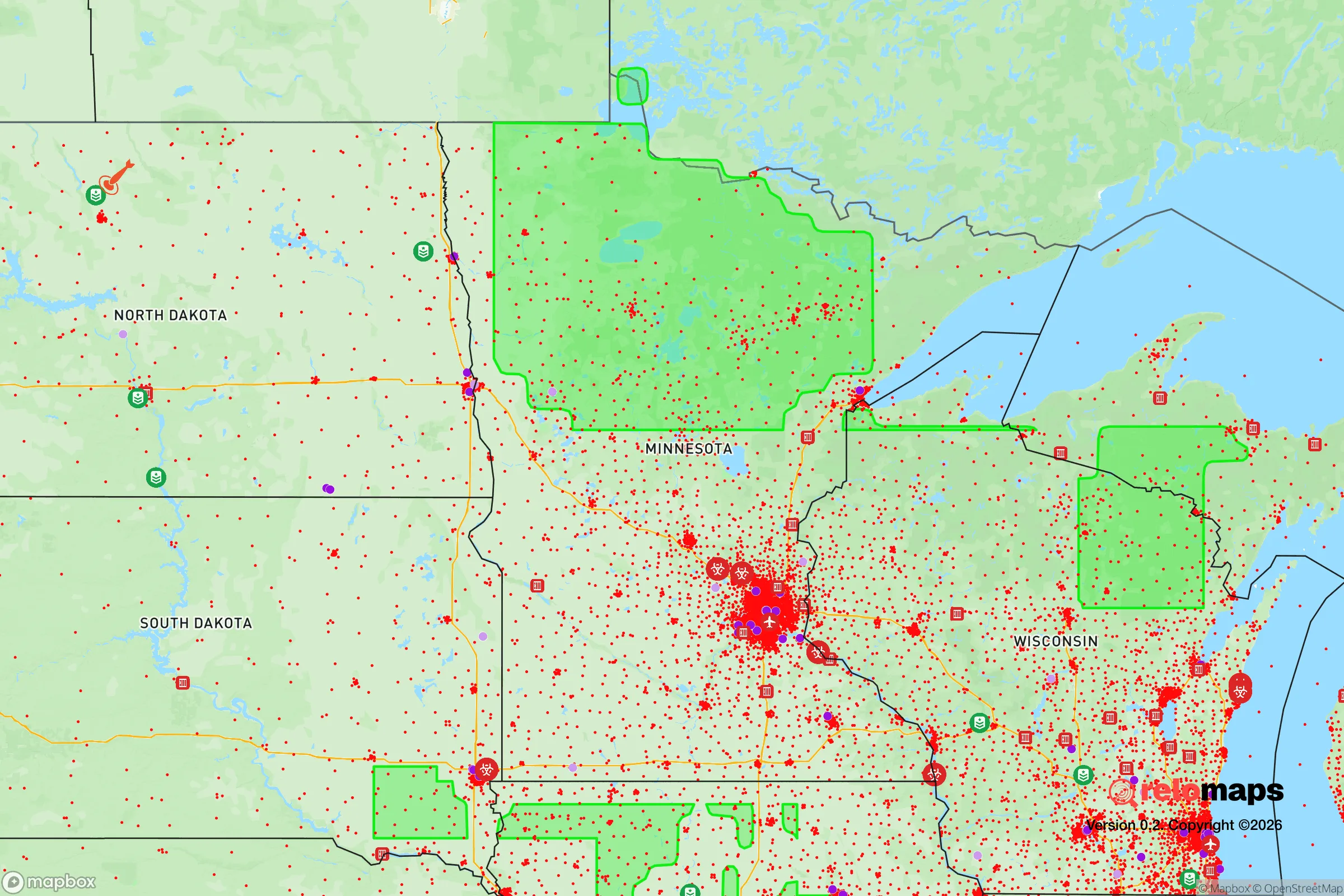
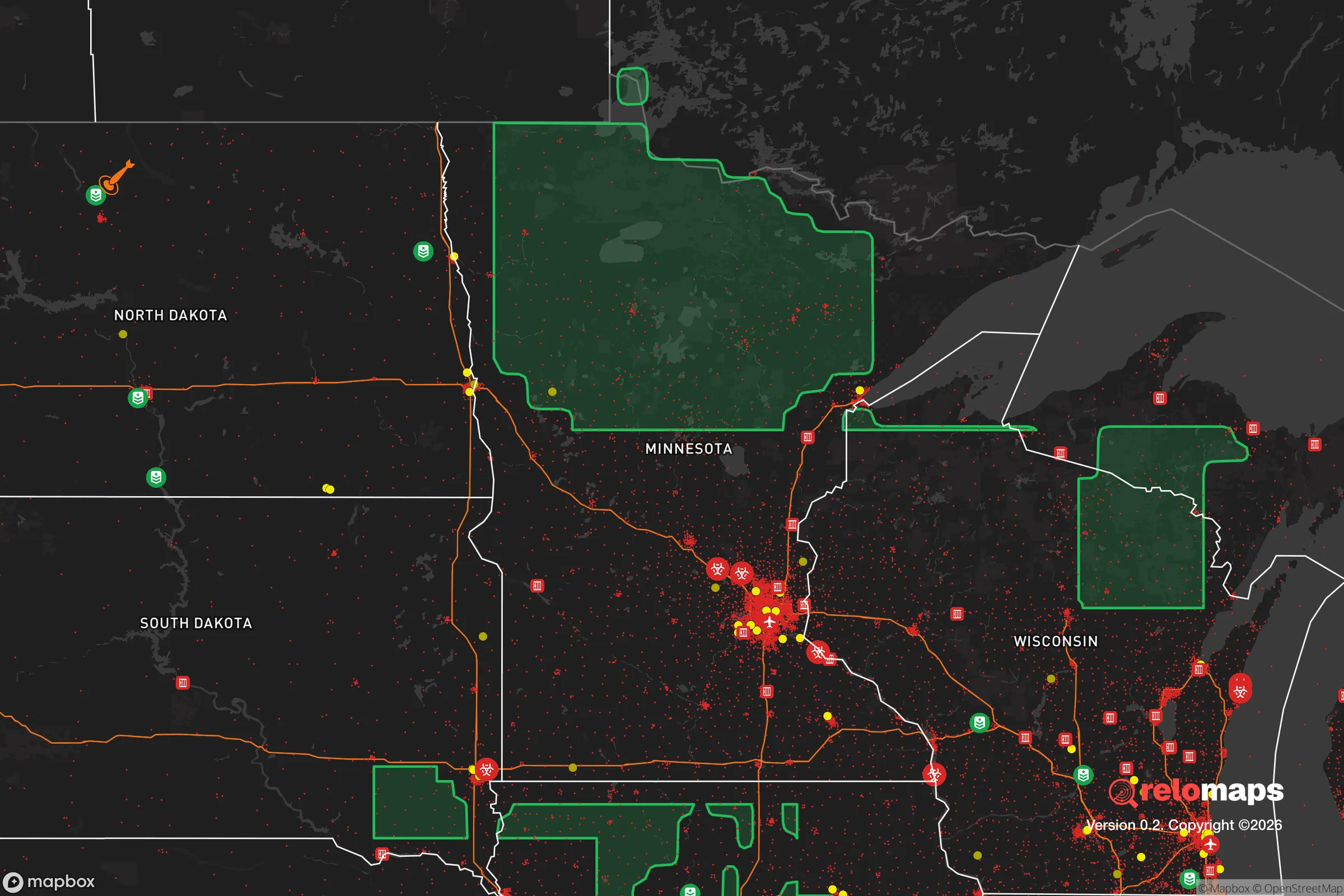


Important Note: For informational purposes only. This does not mean nothing bad ever happens in the green zones. Please use common sense. This is based on public data and modeled with AI. We tried to take a conservative approach but mistakes happen. We update this regularly as new information becomes available.
Solar Generator Recommendations
Backup power matters more here than in safer locations. We've picked three solar generators across budgets and capacity tiers — start with the budget unit if you only need a few essentials, or step up if you want to run a fridge and HVAC for days at a time.

Jackery Portable Power Station Explorer 300
Budget OptionPower on the Go: Weighing only 11 lbs, it's convenient to set up and store with book-sized foldable solar panels

BLUETTI Portable Power Station AC180
Designed for both indoor and outdoor scenarios, AC180 is highly capable as it has a robost capacity and continuous output power.

EF ECOFLOW DELTA Pro Ultra Power Station
Upgraded PickEcoFlow DELTA Pro Ultra is a whole-home energy system designed to grow with your family. Integrated with the Smart Home Panel 2, it scales to meet your evolving energy needs — keeping your home powered, intelligent, and secure through every stage of life.
We earn a commission, at no additional cost to you.
Strategic Assessment Analysis
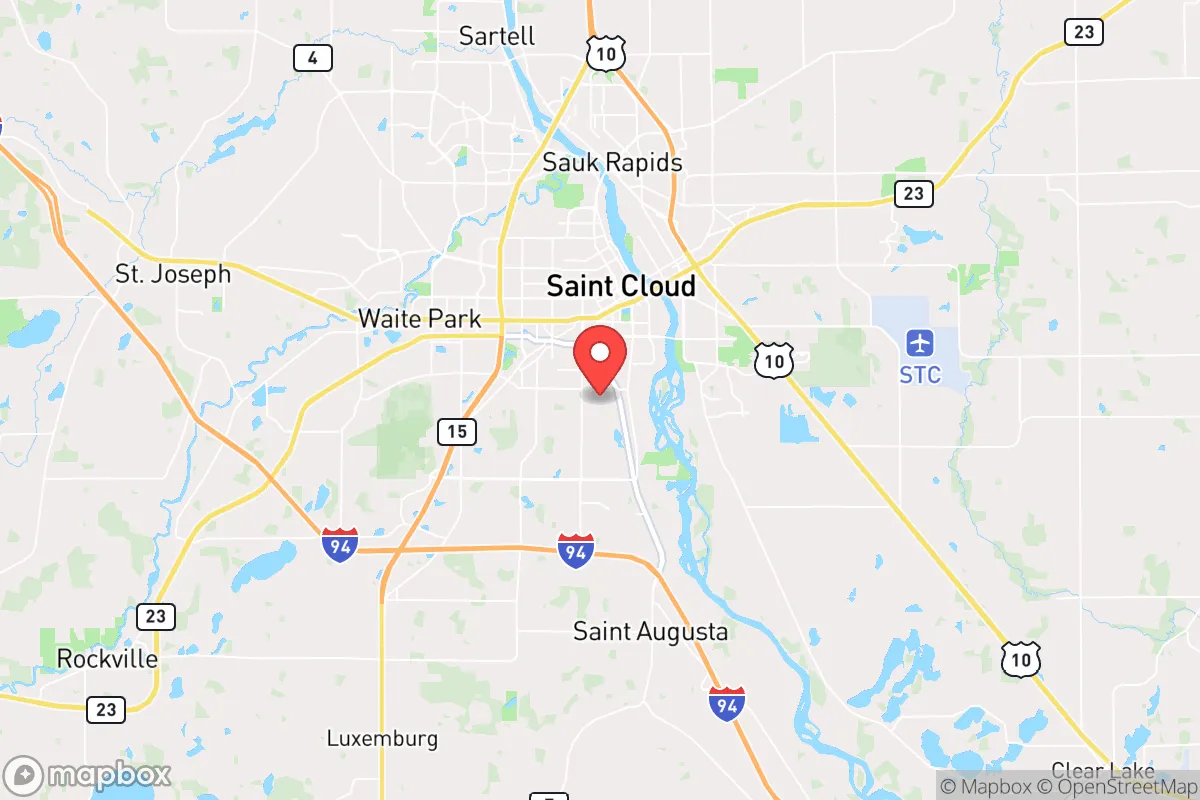
St. Cloud, Minnesota, sits at a strategic crossroads that offers a rare blend of industrial resilience and geographic buffer, making it a serious contender for those prioritizing long-term preparedness. Located roughly 70 miles northwest of the Twin Cities, this city of about 70,000 anchors a metro area of roughly 200,000, providing enough infrastructure to sustain essential services without the density that becomes a liability during civic unrest or mass casualty events. The area’s position along the Mississippi River, its diversified economy anchored by manufacturing and healthcare, and its distance from primary fallout targets give it a practical edge for a relocator thinking in decades, not just next year.
Geographic position and natural advantages for long-term stability
St. Cloud’s location is its first and most obvious asset. It sits on the southern edge of Minnesota’s vast pine and hardwood forests, with the Mississippi River cutting through the city’s eastern side. This isn’t just scenic—it’s a functional water source that doesn’t depend on fragile municipal pumping stations alone. The surrounding terrain is relatively flat but offers natural chokepoints: the river itself, plus a network of smaller lakes and wetlands that limit easy overland movement. To the north and west, you’ve got hundreds of square miles of agricultural land and mixed forest, which means food production potential and fuel (firewood) are within a day’s drive. The area’s cold winters—average January highs around 18°F—are a double-edged sword: they discourage transient populations and slow the spread of airborne pathogens, but they demand serious heating and cold-weather gear. For a prepper, that’s a manageable trade-off. The city’s elevation (roughly 1,000 feet) and inland position also mean it’s largely immune to coastal storm surges, hurricanes, and sea-level rise. No one’s evacuating St. Cloud for a hurricane.
Risks, exposures, and proximity to fallout-relevant landmarks
No location is a fortress, and St. Cloud has its share of vulnerabilities. The biggest risk is its proximity to the Twin Cities—70 miles as the crow flies. In a major civil unrest scenario or a limited nuclear exchange, the Twin Cities metro (population 3.7 million) is a likely target due to its economic and political significance. Fallout patterns depend on wind direction, but prevailing westerlies mean St. Cloud could see particulate drift within 12-24 hours. That’s not a dealbreaker—it’s far enough to avoid blast and thermal effects—but it means you need a solid shelter-in-place plan and at least two weeks of supplies. The city itself has a few soft targets: the St. Cloud Regional Airport, a major rail yard (BNSF and Union Pacific lines run through), and the St. Cloud VA Medical Center. None are likely primary targets, but they could become secondary chokepoints during evacuation or supply disruptions. The nearby Sartell paper mill and the Xcel Energy natural gas plant in Becker (about 20 miles northwest) are industrial risks—chemical spills or gas explosions are possible, but not catastrophic. More concerning is the lack of natural barriers to the south and east; there’s no mountain range or desert to slow a determined mob or military unit. The area’s defensibility relies on distance and low population density, not terrain.
Practical resilience for a relocator: food, water, energy, and defensibility
For a single individual or family looking to dig in, St. Cloud offers a realistic baseline for self-sufficiency. The Mississippi River provides a reliable surface water source, but it’s not drinkable without treatment—expect to invest in a high-quality filter (Berkey or similar) and store at least 50 gallons per person. The city’s water treatment plant is a single point of failure; if it goes down, you’re on your own. Groundwater is accessible via shallow wells in most of the surrounding county (Stearns), but drilling costs run $5,000-$10,000. Food-wise, the area is surrounded by corn, soybean, and dairy operations. The St. Cloud Farmers Market (summer months) and local CSAs offer a buffer, but for long-term storage, you’ll want to establish relationships with local farmers—cash-and-carry bulk grains, dried beans, and root vegetables are available within a 30-minute drive. The growing season is short (about 140 days), so greenhouse or cold-frame gardening is almost mandatory for year-round produce. Energy is a mixed bag: Xcel Energy provides grid power, but outages during ice storms or derecho events (common in summer) can last 3-5 days. Solar is viable but limited in winter (4-5 hours of peak sun). A backup generator with 50-100 gallons of stored fuel is a minimum. Defensibility is moderate. The city itself is too spread out for effective perimeter defense, but rural properties north and west of town (e.g., near Clearwater or St. Joseph) offer better sightlines and natural cover. The local sheriff’s office (Stearns County) is professional but understaffed—response times in rural areas can exceed 20 minutes. You are your own first responder here.
The overall strategic picture for St. Cloud is that of a solid B+ relocation option for the conservative prepper. It’s not a hardened bunker, but it’s not a glass-jaw suburb either. The area’s industrial base (manufacturing, healthcare, logistics) means it will retain economic function longer than purely residential exurbs during a crisis. The distance from the Twin Cities buys you time—time to assess, time to bug in, time to decide whether to stay or move further north. The climate is harsh but predictable, and the local culture (heavily German and Scandinavian, with a strong Catholic and Lutheran presence) leans self-reliant and community-oriented, which aligns with a conservative worldview. The biggest unknowns are the fallout risk from a Twin Cities strike and the long-term viability of the regional food supply chain if fertilizer or fuel shipments stop. If you’re looking for a place that balances access to resources with a reasonable safety margin, St. Cloud deserves a serious look. Just don’t expect it to be a secret—plenty of others have the same idea.

* Values derived from national, state, county, city and local statistics and may differ in a specific area. Last updated: 2026-04-24T11:42:43.000Z
Narrative content on this page is AI-generated and may contain mistakes. Verify any details that matter before acting on them.
ReloMaps may earn a commission from affiliate links at no extra cost to you.

