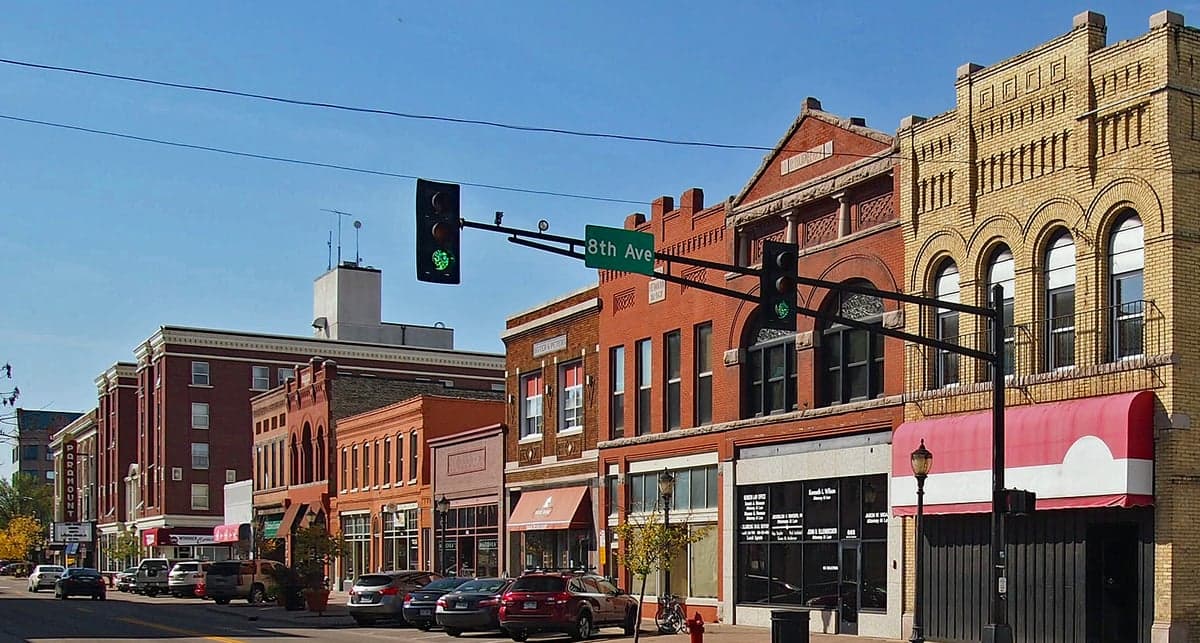
Photo: Wikipedia
Quality of Life in St Cloud, MN
Above-average quality of iife. The area offers a reasonable cost of living, decent mobility, and a mix of neighborhood amenities.
What does Quality of Life tell us?
Quality of Life blends cost of living, nearby amenities, socioeconomic signals, and neighborhood character. City-level scores represent the whole municipality; individual neighborhoods can differ.
What does this tell us?
Quality of Life blends cost of living, nearby amenities, socioeconomic signals, and neighborhood character. City-level scores represent the whole municipality; individual neighborhoods can differ.
Cost of Living
18% below national average
The Real Cost of Living in St Cloud, MN for 2026
| Tier | Individual | Family (4) |
|---|---|---|
| Survival | $16k | $30k |
| Comfortable | $41k | $61k |
| Luxury | $107k+ | $166k+ |
| Elite (Top 5%) | $126k+ | $195k+ |
101%
The Area Signal
A metric tracking the socioeconomic signals of the area.
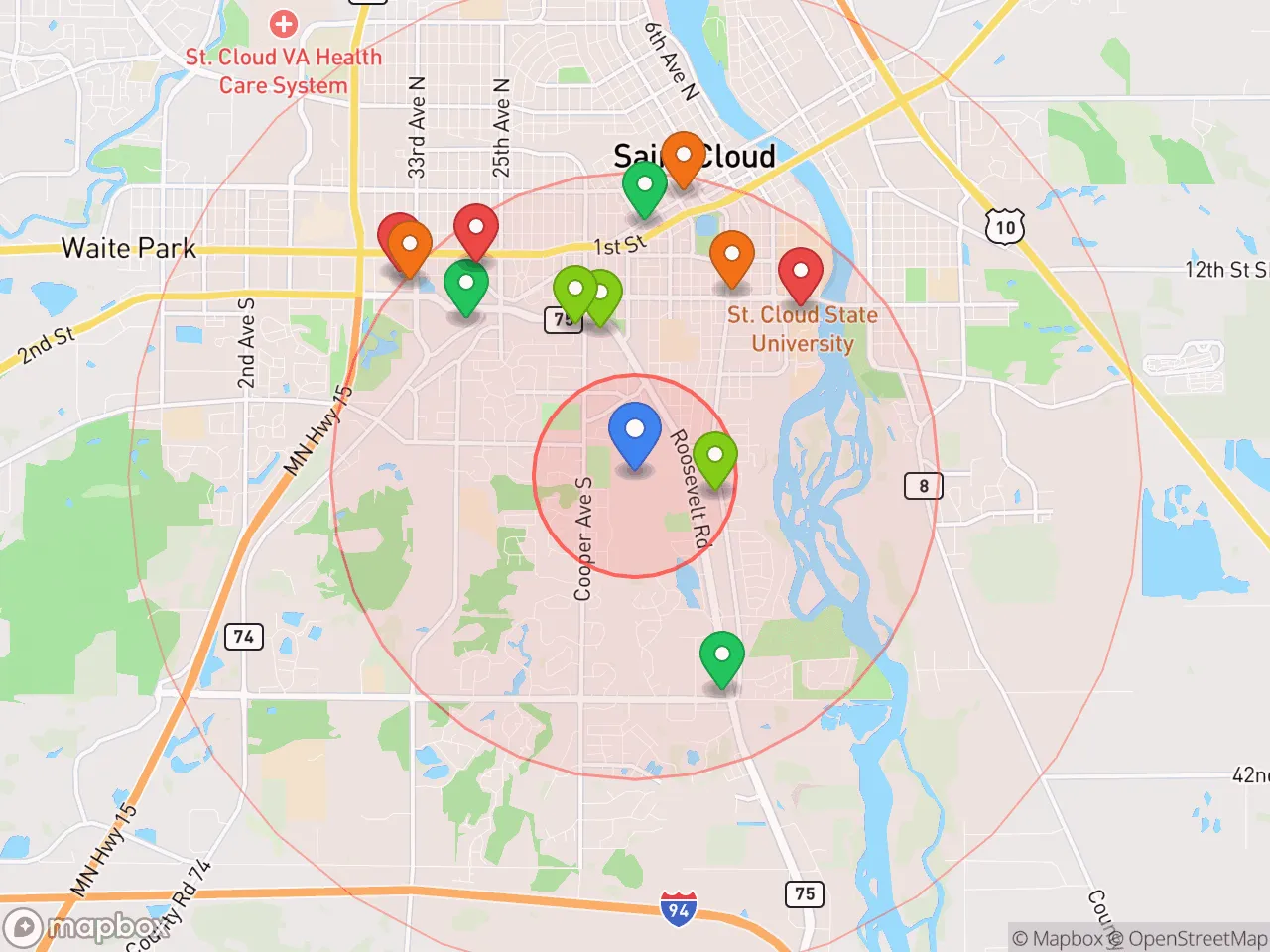
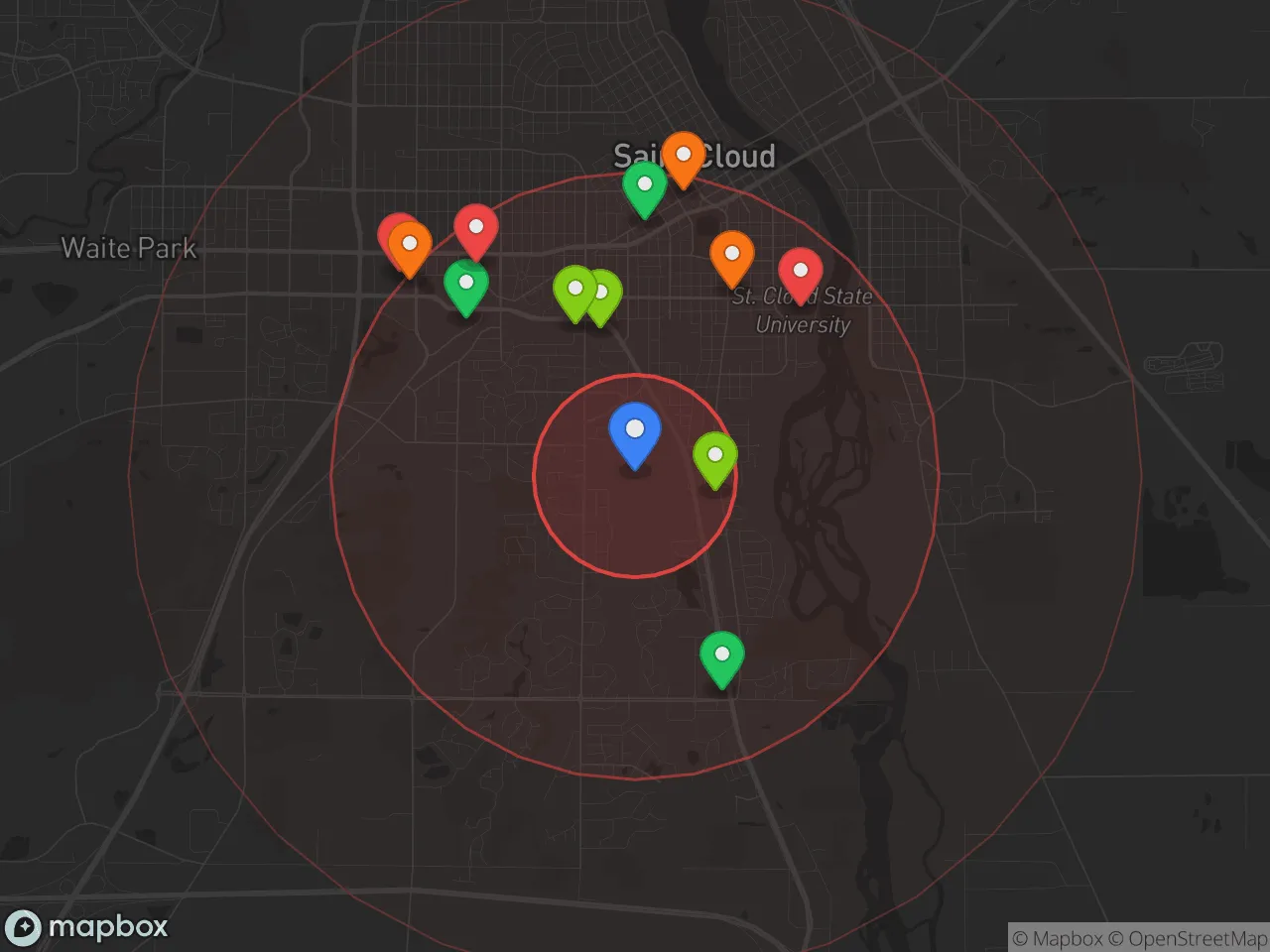
Hobbies
Explore the areaGroceries
5 within 10 miles
Gas
20 within 10 miles
Hospital
3 within 20 miles
Airport
JFK — John F. Kennedy Memorial
Post Office
USPS — St Cloud, MN
Critical Amenities
Quality-of-Life Analysis
St. Cloud, Minnesota, offers a quality of life defined by modest affluence and a strong sense of community, attracting a mix of young families, healthcare professionals, and students drawn to its affordability and steady job market. With a cost of living index of 82—well below the national average of 100—the city provides a financial cushion that allows residents to prioritize homeownership, savings, and local experiences. The population skews younger and more diverse than the state average, thanks in part to St. Cloud State University and a growing immigrant community, creating a daily rhythm that balances small-town familiarity with mid-sized city opportunity.
How housing costs and everyday expenses compare to the Twin Cities
St. Cloud’s affordability is its most defining quality-of-life feature, especially when stacked against the Minneapolis-Saint Paul metro area, just 70 miles southeast. The median home value sits at $212,800, roughly half the Twin Cities median, while the median rent of $1,005 undercuts the metro average by more than $400 per month. This price gap means a typical two-income household can afford a three-bedroom home on a single salary in many neighborhoods, such as the historic Southside or the newer developments near the Waite Park border. The average commute of 20.3 minutes is notably shorter than the Twin Cities’ 27-minute average, freeing up time for family or recreation. Utility costs and grocery prices also track below national norms, though property taxes in Stearns County are slightly above the state median—a trade-off that funds well-regarded local schools and infrastructure.
What daily life is like for families: schools, parks, and local amenities
Daily life in St. Cloud revolves around a compact, walkable downtown anchored by the Mississippi River, the St. Cloud State University campus, and the St. Cloud Hospital—the region’s largest employer. The St. Cloud Area School District (742) serves over 10,000 students and includes Apollo and Tech High Schools, both offering International Baccalaureate programs, while the nearby Sartell-St. Stephen district consistently ranks among the state’s top 20 for academic performance. For recreation, the city maintains over 50 parks, including the 1,000-acre Quarry Park and Nature Preserve in neighboring Waite Park, which offers swimming, climbing, and hiking. The retail corridor along Division Street and the Crossroads Center mall provide shopping and dining, while the Paramount Center for the Arts and the St. Cloud River’s Edge Convention Center host live performances and community events. The area’s four distinct seasons mean residents embrace ice fishing and skiing in winter, then shift to farmers’ markets and river kayaking in summer—a lifestyle that appeals to outdoor-oriented families.
Who thrives in St. Cloud? The city is best suited for those who value financial breathing room over urban intensity—young professionals starting careers at CentraCare Health or the local manufacturing plants, families seeking a safe, affordable environment with solid schools, and retirees looking to stretch a fixed income. It is less ideal for those craving late-night culture, high-end dining, or rapid career advancement in tech or finance, as those opportunities remain concentrated in the Twin Cities. However, for anyone willing to trade a 20-minute commute for a mortgage under $1,500 a month, St. Cloud delivers a grounded, resource-rich quality of life that is increasingly rare in the Upper Midwest.

Crime in St Cloud, MN
Generally safer than 62% of comparable U.S. locations.
Violent CrimeViolent Crime Analysis
Property CrimeProperty Crime Analysis
Crime Analysis
St. Cloud, Minnesota, presents a mixed safety profile that demands careful consideration from potential residents. The city’s violent crime rate of 222.8 per 100,000 residents is notably lower than the national average, but its property crime rate of 1,417.9 per 100,000 is significantly elevated, creating a situation where theft and vandalism are far more common threats than physical assault. This disparity means that while the risk of a violent encounter is relatively low, residents face a heightened likelihood of experiencing burglary, larceny, or motor vehicle theft.
Crime in context
When compared to state and national benchmarks, St. Cloud’s crime data reveals a clear split. The violent crime rate of 222.8 per 100,000 is well below the U.S. average of roughly 380 per 100,000 and sits slightly under the Minnesota state average. However, the property crime rate of 1,417.9 per 100,000 is substantially higher than both the state average (around 1,100 per 100,000) and the national average (approximately 1,950 per 100,000). This places St. Cloud in a category where property offenses are a persistent concern, often linked to economic pressures and, in some analyses, to the broader criminal justice philosophy in the region. As part of a large metro area with liberal-leaning judicial policies, St. Cloud’s justice system may prioritize rehabilitation and diversion over incarceration, a progressive approach that, while sympathetic to offenders, can result in more criminals remaining on the street and reduced deterrence for property crimes. This directly impacts public safety by potentially increasing repeat offenses and undermining a sense of security for victims and law-abiding residents.
What residents experience
For those living in St. Cloud, the most tangible safety concern is property crime. Residents frequently report incidents of package theft, vehicle break-ins, and bicycle theft, particularly in neighborhoods near the St. Cloud State University campus and along major commercial corridors like Division Street. Violent crime, while less common, is not absent; it tends to be concentrated in specific areas and often involves individuals who know each other, rather than random attacks on strangers. The presence of progressive district attorneys in the broader metro area has been cited by local law enforcement as a factor that complicates prosecution, as reduced sentencing and a focus on alternatives to incarceration can lead to higher recidivism rates. For families and individuals, this means that while the streets are generally safe for daytime activities, vigilance regarding property security—such as using locked garages, security cameras, and neighborhood watch programs—is a practical necessity.
Neighborhood-level variation is significant in St. Cloud. The southwestern parts of the city, including areas near Lake George and the historic district, tend to report lower crime rates, while the northeastern quadrant, closer to the university and older industrial zones, sees higher concentrations of both property and violent incidents. Suburban communities like Sartell and Sauk Rapids, which are part of the St. Cloud metro area but have their own local governance, often have lower crime rates and may offer a more secure environment for those prioritizing safety. Prospective residents should research specific block-level data and consider how the regional justice system’s progressive leanings might influence long-term safety trends in their chosen neighborhood.
* Values derived from national, state, county, city and local statistics and may differ in a specific area. Last updated: 2026-04-24T11:42:43.000Z
Narrative content on this page is AI-generated and may contain mistakes. Verify any details that matter before acting on them.
ReloMaps may earn a commission from affiliate links at no extra cost to you.

