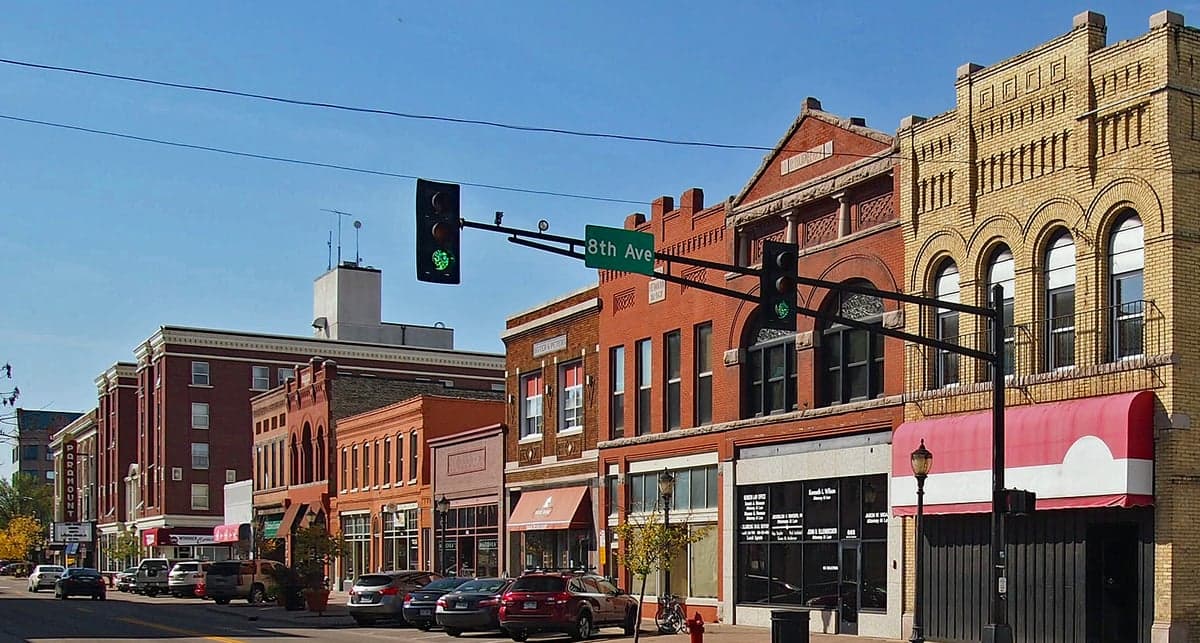
Photo: Wikipedia
Political ClimatePolitical Climate in St Cloud, MN
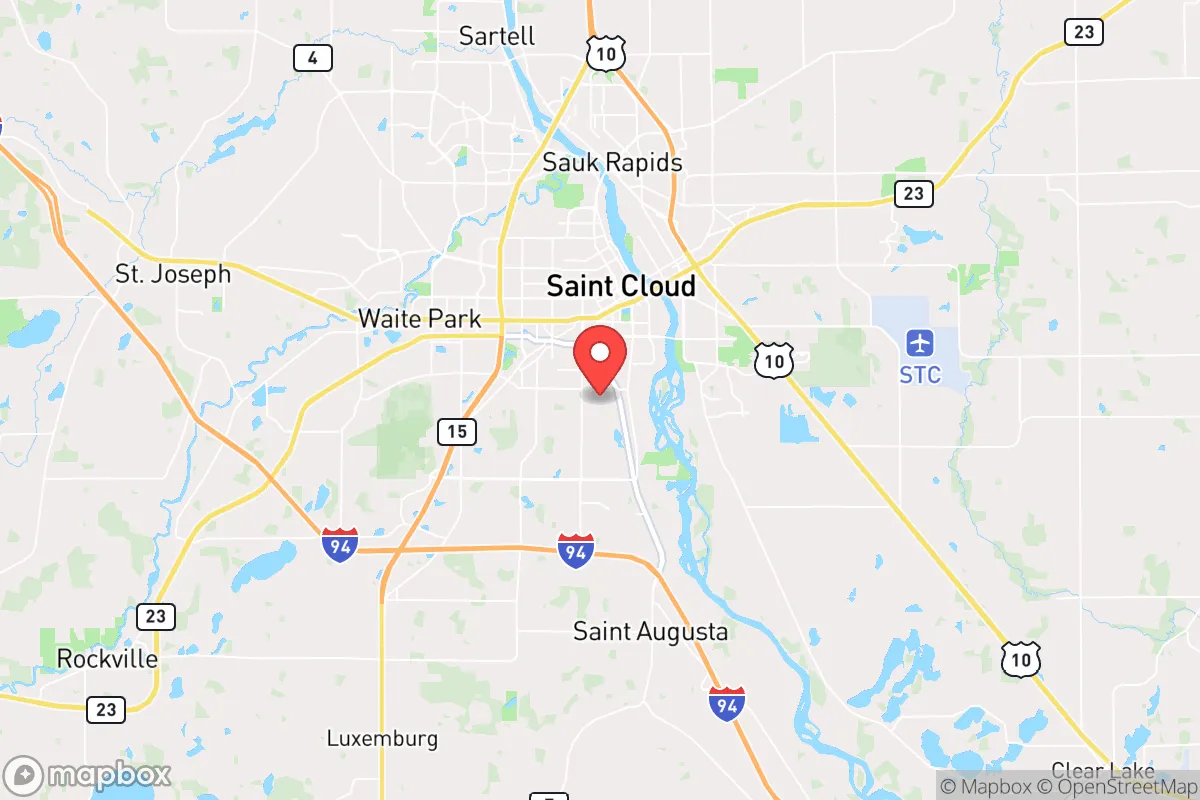
District shown is the primary district for this city’s centroid. Cities may span multiple districts.
Local Political AnalysisPolitical Analysis of St Cloud, MN
St. Cloud leans reliably conservative, with a Cook PVI of R+10 that reflects a voting pattern roughly ten points more Republican than the national average. For a long time, this area was a quiet, steady place where folks minded their own business and the government mostly stayed out of the way. But over the last decade or so, you’ve seen a real shift—not so much in the voting booths, but in the cultural and policy winds blowing in from the Twin Cities. The city itself has held its ground, but the surrounding towns like Sartell, Sauk Rapids, and Waite Park are where you’ll find the strongest conservative backbone, while places like St. Joseph and Collegeville, with St. John’s University, lean noticeably more progressive. The trajectory here is a tug-of-war: the core remains red, but the edges are getting browner, and that’s something to keep an eye on.
How it compares
Compared to the rest of Minnesota, St. Cloud is a conservative island in a sea of blue. Drive 70 miles south to the Twin Cities metro, and you’re in a completely different world—Minneapolis and St. Paul vote heavily Democratic, with policies on taxes, policing, and education that feel like they’re from another planet. Even closer, towns like St. Joseph (home to the College of St. Benedict) and Cold Spring (a bit more rural) show the contrast: St. Joseph leans left, while Cold Spring is solidly right. The R+10 rating puts St. Cloud in the same league as other central Minnesota strongholds like Alexandria or Brainerd, but it’s more moderate than deep-red areas like Morrison County to the north. What’s interesting is that Stearns County as a whole has been trending slightly more purple over the last few cycles, driven by younger voters and new arrivals from the metro. That’s a red flag for anyone who values limited government—those progressive ideas have a way of creeping in once the door cracks open.
What this means for residents
For the average resident, the political climate here means you can still enjoy a lot of personal freedoms without heavy-handed government overreach. Property taxes are reasonable compared to the metro, zoning laws are less restrictive, and you won’t see the kind of mask mandates or business shutdowns that became common in Minneapolis during the pandemic. The local city council and county board have generally resisted the urge to impose progressive social policies, like defunding the police or pushing critical race theory in schools. But that’s not guaranteed to last. If you look at the school board races over the past few years, you’ll see a real battle brewing—parents fighting to keep curriculum focused on basics and not on divisive ideologies. The long-term concern is that as the area grows (and it is growing, with new housing developments and a expanding tech sector), the political balance could tip. If you’re someone who values the Second Amendment, lower taxes, and local control, St. Cloud is still a good bet, but you’ve got to stay engaged. The quiet, conservative way of life here isn’t a given—it’s something you have to protect.
Culturally, St. Cloud has a few distinctions that set it apart. The strong Catholic and Lutheran heritage in the area has historically fostered a community that values family, hard work, and charity over government programs. You’ll see that in the number of private schools and churches that are thriving, even as public institutions struggle. There’s also a growing tension around immigration—the city has a significant Somali and East African population, which has brought both cultural diversity and some friction over things like housing and public services. Most folks here are welcoming, but there’s a real concern that progressive policies on immigration and social services could strain the local budget and erode the sense of community. In the near term, expect the political fights to be over school boards, city council seats, and county commission races—these are where the rubber meets the road. Long term, if the metro’s influence continues to spread up I-94, St. Cloud could become a battleground. For now, it’s still a place where you can raise a family without the government breathing down your neck, but that’s something worth keeping a close watch on.

State Political ClimatePolitical Climate in Minnesota
State Political AnalysisPolitical Environment in the State
Minnesota has shifted from a classic purple battleground to a reliably blue state over the past 15 years, with Democrats now controlling the governorship, state House, and state Senate after the 2022 midterms. The state hasn't voted for a Republican presidential candidate since 1972, and the margin has widened from roughly 1.5 points in 2016 to over 7 points in 2020. That said, the state is far from a monolith — it's a tale of two Minnesotas, with the Twin Cities metro pulling hard left while much of the rest of the state votes solidly red.
Urban vs. rural divide
The political map of Minnesota is dominated by the Twin Cities metro, which accounts for over 55% of the state's population and votes overwhelmingly Democratic. Hennepin County (Minneapolis) and Ramsey County (St. Paul) are deep blue strongholds, with Minneapolis itself delivering margins of 80%+ for Biden in 2020. Suburban counties like Washington and Dakota have trended blue in recent cycles, while outer-ring exurbs like Lakeville and Woodbury remain more competitive but are drifting left. Meanwhile, greater Minnesota is a sea of red. Counties like Stearns (St. Cloud), Olmsted (Rochester), and St. Louis (Duluth) are the only significant blue islands outside the metro. Rural counties like Marshall, Kittson, and Redwood routinely vote 70-80% Republican. The 2018 midterms saw a wave of suburban women flipping seats like the 2nd and 3rd Congressional Districts, but the 2022 election showed some rural pushback, with Republicans flipping the 1st Congressional District in southern Minnesota. The divide isn't just geographic — it's cultural. A farmer in Worthington and a tech worker in Edina live in different political universes.
Policy environment
Minnesota's policy environment has shifted sharply left since Democrats took full control in 2023. The state now has a progressive income tax with a top rate of 9.85% on income over $190,000, one of the highest in the nation. Property taxes are moderate but vary wildly by locality — expect higher rates in the metro. The corporate tax rate sits at 9.8%, and the state sales tax is 6.875% (with local add-ons). In 2023, the legislature passed a paid family and medical leave program funded by a new payroll tax, a clean energy mandate requiring 100% carbon-free electricity by 2040, and a sweeping driver's license-for-all law that allows undocumented immigrants to obtain licenses. Education spending is among the highest per pupil in the country, but school choice options are limited — no universal voucher program, though charter schools exist. Healthcare is heavily regulated, with MinnesotaCare and MNsure (the state exchange) dominating the individual market. Election laws are among the most accessible in the nation: no-excuse absentee voting, same-day registration, and automatic voter registration. The 2023 session also restored felon voting rights upon release from prison. For a conservative, the policy environment is increasingly hostile — high taxes, expansive government programs, and a regulatory posture that favors collective action over individual choice.
Trajectory & freedom
Minnesota is becoming less free by any standard measure of personal liberty. The 2023 legislative session was a watershed for government expansion. On gun rights, the state passed universal background checks and a "red flag" law (extreme risk protection orders), despite strong rural opposition. On parental rights, the state enacted a law requiring schools to adopt policies on "affirming" LGBTQ+ students, which critics argue undermines parental notification. On medical autonomy, the legislature codified abortion rights into state law and removed nearly all restrictions, including parental notification for minors. On property rights, the state tightened environmental regulations on farming and development, particularly around buffer zones and wetlands. On speech, there's no major crackdown yet, but the state's human rights department has expanded enforcement powers. The 2024 session saw a push for a state-level carbon tax (stalled for now) and a "clean transportation" standard that would effectively mandate electric vehicle adoption. The trajectory is clear: more mandates, more taxes, and less room for individual decision-making. The only bright spot for conservatives is that the state's constitution still protects the right to keep and bear arms for self-defense, and the state has a strong tradition of local control in many rural counties.
Civil unrest & political movements
Minnesota has been a flashpoint for political unrest since the 2020 murder of George Floyd in Minneapolis, which sparked the largest protests in the state's history and a national reckoning. The subsequent trial and conviction of Derek Chauvin did little to calm tensions; the city saw a spike in crime and a significant exodus of residents from the city core. The "defund the police" movement gained traction in Minneapolis, with the city council attempting to dismantle the police department (later blocked by voters in a 2021 ballot measure that actually strengthened police funding). On the right, the "Back the Blue" movement is strong in rural areas, and groups like the Minnesota Gun Owners Caucus have become more organized. Immigration politics are heated: Minnesota is a sanctuary state in practice, with the 2023 driver's license law and a 2024 law limiting cooperation with ICE. The city of St. Cloud has seen tensions over Somali immigration, while Willmar and Worthington have large immigrant populations that have reshaped local politics. Election integrity remains a concern for conservatives, given the state's same-day registration and mail-in voting expansion. The 2020 election saw a record number of absentee ballots, and while no widespread fraud was proven, the process left many rural voters skeptical. The state's political movements are increasingly polarized — you'll see "Let's Go Brandon" flags in farm country and "Abolish ICE" signs in Minneapolis, with little middle ground.
Projection
Over the next 5-10 years, Minnesota will likely become more blue, more urban-dominated, and more regulated. Demographic trends favor Democrats: the Twin Cities metro is growing, while rural counties are shrinking. In-migration from blue states like California and Illinois is accelerating, particularly in the western suburbs and exurbs like Chanhassen and Prior Lake. The state's agricultural base is aging, and young people are leaving rural areas for the metro or out of state entirely. The 2024 election will be a test — if Trump can't flip Minnesota despite a favorable national environment, it's hard to see a path back to competitiveness for Republicans. The state's Democratic trifecta is likely to hold for at least another cycle, meaning more progressive policies: a potential state-level carbon tax, universal healthcare proposals, and further gun restrictions. The one wildcard is the state's budget surplus — Minnesota has run surpluses for years, but the new spending commitments (paid leave, clean energy, education) could strain finances if the economy slows. For a conservative moving in, expect to pay more in taxes and have less control over your children's education, your healthcare choices, and your property. The rural-urban divide will only widen, with rural areas becoming more politically isolated and resentful.
Bottom line for a new resident: If you're a conservative considering Minnesota, you need to go in with eyes wide open. The state offers great natural beauty, strong schools in many districts, and a robust economy, but the political climate is increasingly hostile to traditional values and personal freedom. You'll find like-minded communities in the exurbs and rural areas, but you'll be fighting an uphill battle at the state level. If you value low taxes, school choice, gun rights, and local control, Minnesota is not trending in your direction. If you're willing to pay a premium for quality of life and can find a niche in a red pocket like Rochester or St. Cloud, it's livable — just don't expect the state to get more conservative anytime soon.
* Values derived from national, state, county, city and local statistics and may differ in a specific area. Last updated: 2026-04-24T11:42:43.000Z
Narrative content on this page is AI-generated and may contain mistakes. Verify any details that matter before acting on them.
ReloMaps may earn a commission from affiliate links at no extra cost to you.

