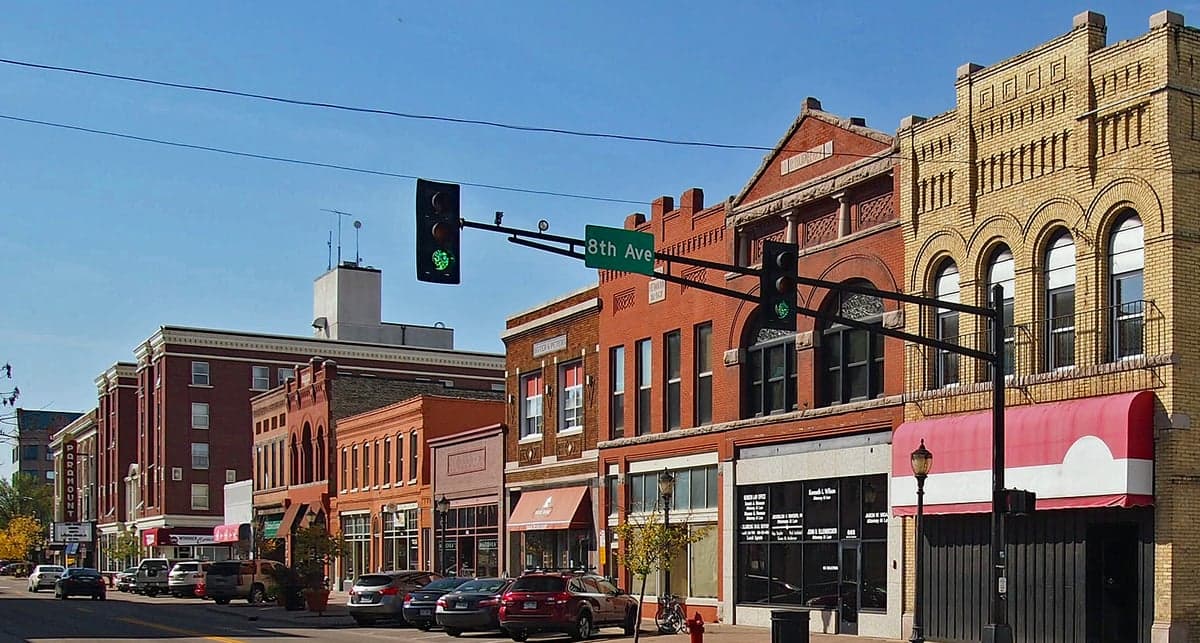
Photo: Wikipedia
Personal Sovereignty in St Cloud, MN
Viable for self-reliance. Generally workable, though some barriers may limit total independence.
What does Personal Sovereignty tell us?
Personal Sovereignty measures your capacity for self-reliance and independence with minimal government friction. Higher scores mean fewer barriers between you and the way you want to live... but it assumes you have the space you need and good neighbors.
What does this tell us?
Personal Sovereignty measures your capacity for self-reliance and independence with minimal government friction. Higher scores mean fewer barriers between you and the way you want to live... but it assumes you have the space you need and good neighbors.
State Policy
Energy independence: Importer (20% of energy produced in-state)
Personal Liberty
Homesteading

Personal Liberty Analysis
St. Cloud, Minnesota offers a mixed bag for those prioritizing personal sovereignty, where the state's progressive tilt at the capitol clashes with a more independent, self-reliant culture on the ground. For a conservative-leaning individual or family weighing relocation, the city provides a lower cost of entry and a stronger sense of community than the Twin Cities, but you must navigate a state government that is increasingly assertive in areas like taxation, gun control, and medical mandates. The real question is whether the local buffer of Central Minnesota's ethos can insulate you from St. Paul's reach, and the answer depends heavily on which aspect of sovereignty you value most.
Tax burden and regulatory posture in Central Minnesota
Minnesota's overall tax burden is a significant factor, ranking among the highest in the nation, and St. Cloud residents are not exempt. You will pay state income tax on a progressive scale up to 9.85%, and the state sales tax of 6.875% is supplemented by local options in St. Cloud, bringing the total to around 7.375%. Property taxes in Stearns County are moderate compared to the metro area, but still represent a real annual cost—expect roughly 1.1% to 1.3% of assessed home value. The regulatory posture from the state is interventionist, with a robust environmental review board and a Department of Labor that enforces strict wage and hour rules. However, St. Cloud's city government is generally more business-friendly and less inclined toward the aggressive zoning and licensing hurdles seen in Minneapolis or St. Paul. For a prepper or homesteader, the state's permitting requirements for things like well drilling and septic systems are a notable hurdle, but the county-level enforcement is often more practical and less ideological than in urban counties.
Self-defense and gun law specifics in St. Cloud
This is the most contentious area for sovereignty-minded residents. Minnesota is a "shall-issue" state for permits to carry a pistol, and St. Cloud has no local ordinances that further restrict that right—you can carry concealed or openly with a permit. However, the state legislature has passed red flag laws (Extreme Risk Protection Orders) and universal background checks for private sales, which many in the prepper community view as an infringement on the right to keep and bear arms without undue government interference. There is no state preemption on firearms regulation, meaning cities could theoretically pass their own restrictions, but St. Cloud has not done so. Magazine capacity is not currently restricted by state law, and you can own "assault weapons" and standard-capacity magazines. The practical reality is that gun culture is strong in Central Minnesota; you will find multiple gun shops, ranges, and a community that takes self-defense seriously. But the legal landscape is fragile—a change in state leadership could bring magazine bans or permit-to-purchase requirements, so your sovereignty here is contingent on the political winds in St. Paul.
Self-reliance and homesteading viability near St. Cloud
For those seeking to live off-grid or establish a small homestead, the areas immediately surrounding St. Cloud offer genuine opportunity, though with strings attached. Within a 15- to 30-minute drive of downtown, you can find rural parcels starting at 2 to 5 acres for under $50,000, with larger tracts of 10 to 40 acres available further out in Stearns, Benton, or Sherburne counties. Zoning in unincorporated areas is generally permissive for small-scale agriculture, including chickens, goats, and even a few head of cattle. However, Minnesota's state building code and county health regulations make true off-grid living difficult. You are required to have a septic system permitted by the county, and while solar panels are legal, net metering rules are set by the state and favor grid-tied systems. Rainwater collection for potable use is restricted—you can collect for irrigation, but drinking water must come from a permitted well. The state also has strict requirements for dwelling units, meaning a cabin without a permanent foundation or proper insulation may not pass inspection. For a serious prepper, the land is affordable and the soil is good, but you will need to work within a regulatory framework that does not fully embrace the "leave me alone" ideal.
Personal liberties in practice: parental rights, medical autonomy, and speech
This is where St. Cloud's local culture provides a meaningful buffer against state overreach. Parental rights are a live issue: the state has mandated comprehensive sex education and does not have a robust opt-out mechanism for parents who object, but the St. Cloud school district has been more responsive to conservative parents than metro districts. Medical autonomy took a hit during the pandemic, with Minnesota having some of the longest-lasting mask and vaccine mandates in the Midwest, and the state still maintains a vaccine database that raises privacy concerns. However, the local healthcare system—CentraCare—is less aggressive than the University of Minnesota or Allina systems in pushing experimental protocols. On speech and property rights, Minnesota has a strong data practices act that limits government surveillance, but the state also has a "bias crime" statute that has been used to prosecute speech deemed threatening. Property rights are relatively strong; eminent domain is not abused as it is in some states, and you can generally use your land as you see fit within zoning. The key takeaway: your personal liberties in St. Cloud are better than in the Twin Cities, but you are still living under a state government that believes it knows better than you on many issues.
Overall, St. Cloud represents a compromise for the sovereignty-minded. It is not a free state like Idaho or Montana, nor is it a police state like New York or California. The cost of land and housing is low enough that you can build a buffer—both physical and financial—against government overreach. The local community is largely conservative, churchgoing, and armed, which creates a social fabric that resists top-down control. But you must accept that the state government will continue to push for more taxation, more regulation, and more control over your medical and educational choices. If you are willing to fight those battles at the local level and build a life that minimizes your reliance on state services, St. Cloud offers a viable base of operations. If you want a place where the government simply stays out of your way, you will need to look further west or south.

* Values derived from national, state, county, city and local statistics and may differ in a specific area. Last updated: 2026-04-24T11:42:43.000Z
Narrative content on this page is AI-generated and may contain mistakes. Verify any details that matter before acting on them.
ReloMaps may earn a commission from affiliate links at no extra cost to you.

