Photo: Wikipedia
Strategic Assessment of St. George, UT
Meaningful friction. Expect exposure to either population pressure, blast zones, or natural disaster risk. Consider buying a retreat property.
What does the Strategic Assessment tell us?
Our Strategic Assessment grades tactical survivability of an area. Major population centers, military targets, fallout zones, natural disasters, and border exposure all drive risk — lower exposure means a more defensible position in a crisis.
This is heavily inspired by Joel Skousen's Strategic Relocation book. Highly recommended you checkout the book ($)What does this tell us?
Our Strategic Assessment grades tactical survivability of an area. Major population centers, military targets, fallout zones, natural disasters, and border exposure all drive risk — lower exposure means a more defensible position in a crisis.
This is heavily inspired by Joel Skousen's Strategic Relocation book. Highly recommended you checkout the book ($)Strategic Pillars

Key Distances
Regional Safe Places
Below is our recommended "safe zones" in Utah and the surrounding area based on our strategic heuristics. For most people, it's unrealistic to live in a “safe zone” full-time due to work, family or other personal reasons. They tend to be more rural. However, many of these areas are perfect for second homes and retreat properties that double as a vacation home or even a short-term rental.


Important Note: For informational purposes only. This does not mean nothing bad ever happens in the green zones. Please use common sense. This is based on public data and modeled with AI. We tried to take a conservative approach but mistakes happen. We update this regularly as new information becomes available.
Solar Generator Recommendations
Backup power matters more here than in safer locations. We've picked three solar generators across budgets and capacity tiers — start with the budget unit if you only need a few essentials, or step up if you want to run a fridge and HVAC for days at a time.

Jackery Portable Power Station Explorer 300
Budget OptionPower on the Go: Weighing only 11 lbs, it's convenient to set up and store with book-sized foldable solar panels

BLUETTI Portable Power Station AC180
Designed for both indoor and outdoor scenarios, AC180 is highly capable as it has a robost capacity and continuous output power.

EF ECOFLOW DELTA Pro Ultra Power Station
Upgraded PickEcoFlow DELTA Pro Ultra is a whole-home energy system designed to grow with your family. Integrated with the Smart Home Panel 2, it scales to meet your evolving energy needs — keeping your home powered, intelligent, and secure through every stage of life.
We earn a commission, at no additional cost to you.
Strategic Assessment Analysis
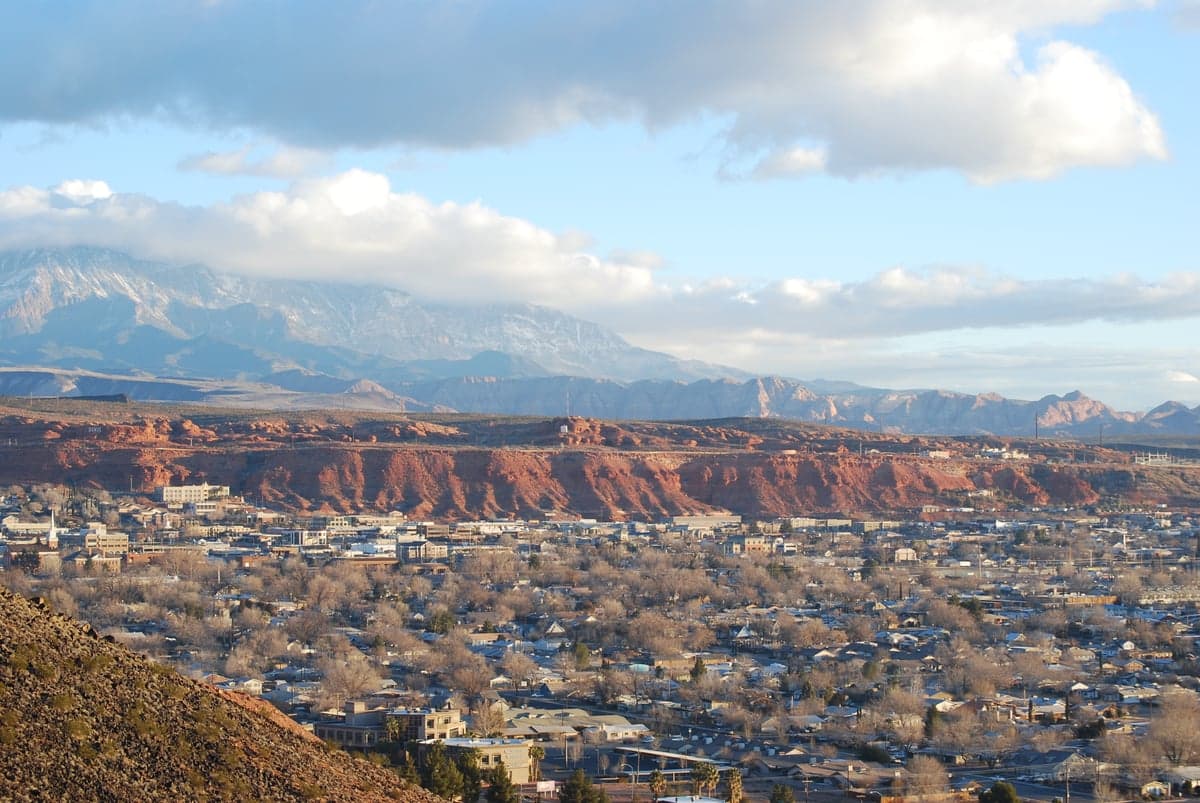
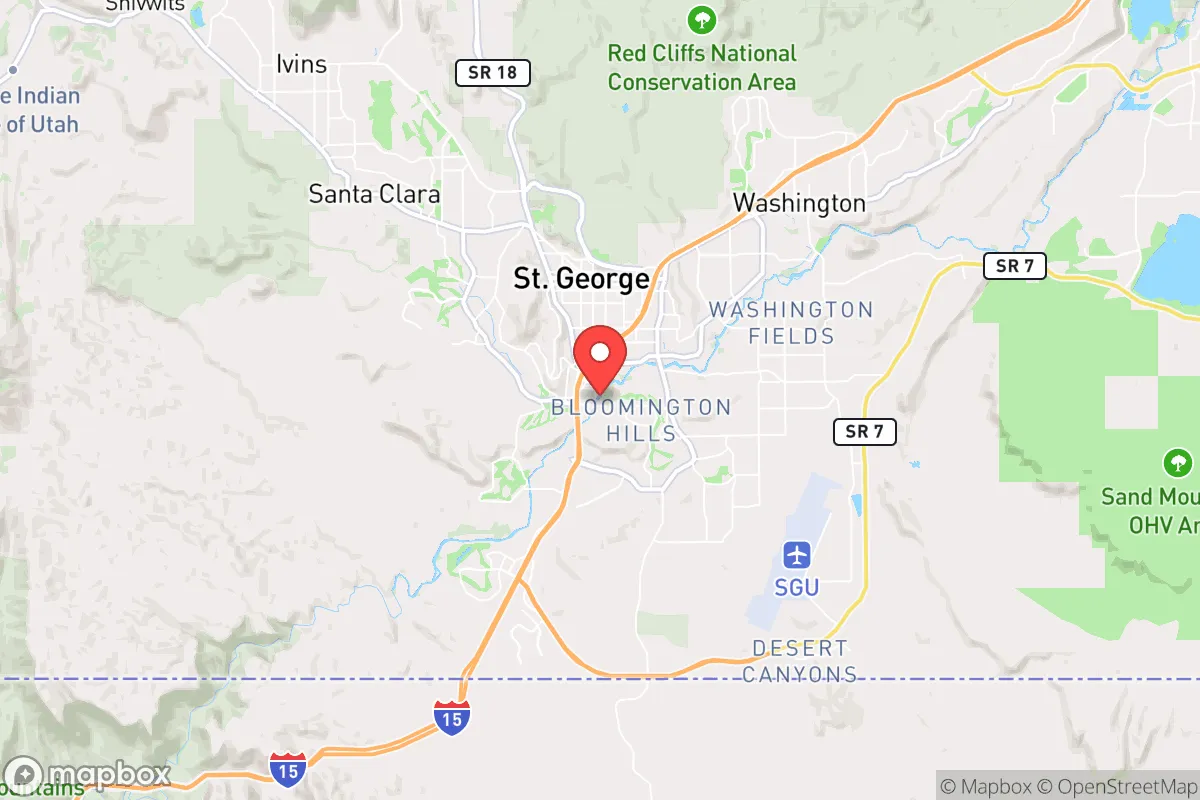
St. George, Utah, occupies a unique strategic position in the American Southwest, offering a blend of geographic isolation and practical self-sufficiency that appeals to those planning for long-term resilience. Its location in the far southwestern corner of Utah, roughly 120 miles northeast of Las Vegas and 300 miles south of Salt Lake City, places it far enough from major urban centers to avoid the immediate fallout of a metropolitan collapse, yet close enough to access critical supply routes if they remain functional. The city’s rapid growth—population surged from around 90,000 in 2010 to over 200,000 in the metro area by 2025—reflects its draw for conservative-minded relocators seeking a buffer from coastal instability, though that same growth introduces pressures a prepper must weigh carefully.
Geographic position and natural advantages for long-term survival
The most compelling asset of St. George is its position within the Mojave Desert’s high-elevation transition zone, sitting at roughly 2,800 feet. This elevation provides a climate that is arid but not extreme—summer highs regularly exceed 100°F, but winters are mild, rarely dropping below freezing, which reduces the risk of cold-weather infrastructure failures. The surrounding terrain is dominated by the Red Cliffs Desert Reserve and the Pine Valley Mountains, offering natural chokepoints and defensible positions against large-scale movement. The Virgin River runs through the valley, providing a perennial water source, though its flow is modest and heavily allocated. For a relocator, the key advantage is the limited number of ingress and egress routes: Interstate 15 is the primary artery, and it funnels traffic through the Virgin River Gorge, a narrow canyon that could be easily monitored or blocked. This makes St. George a natural fortress for those who secure a position before a crisis, but a potential trap for late arrivals.
Risks, exposures, and proximity to fallout-relevant landmarks
St. George’s strategic value is tempered by several hard realities. The most immediate risk is its proximity to the Nevada National Security Site (NNSS), roughly 90 miles west, where the U.S. conducted atmospheric nuclear tests through 1962 and still performs subcritical experiments. While no active detonations occur, the site remains a potential target in a major conflict, and prevailing winds from the west could carry fallout toward the area. Additionally, the Intermountain Power Project in Delta, Utah, about 150 miles north, is a major coal-fired plant and electrical hub that could be a secondary target. On the human side, St. George sits within a 300-mile radius of Las Vegas, a city of 2.3 million that would likely experience severe civil unrest during a national emergency. The I-15 corridor from Las Vegas to St. George is a natural evacuation route, meaning the city could face a surge of refugees within 24-48 hours of a crisis. The local infrastructure—St. George Regional Hospital has only 245 beds—would be overwhelmed quickly. For the prepper, the takeaway is clear: St. George is not a fallout-free zone, but its distance from primary targets (like Los Angeles, San Diego, or Salt Lake City) makes it a secondary-risk area, not a primary one.
Practical resilience for a relocator: food, water, energy, and defensibility
For a relocator serious about self-sufficiency, St. George presents a mixed bag. Water is the critical constraint. The area relies on the Virgin River and the Lake Powell Pipeline (still under environmental review as of 2026), with current allocations already strained by population growth. The Washington County Water Conservancy District reports that per-capita water use is around 250 gallons per day, high for the desert, and drought years could trigger rationing. A prepper should plan for rainwater catchment (annual precipitation is only 8 inches) and deep-well access if property allows—most residential lots are on municipal water, which is vulnerable to grid failure. Food production is limited by the arid climate; the growing season runs March to October, but soil is alkaline and requires amendment. Local farmers markets exist, but the area is not a breadbasket. Energy is a relative strength: St. George gets abundant solar radiation (over 300 sunny days per year), and rooftop solar with battery storage is a viable investment. The Dixie Power cooperative serves much of the area, and natural gas is available in town, but off-grid solar is the more resilient play. Defensibility is where St. George shines. The city is ringed by BLM land and national forest, allowing for retreat into the Pine Valley Mountains or the Beaver Dam Mountains to the west. The local population skews older and more conservative—Washington County voted +38 points Republican in 2024—which means a higher likelihood of firearm ownership and community self-policing. However, the rapid influx of new residents from California and other blue states has diluted this somewhat, so building trust with established locals is essential.
Overall, St. George offers a viable but not ideal strategic relocation option for the conservative prepper. Its strengths—geographic isolation, defensible terrain, high solar potential, and a like-minded population—are real. Its weaknesses—water scarcity, proximity to Las Vegas, and a single vulnerable highway—require serious mitigation. For a single individual or family willing to invest in off-grid water and solar systems, and to secure a property away from the I-15 corridor (look toward Santa Clara or Ivins for better defensibility), St. George can serve as a long-term base. But it is not a bug-out location; it is a pre-positioned community where you must arrive early, build relationships, and harden your site before the crisis hits. The area’s growth is a double-edged sword—it brings resources and infrastructure, but also vulnerability. If you can secure a foothold here, you gain a foothold in the American redoubt’s southern anchor. If you wait too long, you’ll find yourself stuck in traffic on I-15 with everyone else.

* Values derived from national, state, county, city and local statistics and may differ in a specific area. Last updated: 2026-04-22T01:36:39.000Z
Narrative content on this page is AI-generated and may contain mistakes. Verify any details that matter before acting on them.
ReloMaps may earn a commission from affiliate links at no extra cost to you.

