
Photo by Katie Musial on Unsplash
Strategic Assessment of St Helens, OR
Meaningful friction. Expect exposure to either population pressure, blast zones, or natural disaster risk. Consider buying a retreat property.
What does the Strategic Assessment tell us?
Our Strategic Assessment grades tactical survivability of an area. Major population centers, military targets, fallout zones, natural disasters, and border exposure all drive risk — lower exposure means a more defensible position in a crisis.
This is heavily inspired by Joel Skousen's Strategic Relocation book. Highly recommended you checkout the book ($)What does this tell us?
Our Strategic Assessment grades tactical survivability of an area. Major population centers, military targets, fallout zones, natural disasters, and border exposure all drive risk — lower exposure means a more defensible position in a crisis.
This is heavily inspired by Joel Skousen's Strategic Relocation book. Highly recommended you checkout the book ($)Strategic Pillars

Key Distances
Regional Safe Places
Below is our recommended "safe zones" in Oregon and the surrounding area based on our strategic heuristics. For most people, it's unrealistic to live in a “safe zone” full-time due to work, family or other personal reasons. They tend to be more rural. However, many of these areas are perfect for second homes and retreat properties that double as a vacation home or even a short-term rental.


Important Note: For informational purposes only. This does not mean nothing bad ever happens in the green zones. Please use common sense. This is based on public data and modeled with AI. We tried to take a conservative approach but mistakes happen. We update this regularly as new information becomes available.
Solar Generator Recommendations
Backup power matters more here than in safer locations. We've picked three solar generators across budgets and capacity tiers — start with the budget unit if you only need a few essentials, or step up if you want to run a fridge and HVAC for days at a time.

Jackery Portable Power Station Explorer 300
Budget OptionPower on the Go: Weighing only 11 lbs, it's convenient to set up and store with book-sized foldable solar panels

BLUETTI Portable Power Station AC180
Designed for both indoor and outdoor scenarios, AC180 is highly capable as it has a robost capacity and continuous output power.

EF ECOFLOW DELTA Pro Ultra Power Station
Upgraded PickEcoFlow DELTA Pro Ultra is a whole-home energy system designed to grow with your family. Integrated with the Smart Home Panel 2, it scales to meet your evolving energy needs — keeping your home powered, intelligent, and secure through every stage of life.
We earn a commission, at no additional cost to you.
Strategic Assessment Analysis
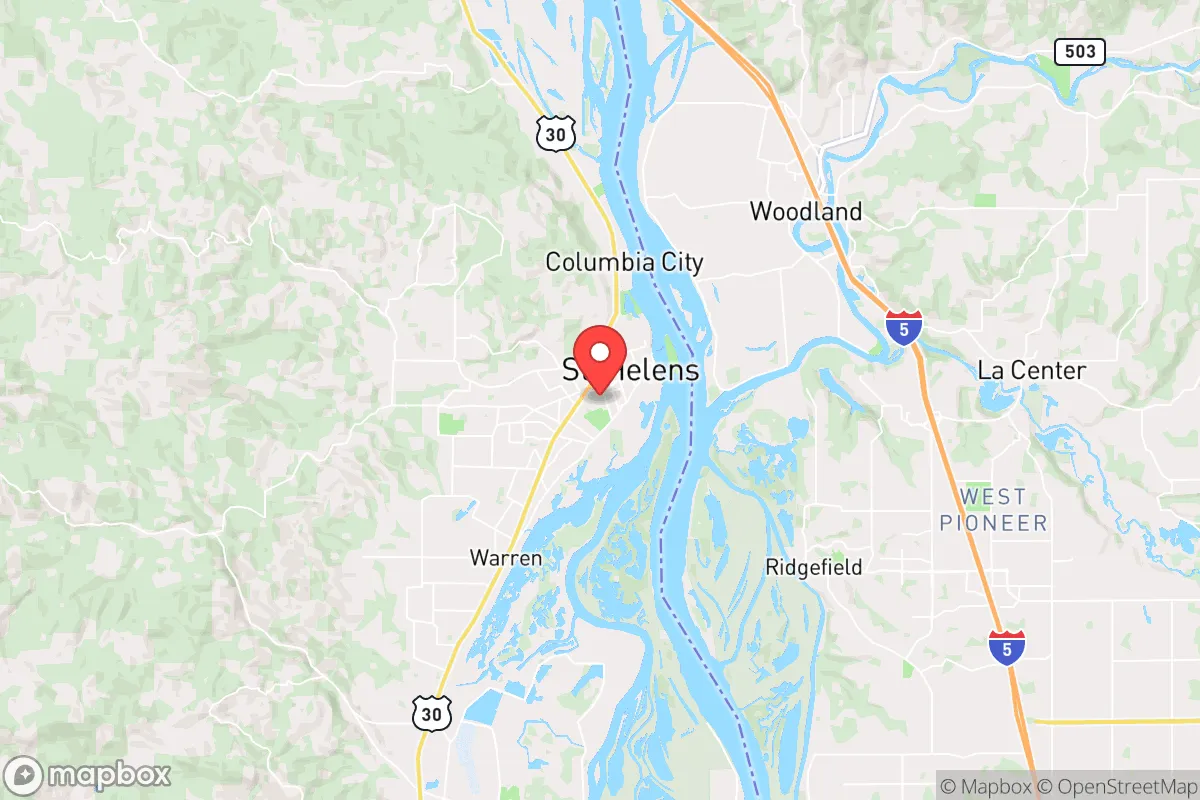
St. Helens, Oregon, sits in a strategic pocket that offers genuine resilience advantages for those concerned about civic unrest and large-scale disasters, but it comes with trade-offs that demand clear-eyed assessment. Located on the Columbia River about 30 miles northwest of Portland, this Columbia County seat of roughly 14,000 people benefits from being far enough from the metro core to avoid the worst of urban chaos, yet close enough to access critical supplies and infrastructure if you plan ahead. The town’s position along the river and its modest population density create a buffer zone that many preppers find appealing, but the proximity to Portland’s potential fallout zones and the region’s seismic risks mean you cannot afford to be complacent.
Geographic position and natural advantages for long-term survival
St. Helens sits on the south bank of the Columbia River, with the Oregon Coast Range rising to the west and the Cascade foothills to the east. This location provides several natural advantages for a survival-minded relocator. The Columbia River offers a reliable water source and a potential transportation corridor if roads become impassable, while the surrounding forests supply timber for shelter, fuel, and defensive barriers. The town is roughly 20 miles from the Pacific Ocean via the Columbia River estuary, giving access to marine resources and a potential evacuation route by water. The Coast Range to the west acts as a natural shield against tsunamis from the Pacific, though the river itself could see surge effects from a Cascadia subduction zone earthquake. The area’s moderate climate—with mild, wet winters and dry summers—reduces the risk of extreme temperature events that could stress food and water supplies. For a relocator, the ability to tap into local resources like the Columbia’s salmon runs, deer populations in the nearby forests, and the region’s agricultural potential in the Willamette Valley to the south makes St. Helens a viable base for self-sufficiency, provided you secure land with well water and off-grid energy before prices climb.
Risks, exposures, and proximity to fallout-relevant landmarks
The most significant risk for St. Helens is its proximity to Portland, a major urban center that would be a primary target for civil unrest, mass casualty events, or a coordinated attack. Portland sits just 30 miles southeast, and in a scenario involving widespread chaos, the city’s population of over 650,000 could push outward along the I-5 corridor and Highway 30, the main routes into St. Helens. The town itself is not a direct target for a nuclear strike—Portland’s industrial and transportation hubs would be the priority—but fallout patterns from a detonation in the metro area could drift northwest toward St. Helens depending on wind direction. The Trojan Nuclear Plant, located just 10 miles north of St. Helens in Rainier, Oregon, is a decommissioned facility, but its spent fuel storage remains a potential hazard in a seismic event or targeted attack. The Cascadia subduction zone, which runs offshore, poses a major earthquake and tsunami risk; a magnitude 9.0 event could cause liquefaction along the Columbia River floodplain, damage the Highway 30 bridge to Washington, and disrupt power and water for weeks. The town’s reliance on the river for transportation and water also makes it vulnerable to contamination from upstream industrial sites or a dam failure at the Bonneville Dam, 40 miles east. For a relocator, these risks mean you need a plan for self-sufficiency that does not depend on Portland’s infrastructure, and you should consider a secondary retreat site further inland or into the Coast Range.
Practical resilience for a relocator: food, water, energy, and defensibility
For a single individual or family looking to establish a resilient base, St. Helens offers a mix of opportunities and challenges. Water access is the strongest asset: the Columbia River provides an almost limitless supply, but you must treat it for industrial runoff, agricultural chemicals, and potential biological contaminants. A well on your property with a hand pump or solar-powered filtration system is ideal, and the area’s high water table makes drilling feasible in many spots. Food production is viable with the region’s fertile soil and long growing season—you can raise vegetables, berries, and small livestock on a few acres, and the nearby forests offer hunting for deer and elk. The Columbia River’s salmon and steelhead runs provide a seasonal protein source, but you need a boat and knowledge of fishing regulations to access them legally. Energy independence is achievable through solar panels, which work well in the region’s summer months but require battery storage for the overcast winters; micro-hydro from a creek or a small wind turbine on a ridge can supplement. The town’s defensibility is moderate: the river to the north and the Coast Range to the west create natural barriers, but Highway 30 and the railroad line provide easy access for outsiders. A relocator should prioritize a property on a dead-end road or with a long driveway, ideally with a clear view of approach routes. The local community is small and tight-knit, which can be an asset for forming a mutual-aid network, but you should vet neighbors carefully—Columbia County has a mix of libertarian-leaning residents, retirees, and Portland refugees, so political and survivalist alignment varies. Stockpiling ammunition, medical supplies, and tools is essential, as the nearest major hospital is in Portland, and local clinics may be overwhelmed in a crisis.
The overall strategic picture for St. Helens is one of cautious opportunity. It is not a remote bunker location—it is a river town with urban proximity that demands constant vigilance. For a relocator who values access to water, timber, and agricultural land, and who is willing to invest in off-grid infrastructure and a secondary retreat, St. Helens can serve as a viable base for weathering short-term disruptions and long-term instability. The key is to treat it as a forward operating position rather than a final redoubt: secure your property, build relationships with like-minded locals, and have a plan to move deeper into the Coast Range or east toward the Cascades if Portland’s collapse spills over. The area’s natural advantages are real, but they are only as good as your preparation. If you are serious about resilience, St. Helens deserves a look—but do not move here expecting safety without effort.

* Values derived from national, state, county, city and local statistics and may differ in a specific area. Last updated: 2026-05-01T07:57:03.000Z
Narrative content on this page is AI-generated and may contain mistakes. Verify any details that matter before acting on them.
ReloMaps may earn a commission from affiliate links at no extra cost to you.

