
Photo by Katie Musial on Unsplash
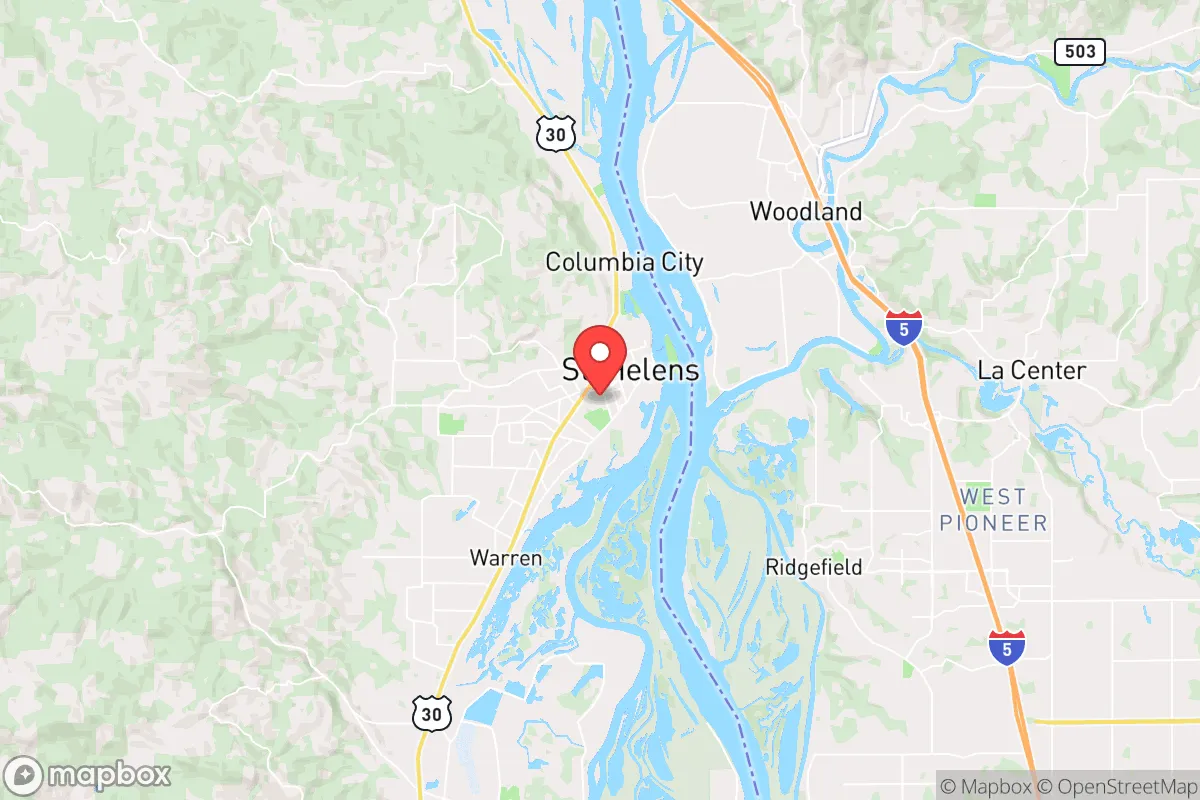
Quality of Life in St Helens, OR
A high quality of life with strong walkability, manageable living costs, healthy neighborhood signals, and solid amenity access.
What does Quality of Life tell us?
Quality of Life blends cost of living, nearby amenities, socioeconomic signals, and neighborhood character. City-level scores represent the whole municipality; individual neighborhoods can differ.
What does this tell us?
Quality of Life blends cost of living, nearby amenities, socioeconomic signals, and neighborhood character. City-level scores represent the whole municipality; individual neighborhoods can differ.
Cost of Living
15% above national average
The Real Cost of Living in St Helens, OR for 2026
| Tier | Individual | Family (4) |
|---|---|---|
| Survival | $20k | $38k |
| Comfortable | $68k | $100k |
| Luxury | $108k+ | $167k+ |
| Elite (Top 5%) | $127k+ | $197k+ |
82%
The Area Signal
A metric tracking the socioeconomic signals of the area.
Hobbies
Explore the areaGroceries
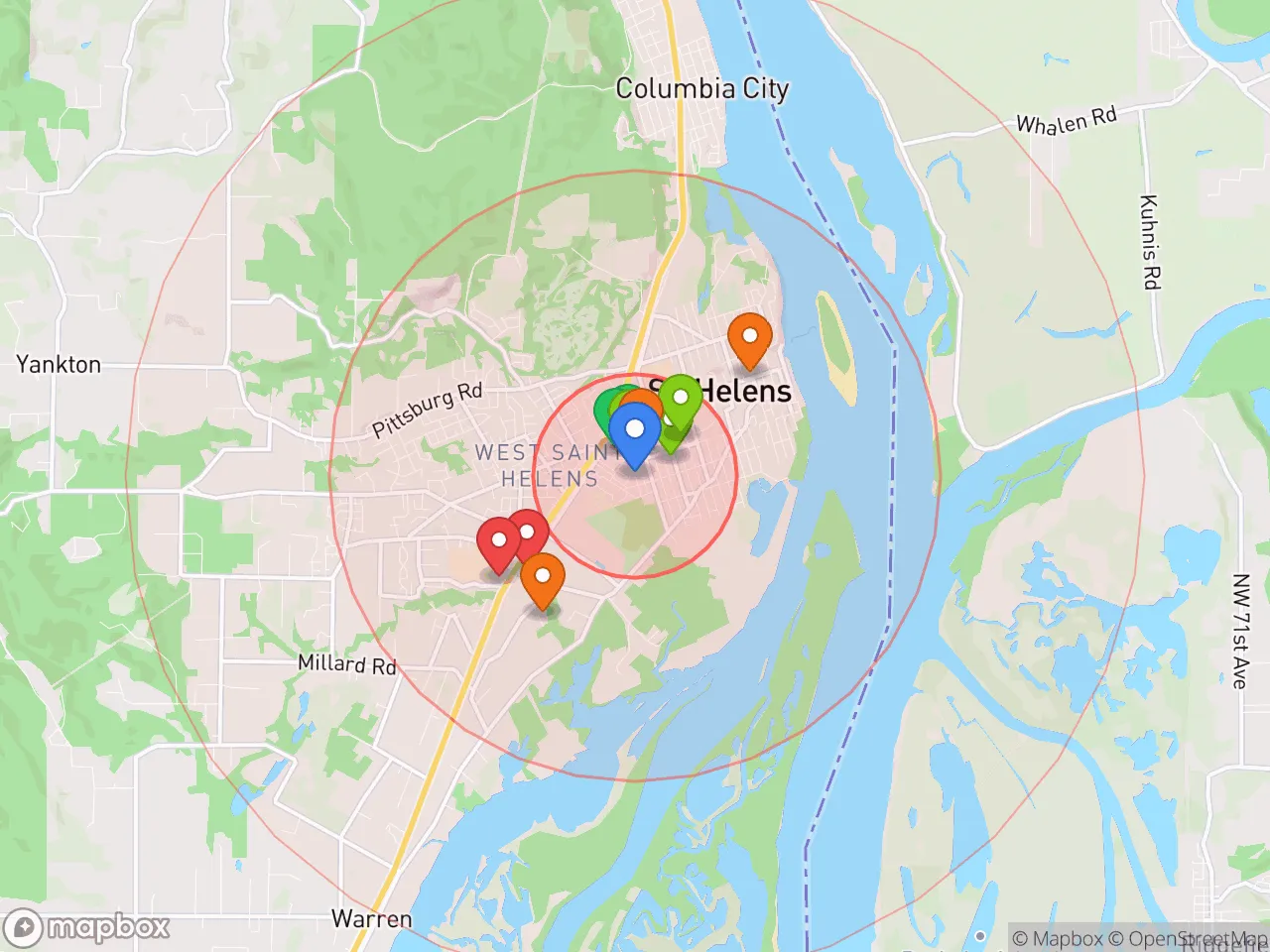
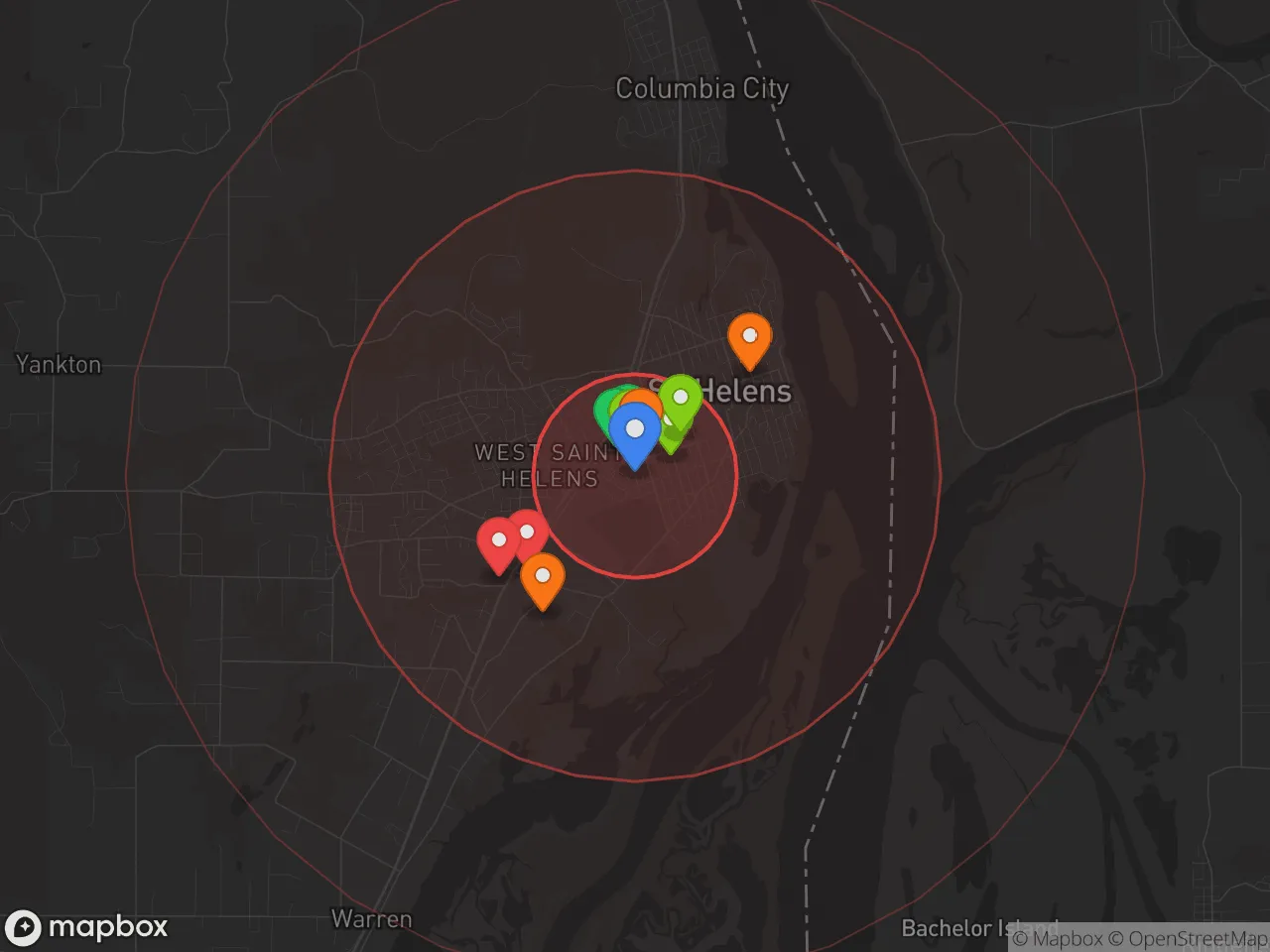
5 within 10 miles
Gas
20 within 10 miles
Hospital
5 within 20 miles
Airport
PDX — Portland International
Post Office
USPS — Saint Helens, OR
Critical Amenities
Quality-of-Life Analysis
St. Helens, Oregon, presents a notably higher cost of living than the national average, with a composite index of 115, yet it remains a more affordable alternative to the Portland metro area, which sits roughly 30 miles to the southeast. The city attracts a mix of long-time timber and river-industry families, newer remote workers seeking lower housing costs, and retirees drawn to the slower pace of Columbia County. With a median home value of $350,900 and a median rent of $1,269, the community is less affluent than Portland’s western suburbs but offers a distinctly different, small-town quality of life anchored by the Columbia River waterfront and nearby forested recreation areas.
Cost of living, housing affordability, and how St. Helens compares to Portland and Scappoose
St. Helens’ cost of living index of 115 means everyday expenses—groceries, utilities, and healthcare—run about 15% above the U.S. average, largely driven by Oregon’s state income tax and regional supply chains. However, housing remains the most significant affordability advantage over Portland. The median home value of $350,900 is roughly $150,000 less than the Portland metro median, while the median rent of $1,269 undercuts Portland’s typical two-bedroom apartment by several hundred dollars. For context, nearby Scappoose (10 miles south) has a slightly higher median home value near $400,000, while the Portland suburb of Beaverton pushes past $500,000. The trade-off is a longer average commute of 32.8 minutes, as many residents drive U.S. Route 30 or take the Portland & Western Railroad’s commuter line (the “WES”) into the city. Property taxes in Columbia County are moderate, and the lack of a local sales tax (Oregon’s statewide policy) keeps day-to-day spending predictable.
Local amenities, schools, and the daily rhythm of life in St. Helens
Daily life in St. Helens revolves around the historic downtown along the Columbia River, where the St. Helens Marina, waterfront parks, and seasonal events like the St. Helens Christmas Ship Parade draw residents outdoors. The St. Helens School District serves roughly 2,800 students, with St. Helens High School offering career-technical programs in forestry and marine sciences that reflect the local economy. For groceries and errands, residents rely on Safeway and Fred Meyer, while specialty shopping and dining are limited compared to Portland—most head to Scappoose or the Cascade Station area for big-box retail. Healthcare is served by Columbia Memorial Hospital, a critical-access facility, with more specialized care requiring a drive to Portland’s OHSU or Legacy Health systems. The area’s outdoor amenities are a major draw: the Columbia River provides year-round fishing, boating, and paddleboarding, while the nearby Clatsop State Forest and the Oregon Coast (45 minutes west) offer hiking and beach access. The rhythm is distinctly small-town—community events at the Columbia County Fairgrounds, local sports at the high school, and a quieter evening scene compared to Portland’s nightlife.
St. Helens is best suited for families, remote workers, and retirees who prioritize lower housing costs and river-adjacent recreation over urban amenities and short commutes. The city’s affordability relative to Portland makes it a practical choice for those who can tolerate the 30-minute drive or who work locally in manufacturing, healthcare, or the timber industry. It is less ideal for young professionals seeking dense nightlife, diverse dining, or rapid career mobility, as the job market remains narrow and the commute to Portland adds time and expense. For those who value a tight-knit community, access to the Columbia River, and a slower pace within striking distance of a major city, St. Helens offers a stable, grounded quality of life.

Crime in St Helens, OR
Crime rates similar to the national median for U.S. locations.
Violent CrimeViolent Crime Analysis
Property CrimeProperty Crime Analysis
Crime Analysis
St Helens, Oregon, reports a violent crime rate of 306.9 per 100,000 residents and a property crime rate of 2,110.8 per 100,000, placing it above national averages for both categories. As a small city within commuting distance of the Portland metro area, its safety profile is influenced by regional crime trends and the broader judicial environment of Columbia County. Prospective residents should weigh these statistics against the city’s small-town character and proximity to outdoor recreation along the Columbia River.
Crime in context
St Helens’ violent crime rate of 306.9 per 100,000 is roughly 20% higher than the national average of about 250 per 100,000, while its property crime rate of 2,110.8 per 100,000 exceeds the U.S. average of approximately 1,950 per 100,000. Compared to Oregon’s statewide violent crime rate of roughly 290 per 100,000, St Helens is slightly elevated. The city’s proximity to the Portland metro area—where progressive district attorneys and judges have implemented policies emphasizing diversion and reduced incarceration—is a significant factor. These approaches, while intended to reduce recidivism, often result in more offenders remaining on the street, which can increase risks for victims and the public. Columbia County itself has not adopted the same level of progressive reform as Multnomah County, but regional spillover effects from Portland’s justice system are a concern for residents.
What residents experience
Property crime is the most common safety issue in St Helens, with theft, burglary, and vehicle break-ins being the primary complaints. The city’s downtown and residential neighborhoods near Highway 30 see the highest incident density. Violent crime, while less frequent, includes aggravated assault and occasional robbery, often linked to drug-related activity. Local law enforcement maintains a visible presence, but staffing levels are limited, and response times can be slower in outlying areas. Residents report that property crimes often go unsolved, and the judicial system’s focus on rehabilitation over punishment can lead to repeat offenses by the same individuals. For families and retirees, securing homes with alarms, lighting, and neighborhood watch participation is a practical step.
Neighborhood-level variation
Safety in St Helens varies noticeably by neighborhood. The historic downtown core and areas along the riverfront experience higher foot traffic and more property crime incidents, including shoplifting and vandalism. In contrast, newer subdivisions on the city’s eastern edge and rural outskirts tend to have lower crime rates, though they are more isolated. The St Helens School District area sees occasional juvenile-related incidents, but overall, violent crime is concentrated in a few blocks near the city center. Prospective renters and buyers should consult local crime maps and speak with current residents to identify safer pockets, particularly if they are moving from areas with lower baseline crime rates.
* Values derived from national, state, county, city and local statistics and may differ in a specific area. Last updated: 2026-05-01T07:57:03.000Z
Narrative content on this page is AI-generated and may contain mistakes. Verify any details that matter before acting on them.
ReloMaps may earn a commission from affiliate links at no extra cost to you.

