 Popular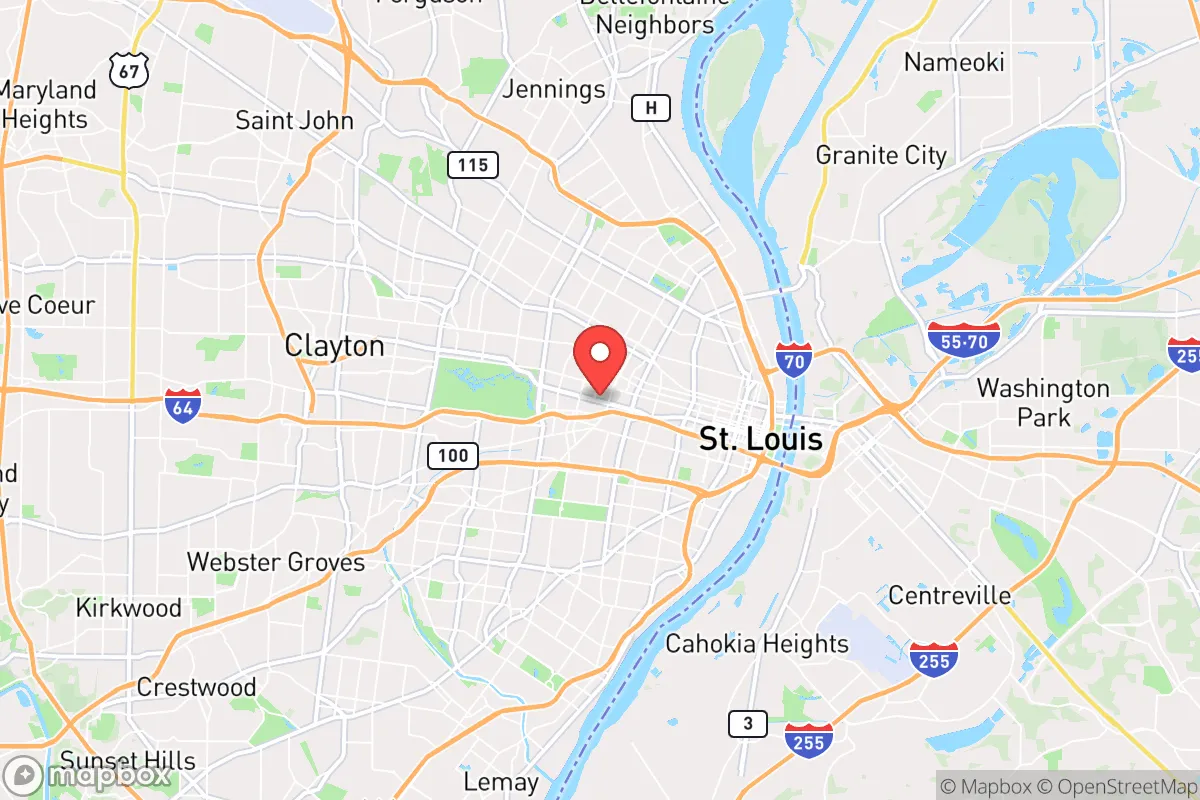
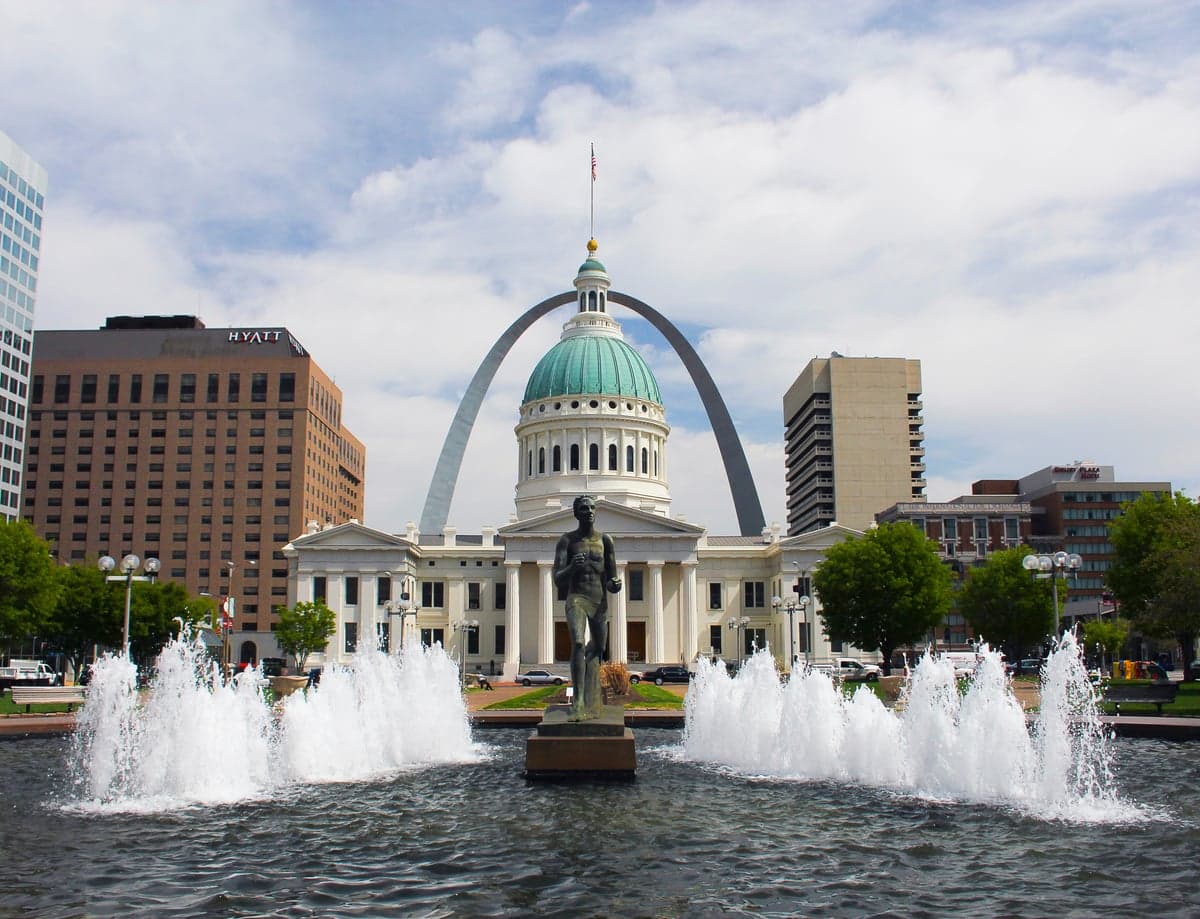
Photo: Wikipedia
Political ClimatePolitical Climate in St. Louis, MO
District shown is the primary district for this city’s centroid. Cities may span multiple districts.
Local Political AnalysisPolitical Analysis of St. Louis, MO
Look, I’ve lived in St. Louis my whole life, and I’ve watched this city’s politics shift from a rough-and-tumble, blue-collar Democratic machine into something far more ideologically rigid. The numbers tell the story: St. Louis City has a Cook Partisan Voting Index of D+29, meaning it votes about 29 points more Democratic than the national average. That’s not just blue—it’s deep, deep blue. And while the city has always been Democratic, the flavor has changed. It used to be about unions, ward politics, and getting potholes filled. Now it’s about progressive social agendas, and frankly, a lot of us feel like the government is getting way too comfortable telling you how to live your life.
How it compares
If you drive just 15 minutes west into St. Louis County, you hit places like Wildwood, Town and Country, or Chesterfield. Those areas are still purple-to-red, with a lot of fiscal conservatives and folks who just want to be left alone. Go another 30 minutes out to St. Charles County, and you’re in solid Republican territory—places like O’Fallon and Wentzville. The contrast is stark. In the city, you’ve got a city council that’s pushed through things like a $15 minimum wage, strict paid sick leave mandates, and a non-discrimination ordinance that, while well-intentioned, has been used to go after small business owners who don’t want to participate in certain cultural events. The county and suburbs? They’re still fighting to keep property taxes low and schools focused on basics, not social engineering. It’s like two different countries sharing a zip code.
What this means for residents
For a conservative or even a moderate living in the city, it means you’re constantly swimming upstream. The city government has a habit of overreaching—like the 2020 effort to defund the police, which led to a spike in carjackings and homicides that we’re still digging out from. The mayor and board of aldermen have pushed through a “Clean Energy” bill that effectively bans natural gas hookups in new construction, which drives up your utility bills and limits your choices. And the school board? It’s been taken over by progressive activists who’ve focused more on renaming schools and pushing critical race theory than on fixing the fact that less than 20% of kids in St. Louis Public Schools are proficient in math. If you value personal freedom—like choosing your own energy source, sending your kid to a school that teaches fundamentals, or running a business without a dozen new regulations every year—the city is becoming a harder place to call home.
One thing that really gets under my skin is how the city handles property rights. There’s a growing movement to impose rent control and “just cause” eviction laws, which sounds nice on paper but basically ties a landlord’s hands. I’ve seen small-time landlords sell off their properties because they can’t get rid of problem tenants without a year-long legal battle. That shrinks the rental supply and drives up prices for everyone. And the city’s approach to homelessness? Instead of enforcing basic camping bans, they’ve set up “safe zones” that have turned some parks into permanent encampments. It’s a mess. Looking ahead, I don’t see it getting better unless there’s a serious pushback at the ballot box. The progressive machine is entrenched, and the only real check on it is the state legislature in Jefferson City, which has been stepping in to preempt some of the city’s more radical ordinances. But that’s a band-aid. If you’re thinking of moving here, just know: you’re not just moving to a city—you’re moving into a political experiment that’s still unfolding, and not in a way that respects your right to live your own life.

State Political ClimatePolitical Climate in Missouri
State Political AnalysisPolitical Environment in the State
Missouri has long been considered a bellwether state, but over the past 10-20 years it has shifted decisively from a classic swing state to a solidly Republican stronghold, with a +18.5-point margin for Donald Trump in 2024. The dominant coalition is a mix of rural conservatives, suburban ex-urbanites fleeing St. Louis and Kansas City, and a growing population of fiscally conservative transplants from blue states. The trajectory has been a steady reddening, accelerated by the post-2020 migration wave and a state legislature that has aggressively pushed conservative policy. However, the state is not monolithic—the urban cores of St. Louis and Kansas City remain deep blue, creating a stark internal divide that defines Missouri politics.
Urban vs. rural divide
The political map of Missouri is a textbook example of the urban-rural split. The two major metros—St. Louis and Kansas City—drive the state's Democratic vote, with St. Louis City and County delivering margins of +50 to +60 points for Democrats in recent cycles. Kansas City proper is similarly blue, though its northern and eastern suburbs like Liberty and Lee's Summit have trended redder as families move outward. The real story is the rural and exurban expanse: counties like Christian County (outside Springfield), Franklin County (west of St. Louis), and Cole County (Jefferson City) vote Republican by 60-70% margins. The Ozarks region, anchored by Springfield, is a conservative stronghold where Trump won by 30+ points. The Bootheel in the southeast, once a Democratic holdout, flipped hard red in the 2010s. The only real swing areas are the St. Louis suburbs like St. Charles County, which voted for Trump by 20 points in 2024 but still has pockets of moderate Republicans and independents.
Policy environment
Missouri's policy environment is among the most conservative in the Midwest, and it's been trending that way for a decade. The state has a flat income tax that was cut from 5.4% to 4.8% in 2023, with a trigger to drop further to 4.5% if revenue targets are met. There is no state property tax on vehicles, and the overall property tax burden is low compared to Illinois or Kansas. The regulatory posture is business-friendly, with right-to-work (repealed by ballot in 2018 but still a cultural touchstone) and a strong tort reform environment. Education policy is a flashpoint: the state has a robust school choice program, including the MOScholars tax-credit scholarship program, and a new open enrollment law passed in 2024 that lets students cross district lines. Healthcare is mixed—Missouri did not expand Medicaid until 2021 (via ballot initiative), and the legislature has since passed restrictions on abortion, including a near-total ban with no exceptions for rape or incest. Election laws have tightened: voter ID is required, and the 2022 law eliminated no-excuse absentee voting and shortened the window for mail-in ballots. The state also passed a constitutional carry law in 2016, allowing permitless concealed carry.
Trajectory & freedom
On the freedom scale, Missouri is moving in a decidedly more free direction for conservatives, but with some caveats. The Second Amendment Preservation Act (SAPA), passed in 2021, declares federal gun laws that infringe on the Second Amendment to be invalid in Missouri—a direct challenge to federal authority that has been partially blocked in court but remains a powerful symbol. The Missouri Stand Your Ground law was strengthened in 2016. On parental rights, the state passed the Parental Bill of Rights in 2022, giving parents explicit authority over their children's education and medical decisions. The Save Women's Sports Act (2023) bans transgender athletes from female sports. However, there are concerns: the Missouri State Highway Patrol has been used to enforce local gun ordinances in St. Louis, and the Kansas City police department is still under state control, which some see as a mixed bag for local autonomy. The medical marijuana program, approved by voters in 2018, is functional but heavily regulated, and recreational marijuana remains illegal—a rare area where the state lags behind neighboring Illinois and Oklahoma. Overall, the trajectory is toward more cultural and economic freedom, but with a strong hand from Jefferson City on local governance.
Civil unrest & political movements
Missouri has a history of civil unrest that still echoes. The Ferguson protests of 2014 in the St. Louis suburbs were a national flashpoint, and the city's north side remains a site of periodic protests over policing and racial justice. The Kansas City area has seen smaller but persistent activism around housing and police reform. On the right, the Missouri Freedom Caucus has become a powerful force in the state legislature, pushing for school choice, gun rights, and anti-abortion measures. The Missouri Republican Assembly is a grassroots group that has successfully primaried moderate Republicans. Immigration politics are less heated than in border states, but St. Louis has declared itself a sanctuary city for undocumented immigrants, which has led to state-level preemption laws banning such policies. Election integrity remains a hot topic: the 2020 election saw St. Louis and Kansas City under scrutiny for ballot processing issues, leading to the 2022 law that tightened procedures. The Missouri State Capitol in Jefferson City has seen large rallies on both sides, particularly around abortion and gun rights. A new resident in a rural area would see little visible activism, but in the cities, political polarization is on full display.
Projection
Over the next 5-10 years, Missouri is likely to become more Republican and more culturally conservative. The in-migration pattern is key: people are moving from Illinois, California, and New York to the St. Louis exurbs (like Warrenton and Troy), the Springfield area, and the Lake of the Ozarks region. These newcomers tend to be fiscally conservative and socially moderate-to-conservative, reinforcing the red trend. The urban cores of St. Louis and Kansas City will continue to shrink in population share, reducing their political influence. The state legislature will likely push further on school choice, tax cuts, and gun rights, while the courts will continue to shape the SAPA battle. The biggest wildcard is the St. Louis region: if the city's population decline accelerates, it could lose its status as a Democratic stronghold, making the state even redder. For a new resident, expect a state that is increasingly aligned with conservative values, with a low-tax, low-regulation environment, but with the understanding that the urban areas will remain politically distinct and occasionally contentious.
Bottom line for a new resident: If you're moving to Missouri for freedom from government overreach, you're in the right place—especially if you settle in the exurbs or rural areas. The state is trending in a direction that respects gun rights, parental authority, and low taxes. Just be aware that the cities are a different world, and the political battles over local control and cultural issues will continue. Pick your county wisely, and you'll find a state that's increasingly aligned with conservative principles.
* Values derived from national, state, county, city and local statistics and may differ in a specific area. Last updated: 2026-04-22T01:27:35.000Z
Narrative content on this page is AI-generated and may contain mistakes. Verify any details that matter before acting on them.
ReloMaps may earn a commission from affiliate links at no extra cost to you.

