 Popular
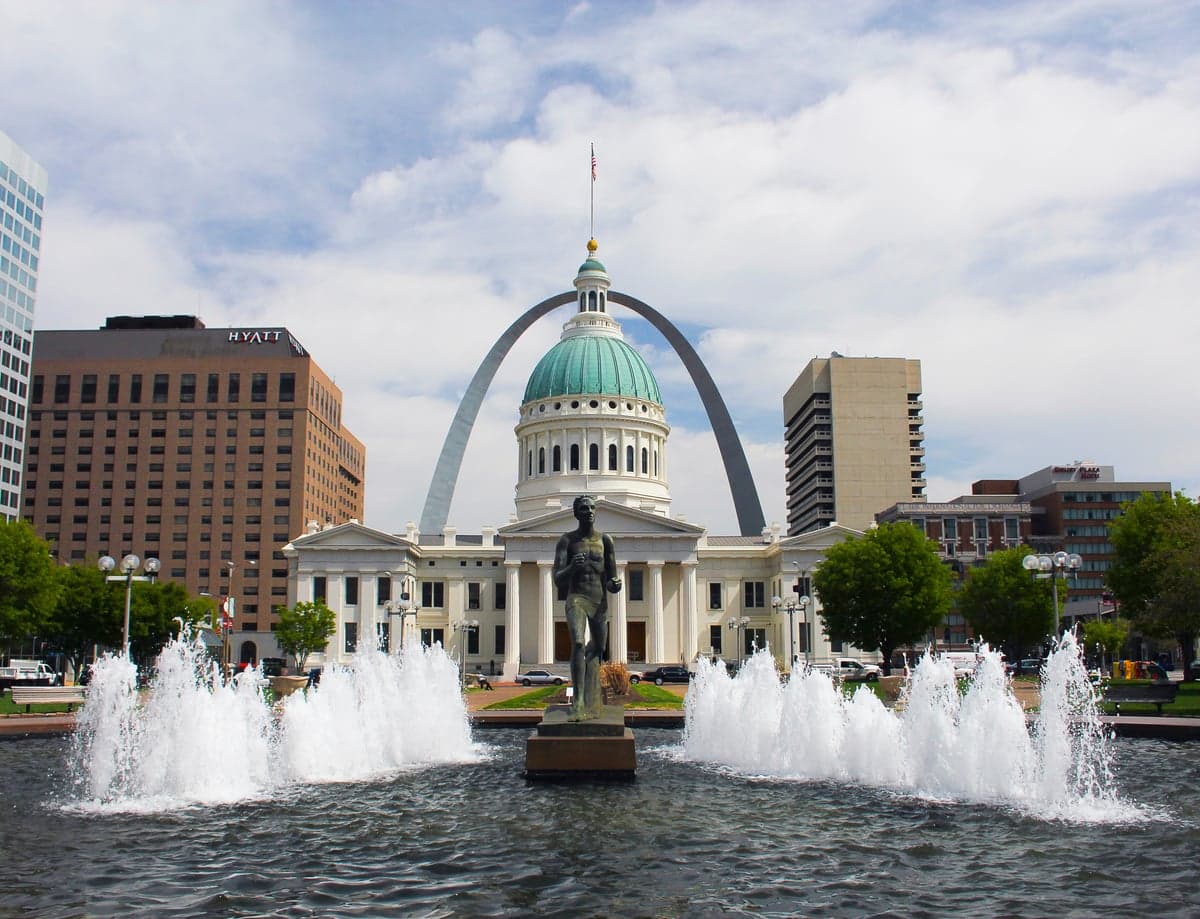
Photo: Wikipedia
Quality of Life in St. Louis, MO
A high quality of life with strong walkability, manageable living costs, healthy neighborhood signals, and solid amenity access.
What does Quality of Life tell us?
Quality of Life blends cost of living, nearby amenities, socioeconomic signals, and neighborhood character. City-level scores represent the whole municipality; individual neighborhoods can differ.
What does this tell us?
Quality of Life blends cost of living, nearby amenities, socioeconomic signals, and neighborhood character. City-level scores represent the whole municipality; individual neighborhoods can differ.
Cost of Living
23% below national average
The Real Cost of Living in St. Louis, MO for 2026
| Tier | Individual | Family (4) |
|---|---|---|
| Survival | $16k | $29k |
| Comfortable | $36k | $53k |
| Luxury | $100k+ | $155k+ |
| Elite (Top 5%) | $132k+ | $204k+ |
105%
The Area Signal
A metric tracking the socioeconomic signals of the area.
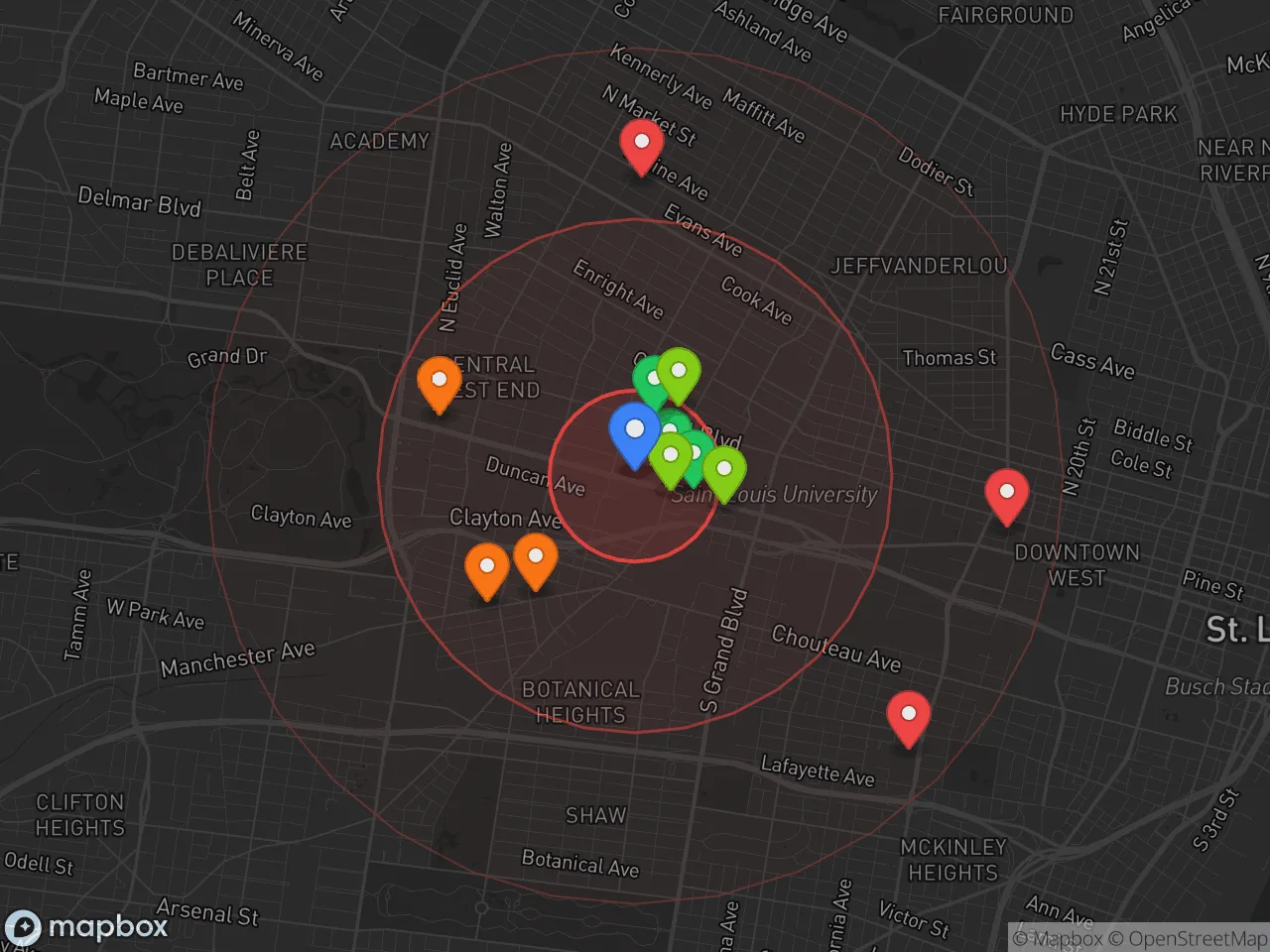
Hobbies
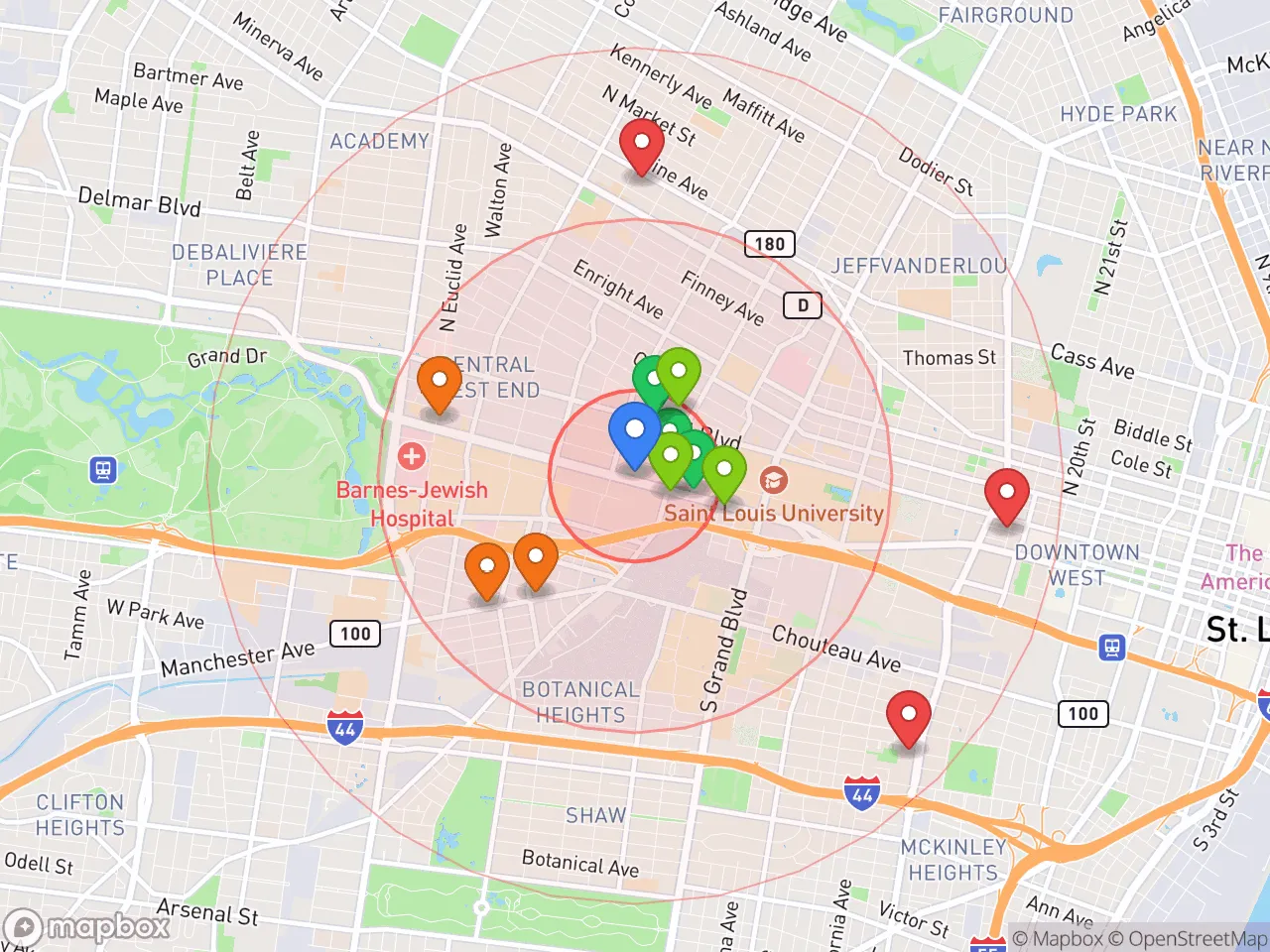
Explore the areaGroceries
6 within 10 miles
Gas
20 within 10 miles
Hospital
20 within 20 miles
Airport
Indianapolis International Airport
Post Office
USPS — Saint Louis, MO
Critical Amenities
Quality-of-Life Analysis
St. Louis, Missouri, offers a quality of life defined by its stark contrast between modest affluence and deep-rooted urban challenges. The city’s cost of living index sits at 77 (100 = U.S. average), making it one of the most affordable major metros in the country. This attracts a diverse population: young professionals drawn to the city’s historic architecture and growing startup scene, families seeking affordable homeownership, and retirees looking to stretch fixed incomes. However, the city also contends with population decline and concentrated poverty, meaning the experience of living here varies dramatically by neighborhood.
Cost of living and housing affordability compared to nearby suburbs
St. Louis’s cost of living is 23% below the national average, a figure that directly impacts housing. The median home value is $185,100, compared to the national median of roughly $420,000. This makes homeownership accessible even for single-income households. Median rent is $978, well below the national average of $1,400. By contrast, nearby suburbs like Clayton (median home value $450,000) and Kirkwood ($380,000) are significantly pricier, while St. Charles County offers slightly higher prices but lower crime rates. The average commute in St. Louis is 22.2 minutes, shorter than the national average of 26 minutes, thanks to a grid-like street system and limited traffic congestion outside peak hours. This commute advantage is a major draw for workers employed at major employers like BJC HealthCare, Washington University, and Anheuser-Busch.
Schools, amenities, and daily life rhythm in the city
Daily life in St. Louis revolves around its distinct neighborhoods—each with its own character. The Central West End offers walkable streets, high-end dining, and proximity to Forest Park (larger than NYC’s Central Park). The Delmar Loop provides live music venues and independent shops. Public schools are a mixed bag: the St. Louis Public Schools district has struggled with funding and performance, but magnet schools like Metro Academic & Classical High School and Clayton High School (in the county) are top-ranked. Private and parochial schools are common. Amenities include the free St. Louis Zoo, the Saint Louis Art Museum, and the Missouri Botanical Garden. The city’s rhythm is slower than Chicago or New York, with a strong emphasis on local sports (Cardinals baseball, Blues hockey) and a thriving craft beer scene. Crime remains a concern—violent crime rates are high in certain zip codes (e.g., 63113, 63107), while neighborhoods like Soulard and Lafayette Square are relatively safe.
Who thrives in St. Louis? Budget-conscious homebuyers who want a historic house with character, young professionals in healthcare, education, or tech who value a short commute and cultural amenities, and families willing to navigate the school-choice landscape. Those seeking a low-stress, affordable urban lifestyle with access to world-class museums and parks—and who can tolerate the city’s crime disparities and winter weather—will find St. Louis a compelling, underrated place to live.

Crime in St. Louis, MO
Significantly higher crime rates than 93% of comparable U.S. locations.
Violent CrimeViolent Crime Analysis
Property CrimeProperty Crime Analysis
Crime Analysis
St. Louis, Missouri, faces a severe public safety crisis, with violent crime rates more than three times the national average and property crime rates that are among the highest in the country for a major U.S. city. The city's overall safety picture is deeply concerning, driven by a combination of socioeconomic challenges and a justice system that many critics argue prioritizes offender rehabilitation over public protection. With a violent crime rate of 1,224.1 per 100,000 residents and a property crime rate of 5,029.5 per 100,000, St. Louis consistently ranks as one of the most dangerous cities in the United States, a reality that demands serious consideration for anyone evaluating a move to the region.
Crime in context
St. Louis's crime statistics far exceed both Missouri state averages and national benchmarks. The city's violent crime rate is roughly 3.3 times higher than the national average of approximately 370 per 100,000, while its property crime rate is nearly 2.5 times the national figure of about 2,000 per 100,000. These numbers place St. Louis in the top 1-2% of all U.S. cities for violent crime. A significant contributing factor is the progressive prosecutorial and judicial philosophy prevalent in the city. St. Louis has elected reform-minded district attorneys and judges who have implemented policies such as reduced cash bail, diversion programs for repeat offenders, and lighter sentencing guidelines. While intended to address systemic inequities, these policies have been linked to a revolving-door justice system that releases dangerous individuals back onto the streets, directly undermining deterrence and public safety. The result is a cycle where high crime rates persist, and victims often feel that the justice system fails to hold offenders accountable.
What residents experience
For those living in St. Louis, crime is not an abstract statistic but a daily reality. Property crime—including car theft, burglary, and larceny—is pervasive, with residents reporting frequent break-ins and vehicle thefts even in relatively stable neighborhoods. Violent crime, particularly aggravated assault and homicide, is concentrated in certain areas but casts a shadow over the entire city. Many residents alter their daily routines: avoiding public transit after dark, installing extensive home security systems, and limiting travel to specific corridors. The city's response, hampered by understaffed police departments and a court system that often releases suspects on their own recognizance, has led to widespread frustration. The progressive approach to criminal justice, while well-intentioned, has created an environment where many feel the system is more sympathetic to offenders than to law-abiding citizens and victims.
Neighborhood-level variation is stark. Areas like the Central West End and parts of Soulard have lower crime rates due to higher property values, active neighborhood associations, and private security patrols. In contrast, neighborhoods north of Delmar Boulevard—such as the Greater Ville, Penrose, and Wells-Goodfellow—experience violent crime rates that can be 5-10 times higher than the city average. Even in safer pockets, the spillover effect from high-crime areas means that no part of St. Louis is entirely insulated from the city's broader public safety challenges. Prospective residents should research specific neighborhoods thoroughly and consider that even "safe" areas may face property crime and occasional violent incidents linked to the city's systemic issues.
* Values derived from national, state, county, city and local statistics and may differ in a specific area. Last updated: 2026-04-22T01:27:35.000Z
Narrative content on this page is AI-generated and may contain mistakes. Verify any details that matter before acting on them.
ReloMaps may earn a commission from affiliate links at no extra cost to you.

