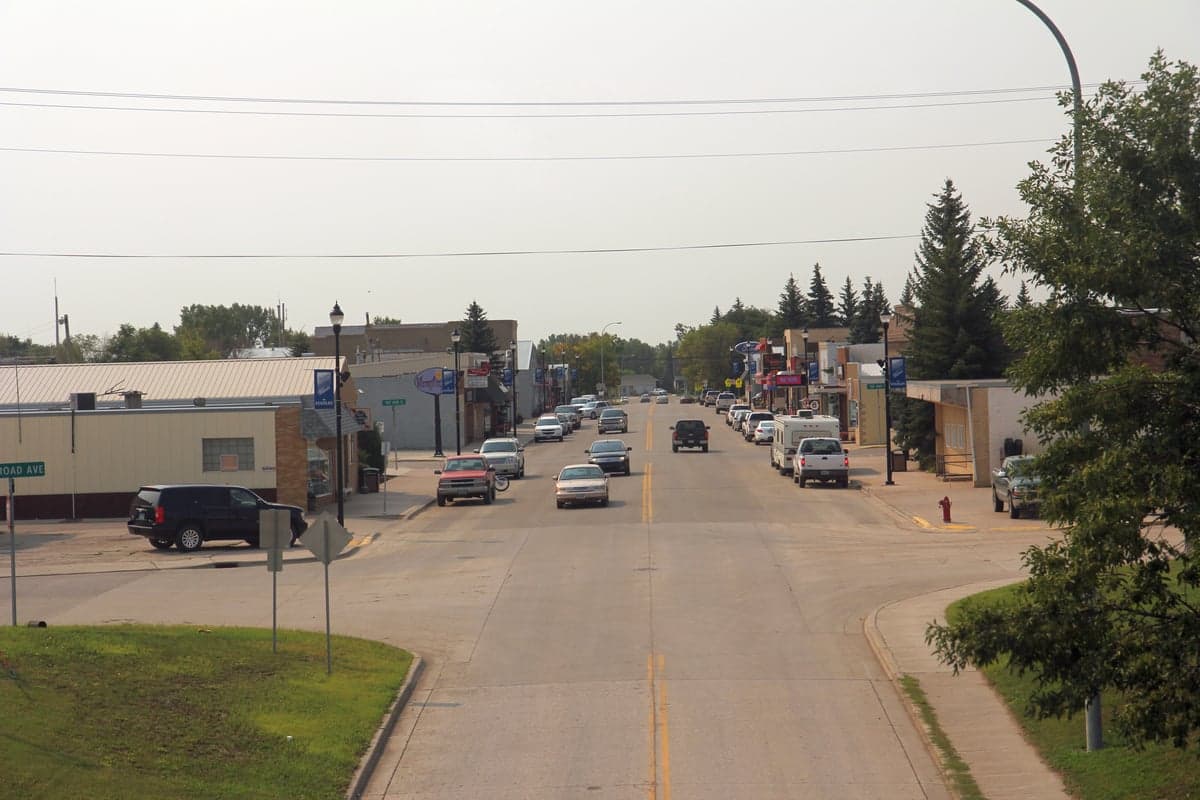
Photo: Wikipedia
Quality of Life in Stanley, ND
Above-average quality of iife. The area offers a reasonable cost of living, decent mobility, and a mix of neighborhood amenities.
What does Quality of Life tell us?
Quality of Life blends cost of living, nearby amenities, socioeconomic signals, and neighborhood character. City-level scores represent the whole municipality; individual neighborhoods can differ.
What does this tell us?
Quality of Life blends cost of living, nearby amenities, socioeconomic signals, and neighborhood character. City-level scores represent the whole municipality; individual neighborhoods can differ.
Cost of Living
8% below national average
The Real Cost of Living in Stanley, ND for 2026
| Tier | Individual | Family (4) |
|---|---|---|
| Survival | $18k | $34k |
| Comfortable | $47k | $69k |
| Luxury | $129k+ | $200k+ |
| Elite (Top 5%) | $151k+ | $235k+ |
154%
The Area Signal
A metric tracking the socioeconomic signals of the area.


Limited data for this area
Limited data for this area
Hobbies
Explore the areaGroceries
2 within 10 miles
Gas
0 within 10 miles
Hospital
1 within 20 miles
Airport
Stanley Municipal Airport
Post Office
USPS — Ross, ND
Critical Amenities
Quality-of-Life Analysis
Stanley, North Dakota, presents a quality-of-life profile shaped by its role as a service hub for the Bakken oil region, offering a notably lower cost of living than the national average while maintaining a stable, family-oriented community. With a cost-of-living index of 92 (8% below the U.S. average), the town attracts a mix of energy-sector workers, long-term agricultural families, and professionals seeking affordable housing and short commutes. The population skews slightly younger and more male than the state average due to oil-field employment, but the core community remains rooted in ranching and small-town traditions, creating a blend of transient workers and multi-generational residents.
How housing costs and daily expenses compare to nearby towns
Stanley’s housing market is a standout advantage for affordability in western North Dakota. The median home value of $241,300 is roughly $30,000 below the state median and significantly cheaper than Williston (about $320,000) or Minot (around $290,000), making it one of the more attainable markets in the region for first-time buyers. Median rent sits at $1,120, which is about 15% lower than in Williston and comparable to smaller towns like Tioga. The overall cost-of-living index of 92 is driven largely by lower housing and utility costs, though groceries and healthcare run close to national averages. The average commute of 18 minutes is remarkably short for the Bakken region—many oil-field workers in surrounding areas face 30- to 45-minute drives to well sites—meaning residents save both time and fuel money. Property taxes in Mountrail County are moderate, around 1.1% of assessed value, which keeps monthly carrying costs manageable for homeowners.
What daily life is like for families and workers in Stanley
Daily life in Stanley revolves around a compact, walkable downtown and a handful of essential amenities that serve a population of roughly 2,500. The Mountrail County School District operates one K-12 school with an enrollment of about 500 students, maintaining a student-teacher ratio near 14:1 and offering basic extracurriculars like football, basketball, and FFA. For healthcare, the Mountrail County Medical Center provides emergency care, primary care, and limited specialist services, though residents travel to Williston (45 minutes) or Minot (90 minutes) for advanced procedures. Grocery shopping is served by a full-line supermarket, and dining options include a handful of local cafes and a popular steakhouse. The town’s recreation centers on the Stanley Municipal Golf Course, a public swimming pool, and nearby Lake Sakakawea for fishing and boating. The rhythm of life is quiet and predictable—most businesses close by 6 p.m., and community events like the Mountrail County Fair in August draw nearly the entire town. Internet access is reliable via cable and fiber providers, supporting remote work for those not in the energy sector.
Stanley is best suited for families and workers who prioritize affordability, short commutes, and a low-crime, small-town environment over urban amenities or career diversity. The energy industry provides stable employment for roughnecks, truck drivers, and engineers, while the agricultural base offers opportunities in ranching and grain farming. Retirees on fixed incomes will find the low housing costs appealing, but the limited healthcare and entertainment options may feel restrictive. Young professionals without ties to the oil or ag sectors may struggle with the narrow job market. Overall, Stanley delivers a solid, budget-friendly quality of life for those who value community connection and outdoor recreation over convenience and cultural variety.

Crime in Stanley, ND
Lower crime rates than 95% of comparable U.S. locations.
Violent CrimeViolent Crime Analysis
Property CrimeProperty Crime Analysis
Crime Analysis
Stanley, North Dakota, reports a violent crime rate of 91.8 incidents per 100,000 residents and a property crime rate of 642.8 per 100,000, placing it well below national averages for both categories. This small oil-boom town in Mountrail County presents a notably safer profile than many comparably sized communities across the Upper Midwest, though its property crime rate warrants attention from prospective residents.
Crime in context
Stanley's violent crime rate of 91.8 per 100,000 is roughly 74% lower than the national average of approximately 380 per 100,000, and significantly below the North Dakota state average of about 290 per 100,000. The property crime rate of 642.8 per 100,000 is about 55% below the national average of roughly 1,950 per 100,000, though it sits slightly above the North Dakota state average of approximately 1,500 per 100,000. These figures reflect a community where serious violent offenses like homicide, rape, and aggravated assault are rare events. The local justice system in Mountrail County operates under traditional conservative judicial philosophies, with no evidence of progressive or lenient sentencing policies that might contribute to higher recidivism or embolden offenders—a factor that helps maintain these low violent crime numbers.
What residents experience
Daily life in Stanley involves minimal fear of violent confrontation. The most common safety concerns revolve around property-related incidents, including theft from vehicles, minor burglaries, and occasional vandalism—typical for a community that experienced rapid population growth during the Bakken oil boom. Residents report feeling safe walking alone during daylight hours, and neighborhood watch dynamics are active in the older, established parts of town. The Stanley Police Department maintains a visible presence, and the city's compact layout means emergency response times are short. Property crime, while higher than the state average, rarely involves armed confrontation or home invasions; most incidents target unlocked vehicles or unsecured outbuildings.
Neighborhood-level variation in Stanley is modest but noticeable. The newer subdivisions built during the oil boom, particularly those along Highway 2 east of town, see slightly higher rates of vehicle break-ins and package thefts, likely due to transient rental populations. The historic downtown core and the residential areas west of Main Street report the lowest crime rates, with strong community cohesion and long-term residents actively monitoring their blocks. The rural outskirts and agricultural areas surrounding Stanley experience virtually no violent crime, though property theft from farm equipment and outbuildings occurs seasonally. Overall, Stanley offers a safety profile that appeals to families and retirees seeking a low-crime environment, with the caveat that basic property precautions—locking vehicles, securing sheds, and using outdoor lighting—remain prudent.
* Values derived from national, state, county, city and local statistics and may differ in a specific area. Last updated: 2026-10-10T16:29:05.000Z
Narrative content on this page is AI-generated and may contain mistakes. Verify any details that matter before acting on them.
ReloMaps may earn a commission from affiliate links at no extra cost to you.

