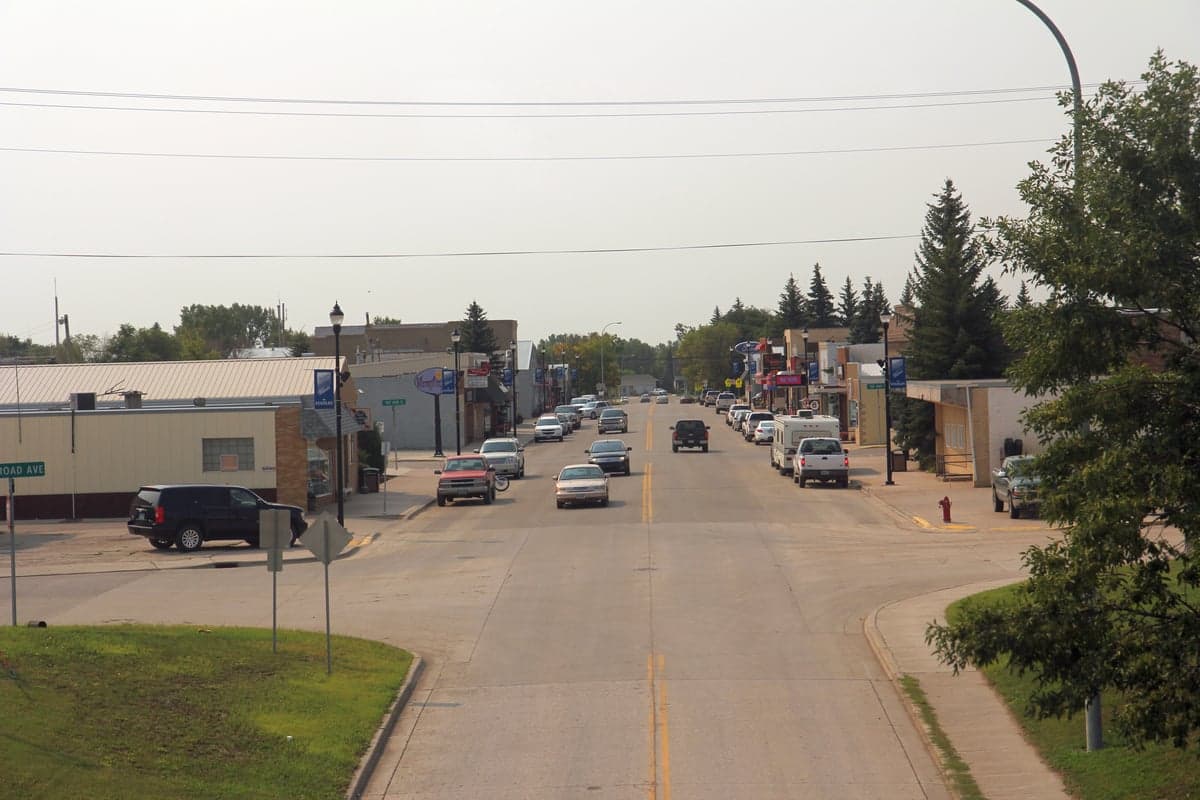
Photo: Wikipedia
Strategic Assessment of Stanley, ND
Strong survivability profile. Good buffer from population centers, with manageable environmental and tactical risks.
What does the Strategic Assessment tell us?
Our Strategic Assessment grades tactical survivability of an area. Major population centers, military targets, fallout zones, natural disasters, and border exposure all drive risk — lower exposure means a more defensible position in a crisis.
This is heavily inspired by Joel Skousen's Strategic Relocation book. Highly recommended you checkout the book ($)What does this tell us?
Our Strategic Assessment grades tactical survivability of an area. Major population centers, military targets, fallout zones, natural disasters, and border exposure all drive risk — lower exposure means a more defensible position in a crisis.
This is heavily inspired by Joel Skousen's Strategic Relocation book. Highly recommended you checkout the book ($)Strategic Pillars

Key Distances
Regional Safe Places
Below is our recommended "safe zones" in North Dakota and the surrounding area based on our strategic heuristics. For most people, it's unrealistic to live in a “safe zone” full-time due to work, family or other personal reasons. They tend to be more rural. However, many of these areas are perfect for second homes and retreat properties that double as a vacation home or even a short-term rental.
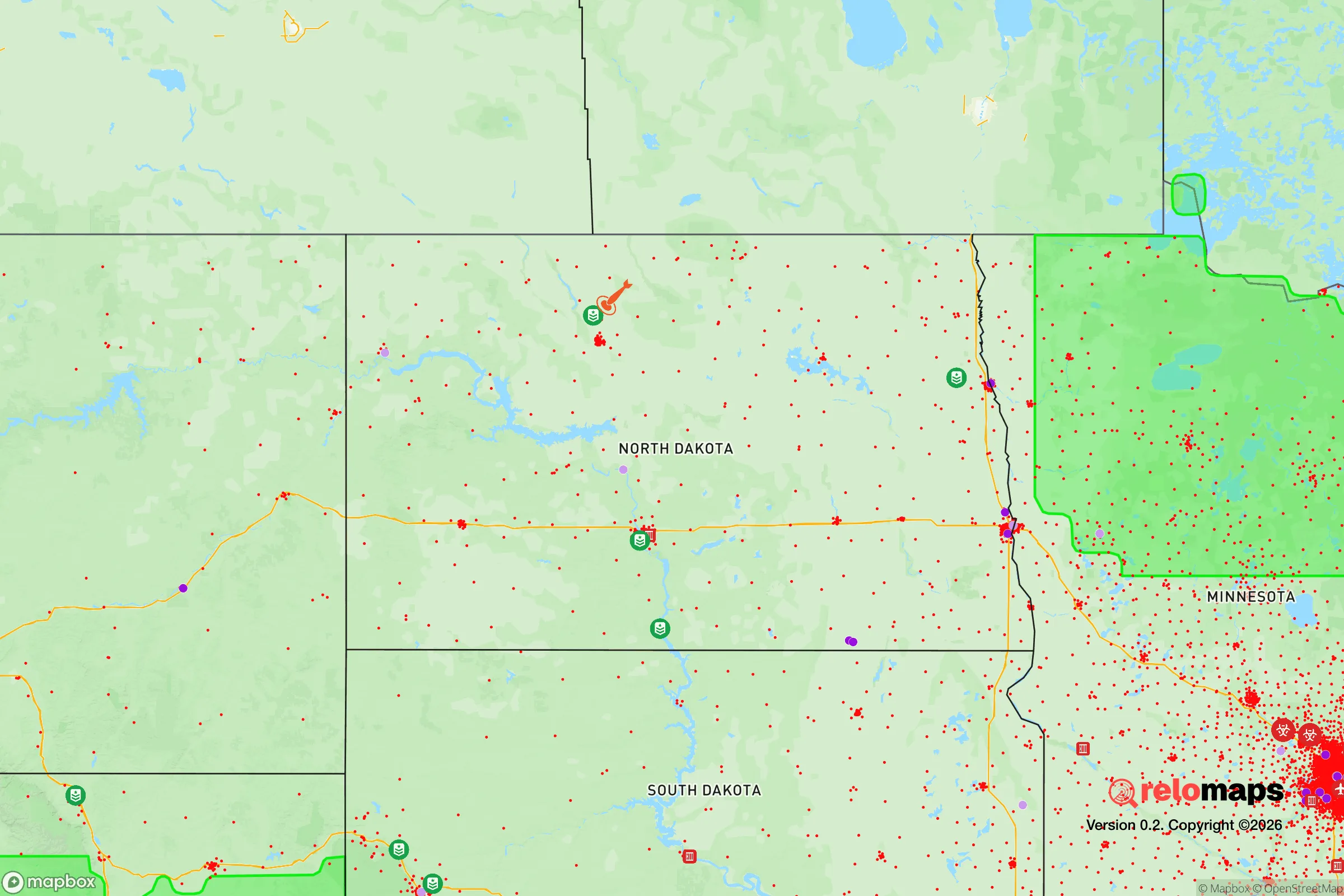
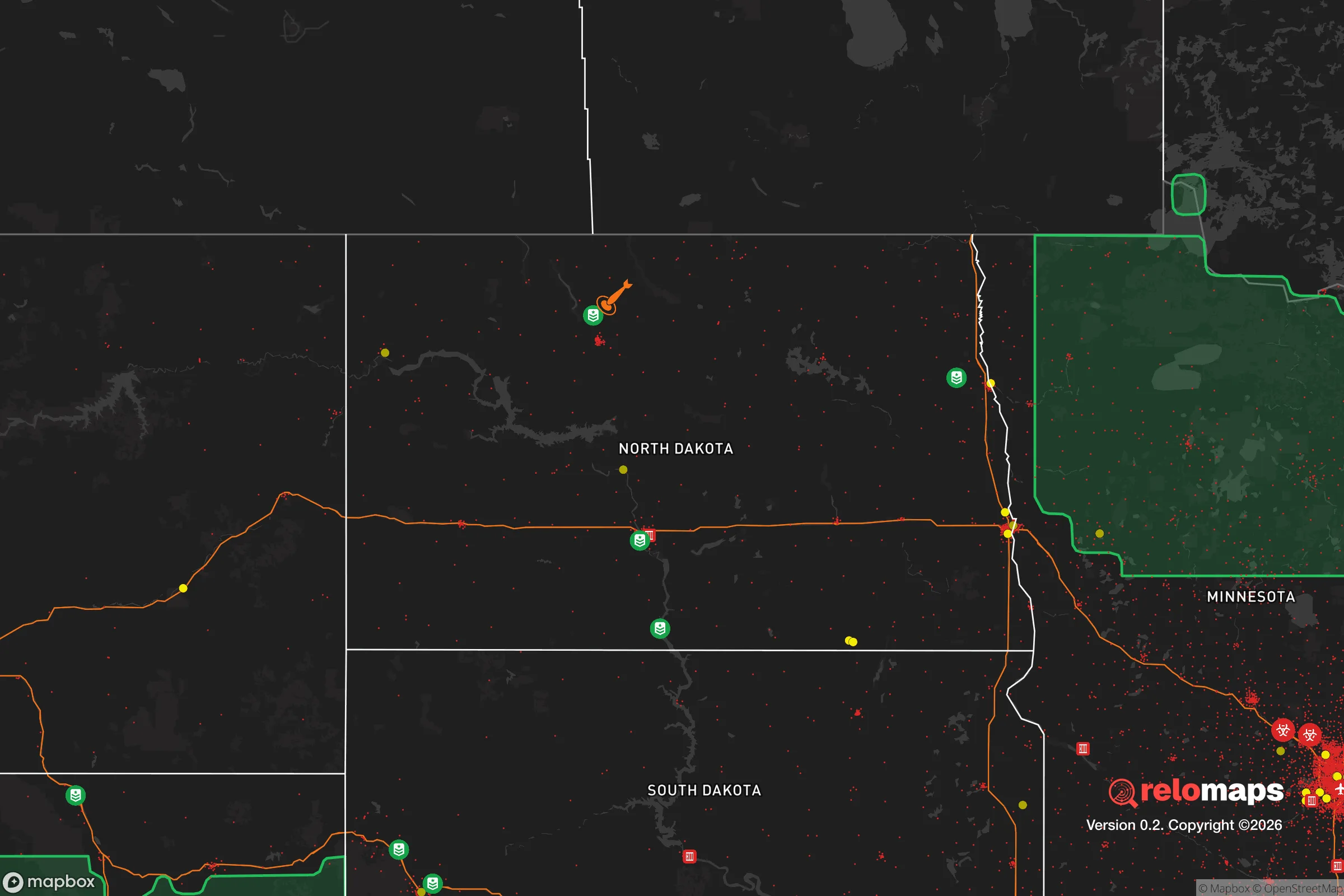


Important Note: For informational purposes only. This does not mean nothing bad ever happens in the green zones. Please use common sense. This is based on public data and modeled with AI. We tried to take a conservative approach but mistakes happen. We update this regularly as new information becomes available.
Solar Generator Recommendations
Backup power matters more here than in safer locations. We've picked three solar generators across budgets and capacity tiers — start with the budget unit if you only need a few essentials, or step up if you want to run a fridge and HVAC for days at a time.

Jackery Portable Power Station Explorer 300
Budget OptionPower on the Go: Weighing only 11 lbs, it's convenient to set up and store with book-sized foldable solar panels

BLUETTI Portable Power Station AC180
Designed for both indoor and outdoor scenarios, AC180 is highly capable as it has a robost capacity and continuous output power.

EF ECOFLOW DELTA Pro Ultra Power Station
Upgraded PickEcoFlow DELTA Pro Ultra is a whole-home energy system designed to grow with your family. Integrated with the Smart Home Panel 2, it scales to meet your evolving energy needs — keeping your home powered, intelligent, and secure through every stage of life.
We earn a commission, at no additional cost to you.
Strategic Assessment Analysis
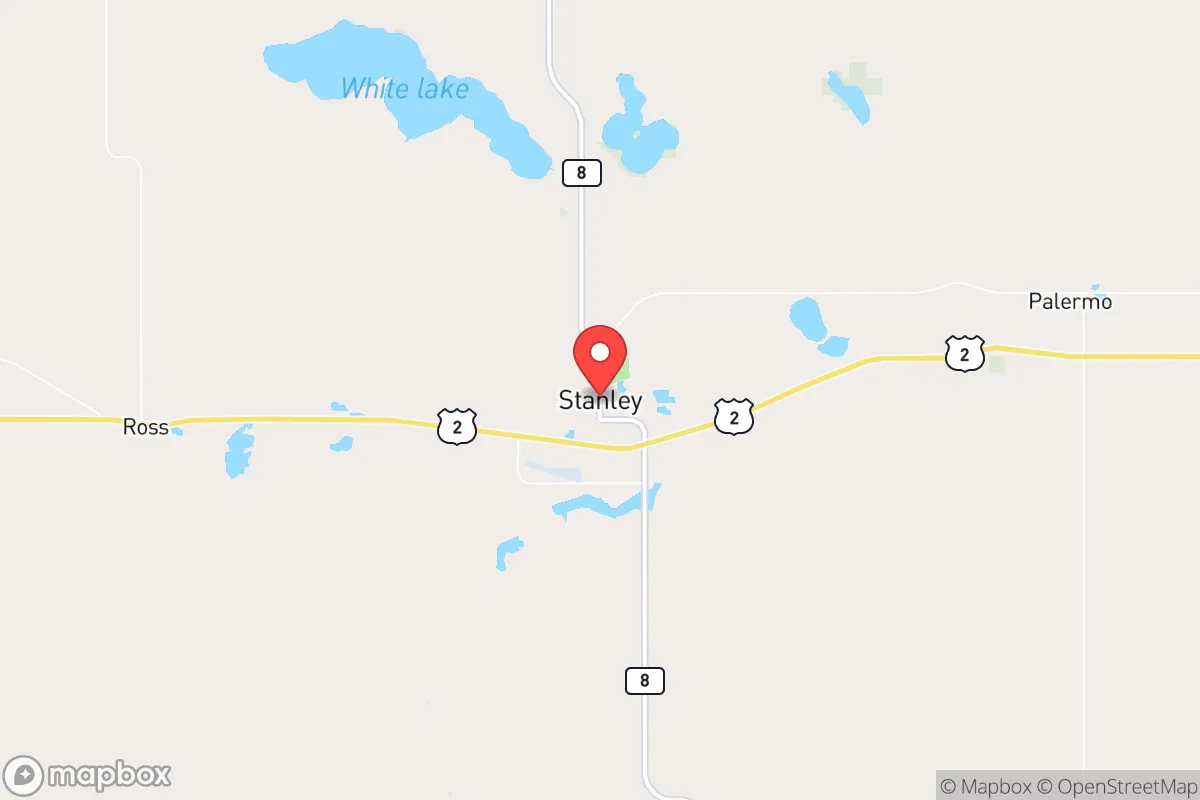
Stanley, North Dakota, sits in a part of the country that most of the country has forgotten—and that’s exactly its strategic value. Tucked into the northwestern corner of the state along U.S. Route 2, this town of roughly 2,600 people offers a combination of low population density, harsh but manageable climate, and distance from major population centers that makes it a serious candidate for anyone thinking about long-term resilience. The Bakken oil fields have brought infrastructure and jobs, but the real draw for a prepper or survivalist is the isolation: Stanley is about 90 miles from the Canadian border, 130 miles from Minot, and over 500 miles from the nearest major metro (Minneapolis). That kind of buffer buys time in a crisis.
Geographic position and natural advantages for long-term survival
Stanley’s location on the Missouri Plateau gives it a few hard-to-replicate natural advantages. The area sits atop the Bakken shale formation, which means energy independence is baked into the local economy—natural gas and oil extraction are the backbone, and even a small landowner can often secure mineral rights or lease arrangements that provide a steady income stream. The Missouri River is about 40 miles south, and the region has access to the Lake Sakakawea reservoir, which provides a massive freshwater buffer during drought. The terrain is rolling plains and buttes, offering natural cover and defensible positions for a homestead, while the cold winters (average January highs around 18°F) act as a natural deterrent to unprepared transient populations. The growing season is short—about 120 days—but the soil is fertile enough for cold-hardy crops like potatoes, carrots, and rye. For a family or individual looking to become less dependent on fragile supply chains, this is a place where you can realistically produce your own calories and fuel.
Risks, exposures, and proximity to fallout-relevant landmarks
No location is perfect, and Stanley has its own set of vulnerabilities that a serious relocator needs to weigh. The most obvious risk is the Bakken oil infrastructure itself: Stanley is surrounded by active well pads, pipelines, and rail terminals that handle crude oil and natural gas liquids. A major pipeline rupture, well blowout, or train derailment could create a localized environmental hazard or fire risk. That said, the dispersed nature of the extraction sites means a single event is unlikely to affect the whole town. More concerning from a national-security perspective is the proximity to Minot Air Force Base, about 100 miles east, which houses nuclear-capable B-52 bombers and is a high-value target in any major conflict. A ground burst at Minot would put Stanley outside the lethal blast radius but inside the fallout plume zone depending on wind direction. The same applies to the Canadian border—while it’s a buffer, it’s also a potential vector for uncontrolled migration during a collapse scenario. The nearest major population center is Williston (about 30 miles west), which has seen boom-and-bust cycles and could become a source of desperate people during a prolonged crisis. Stanley’s small size and lack of a major hospital or large police force mean that self-reliance is not optional—it’s the baseline expectation.
Practical resilience for a relocator: food, water, energy, and defensibility
For someone serious about prepping, Stanley checks most of the practical boxes. Water is the first concern, and the area’s access to the Lake Sakakawea aquifer and the Missouri River system means that a well-drilled property can yield reliable groundwater at depths of 100-300 feet. Surface water is available but requires treatment for agricultural runoff and oil-field contaminants. Food production is feasible but labor-intensive: the short growing season demands greenhouses or cold frames for anything beyond root vegetables, and livestock (cattle, goats, chickens) is the more reliable protein source. The local economy is built around energy extraction, so diesel, propane, and gasoline are readily available—but that also means prices spike during supply disruptions. Solar is viable but less efficient in winter; a hybrid system with a small wind turbine is a better bet for year-round off-grid power. Defensibility is where Stanley shines: the town itself is compact, with a single main highway (U.S. 2) providing the only easy access. The surrounding countryside offers numerous draws, coulees, and buttes where a well-placed homestead can be nearly invisible from the road. The local population is overwhelmingly conservative, rural, and armed—the Mountrail County sheriff’s office is small, but the community is tight-knit and suspicious of outsiders, which works in your favor if you’re already part of the fabric. Crime is low, but the oil-field culture brings a transient male population that can be rough; property crime (theft from vehicles, tools) is the main concern, not violent crime.
The overall strategic picture for Stanley is one of trade-offs. You get genuine isolation, energy abundance, and a community that values self-sufficiency, but you also get a harsh climate, limited medical infrastructure, and proximity to both oil-field hazards and a nuclear target. For a single individual or a family willing to invest in a well-insulated home, a reliable water source, and a year’s worth of supplies, this is a location that could ride out most regional or national disruptions. The key is to arrive with a plan—not just a dream. If you’re looking for a place where you can be left alone, where the government is distant and the winters keep the unprepared away, Stanley deserves a hard look. Just don’t expect it to be easy. That’s the point.

* Values derived from national, state, county, city and local statistics and may differ in a specific area. Last updated: 2026-10-10T16:29:05.000Z
Narrative content on this page is AI-generated and may contain mistakes. Verify any details that matter before acting on them.
ReloMaps may earn a commission from affiliate links at no extra cost to you.

