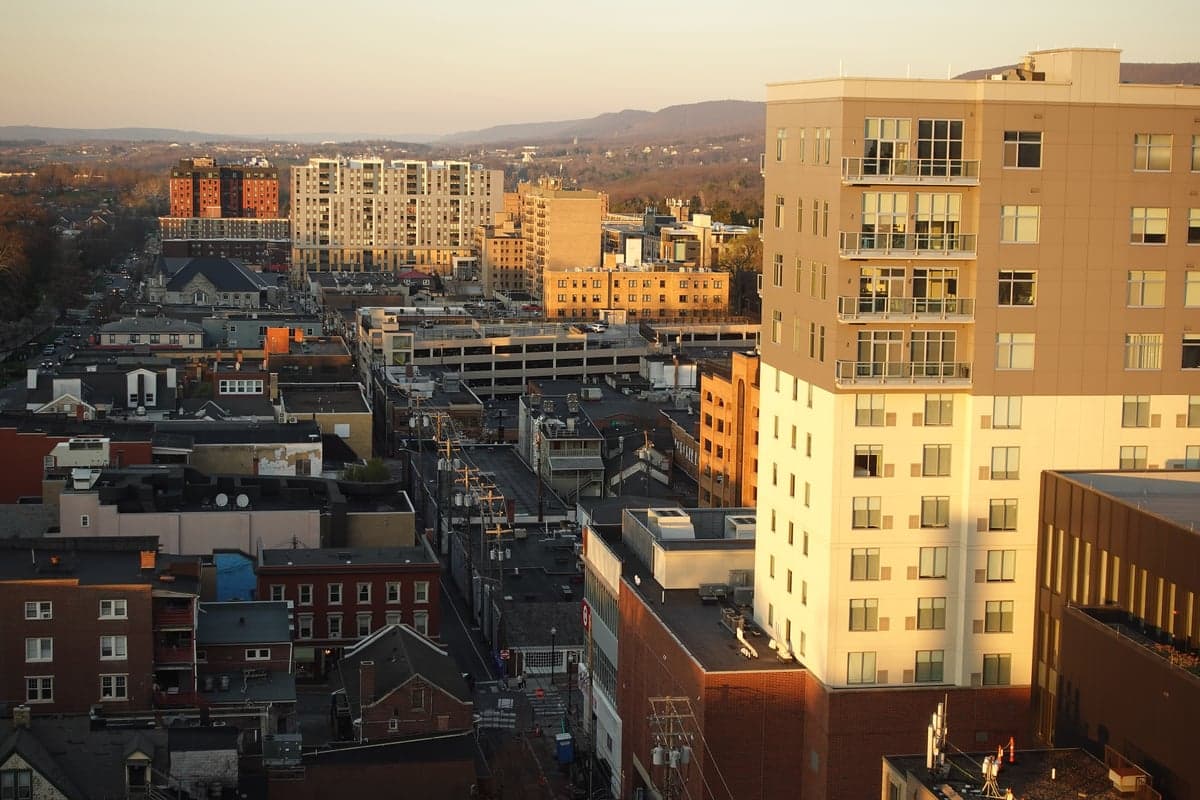
Photo: Wikipedia
Quality of Life in State College, PA
Above-average quality of iife. The area offers a reasonable cost of living, decent mobility, and a mix of neighborhood amenities.
What does Quality of Life tell us?
Quality of Life blends cost of living, nearby amenities, socioeconomic signals, and neighborhood character. City-level scores represent the whole municipality; individual neighborhoods can differ.
What does this tell us?
Quality of Life blends cost of living, nearby amenities, socioeconomic signals, and neighborhood character. City-level scores represent the whole municipality; individual neighborhoods can differ.
Cost of Living
22% above national average
The Real Cost of Living in State College, PA for 2026
| Tier | Individual | Family (4) |
|---|---|---|
| Survival | $20k | $37k |
| Comfortable | $79k | $116k |
| Luxury | $85k+ | $132k+ |
| Elite (Top 5%) | $136k+ | $210k+ |
41%
The Area Signal
A metric tracking the socioeconomic signals of the area.
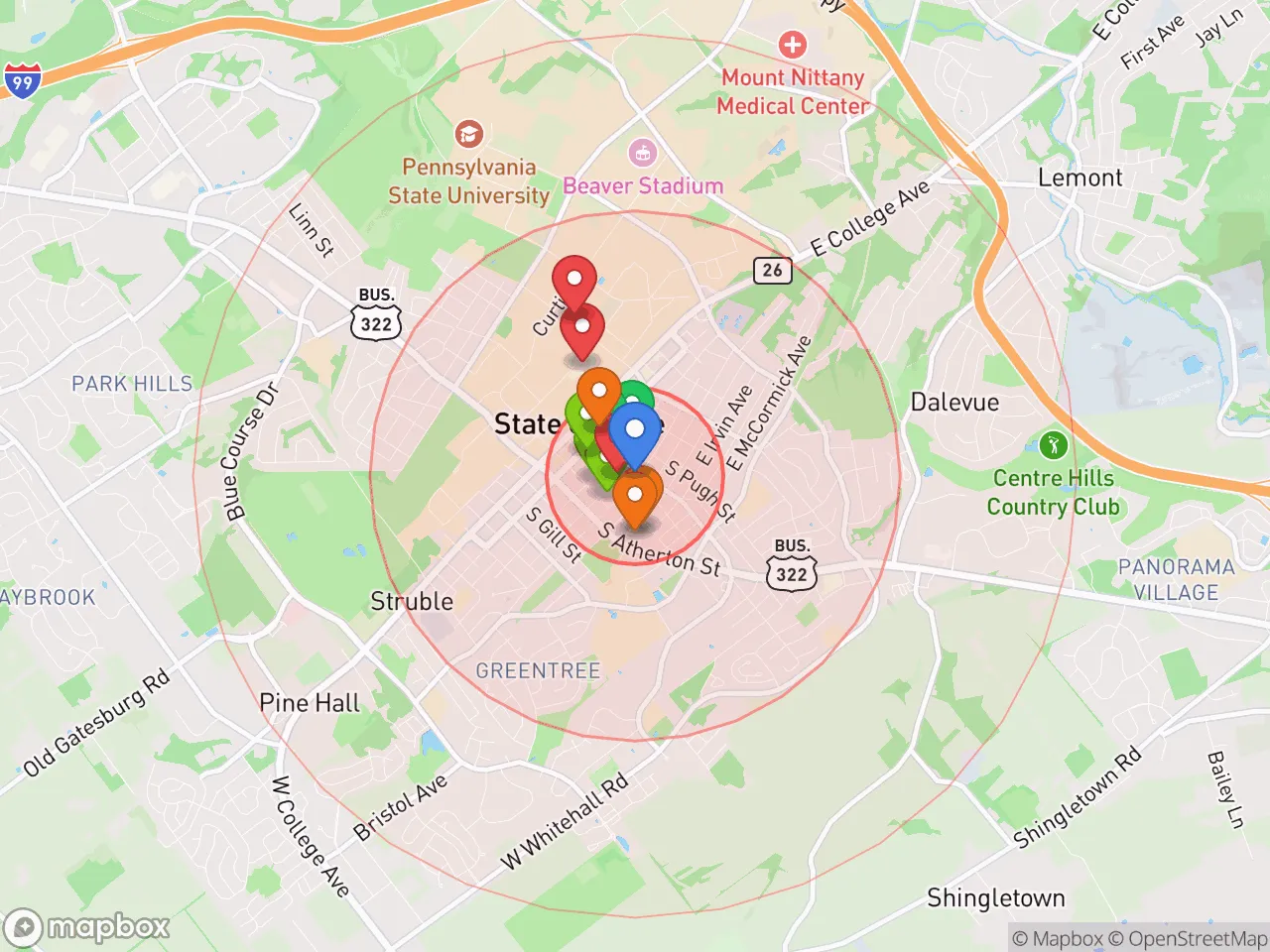
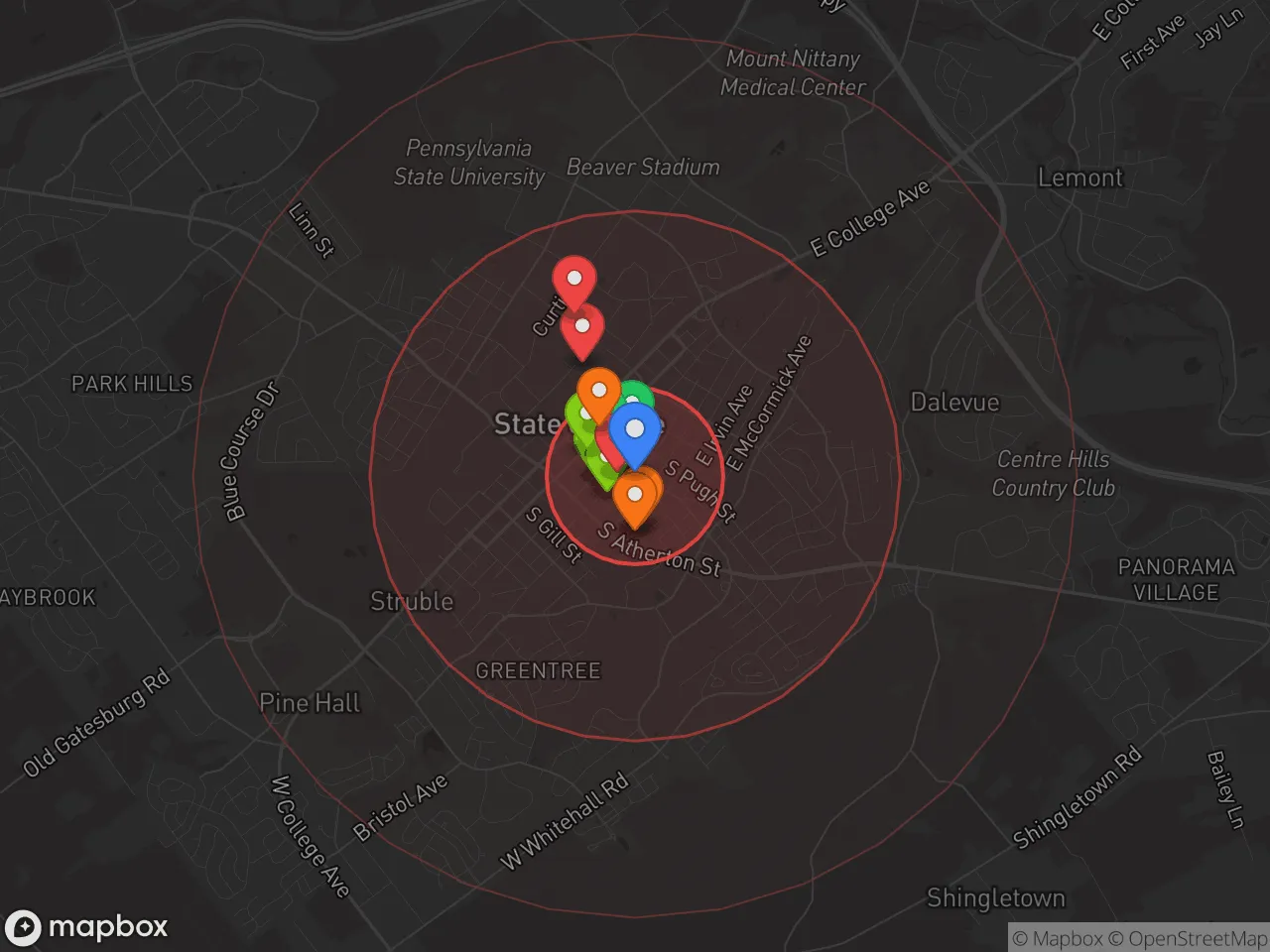
Hobbies
Explore the areaGroceries
7 within 10 miles
Gas
20 within 10 miles
Hospital
4 within 20 miles
Airport
Pittsburgh International Airport
Post Office
USPS — State College, PA
Critical Amenities
Quality-of-Life Analysis
State College, Pennsylvania, is an affluent, highly educated college town anchored by Penn State University, where the population skews younger and more transient than the national average. With a cost-of-living index of 122 (22% above the U.S. average), the area commands a premium for housing and goods, driven by university employment, a robust local economy, and limited housing supply. The median home value sits at $414,400, and median rent at $1,229, making it one of the pricier markets in central Pennsylvania, yet still more affordable than major East Coast metros like Philadelphia or Washington, D.C.
Cost of living, housing prices, and affordability compared to nearby towns
State College’s cost-of-living index of 122 reflects housing costs that are roughly 40% above the national average, while other categories like groceries and healthcare are closer to the U.S. norm. The median home value of $414,400 is significantly higher than in nearby towns such as Bellefonte (median ~$280,000) or Philipsburg (~$150,000), where buyers can find more space for less money. Renters face a median of $1,229 per month, which is steep for the region but competitive with smaller cities like Harrisburg. The average commute is just 15.8 minutes, a major quality-of-life advantage that cuts transportation costs and frees up time. However, first-time buyers and lower-income households often struggle to enter the market, as inventory is tight and prices have risen steadily since 2020.
Local amenities, school quality, and the daily rhythm of life
Daily life in State College revolves around the university calendar, with a steady influx of students during the academic year and a quieter, more family-oriented pace in summer. The State College Area School District is highly rated, with strong test scores and a wide array of extracurriculars, making it a draw for faculty and professionals with children. Amenities include the Penn State Arboretum, the Palmer Museum of Art, and a walkable downtown with independent bookstores, coffee shops, and farm-to-table restaurants. The area also offers easy access to outdoor recreation—Rothrock State Forest and Bald Eagle State Park are within a 20-minute drive for hiking, biking, and fishing. While nightlife is student-heavy, there are quieter options like the State Theatre for live performances and the Central Pennsylvania Festival of the Arts each July.
State College is best suited for university employees, graduate students, and professionals who value a short commute, strong public schools, and a walkable, culturally active environment. Retirees and remote workers may find the housing costs and seasonal population swings less appealing, but families and academics tend to thrive here. The trade-off is clear: higher housing costs in exchange for a safe, educated community with excellent schools and minimal traffic. For those who can afford the premium, State College offers a quality of life that is hard to match in rural Pennsylvania.

Crime in State College, PA
Lower crime rates than 87% of comparable U.S. locations.
Violent CrimeViolent Crime Analysis
Property CrimeProperty Crime Analysis
Crime Analysis
State College, Pennsylvania, presents a safety profile that is significantly safer than both state and national averages for violent crime, though property crime rates are more elevated and warrant attention from prospective residents. The borough's violent crime rate of 157.1 incidents per 100,000 residents is roughly one-third the national average, while its property crime rate of 861.2 per 100,000 sits notably higher than the Pennsylvania state average. This dual dynamic creates a community where serious physical threats are rare, but theft and property-related offenses are a routine concern, particularly in areas with high transient populations.
Crime in context
State College's violent crime rate of 157.1 per 100,000 is substantially lower than the national average of approximately 380 per 100,000 and well below the Pennsylvania state average of roughly 300 per 100,000. This places the borough among the safer municipalities in Centre County for violent offenses like homicide, robbery, and aggravated assault. However, the property crime rate of 861.2 per 100,000 exceeds the Pennsylvania state average of about 1,200 per 100,000, meaning it is actually lower than the state average, but still represents a meaningful volume of thefts, burglaries, and vehicle break-ins. The presence of a large university population and a progressive local government—including district attorneys and judges who often prioritize rehabilitation over incarceration—can influence how these crimes are prosecuted and how quickly offenders return to the community. This ideological approach, while intended to reduce recidivism, can result in more property criminals remaining on the streets, directly impacting the sense of security for residents and victims.
What residents experience
For most residents, daily life in State College feels safe, with the primary safety concerns revolving around opportunistic property crime rather than violent confrontation. Bicycle theft, package theft from porches, and unlocked vehicle break-ins are the most common complaints, especially in neighborhoods near the Penn State campus and downtown areas with high student turnover. Violent crime is rare and typically confined to isolated incidents involving individuals who know each other, rather than random attacks on the public. The borough's police department maintains a visible presence, but the progressive justice system's tendency toward leniency for non-violent offenders means that repeat property criminals often cycle through the system quickly, frustrating residents who experience thefts from the same individuals multiple times. This is a particular concern for families and long-term homeowners who expect a higher standard of accountability.
Neighborhood-level variation is notable. Areas like College Heights and Holmes-Foster, dominated by single-family homes and long-term residents, experience very low crime rates. In contrast, the downtown core and neighborhoods immediately adjacent to campus, such as South Hills and parts of the Highlands, see higher property crime rates driven by the dense student population and transient renters. Prospective residents should prioritize secure parking and well-lit properties, particularly if renting near the university, and should be aware that the local legal climate may not provide the deterrent effect against property crime that more conservative jurisdictions offer.
* Values derived from national, state, county, city and local statistics and may differ in a specific area. Last updated: 2026-05-01T04:11:40.000Z
Narrative content on this page is AI-generated and may contain mistakes. Verify any details that matter before acting on them.
ReloMaps may earn a commission from affiliate links at no extra cost to you.

