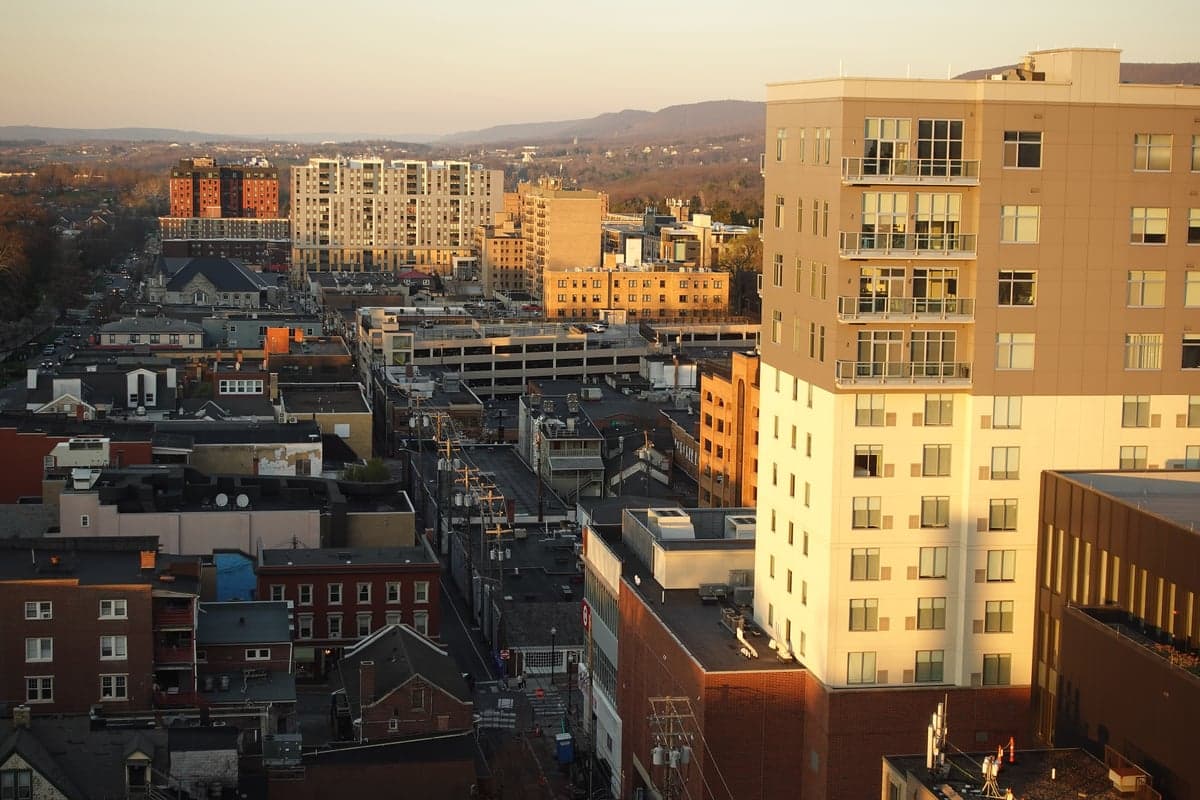
Photo: Wikipedia
Political ClimatePolitical Climate in State College, PA
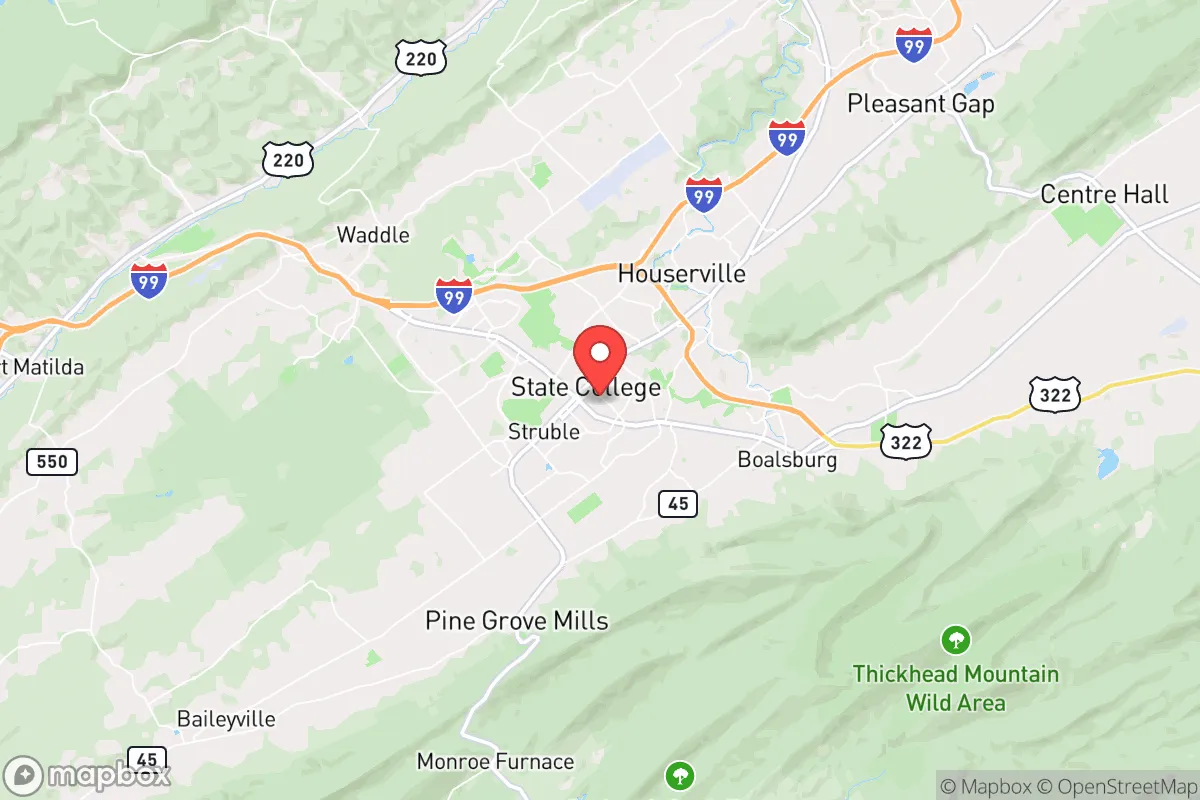
District shown is the primary district for this city’s centroid. Cities may span multiple districts.
Local Political AnalysisPolitical Analysis of State College, PA
State College, PA, has a political climate that’s shifting in ways that should give any freedom-minded resident pause. The area’s Cook PVI is R+19, meaning it leans heavily Republican in federal elections, but that number masks a growing progressive undercurrent, especially within the university community. Over the past decade, I’ve watched the local culture drift from a live-and-let-live conservatism toward a more activist, government-heavy approach that feels out of step with the surrounding rural towns like Bellefonte and Boalsburg, which remain solidly red. If you value limited government and personal autonomy, the trajectory here is worth watching closely.
How it compares
State College sits in Centre County, which overall votes blue in presidential races—Biden won it by about 10 points in 2020—but that’s almost entirely driven by Penn State’s student and faculty population. Drive 15 minutes outside town, and you’re in places like Pleasant Gap or Millheim, where Trump flags still fly and local officials push back on state mandates. The contrast is stark: inside the borough, you’ll see more “In This House We Believe” signs than “Don’t Tread on Me” ones, while the county commissioners have leaned into zoning and health ordinances that feel like overreach. Compared to nearby Lock Haven or Philipsburg, State College is the outlier—a blue island in a red sea, and that island is getting bluer as the university expands its influence on local policy.
What this means for residents
For those of us who’ve lived here long enough, the biggest change is how local government now touches daily life in ways it didn’t before. The borough council has pushed for stricter rental regulations, noise ordinances that target private gatherings, and a sustainability plan that includes mandates on energy use and waste—all well-intentioned, but each one nibbles at your freedom to run your property or business as you see fit. Property taxes have crept up to fund these initiatives, and there’s a growing sense that if you don’t align with the progressive agenda, your voice gets drowned out at public meetings. The school board has also become a battleground, with debates over curriculum transparency and parental rights heating up. For a family or small business owner, it means you’re constantly watching your back against another rule or fee that wasn’t there five years ago.
On the cultural side, State College still has its charms—the farmer’s market, the local gun clubs, the tailgates where politics takes a backseat to football. But the long-term trend is concerning. As Penn State’s administration pushes diversity, equity, and inclusion mandates into every corner of campus life, that ideology seeps into the broader community through partnerships with the borough and county. The next decade will likely see more pressure on Second Amendment rights, more restrictions on short-term rentals, and more taxpayer-funded programs that prioritize social engineering over individual choice. If you’re considering a move here, know that the political climate is a tug-of-war between the old-school rural conservatism of the surrounding area and the increasingly assertive progressivism of the university town. It’s still a good place to raise a family if you’re willing to stay engaged and push back, but the days of being left alone are fading fast.

State Political ClimatePolitical Climate in Pennsylvania
State Political AnalysisPolitical Environment in the State
Pennsylvania is a classic battleground state, and honestly, it’s been trending in a concerning direction for conservatives over the last 10-20 years. Once a reliably purple state with a strong blue-collar, independent streak, it’s now a razor-thin toss-up that’s been slowly drifting left, driven almost entirely by the explosive growth of the Philadelphia and Pittsburgh metros. The state’s 19 electoral votes are still up for grabs, but the cultural and policy momentum is increasingly coming from the urban cores, making it a tougher place for conservative families and individuals to feel at home.
Urban vs. rural divide
The political map of Pennsylvania is a tale of two states. The southeastern corner, anchored by Philadelphia and its sprawling suburbs like Montgomery County and Bucks County, is a deep blue stronghold that produces massive Democratic margins. These counties have flipped hard over the past two decades, going from swing areas to solidly progressive. The same is true for Pittsburgh and its surrounding Allegheny County, which now reliably votes blue. Meanwhile, the vast rural and exurban areas—places like Lancaster County, York County, and the entire northern tier stretching from Erie to the Poconos—are deeply red. The key battlegrounds are the “collar counties” around Philadelphia, like Delaware County and Chester County, which have shifted left as professionals and younger families move in from the city. The result is a state where the urban cores dictate the outcome, even though the landmass and population outside them lean heavily conservative.
Policy environment
The policy environment in Pennsylvania reflects this split, with a state government that’s often gridlocked but tilts left on key issues. The state has a flat income tax of 3.07%, which is relatively low, but property taxes are among the highest in the nation, especially in the Philadelphia suburbs. There’s no statewide school choice program, though a limited tax credit scholarship exists. The regulatory posture is mixed: the state has a strong environmental regulatory apparatus, which has made energy extraction (like natural gas in the Marcellus Shale) more expensive and slower. On education, the state has seen a push for progressive curriculum standards, including social-emotional learning and DEI initiatives, which has alarmed many parents. Election laws are a major flashpoint: Pennsylvania has no voter ID requirement, and the 2020 election saw widespread use of mail-in ballots with no signature verification, leading to ongoing distrust. The state’s gun laws are relatively permissive compared to neighboring New Jersey and New York, but there’s a constant push for “red flag” laws and universal background checks, which have stalled in the legislature.
Trajectory & freedom
On the freedom front, Pennsylvania is moving in the wrong direction. The most concerning recent trend is the erosion of parental rights. In 2022, the state passed Act 66, which allows minors as young as 14 to access mental health services without parental consent, effectively bypassing parents on sensitive issues. On gun rights, the state has a preemption law that prevents local municipalities from passing their own gun control, but Philadelphia has repeatedly tried to flout it, and the state Supreme Court has been sympathetic. The COVID-19 era was a disaster for personal liberty: Governor Tom Wolf imposed some of the longest and most restrictive lockdowns in the country, including a shutdown of all non-essential businesses and a stay-at-home order that lasted months. The state’s response to the pandemic, including vaccine mandates for healthcare workers and school employees, was heavy-handed. On the positive side, the state has no income tax on retirement income, which is a draw for retirees, and property taxes are somewhat offset by a homestead exemption. But the overall trajectory is toward more government control, not less.
Civil unrest & political movements
Pennsylvania has seen its share of political flashpoints. The 2020 election aftermath was particularly intense, with massive protests in Philadelphia over the counting of mail-in ballots, and the “Stop the Steal” movement was very active in the state. There have been ongoing election integrity battles, with the Republican-led legislature pushing for audits and reforms that have been blocked by the Democratic governor. The state has also seen significant left-wing activism, particularly in Philadelphia, where the city has declared itself a “sanctuary city” and has seen repeated protests over police reform and racial justice. In 2020, Philadelphia was the site of widespread looting and property destruction during the George Floyd protests. On the right, there’s a growing “Second Amendment sanctuary” movement, with over 30 counties passing resolutions declaring they won’t enforce unconstitutional gun laws. The state’s immigration politics are also a flashpoint: while the state as a whole is not a sanctuary state, Philadelphia’s policies have created tension with the state government. A new resident would notice the stark contrast between the quiet, orderly rural areas and the more chaotic, activist-driven urban centers.
Projection
Looking ahead 5-10 years, the trend is not favorable for conservatives. The Philadelphia suburbs are continuing to grow and diversify, and the Democratic margins there are likely to increase. The state’s population is aging, and younger, more progressive voters are moving into the cities. The Republican Party in Pennsylvania is increasingly split between the establishment and a more populist, Trump-aligned wing, which has led to primary battles that weaken the party in general elections. The state’s electoral votes are likely to remain in play, but the path to a Republican win is narrowing. For a conservative moving in now, expect to see continued fights over election integrity, school curriculum, and gun rights, but with the state government likely to remain under Democratic control for the foreseeable future. The best bet for conservatives is to look at the red counties—Lancaster, York, Franklin, and the northern tier—where local government is still friendly to conservative values, but state-level policy will be an uphill battle.
For a new resident, the bottom line is this: Pennsylvania is a beautiful state with a lot to offer, but it’s not a safe haven for conservatives. If you’re moving here, you need to be prepared for a constant political fight at the state level, especially on issues like parental rights, education, and gun rights. The urban areas are increasingly hostile to conservative values, and the state government is likely to continue pushing progressive policies. Your best strategy is to choose your county carefully—stick to the red areas—and get involved in local politics to protect your freedoms. It’s not a lost cause, but it’s a state that requires vigilance.
* Values derived from national, state, county, city and local statistics and may differ in a specific area. Last updated: 2026-05-01T04:11:40.000Z
Narrative content on this page is AI-generated and may contain mistakes. Verify any details that matter before acting on them.
ReloMaps may earn a commission from affiliate links at no extra cost to you.

