
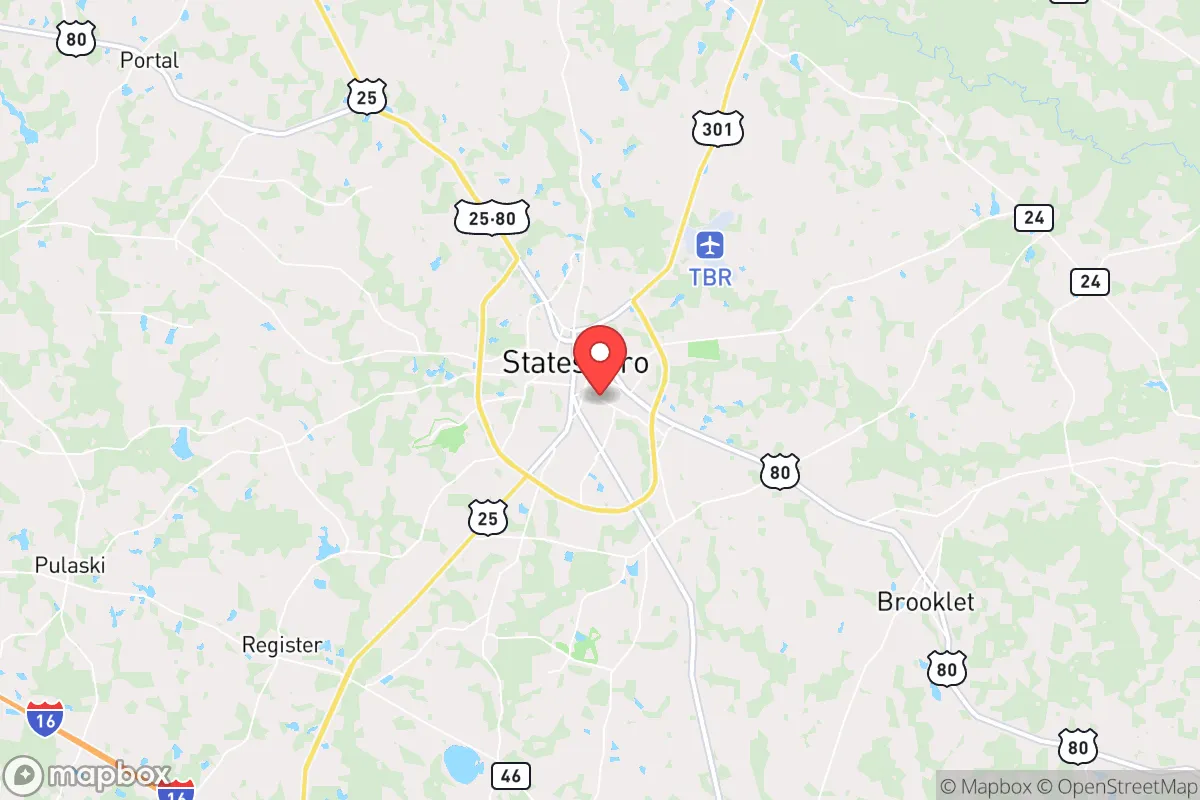
Photo: Wikipedia
Quality of Life in Statesboro, GA
A high quality of life with strong walkability, manageable living costs, healthy neighborhood signals, and solid amenity access.
What does Quality of Life tell us?
Quality of Life blends cost of living, nearby amenities, socioeconomic signals, and neighborhood character. City-level scores represent the whole municipality; individual neighborhoods can differ.
What does this tell us?
Quality of Life blends cost of living, nearby amenities, socioeconomic signals, and neighborhood character. City-level scores represent the whole municipality; individual neighborhoods can differ.
Cost of Living
29% below national average
The Real Cost of Living in Statesboro, GA for 2026
| Tier | Individual | Family (4) |
|---|---|---|
| Survival | $15k | $28k |
| Comfortable | $31k | $45k |
| Luxury | $67k+ | $104k+ |
| Elite (Top 5%) | $79k+ | $122k+ |
95%
The Area Signal
A metric tracking the socioeconomic signals of the area.
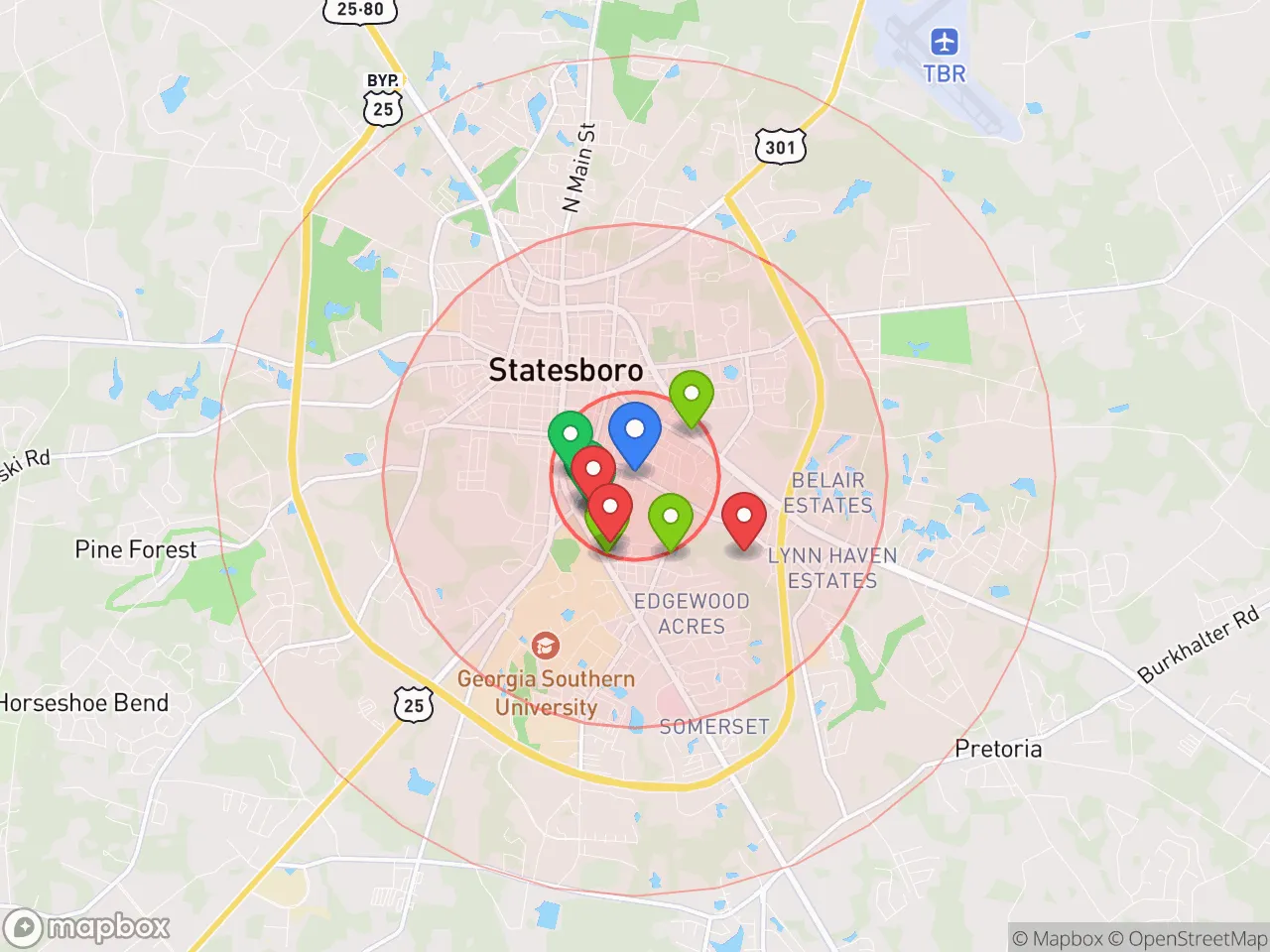
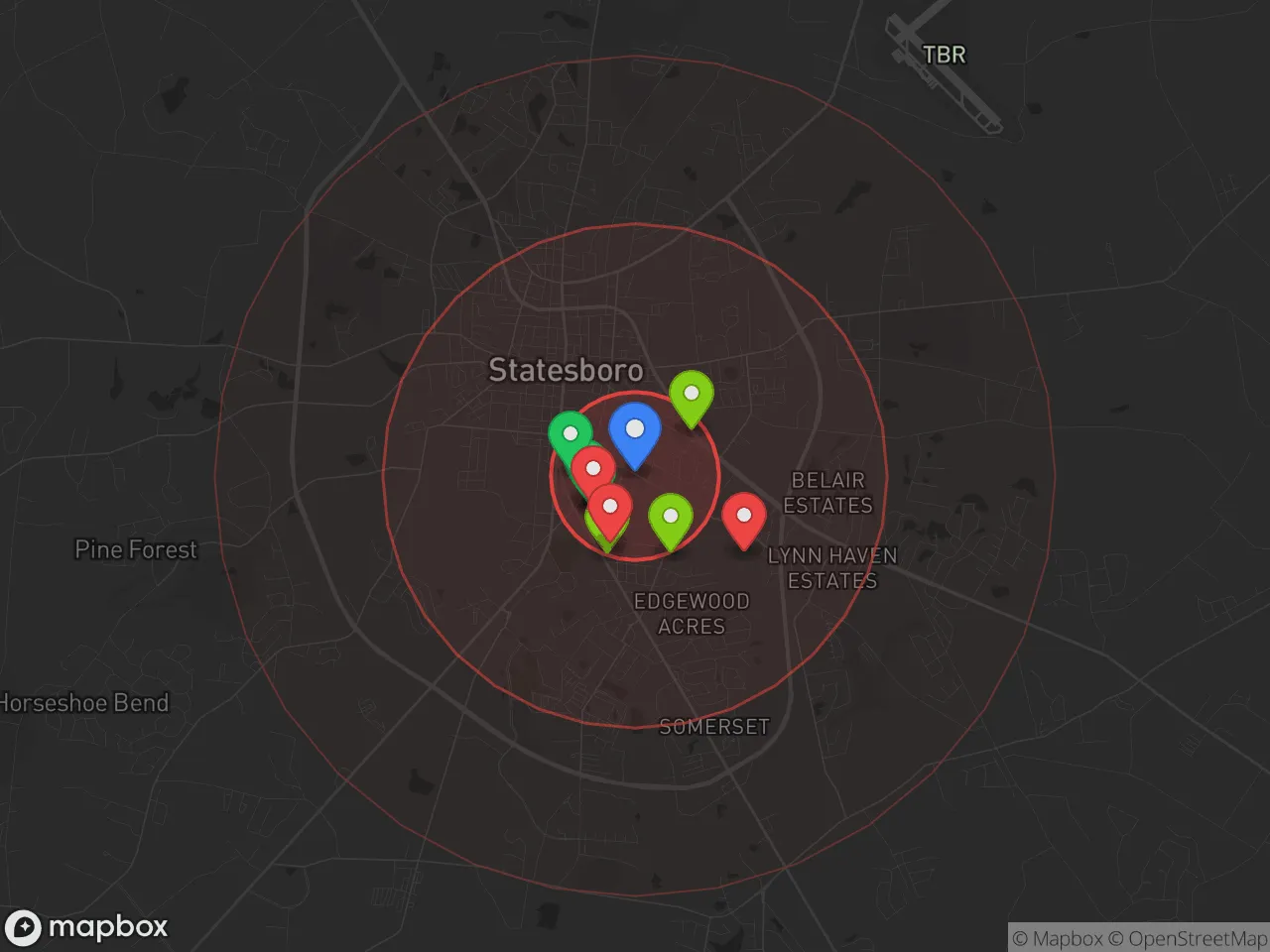
Hobbies
Explore the areaGroceries
3 within 10 miles
Gas
18 within 10 miles
Hospital
3 within 20 miles
Airport
ATL — Hartsfield–Jackson Atlanta International
Post Office
USPS — Statesboro, GA
Critical Amenities
Quality-of-Life Analysis
Statesboro, Georgia, presents a notably affordable quality of life shaped by its dual identity as a college town and a regional service hub. With a cost of living index of 71—well below the national average of 100—the area attracts a mix of Georgia Southern University students, faculty, healthcare workers, and young families seeking economic breathing room. The median home value of $158,600 and median rent of $935 place it among the most accessible housing markets in the state, drawing residents who prioritize financial stability over urban amenities.
How housing costs and everyday expenses compare to nearby cities
Statesboro’s affordability stands out sharply against neighboring Savannah, where the cost of living index hovers near 90 and median home values exceed $250,000. A typical household here spends roughly 29% less on housing than the national norm, with the median home price of $158,600 translating to a monthly mortgage payment around $850 at current rates—significantly lower than the $1,200+ typical in Savannah or the $1,400+ in Atlanta suburbs. Renters also benefit: the median rent of $935 undercuts Savannah’s $1,200 average by over 20%. Utility costs and grocery prices track similarly low, though residents pay a slight premium for specialty goods due to limited big-box competition. The average commute of just 21 minutes is a major draw, cutting daily travel time nearly in half compared to metro Atlanta workers who often log 35–45 minutes each way. This short commute, combined with low property taxes (Bulloch County’s millage rate of roughly 28 mills), makes Statesboro particularly attractive for remote workers and tradespeople who want to stretch their income further.
What daily life is like for families, students, and professionals
Daily life in Statesboro revolves around Georgia Southern University, which anchors both the economy and social calendar. The campus brings concerts, Division I athletics (especially football at Paulson Stadium), and cultural events like the annual Statesboro Kiwanis Rodeo. For families, the Bulloch County School System offers several magnet programs, though the district’s overall graduation rate of 85% trails the state average slightly. Private options include Trinity Christian School and the Montessori-inspired Ogeechee River School. Outdoor recreation centers on Mill Creek Regional Park’s walking trails and the 1,200-acre George L. Smith State Park, a 20-minute drive for kayaking and birdwatching. The downtown area along Main Street has seen revitalization with local eateries like Eagle Creek Brewing Company and the historic Averitt Center for the Arts hosting theater productions. Residents note that the pace is slower than Savannah or Atlanta, with most errands completed within a 10-minute drive and weekend social life concentrated around campus events or church communities. Healthcare is served by East Georgia Regional Medical Center, a 150-bed facility that handles routine emergencies but often refers complex cases to Savannah’s Memorial Health.
Who thrives here? Statesboro best suits cost-conscious families, early-career professionals, and retirees who value low housing costs and a tight-knit community over urban nightlife or career density. The university provides a steady cultural pulse, but those seeking diverse dining, major airport access (Savannah/Hilton Head is 50 minutes away), or high-paying white-collar jobs may find the trade-offs limiting. For anyone prioritizing financial stability, a short commute, and a slower Southern rhythm, Statesboro delivers a quality of life that punches above its price tag.

Crime in Statesboro, GA
Crime rates similar to the national median for U.S. locations.
Violent CrimeViolent Crime Analysis
Property CrimeProperty Crime Analysis
Crime Analysis
Statesboro, Georgia, reports a violent crime rate of 285.8 incidents per 100,000 residents and a property crime rate of 1,345.1 per 100,000, placing overall safety concerns in a mixed context. While the violent crime figure is slightly below the national average, the property crime rate significantly exceeds both state and national benchmarks, indicating a higher risk for theft and burglary. The city’s status as a college town, home to Georgia Southern University, introduces transient population dynamics that can influence crime patterns, particularly during academic breaks and major events.
Crime in context
Statesboro’s violent crime rate of 285.8 per 100,000 is notably lower than Georgia’s state average of roughly 380 per 100,000 and the U.S. rate of about 380 per 100,000. However, its property crime rate of 1,345.1 per 100,000 is substantially higher than the national average of approximately 1,954 per 100,000 and the Georgia average of around 2,200 per 100,000. This disparity suggests that while serious violent offenses like homicide and aggravated assault are less common, residents face a heightened risk of larceny, motor vehicle theft, and burglary. Property crime in Statesboro is roughly 30% higher than the national average, a figure that aligns with patterns seen in many small cities with large student populations.
What residents experience
Daily life for most Statesboro residents involves a tangible awareness of property crime, particularly in areas near campus and commercial corridors. Vehicle break-ins and package thefts are frequently reported, especially in apartment complexes and neighborhoods with high rental turnover. Violent crime, while less common, is not absent—incidents tend to cluster in specific zones, such as late-night entertainment districts and low-income housing areas. The presence of Georgia Southern University’s police department provides an additional layer of patrol and response, but the city’s overall clearance rates for property crimes remain low, which can erode public confidence. Residents often cite the need for proactive measures like security cameras and neighborhood watch programs as essential to mitigating risk.
Neighborhood-level variation
Safety in Statesboro varies significantly by neighborhood. The historic downtown core and areas west of U.S. Highway 301 generally report lower crime rates, while neighborhoods east of the city, particularly along Fair Road and near the interstate exchange, see higher concentrations of property offenses. The area immediately surrounding Georgia Southern’s campus experiences a spike in thefts during the fall semester, with off-campus student housing complexes being frequent targets. Gated communities and newer subdivisions on the city’s southern edge, such as those near Brannen Street, tend to have the lowest crime rates. For prospective residents, consulting the Statesboro Police Department’s online crime mapping tool is recommended to assess specific block-level risks before choosing a home.
* Values derived from national, state, county, city and local statistics and may differ in a specific area. Last updated: 2026-04-29T23:26:04.000Z
Narrative content on this page is AI-generated and may contain mistakes. Verify any details that matter before acting on them.
ReloMaps may earn a commission from affiliate links at no extra cost to you.

