
Photo: Wikipedia
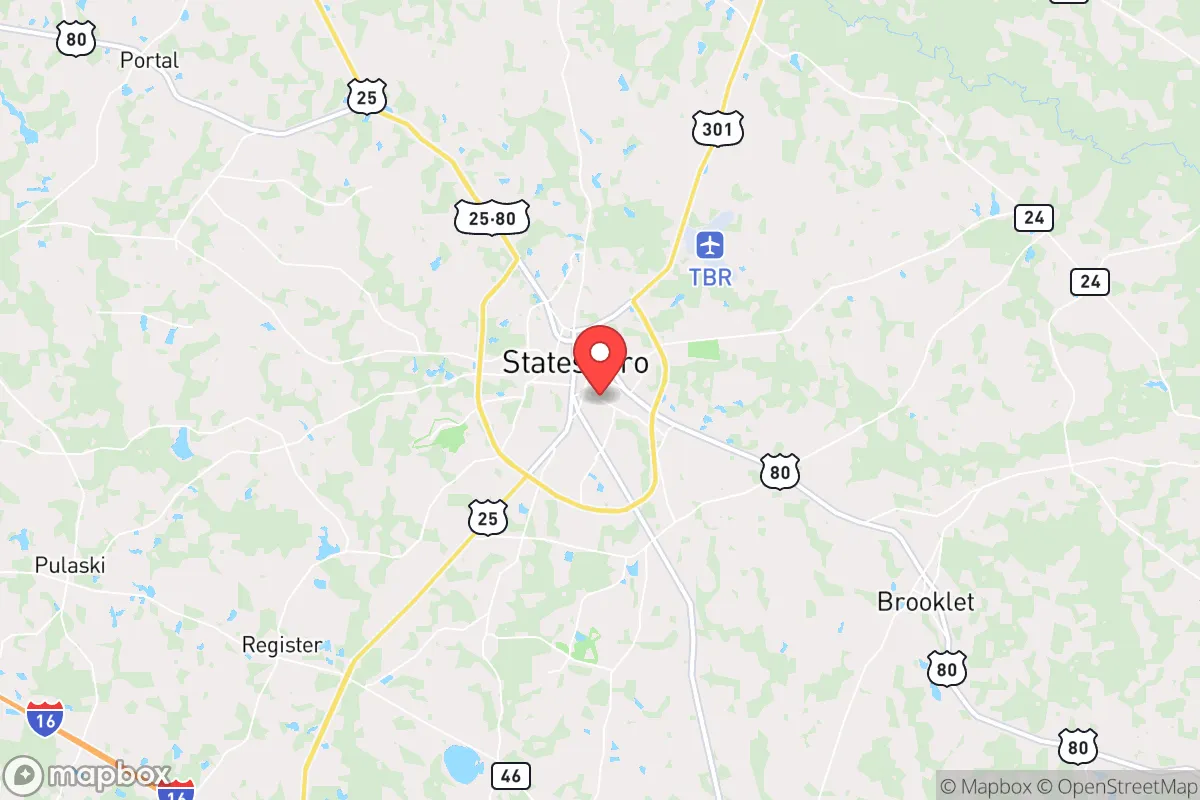
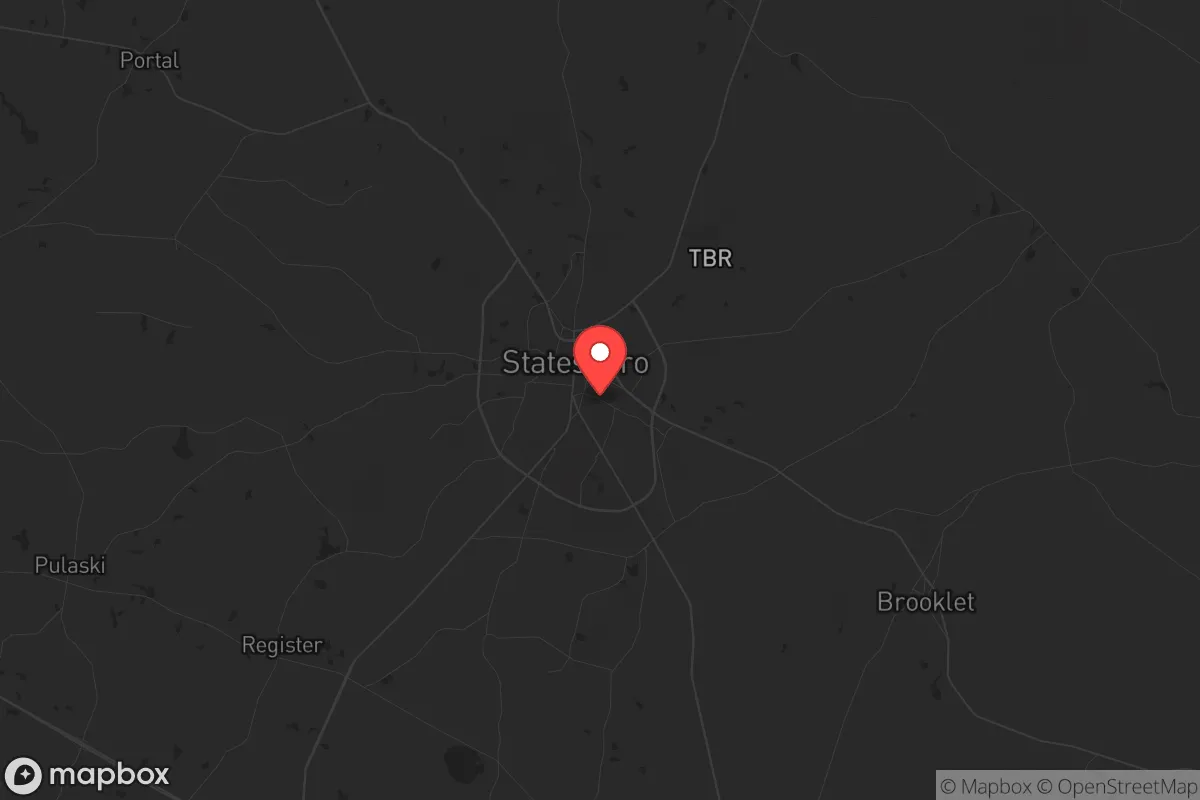
Strategic Assessment of Statesboro, GA
Meaningful friction. Expect exposure to either population pressure, blast zones, or natural disaster risk. Consider buying a retreat property.
What does the Strategic Assessment tell us?
Our Strategic Assessment grades tactical survivability of an area. Major population centers, military targets, fallout zones, natural disasters, and border exposure all drive risk — lower exposure means a more defensible position in a crisis.
This is heavily inspired by Joel Skousen's Strategic Relocation book. Highly recommended you checkout the book ($)What does this tell us?
Our Strategic Assessment grades tactical survivability of an area. Major population centers, military targets, fallout zones, natural disasters, and border exposure all drive risk — lower exposure means a more defensible position in a crisis.
This is heavily inspired by Joel Skousen's Strategic Relocation book. Highly recommended you checkout the book ($)Strategic Pillars

Key Distances
Regional Safe Places
Below is our recommended "safe zones" in Georgia and the surrounding area based on our strategic heuristics. For most people, it's unrealistic to live in a “safe zone” full-time due to work, family or other personal reasons. They tend to be more rural. However, many of these areas are perfect for second homes and retreat properties that double as a vacation home or even a short-term rental.
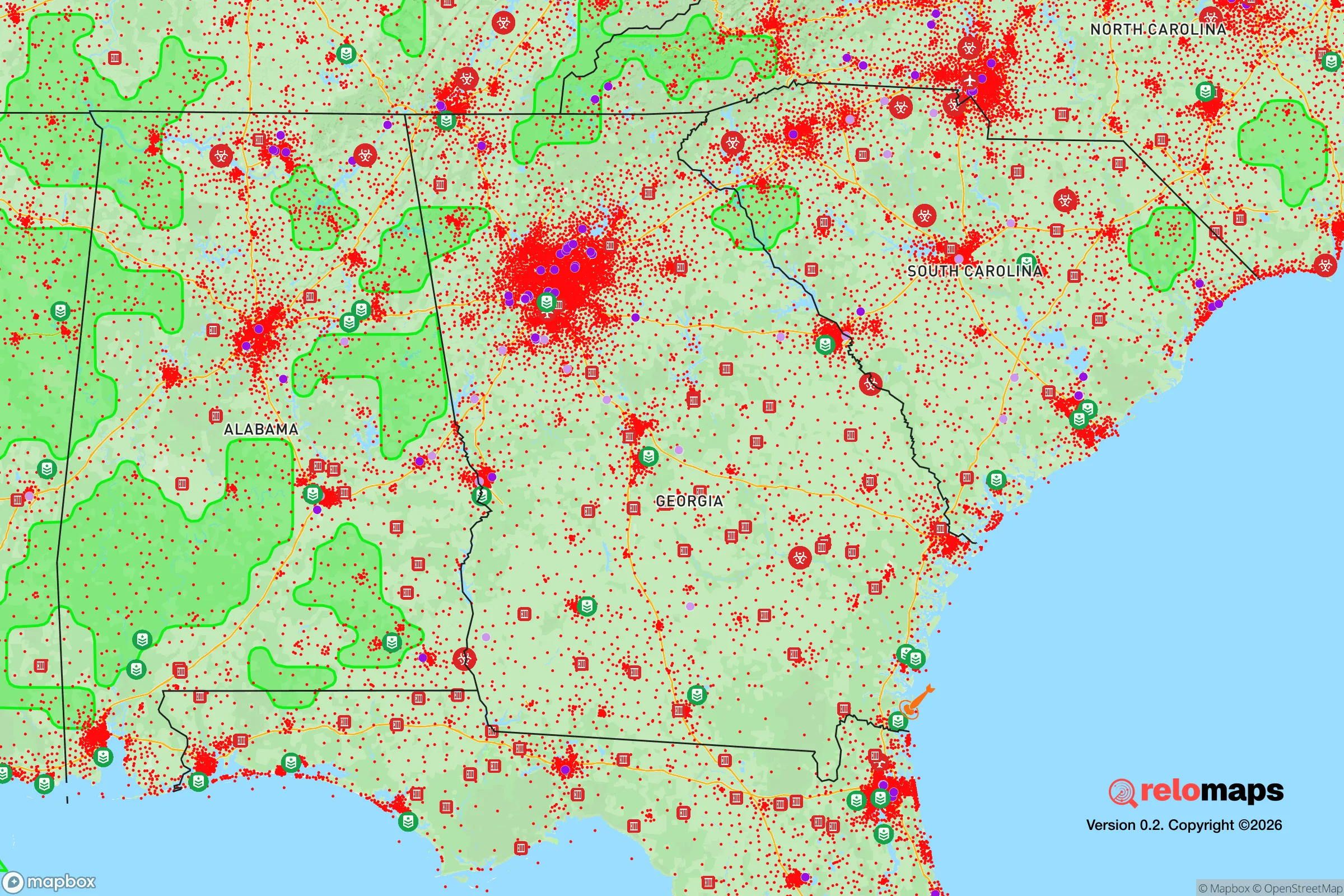
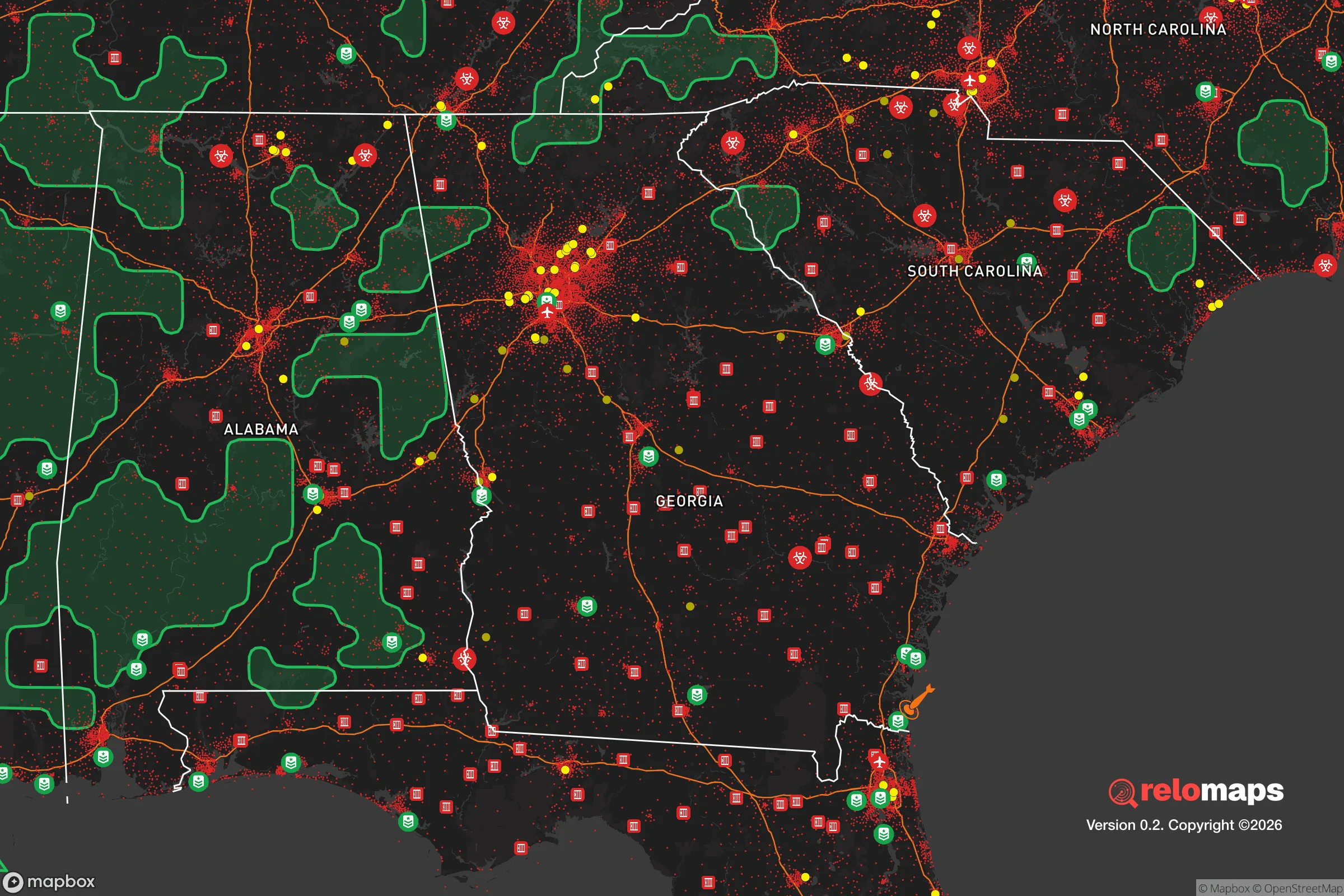


Important Note: For informational purposes only. This does not mean nothing bad ever happens in the green zones. Please use common sense. This is based on public data and modeled with AI. We tried to take a conservative approach but mistakes happen. We update this regularly as new information becomes available.
Solar Generator Recommendations
Backup power matters more here than in safer locations. We've picked three solar generators across budgets and capacity tiers — start with the budget unit if you only need a few essentials, or step up if you want to run a fridge and HVAC for days at a time.

Jackery Portable Power Station Explorer 300
Budget OptionPower on the Go: Weighing only 11 lbs, it's convenient to set up and store with book-sized foldable solar panels

BLUETTI Portable Power Station AC180
Designed for both indoor and outdoor scenarios, AC180 is highly capable as it has a robost capacity and continuous output power.

EF ECOFLOW DELTA Pro Ultra Power Station
Upgraded PickEcoFlow DELTA Pro Ultra is a whole-home energy system designed to grow with your family. Integrated with the Smart Home Panel 2, it scales to meet your evolving energy needs — keeping your home powered, intelligent, and secure through every stage of life.
We earn a commission, at no additional cost to you.
Strategic Assessment Analysis
Statesboro, Georgia, sits in a position that many preppers overlook, but its strategic value is quietly solid. Located roughly 50 miles northwest of Savannah and 80 miles west of the coast, it offers a buffer from the immediate fallout zones of major ports, military installations, and population centers, while still being close enough to access resources if needed. The area’s resilience stems from its agricultural backbone, relatively low population density, and distance from the most likely targets in a major crisis—think Savannah’s port, Hunter Army Airfield, and the I-16 corridor that funnels traffic straight into the heart of Georgia. For a conservative-minded relocator worried about civic unrest, supply chain collapses, or mass casualty events, Statesboro presents a workable middle ground: not too remote to be cut off, not too close to be in the blast radius.
Geographic position and natural advantages for long-term survival
Statesboro’s location in the Coastal Plain region gives it a few underrated perks. The land is flat, which makes gardening, livestock, and water management simpler than in hillier terrain. The Ogeechee River runs just west of town, providing a reliable surface water source, and the area’s high water table means shallow wells are feasible for most properties within a 10- to 15-mile radius. The climate is humid subtropical, with a growing season that stretches from March to November—ideal for year-round food production if you’re willing to work with the heat and humidity. The region is also far enough inland to avoid the worst of hurricane storm surge, though tropical storms and heavy rain events are a recurring risk. For a prepper, the key advantage is that Statesboro sits in a zone where you can realistically produce a significant portion of your own calories, and the local economy is still tied to agriculture—peanuts, cotton, poultry, and timber dominate. That means even in a grid-down scenario, there’s a baseline of food and material production within a 30-minute drive.
Risks, exposures, and proximity to fallout-relevant landmarks
The biggest liability for Statesboro in a crisis is its proximity to Savannah and the I-16 corridor. Savannah is a major port and military hub—home to the Georgia Ports Authority, Hunter Army Airfield, and a significant chemical storage infrastructure along the Savannah River. In a mass casualty event or war scenario, that area is a high-priority target. Statesboro is far enough away (50 miles) to avoid direct blast effects or immediate fallout from a conventional strike, but it’s close enough that refugees, looters, and military traffic could pour up I-16 and US-301 within hours. The city itself has a population of about 33,000, with Bulloch County at roughly 80,000—small enough to avoid being a primary target, but large enough that local resources could be strained quickly if Savannah’s population evacuates north. There’s also the risk of HAZMAT incidents from the rail lines that run through the area, carrying chemicals and fuels to and from the coast. On the plus side, there are no nuclear power plants within 100 miles (the closest is Plant Vogtle near Augusta, about 120 miles north), and no major military bases directly in the county. The biggest natural risk is flooding from the Ogeechee River during heavy rain events, particularly in low-lying areas south of town. Tornadoes are a seasonal threat, but the flat terrain means they’re usually visible from a distance.
Practical resilience for a relocator: food, water, energy, and defensibility
For someone looking to set up a resilient homestead or smallholding, Statesboro offers a mix of advantages and trade-offs. Water is the strongest suit: the Floridan Aquifer lies beneath the entire region, and wells are common and affordable. A typical residential well runs $3,000–$6,000 and can produce 20–40 gallons per minute at depths of 100–200 feet. Surface water from the Ogeechee is also accessible, but it requires treatment for sediment and agricultural runoff. Food production is viable year-round, with local feed stores, farm supply co-ops, and a strong network of small farmers who sell direct to consumers. The Bulloch County Farmers Market operates seasonally, and there are multiple U-pick operations within 20 minutes. For energy, solar is a solid option—the area averages about 215 sunny days per year, and net metering is available through Georgia Power, though the utility’s grid reliability is average. Backup generators are common among rural residents, and propane is widely available. Defensibility is the weak point: the terrain is flat and open, with few natural chokepoints. A rural property with a long driveway, good sightlines, and a perimeter fence is your best bet. The local law enforcement presence is moderate—Bulloch County Sheriff’s Office has about 60 sworn deputies for the whole county, so response times in a crisis could be slow. The community itself is conservative-leaning, with a strong church presence and a culture of self-reliance, which means you’re more likely to find like-minded neighbors than in suburban Atlanta. But don’t expect a tight-knit prepper network—most people here are just regular farmers and small business owners who keep to themselves.
The overall strategic picture for Statesboro is that it’s a solid B-tier relocation option for a conservative prepper. It’s not a hardened bunker location like the Idaho panhandle or the Ozarks, but it offers a realistic balance of access, resources, and risk. You’re close enough to a major port and city to monitor events and potentially trade, but far enough to avoid the worst of the initial chaos. The climate and soil support long-term self-sufficiency, and the local culture is generally aligned with the values of personal responsibility and community. The main downsides are the flat terrain (hard to defend), the risk of refugee flow from Savannah, and the lack of natural barriers. If you’re willing to invest in a well, solar, and a good fence, and you keep a low profile, Statesboro can work as a staging ground for weathering the next decade’s uncertainties. Just don’t expect it to be a secret—plenty of people have already figured out that this part of Georgia is a decent bet, and land prices have been creeping up accordingly. Act sooner rather than later if it’s on your short list.

* Values derived from national, state, county, city and local statistics and may differ in a specific area. Last updated: 2026-04-29T23:26:04.000Z
Narrative content on this page is AI-generated and may contain mistakes. Verify any details that matter before acting on them.
ReloMaps may earn a commission from affiliate links at no extra cost to you.

