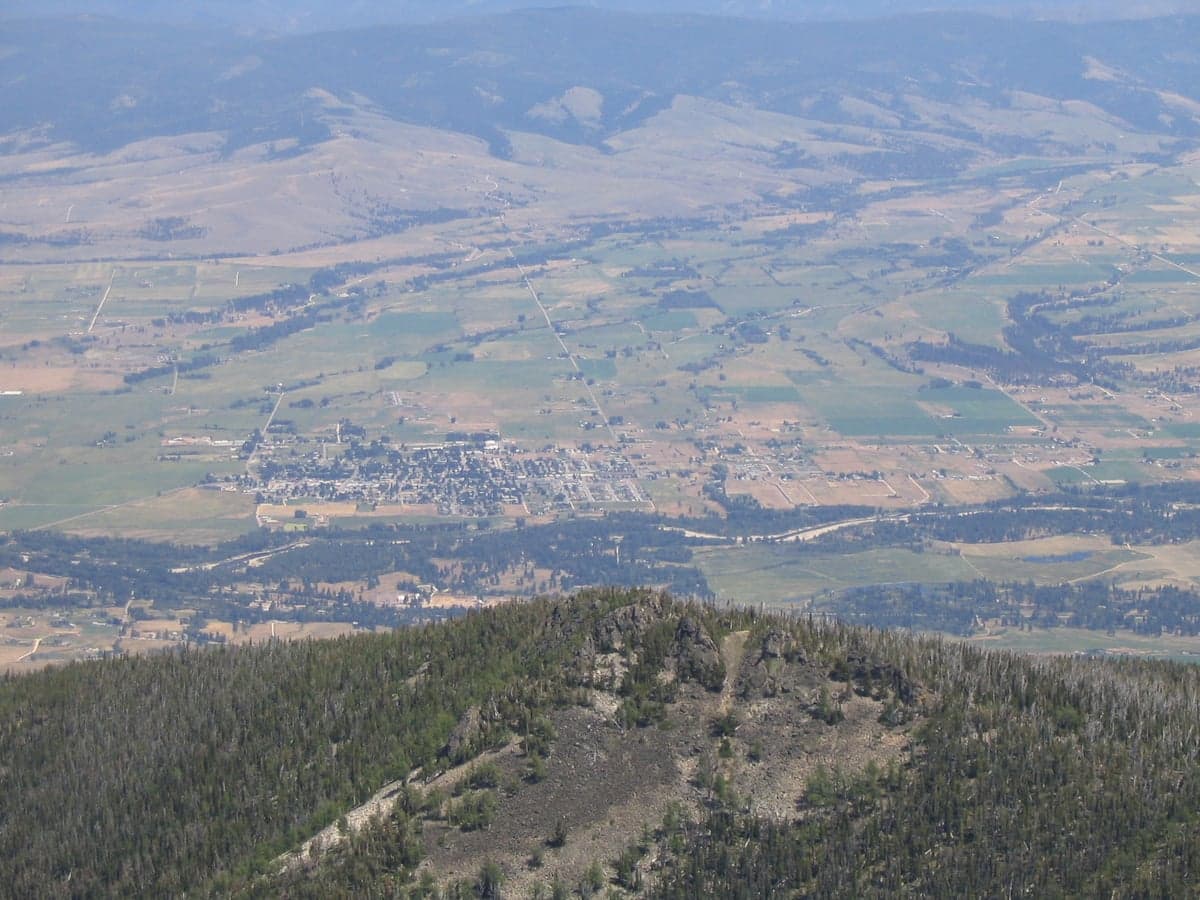
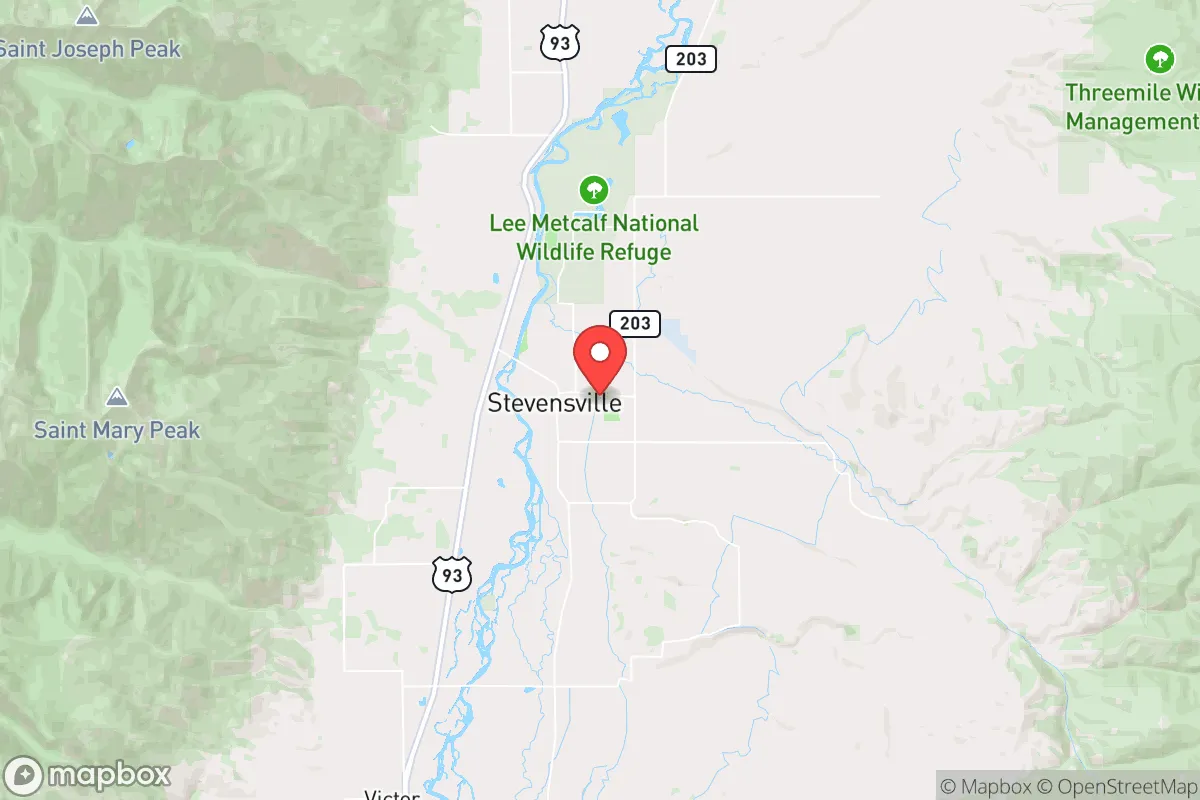
Photo: Wikipedia
Demographics of Stevensville, MT
Affluence Level in Stevensville, MT
A middle-class area roughly in line with national averages across income, home values, education, and employment.
People of Stevensville, MT
Stevensville, Montana, is a small, tightly-knit community of 2,172 residents that remains overwhelmingly white (91.1%) and native-born, with a foreign-born population of just 0.6%. The town’s character is defined by its deep agricultural roots, a strong sense of local independence, and a population that is older and less college-educated (23.4%) than the national average, reflecting a place where family history and land tenure matter more than transient professional migration. It is a community where the original homesteading families still hold significant social weight, and new arrivals are often drawn by the promise of rural space and a slower pace of life, not by urban amenities or corporate jobs.
How the city was settled and grew
Stevensville’s human history begins not with European settlers but with the Salish (Flathead) people, who used the Bitterroot Valley as a seasonal hunting and wintering ground for centuries. The first permanent non-Native settlement came in 1841 with the arrival of Jesuit missionaries, who built St. Mary’s Mission near what is now the St. Mary’s Mission Historic District. This mission drew a small population of French-Canadian trappers and Catholic converts, but the real demographic shift came after the 1860s, when the U.S. government opened the valley to homesteading under the Homestead Act. The East Side Settlement area, along the foothills east of town, was where many of the first Anglo-American homesteaders—primarily of German, Irish, and English stock—filed claims and built farms. These families, names like the Bakers and the McLeods, established the town’s foundational culture of self-sufficient agriculture and conservative social values. By the early 1900s, the railroad’s arrival spurred a modest commercial core around Main Street, but Stevensville never industrialized; it remained a service center for surrounding ranches and orchards. The population hovered around 1,000 through the mid-20th century, with little in-migration beyond the children of existing families.
Modern era (post-1965)
After the 1965 Immigration Act, Stevensville saw virtually no international immigration—its foreign-born share remains below 1%—so the modern era is a story of domestic in-migration and generational turnover. The 1970s and 1980s brought a small wave of back-to-the-land homesteaders, often from California and the Pacific Northwest, who settled in the Woods Gulch area west of town, seeking affordable land and a countercultural lifestyle. This group, while numerically small, introduced a libertarian-leaning, anti-government streak that blended uneasily with the town’s older conservative ranching families. By the 1990s and 2000s, a second domestic wave arrived: retirees and remote workers from high-cost states, particularly California and Washington, who bought existing homes in the Stevensville South subdivision and the newer Bitterroot River Estates area. These newcomers are generally older, wealthier, and more politically moderate than the established population, but they have not dramatically altered the town’s demographics. The Hispanic population, at 2.4%, is almost entirely native-born and concentrated among a few long-standing families in the West Side neighborhood, near the old railroad corridor. There are no significant East/Southeast Asian, Indian, or Black communities—each group registers at 0.1% or less—making Stevensville one of the most ethnically homogeneous towns in a state that is itself among the least diverse in the nation.
The future
Stevensville’s population is likely to remain small and white, but it is aging. The median age is rising as younger residents leave for Missoula (30 miles north) or out of state for jobs, while retirees continue to arrive. The town is not homogenizing so much as slowly shifting from a working-age agricultural community to a retirement and remote-work bedroom community. The East Side Settlement and Woods Gulch areas are seeing the most new construction, but it is low-density and expensive by local standards, pricing out younger families. The Hispanic population is stable but not growing, and there is no sign of significant Asian, Indian, or Black in-migration. The next 10-20 years will likely see Stevensville become slightly older, slightly wealthier, and slightly more politically divided between long-time locals and newer arrivals, but its core identity as a white, native-born, rural community will persist.
For someone moving in now, Stevensville offers a place where community ties are deep and the pace of life is slow, but where demographic change is minimal and the economy offers limited opportunity outside of agriculture, healthcare, and remote work. It is a town that rewards those who respect its history and are willing to integrate into existing social networks, rather than expecting rapid change or diversity.

* Values derived from national, state, county, city and local statistics and may differ in a specific area. Last updated: 2026-04-30T04:41:02.000Z
Narrative content on this page is AI-generated and may contain mistakes. Verify any details that matter before acting on them.
ReloMaps may earn a commission from affiliate links at no extra cost to you.

