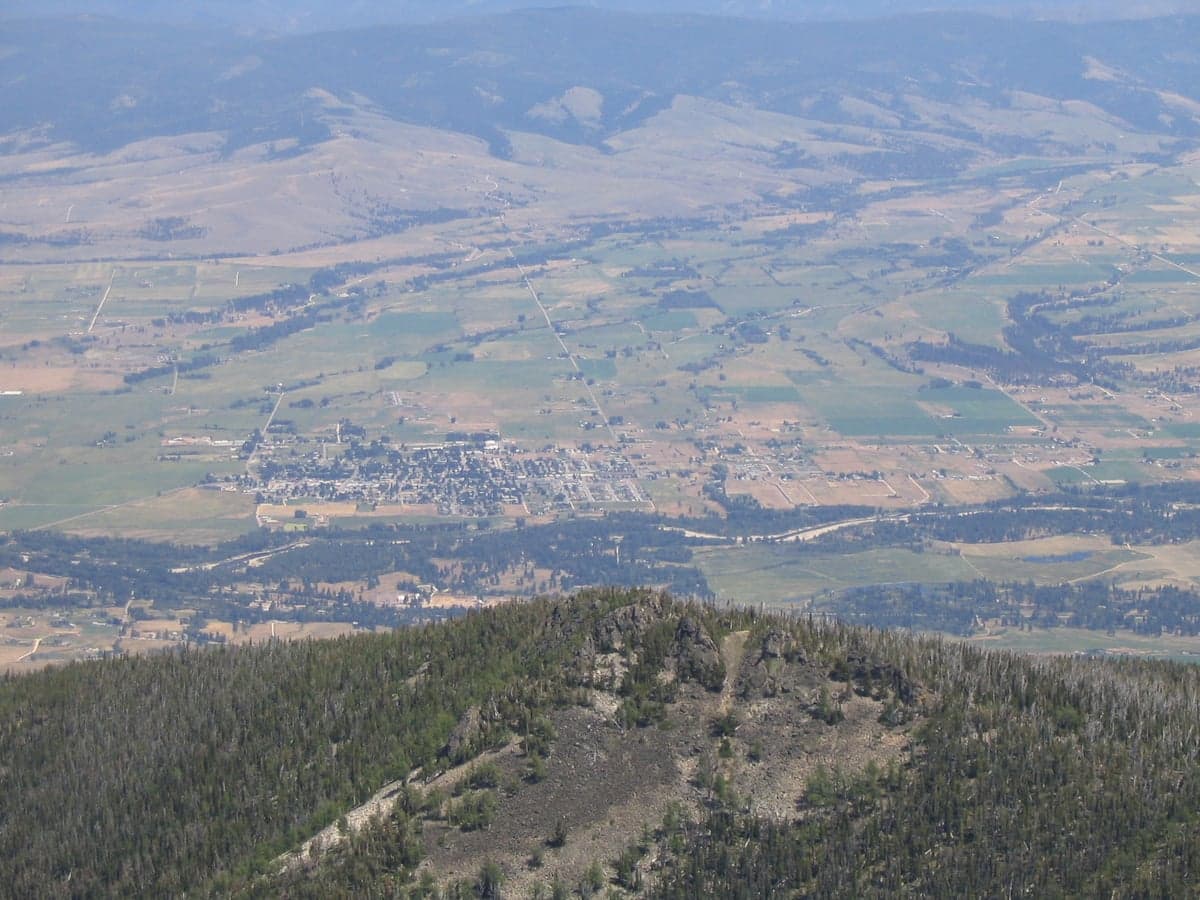
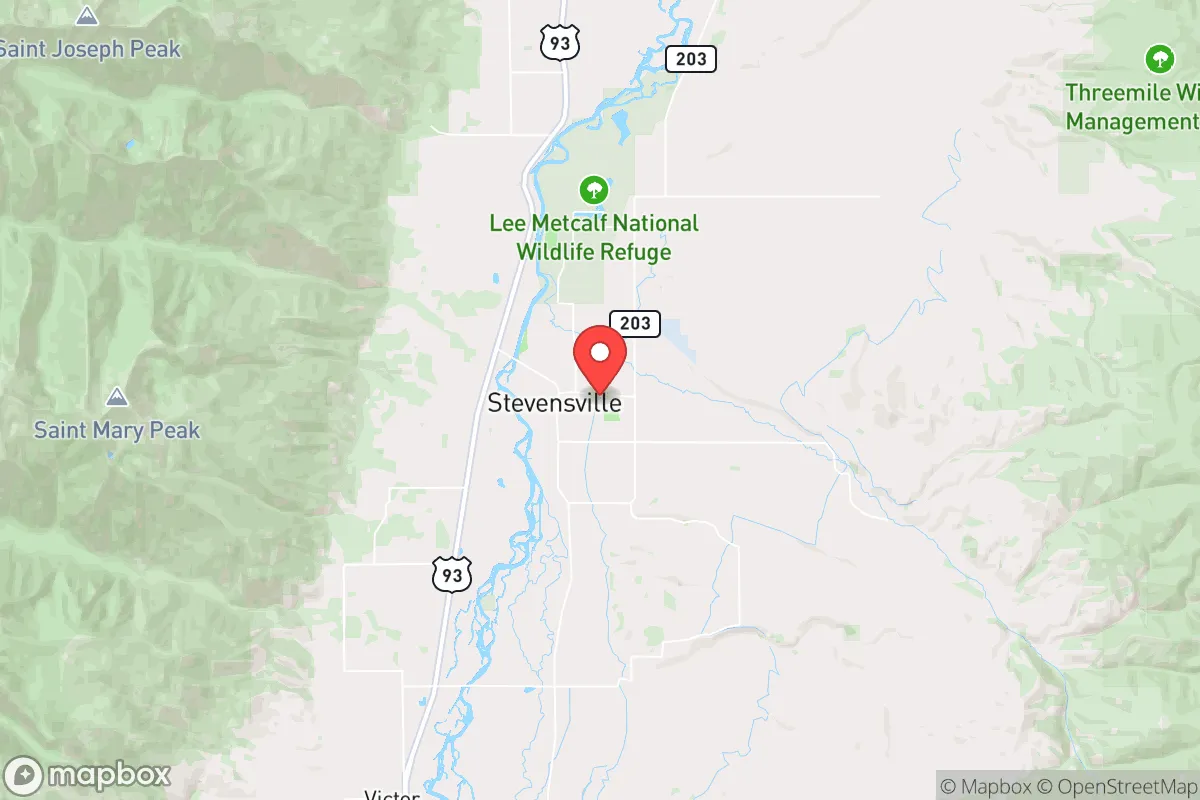
Photo: Wikipedia
Political ClimatePolitical Climate in Stevensville, MT
District shown is the primary district for this city’s centroid. Cities may span multiple districts.
Local Political AnalysisPolitical Analysis of Stevensville, MT
Stevensville, Montana, has long been a quiet, conservative stronghold in the Bitterroot Valley, and while the numbers still lean that way—with a Cook PVI of R+5—you can feel the political winds shifting under your feet. For decades, this was the kind of place where folks kept their politics simple: small government, local control, and a deep suspicion of anyone in Helena or D.C. telling you how to live. But lately, with an influx of folks from places like California and Washington, you’re starting to see more “Keep It Local” signs next to “In This House We Believe” yard placards, and that’s got a lot of us watching the local elections a little closer.
How it compares
Drive 25 miles north to Missoula, and you might as well be in a different country. Missoula’s a deep-blue college town where city council debates are all about bike lanes and affordable housing mandates, while Stevensville’s still arguing over whether the county should even have a planning department. Down south in Hamilton, you get a similar conservative vibe, but it’s a bit more polished—more retirees and second-home owners. Stevensville’s rawer, more working-class, and that makes the political contrast sharper. The real tension shows up in the county commission races, where the old-guard ranchers and loggers are squaring off against newcomers who want more “smart growth” and environmental regulations. So far, the conservative majority holds, but it’s not the slam dunk it was ten years ago.
What this means for residents
For those of us who moved here to get away from overreach—whether it’s mask mandates, property tax hikes, or zoning rules that tell you what color to paint your barn—the creeping progressive influence is a real concern. You see it in the school board meetings, where a few vocal parents are pushing for DEI initiatives and “culturally responsive” curricula that sound an awful lot like the stuff we left behind. And on the county level, there’s constant pressure to adopt state-level housing mandates that would strip local control and force higher-density development into our rural neighborhoods. The good news is that Stevensville’s still small enough that your voice matters. Show up to a planning board meeting, and you can still make a difference. But if you’re not paying attention, you might wake up to find your property rights eroded by a bunch of well-meaning bureaucrats who don’t understand life out here.
One thing that sets Stevensville apart is its fierce independence. We don’t have a city police force—we rely on the Ravalli County Sheriff’s Office—and that’s exactly how most folks want it. There’s a strong tradition of neighbor helping neighbor, not calling the government. The local gun culture is alive and well, with the Stevensville Rod and Gun Club hosting regular events, and concealed carry permits are common. You’ll also notice a healthy skepticism of federal land management, since the Bitterroot National Forest surrounds us. Any talk of expanding wilderness designations or restricting motorized access gets met with a wall of opposition. Looking ahead, the real fight will be over water rights and development pressure. If you’re thinking of moving here, just know that the political climate is still solidly conservative, but it’s not immune to change. Keep your ear to the ground, and don’t be afraid to speak up at the town hall—that’s how we keep Stevensville, Stevensville.

State Political ClimatePolitical Climate in Montana
State Political AnalysisPolitical Environment in the State
Montana has long been a reliably Republican state at the presidential level, voting for the GOP candidate in every election since 1996, but its internal politics are far more nuanced than a simple red-state label suggests. The state’s political lean is best described as a dominant conservative coalition in rural areas, increasingly challenged by a growing libertarian-leaning and moderate conservative bloc in its few urban centers, with a noticeable rightward shift over the past decade driven by an influx of out-of-state transplants seeking lower taxes and fewer regulations. The 2024 election saw Donald Trump carry the state by over 20 points, but the real story is the internal tension between the old-school, resource-extraction conservatives and the newer, freedom-focused arrivals who are reshaping the state’s political DNA.
Urban vs. rural divide
The political map of Montana is a textbook study in the urban-rural split. The state’s largest city, Billings, in Yellowstone County, is a conservative stronghold that leans Republican but has a noticeable moderate streak, often swinging elections in the state’s most populous region. Missoula, home to the University of Montana, is the state’s progressive anchor, consistently voting Democratic and pushing for environmental regulations and social programs that clash with the rest of the state. Bozeman and Gallatin County are the most politically volatile: once a conservative bastion, the area has seen an influx of wealthy, often left-leaning Californians and tech workers, making it a purple battleground where local school board and county commission races are now fiercely contested. Great Falls and Butte remain reliably conservative, with a strong working-class, union-influenced Republican base. The rural counties—like McCone, Garfield, and Petroleum—vote 80-90% Republican, driven by ranching, farming, and a deep distrust of federal land management. The divide isn’t just about party; it’s about worldview: urban Montanans increasingly prioritize climate action and social equity, while rural residents see those priorities as existential threats to their way of life.
Policy environment
Montana’s policy environment is a mixed bag for conservatives. On the plus side, the state has no sales tax, a flat income tax of 5.9% (recently reduced from a progressive structure), and relatively low property taxes compared to the coasts. The regulatory posture is generally business-friendly, especially for agriculture, mining, and energy extraction. However, the state has a history of progressive ballot initiatives—like legalizing recreational marijuana in 2020 and expanding Medicaid under the Affordable Care Act—that show a libertarian streak that sometimes surprises newcomers. Education policy is a flashpoint: the state has a robust public school system, but school choice is limited, with no voucher program and only a handful of charter schools. The 2023 session saw the passage of SB 99, which expanded parental rights in education, requiring schools to notify parents of any curriculum involving sexuality or gender identity. Election laws are relatively secure: Montana requires voter ID, has no same-day registration, and recently passed HB 176 to ban ballot harvesting. The state’s constitution also includes a strong right-to-hunt and fish provision, a nod to its outdoor heritage.
Trajectory & freedom
Montana is arguably becoming more free in several key areas, but the trajectory is not uniform. On gun rights, the state is a national leader: permitless carry was signed into law in 2021 (HB 102), and the 2023 session passed SB 42, which prohibits state and local enforcement of federal gun laws that violate the Second Amendment. Parental rights were strengthened with HB 361, which requires parental consent for any medical procedure or mental health treatment for minors, effectively banning gender-affirming care for kids. Medical autonomy saw a win with SB 154, which prohibits vaccine mandates by private employers and government entities. However, property rights remain a concern: the state’s Land Use Planning Act gives counties significant power to regulate development, and some rural landowners feel their rights are being eroded by county-level zoning. Taxation is trending in the right direction with the flat tax, but the state still has a high gas tax and a bed tax that hits tourism-heavy areas like Bozeman and Whitefish. The biggest threat to freedom, in my view, is the growing influence of out-of-state money in local elections, particularly in Gallatin County, where progressive PACs are pouring cash into school board and county commission races.
Civil unrest & political movements
Montana has seen its share of political flashpoints, but they are generally more organized and less chaotic than in other states. The Yellowstone County Republican Party has been a hotbed of internal factionalism between establishment conservatives and the more populist, America First wing. In 2022, a series of protests erupted in Helena over the state’s COVID-19 mandates, with thousands gathering at the Capitol to demand an end to the emergency declaration. The Montana Freedom Caucus, a group of hardline conservative legislators, has been a driving force behind the parental rights and gun legislation, often clashing with the more moderate Republican governor, Greg Gianforte. Immigration politics are relatively quiet, but there is growing concern in border counties like Toole and Hill about illegal crossings from Canada, though the numbers are tiny compared to the southern border. Election integrity is a live issue: the 2020 and 2022 cycles saw allegations of irregularities in Missoula County, where a Democratic county commissioner was accused of mishandling ballots, though no major fraud was proven. The most visible movement is the Yellowstone Club effect—the influx of wealthy, often left-leaning second-home owners in Big Sky and Bozeman, who are pushing for more environmental regulations and affordable housing mandates, creating a cultural and political clash with long-time residents.
Projection
Over the next 5-10 years, Montana is likely to become more politically polarized, not less. The in-migration from California, Washington, and Oregon will continue to shift the urban centers—especially Bozeman, Missoula, and to a lesser extent Billings—toward the center-left, while the rural counties will harden their conservative stance. The state’s growing Hispanic population, concentrated in the agricultural valleys around Havre and Miles City, could become a swing demographic if either party invests in outreach. The biggest wildcard is the state’s housing crisis: as prices skyrocket in Bozeman and Missoula, younger conservatives are being priced out, potentially pushing them toward more affordable rural areas or out of the state entirely. The Republican Party will likely remain in control of the legislature and governor’s mansion, but the internal fight between the Freedom Caucus and the more business-friendly wing will intensify. I expect to see more preemption laws from the state legislature to block progressive city ordinances, particularly around housing, environmental regulations, and sanctuary policies. The 2028 election could see Montana become a true battleground if the Democratic Party can turn out the growing urban and suburban vote, but for now, the state’s rural weight keeps it solidly red.
For a new resident, the bottom line is this: Montana offers a high degree of personal freedom, especially on guns, taxes, and parental rights, but you’ll need to be strategic about where you settle. If you want a conservative, low-regulation environment, stick to the rural counties or the smaller cities like Kalispell or Helena. If you move to Bozeman or Missoula, be prepared for a culture war that’s only going to intensify. The state’s trajectory is toward more freedom in some areas and more government overreach in others, depending on who wins the local battles. Keep an eye on school board and county commission races—that’s where the real power is shifting. And remember, the Montana you’re moving to today may look very different in a decade, so get involved early if you want to preserve the values that brought you here.
* Values derived from national, state, county, city and local statistics and may differ in a specific area. Last updated: 2026-04-30T04:41:02.000Z
Narrative content on this page is AI-generated and may contain mistakes. Verify any details that matter before acting on them.
ReloMaps may earn a commission from affiliate links at no extra cost to you.

