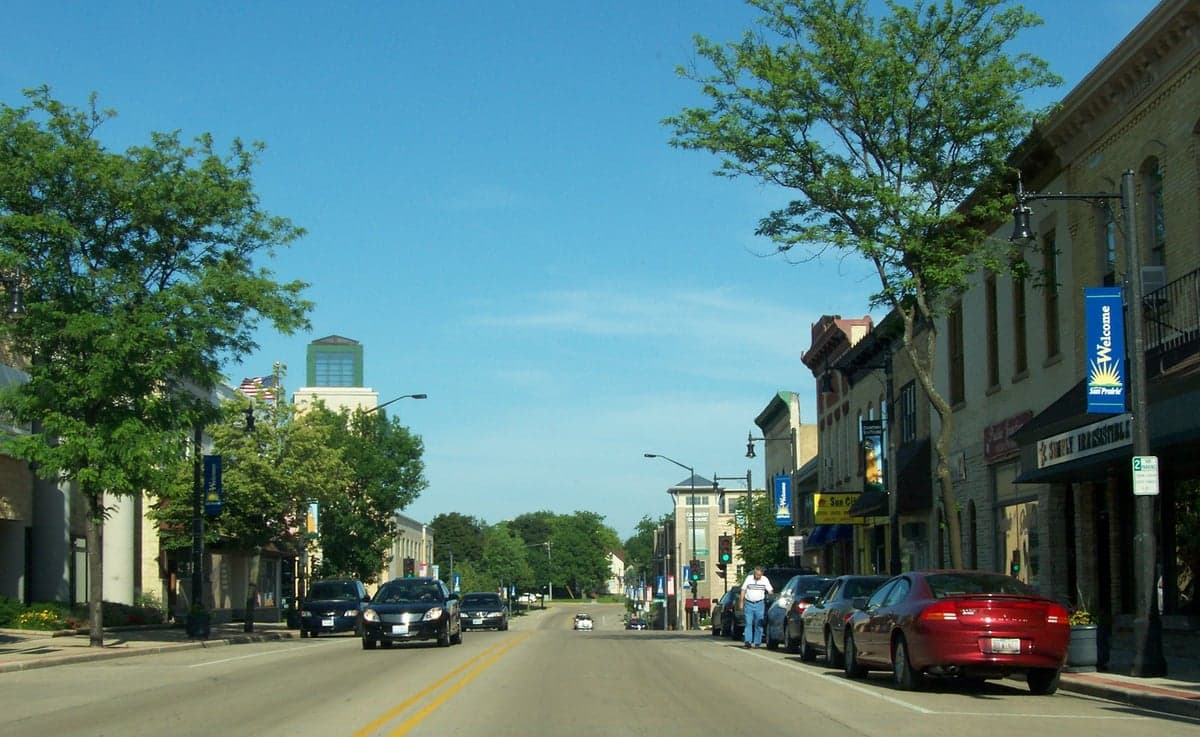
Photo: Wikipedia
Political ClimatePolitical Climate in Sun Prairie, WI
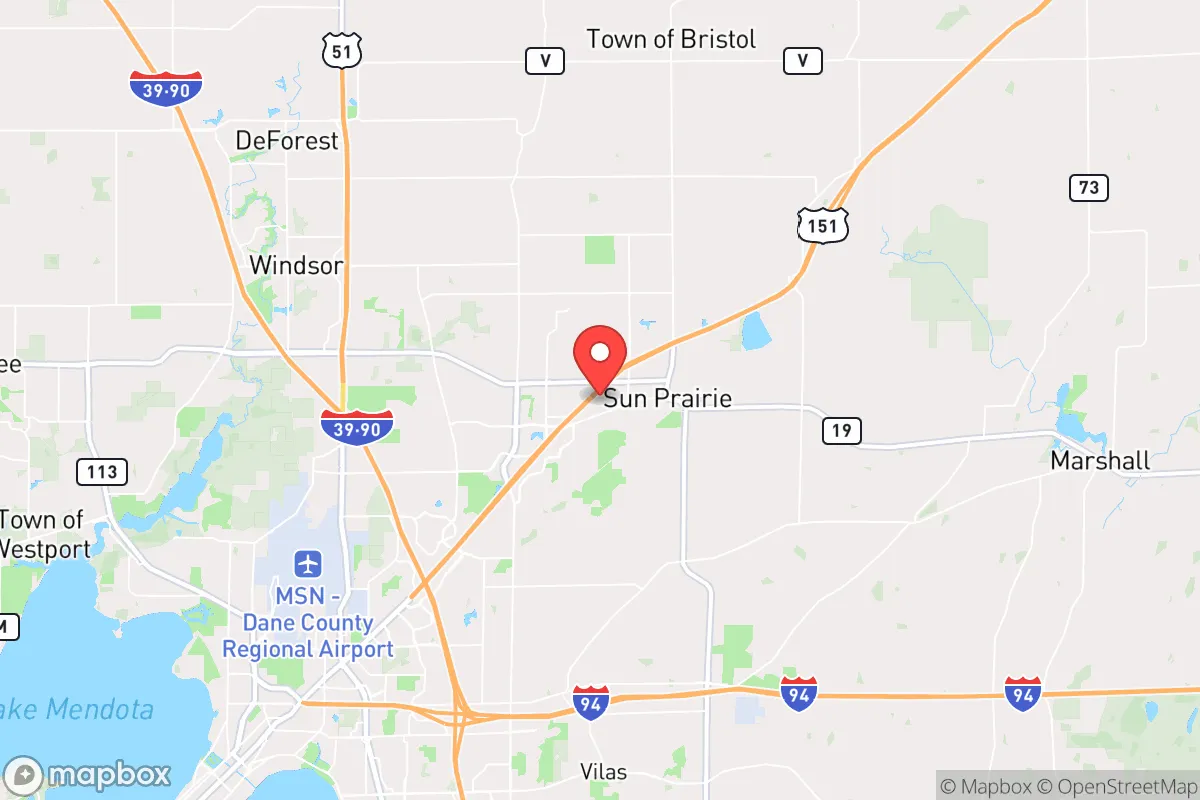
District shown is the primary district for this city’s centroid. Cities may span multiple districts.
Local Political AnalysisPolitical Analysis of Sun Prairie, WI
Sun Prairie leans heavily Democratic, with a Cook PVI of D+21, meaning the city votes about 21 points more Democratic than the national average. That’s a pretty stark shift from what I remember growing up here in the 90s, when the town was more of a purple, working-class community where folks didn’t wear their politics on their sleeve. Today, you’ll see more yard signs for progressive candidates than you will for anyone else, and the local elections tend to be decided in the primary, not the general. The trajectory is clearly toward a more solidly blue, activist-driven local government, which is something to keep an eye on if you value a lighter touch from city hall.
How it compares
If you drive ten minutes west to Madison, you’re in one of the most liberal cities in the Midwest, so Sun Prairie’s D+21 rating actually makes it a bit more moderate than its neighbor. But compare it to towns like DeForest or Waunakee to the north, which are more of a mix—maybe D+5 or even leaning red in some precincts—and Sun Prairie stands out as a progressive stronghold. The surrounding Dane County suburbs have been trending left for years, but Sun Prairie has embraced it faster than most. In the 2020 election, the city voted for Biden by a margin that dwarfed the county average, and local school board races have become battlegrounds for issues like critical race theory and gender identity policies. It’s a far cry from the days when the biggest political fight was over a new cul-de-sac.
What this means for residents
For a conservative or libertarian-leaning resident, the practical effect is a local government that’s increasingly comfortable with regulation and social engineering. You’ve seen it in the push for stricter rental ordinances, a higher minimum wage for city contractors, and a school district that’s quick to adopt progressive curriculum changes without much public input. Property taxes have crept up to fund these initiatives, and there’s a sense that the city council is more responsive to activist groups than to the quiet majority who just want good roads and low crime. The police department, while still professional, has faced calls for defunding from some local groups, though that hasn’t gained much traction yet. If you’re someone who believes in personal responsibility and limited government, you’ll find yourself on the losing side of most votes here.
One cultural distinction worth noting is Sun Prairie’s strong sense of community identity—it’s still a place where neighbors know each other and the annual Sweet Corn Festival draws everyone out. But that small-town feel is being layered over with a more activist, progressive ethos that can feel intrusive. For example, the city has a sustainability coordinator who pushes green building codes and energy mandates, adding costs to new homes and renovations. The school district has implemented equity policies that prioritize group outcomes over individual merit, which has caused some families to look at private schools or move to neighboring towns. In the long term, if these trends continue, Sun Prairie could become a place where conservative residents feel like outsiders in their own hometown, priced out by taxes and outvoted on cultural issues. It’s not there yet, but the direction is clear, and it’s worth watching if you’re considering a move here.

State Political ClimatePolitical Climate in Wisconsin
State Political AnalysisPolitical Environment in the State
Wisconsin has long been a classic swing state, but over the past 20 years it’s shifted from a reliably purple battleground into a deeply polarized, 50-50 trench war where a few thousand votes in the Milwaukee suburbs or the Fox Valley decide everything. The dominant coalition is a rural and exurban conservative base, anchored by the WOW counties (Waukesha, Ozaukee, Washington) and the reliably red western and northern timberlands, facing off against a growing, well-funded progressive machine centered in Dane County (Madison) and Milwaukee. The 10-20 year trajectory has been a slow, grinding rightward shift in the rural areas and a simultaneous, aggressive leftward lurch in the cities, leaving the state’s political future hanging on the fast-growing, politically mixed suburbs of Green Bay and the I-94 corridor.
Urban vs. rural divide
The political map of Wisconsin is a textbook case of the urban-rural chasm. Milwaukee County votes Democratic by roughly 2-to-1, driven by the city’s large African American and progressive white populations, while Dane County (Madison) is the most reliably left-leaning area in the state, often delivering 75%+ for Democratic candidates. The real story is the suburban ring: Waukesha County remains the GOP’s strongest anchor, routinely voting 60-65% Republican, but places like Brookfield and Mequon have seen a slow erosion of that margin as college-educated professionals drift left. The Fox Valley — Appleton, Green Bay, Oshkosh — is the true battleground: these are historically blue-collar, Catholic, and union-heavy areas that have trended Republican since 2010, but the margins are razor-thin. The rural northwoods, from Rhinelander to Hayward, are deeply red, while the Driftless Region in the southwest (around La Crosse) is a mix of conservative farm country and liberal college towns.
Policy environment
Wisconsin’s policy environment is a mixed bag for conservatives. On the plus side, the state has a flat income tax of 4.4% (down from a progressive 7.75% top rate a decade ago), and property taxes are below the national average. The state is a right-to-work state (passed in 2015), which crippled public-sector unions and made the business climate more competitive. However, the regulatory posture is uneven: the DNR under Governor Tony Evers has tightened environmental rules on farming and manufacturing, and the state’s unemployment insurance system was expanded during COVID and remains more generous than neighboring Iowa or Minnesota. Education policy is a flashpoint: the state has a robust school choice program (vouchers for private and religious schools) that has expanded under both parties, but the Evers administration has pushed for more funding for public schools and opposed further expansion. Healthcare is dominated by two large systems (Aurora and UW Health), and the state did not expand Medicaid under the Affordable Care Act — a win for fiscal conservatives. Election laws are relatively tight: voter ID is required, and the state has a bipartisan election commission, though the 2020 election sparked endless controversy over ballot drop boxes and absentee voting rules.
Trajectory & freedom
On personal liberty, Wisconsin is a state of contradictions. Gun rights are strong: the state has permitless carry (passed in 2011), no waiting periods, and no magazine capacity limits. The 2023 “Parents’ Bill of Rights” (Act 1) gave parents explicit authority over their children’s education and medical decisions, a major win for family freedom. However, the trajectory is concerning. The Evers administration has used executive orders to expand mail-in voting and create a “redistricting commission” that effectively hands map-drawing to the courts. The 2024 election saw a surge of out-of-state money into Wisconsin races, and the state Supreme Court flipped to a 4-3 liberal majority in 2023 after a $45 million race — that court has already overturned the state’s legislative maps, forcing new, less gerrymandered districts that will likely cost the GOP seats. On medical autonomy, Wisconsin has a near-total abortion ban from 1849 that remains in legal limbo, with the new court likely to strike it down. Property rights are generally respected, but the DNR’s wetland permitting process has become a bureaucratic nightmare for landowners.
Civil unrest & political movements
Wisconsin has been a national flashpoint for political unrest. The 2020 Kenosha riots after the Jacob Blake shooting saw businesses burned and two people killed by Kyle Rittenhouse, whose acquittal became a rallying cry for the right. The 2020 election integrity fight was massive: the state legislature held hearings on ballot drop boxes and Zuckerberg-funded election grants, and the state Supreme Court eventually banned drop boxes in 2022 (a decision the new liberal court may reverse). On the left, the Indivisible and Wisconsin Democrats have built a permanent field operation, while on the right, the Wisconsin Institute for Law & Liberty (WILL) has become a powerhouse litigating against COVID mandates, school closures, and election changes. Immigration politics are less heated than in border states, but the Evers administration has resisted cooperation with ICE, and the city of Madison is a declared sanctuary city. The 2023 abortion referendum in a local race showed that the issue still mobilizes both sides intensely.
Projection
Over the next 5-10 years, Wisconsin is likely to become more competitive, not less, but with a leftward tilt at the margins. The new legislative maps will almost certainly produce a more Democratic state assembly and senate, meaning the GOP’s ability to block progressive legislation will weaken. In-migration is modest but growing — people from Illinois and Minnesota are moving to the Lake Geneva area and the Fox Valley for lower taxes and more space, but many of them bring their blue-state voting habits. The Milwaukee suburbs are slowly trending left as young professionals replace retirees. The rural areas will stay red, but they’re losing population. The wild card is the Green Bay area, which is growing fast and politically mixed — if it trends left, the state becomes a lean-Democratic state by 2032. A conservative moving in now should expect to see the state’s political balance shift from a 50-50 toss-up to a 52-48 Democratic lean within a decade, unless the GOP can win back suburban women and moderate independents.
Bottom line for a new resident: Wisconsin is still a good place for a conservative family — low taxes, strong gun rights, school choice, and a vibrant rural culture — but you’re moving into a state that is actively contested. You’ll need to be politically engaged to protect the freedoms you value. The WOW counties and the Fox Valley are your best bets for a like-minded community, but even there, the margins are shrinking. If you want a state that is solidly red and likely to stay that way, look at Indiana or Iowa. If you’re willing to fight for your values in a battleground, Wisconsin is the place.
* Values derived from national, state, county, city and local statistics and may differ in a specific area. Last updated: 2026-04-21T10:26:24.000Z
Narrative content on this page is AI-generated and may contain mistakes. Verify any details that matter before acting on them.
ReloMaps may earn a commission from affiliate links at no extra cost to you.

