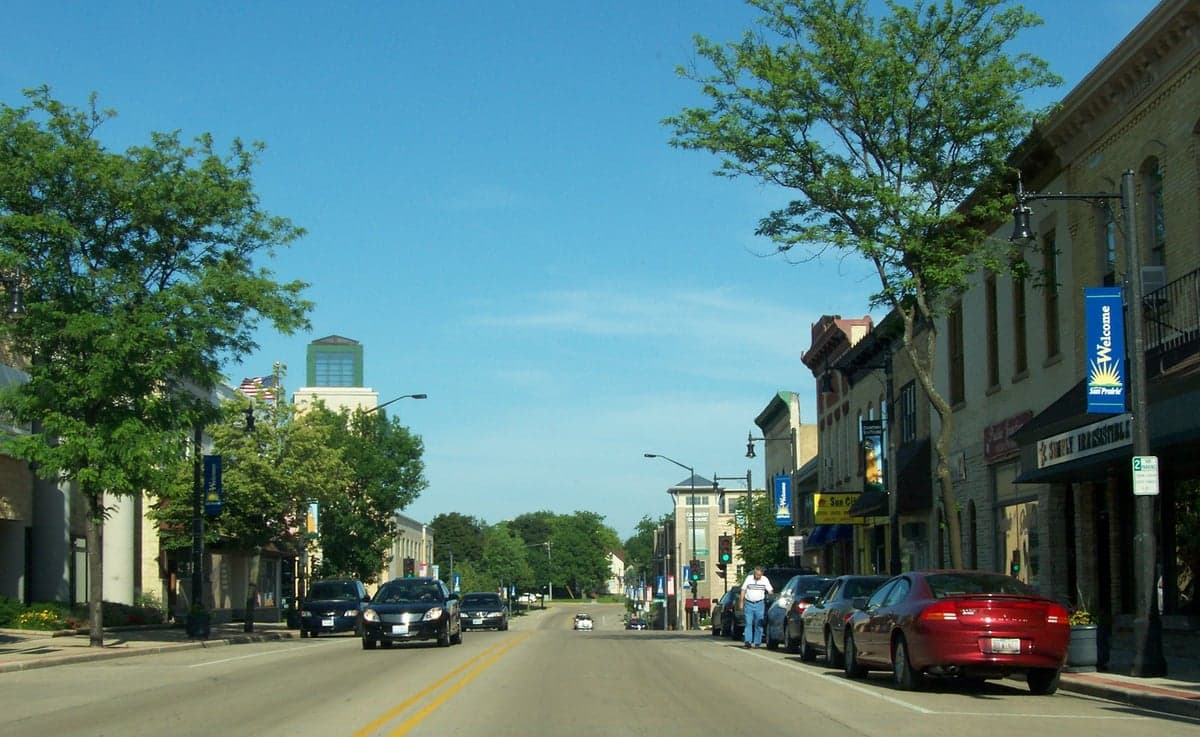
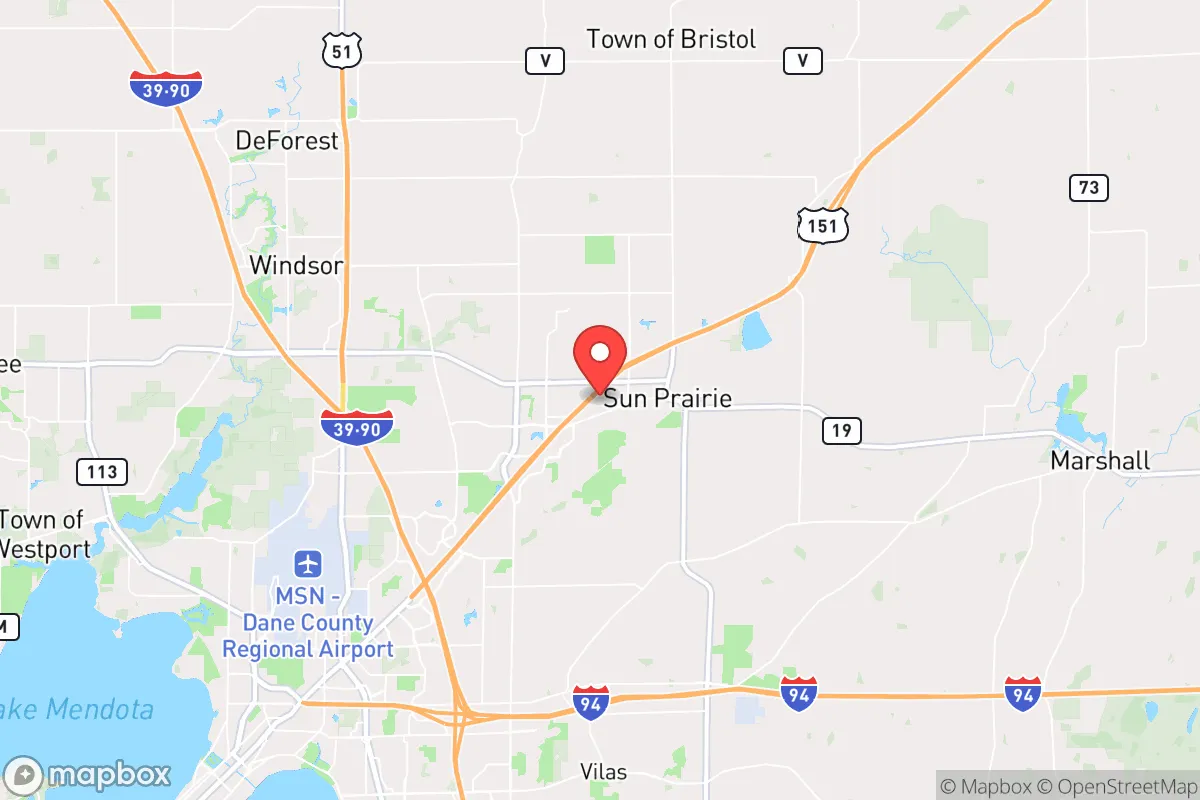
Photo: Wikipedia
Strategic Assessment of Sun Prairie, WI
Meaningful friction. Expect exposure to either population pressure, blast zones, or natural disaster risk. Consider buying a retreat property.
What does the Strategic Assessment tell us?
Our Strategic Assessment grades tactical survivability of an area. Major population centers, military targets, fallout zones, natural disasters, and border exposure all drive risk — lower exposure means a more defensible position in a crisis.
This is heavily inspired by Joel Skousen's Strategic Relocation book. Highly recommended you checkout the book ($)What does this tell us?
Our Strategic Assessment grades tactical survivability of an area. Major population centers, military targets, fallout zones, natural disasters, and border exposure all drive risk — lower exposure means a more defensible position in a crisis.
This is heavily inspired by Joel Skousen's Strategic Relocation book. Highly recommended you checkout the book ($)Strategic Pillars

Key Distances
Regional Safe Places
Below is our recommended "safe zones" in Wisconsin and the surrounding area based on our strategic heuristics. For most people, it's unrealistic to live in a “safe zone” full-time due to work, family or other personal reasons. They tend to be more rural. However, many of these areas are perfect for second homes and retreat properties that double as a vacation home or even a short-term rental.
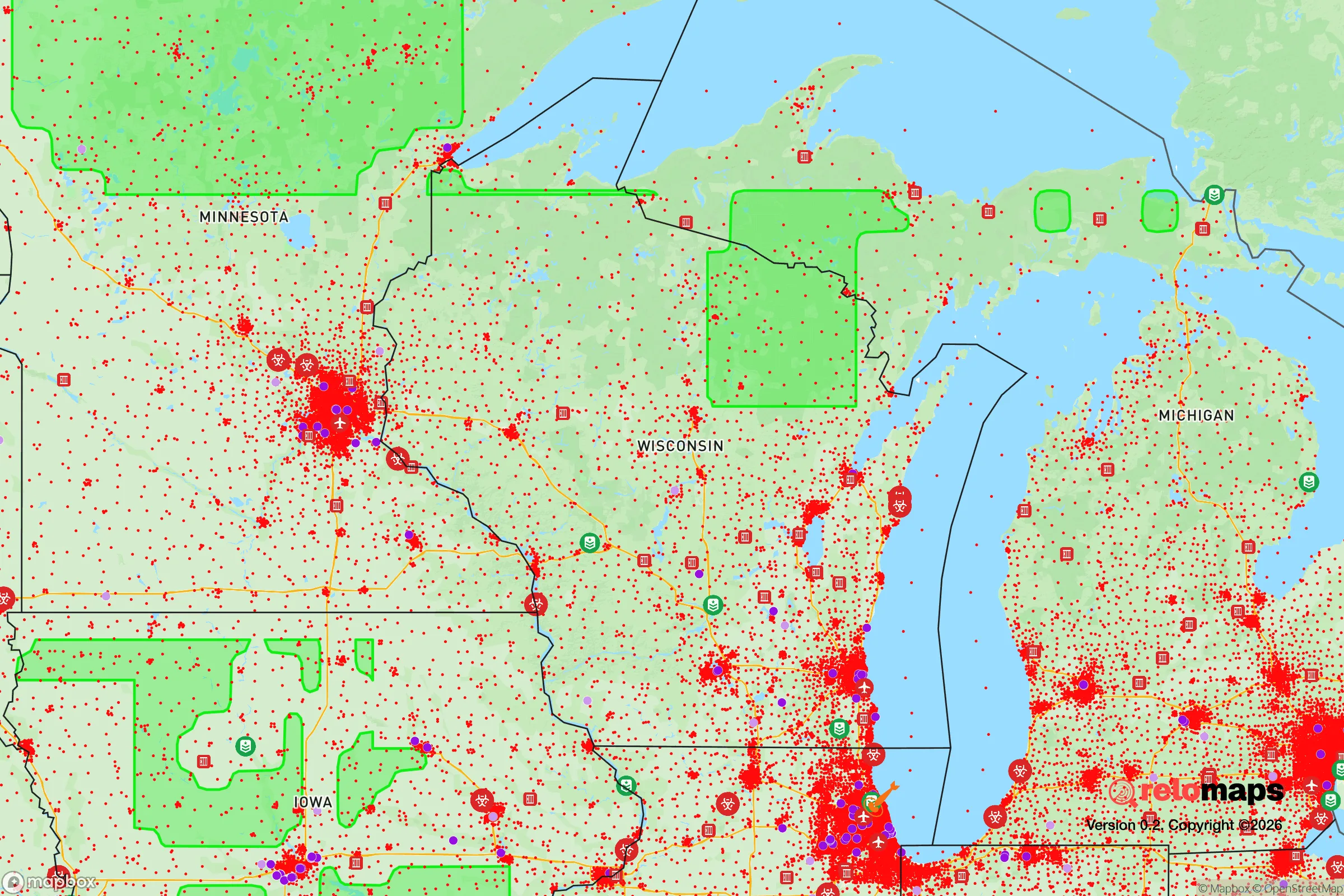
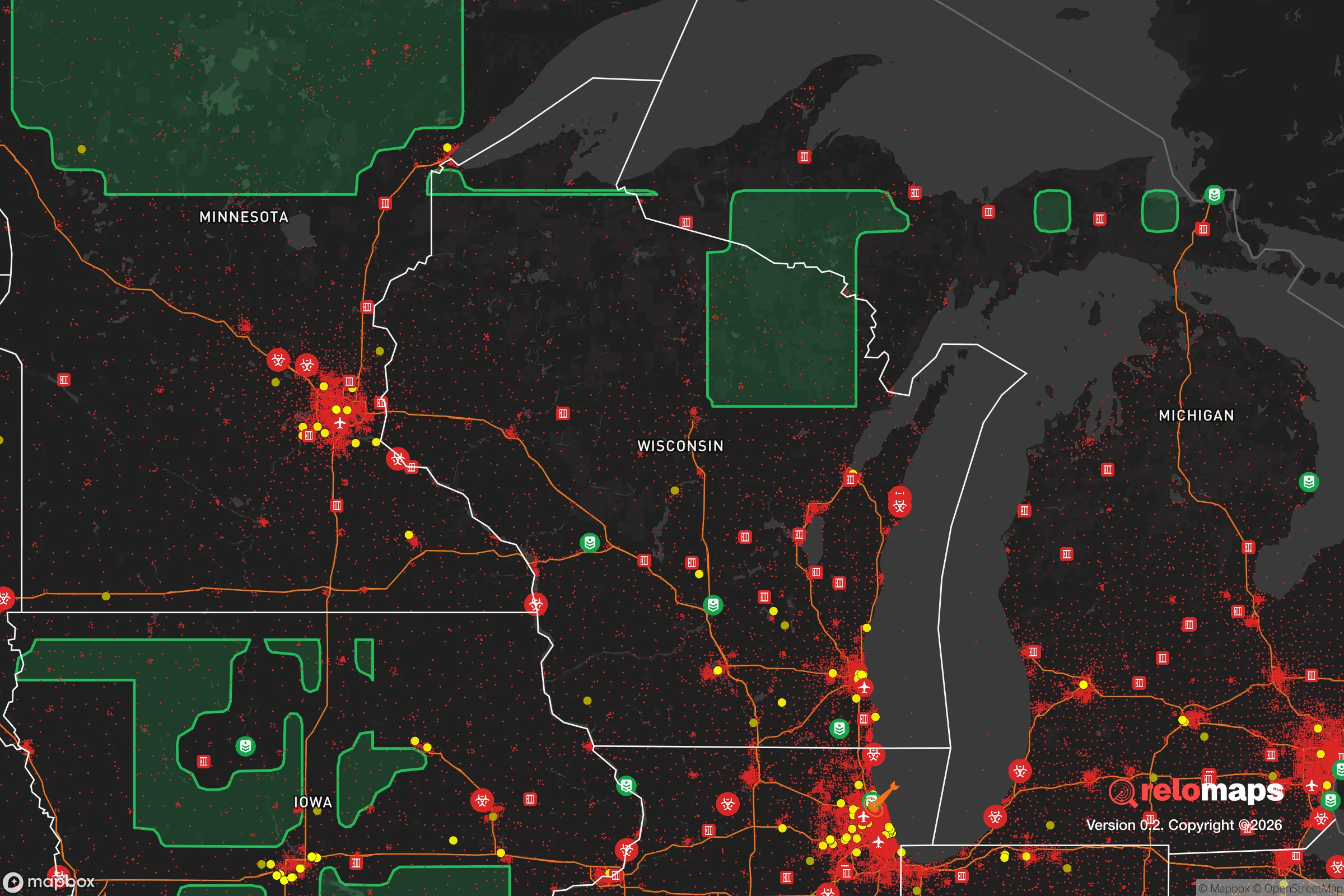


Important Note: For informational purposes only. This does not mean nothing bad ever happens in the green zones. Please use common sense. This is based on public data and modeled with AI. We tried to take a conservative approach but mistakes happen. We update this regularly as new information becomes available.
Solar Generator Recommendations
Backup power matters more here than in safer locations. We've picked three solar generators across budgets and capacity tiers — start with the budget unit if you only need a few essentials, or step up if you want to run a fridge and HVAC for days at a time.

Jackery Portable Power Station Explorer 300
Budget OptionPower on the Go: Weighing only 11 lbs, it's convenient to set up and store with book-sized foldable solar panels

BLUETTI Portable Power Station AC180
Designed for both indoor and outdoor scenarios, AC180 is highly capable as it has a robost capacity and continuous output power.

EF ECOFLOW DELTA Pro Ultra Power Station
Upgraded PickEcoFlow DELTA Pro Ultra is a whole-home energy system designed to grow with your family. Integrated with the Smart Home Panel 2, it scales to meet your evolving energy needs — keeping your home powered, intelligent, and secure through every stage of life.
We earn a commission, at no additional cost to you.
Strategic Assessment Analysis
Sun Prairie, Wisconsin, presents a mixed bag for the strategic relocator. Its rapid growth and proximity to Madison offer economic opportunity, but that same proximity introduces significant vulnerabilities that a prepper-minded individual cannot ignore. The city’s resilience is tied directly to its ability to function as a satellite of a major state capital, which is both its greatest asset and its most glaring liability in a crisis scenario.
Geographic position and natural advantages for long-term survival
Sun Prairie sits in Dane County, roughly 12 miles northeast of downtown Madison. The land here is classic Wisconsin glacial plain—flat to gently rolling, with rich, well-drained soils that are among the most productive in the state. For anyone serious about food security, this is a genuine advantage. The surrounding farmland is not hypothetical; it is actively producing corn, soybeans, and dairy. A relocator with the means to secure a few acres on the outskirts could realistically achieve a high degree of subsistence farming within a single growing season. The area sits at roughly 1,000 feet elevation, which is unremarkable but provides no particular flood risk from the nearby Yahara River system. The climate is continental, with cold winters that serve as a natural barrier to year-round activity—both for you and for potential threats. The region is not prone to earthquakes, hurricanes, or wildfires. The primary natural risks are severe thunderstorms, occasional tornadoes (Dane County is in a moderate-risk zone), and blizzards that can shut down roads for 24–48 hours. From a pure geography standpoint, Sun Prairie offers defensible farmland with decent water access and low catastrophic-event probability.
Risks, exposures, and proximity to fallout-relevant landmarks
Here is where the analysis gets uncomfortable. Sun Prairie’s location is 12 miles from Madison’s city center, which houses the Wisconsin State Capitol, the University of Wisconsin–Madison campus, and a concentration of federal and state government infrastructure. In a scenario involving civil unrest, mass casualty events, or a coordinated attack, Madison is a high-value target. The city is also roughly 80 miles from Milwaukee and 90 miles from Chicago, placing it within the secondary fallout zone of any major event affecting those population centers. The nearby Dane County Regional Airport (MSN) is a civilian and Air National Guard base (the 115th Fighter Wing operates F-16s there), which makes it a potential military target. Sun Prairie itself is not a primary target, but its proximity to these landmarks means that any evacuation from Madison would funnel directly through the area via Highways 151 and 94. In a crisis, Sun Prairie would become a choke point for displaced populations moving east and north. The city’s own population has exploded from roughly 20,000 in 2000 to over 40,000 today, meaning the area is already dense and dependent on just-in-time supply chains. The risk is not that Sun Prairie gets hit directly—it is that it becomes a crowded, resource-strained waypoint in a regional disaster.
Practical resilience for a relocator: food, water, energy, and defensibility
For a relocator willing to buy outside the city limits, Sun Prairie’s practical resilience is moderate to good. The water table in Dane County is high, and private wells are common in rural parcels. Municipal water comes from the Madison Aquifer, which is generally reliable but vulnerable to contamination from surface runoff in a prolonged grid-down scenario. Food production is the strongest card here. The surrounding farmland is not just corn and soybeans; there are numerous small-scale vegetable farms, orchards, and livestock operations within a 20-minute drive. A prepper with a greenhouse, seed stock, and basic animal husbandry skills could realistically produce a majority of their own calories within two years. Energy is a weak point. The grid is standard Midwest infrastructure—overhead lines, vulnerable to ice storms and cyberattack. Solar is viable (the area gets about 190 sunny days per year, slightly below the national average), but winter production is low. Wood heating is practical if you have acreage, as hardwood is abundant in southern Wisconsin. Defensibility is situational. A rural property with a long driveway, good sightlines, and a well is defensible. A suburban lot in a Sun Prairie subdivision is not. The city itself is flat, open, and has multiple entry points from all directions. In a collapse scenario, you would not want to be inside the city limits. The local law enforcement presence is adequate for normal times (Sun Prairie has its own police department), but in a regional crisis, they would be overwhelmed by Madison refugees. Medical access is a genuine asset: SSM Health St. Mary’s Hospital in Madison is a Level II trauma center, and there are multiple urgent care clinics in Sun Prairie itself. But in a disaster, those facilities would be swamped. Stockpiling antibiotics and basic trauma supplies is non-negotiable here.
The overall strategic picture for Sun Prairie is one of calculated trade-offs. It offers excellent agricultural potential, decent water access, and a low baseline risk of natural disasters. But its proximity to Madison, Milwaukee, and Chicago introduces a level of human-caused risk that a serious prepper must account for. If you are looking for a place to ride out a localized event—a winter storm, a temporary supply chain disruption, a short-term civil unrest episode—Sun Prairie is workable. If you are planning for a long-term collapse or a major regional attack, the city’s position as a Madison satellite makes it a poor choice. The smart play here is to buy land at least 15 miles further out, toward Columbus or Fall River, where you get the same soil and water advantages without being in the direct shadow of a state capital. Sun Prairie itself is a decent place to work and shop in normal times, but it is not a bug-out location. It is a staging area at best. Treat it as such, and you can make it work. Treat it as a safe haven, and you will be caught in the crowd when the trouble comes.

* Values derived from national, state, county, city and local statistics and may differ in a specific area. Last updated: 2026-04-21T10:26:24.000Z
Narrative content on this page is AI-generated and may contain mistakes. Verify any details that matter before acting on them.
ReloMaps may earn a commission from affiliate links at no extra cost to you.

