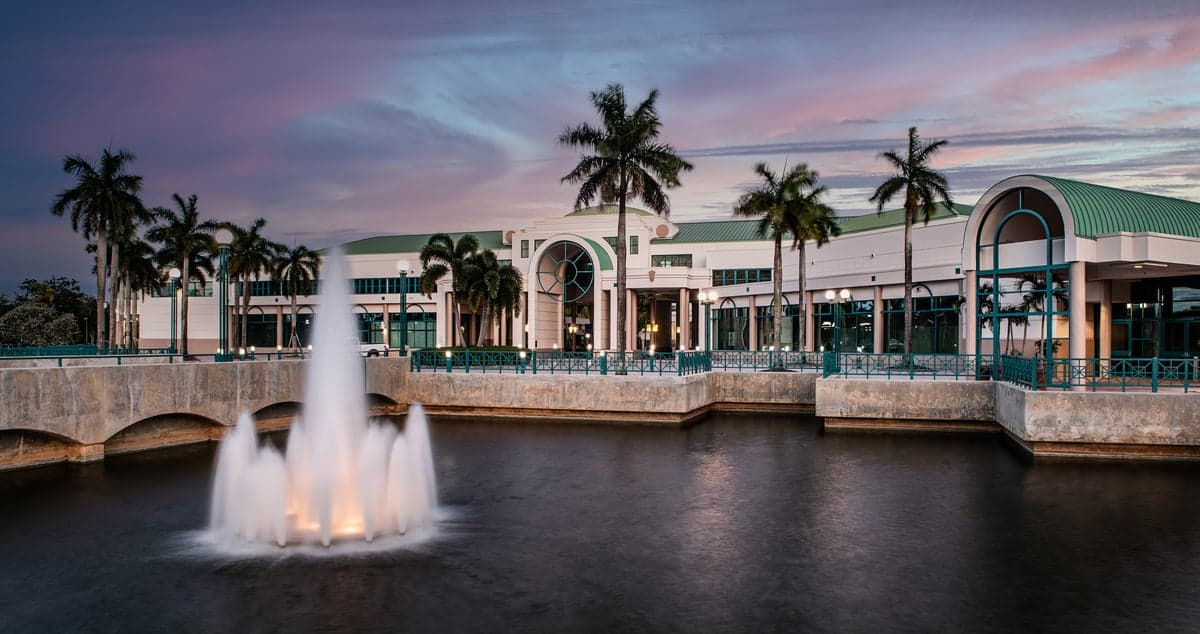
Photo: Wikipedia
Personal Sovereignty in Sunrise, FL
Viable for self-reliance. Generally workable, though some barriers may limit total independence.
What does Personal Sovereignty tell us?
Personal Sovereignty measures your capacity for self-reliance and independence with minimal government friction. Higher scores mean fewer barriers between you and the way you want to live... but it assumes you have the space you need and good neighbors.
What does this tell us?
Personal Sovereignty measures your capacity for self-reliance and independence with minimal government friction. Higher scores mean fewer barriers between you and the way you want to live... but it assumes you have the space you need and good neighbors.
State Policy
Energy independence: Importer (10% of energy produced in-state)
Personal Liberty
Homesteading

Personal Liberty Analysis
Sunrise, Florida offers a mixed bag for those prioritizing personal sovereignty, where the state’s famously light tax burden and strong self-defense laws clash with aggressive local governance and a regulatory environment that can feel intrusive. For a survivalist or prepper evaluating this Broward County suburb, the core tension is between Florida’s constitutional protections and the city’s dense, suburban enforcement culture. You won’t find the wide-open spaces or hands-off zoning of rural Florida here, but the financial and legal framework for individual autonomy is far stronger than in most of the Northeast or West Coast. The question isn’t whether you can be free in Sunrise—it’s whether you can live free enough given the local constraints on property and daily life.
Tax burden and regulatory posture: How Florida’s fiscal freedom holds up in Sunrise
Florida’s lack of a state income tax is the single biggest win for personal sovereignty here, and Sunrise residents benefit directly from that constitutional mandate. You keep every dollar you earn from wages, investments, or side hustles, which is critical for anyone building independent resources or prepping supplies. Property taxes in Sunrise hover around the state average—roughly 1.0% to 1.2% of assessed value—but Broward County’s millage rates and special assessments can add a few hundred dollars annually compared to more rural counties. Sales tax is 7% (6% state plus 1% county surtax), which is moderate but not negligible for bulk purchasing. The regulatory posture is where the friction appears: Sunrise enforces strict code compliance on everything from lawn height to vehicle storage, and the city’s zoning board has little tolerance for non-standard property uses. You cannot legally park an RV or boat in your driveway for more than 48 hours without a permit, and backyard structures like sheds or greenhouses require permits and setback approvals. For a prepper wanting to store supplies in a shipping container or run a small generator setup, the city’s bureaucracy can feel like a thumb on the scale against self-reliance. Compared to unincorporated Broward or counties like Okeechobee, Sunrise’s regulatory density is noticeably higher, but it still beats any state with income tax or heavy business licensing.
Self-defense and gun law specifics: What the Second Sanctuary means for Sunrise residents
Florida is a shall-issue state for concealed carry, and Sunrise residents can obtain a license with a straightforward background check and a 3-hour training course—no permit required for open carry of firearms in most situations, though open carry is generally restricted to hunting, fishing, or camping activities. Stand Your Ground laws apply fully in Sunrise, meaning you have no duty to retreat before using deadly force if you reasonably believe it’s necessary to prevent death or great bodily harm. This is a bedrock principle for personal sovereignty: your home, vehicle, and occupied space are legally defensible without retreat. The city itself has no additional gun control ordinances beyond state law, so magazine capacity limits (none), assault weapon bans (none), and waiting periods (3-day for handguns from private sellers, none for long guns) are all set at the state level. However, Broward County has a history of progressive sheriff’s offices—the current Broward Sheriff Gregory Tony has not been as aggressive on gun rights as some rural counterparts, but the county’s post-Parkland climate means law enforcement may scrutinize gun owners more heavily during routine stops. Sunrise is not a Second Amendment Sanctuary city, unlike dozens of Florida municipalities, so don’t expect local officials to push back on potential future state or federal restrictions. For a prepper, the legal framework is solid, but the cultural and enforcement environment requires discretion—keep your firearms secure and your paperwork in order.
Self-reliance and homesteading viability: Lot sizes, zoning, and off-grid feasibility in a suburban grid
Sunrise is a dense, built-out suburb with typical lot sizes ranging from 5,000 to 8,000 square feet—enough for a garden and a small chicken coop, but not for serious homesteading or livestock. Zoning codes prohibit horses, goats, pigs, and most farm animals; chickens are allowed with a permit (limit of 4 hens, no roosters), and bees require registration with the city. Off-grid living is effectively impossible within city limits: the city requires connection to municipal water and sewer, and solar panels must be grid-tied with utility approval. Rainwater collection is legal but restricted to non-potable uses (irrigation only), and you cannot drill a well for drinking water without a variance that is almost never granted in this urbanized area. For a prepper focused on self-reliance, the constraints are significant: you cannot legally store large quantities of fuel (over 25 gallons of gasoline requires a permit), and backyard composting is regulated to avoid odors. The upside is that Sunrise’s location gives you quick access to the Everglades and rural Broward for more serious off-grid setups—many preppers buy a small lot in Hendry or Glades County as a retreat while keeping a primary residence in Sunrise for work and school. If your vision of sovereignty involves a 5-acre homestead with a well and solar, Sunrise is not that place; it’s a suburban base camp, not a redoubt.
Personal liberties: Parental rights, medical autonomy, speech, and property in practice
Florida has been a national leader on parental rights since the passage of the Parental Bill of Rights in 2021, which gives parents explicit authority over their children’s education, healthcare, and upbringing. In Sunrise, this means you can opt your child out of any school curriculum or activity you find objectionable, and the city’s public schools (part of Broward County Public Schools) must notify parents of any medical or mental health services provided. Medical autonomy is strong at the state level: Florida banned COVID-19 vaccine mandates for employees and students, and the state’s preemption laws prevent local governments from imposing mask mandates or business closures. Sunrise cannot enact its own public health orders that exceed state policy, which is a critical check on local overreach. Free speech is protected under the Florida Constitution, and the city has no ordinances restricting political signage or public assembly beyond standard time-place-manner rules. Property rights are where the friction returns: Sunrise’s code enforcement is aggressive, with fines for overgrown lawns, unregistered vehicles, and even the color of your front door if it violates HOA covenants (many neighborhoods have HOAs). If you buy in a non-HOA area, you still face city-level restrictions on short-term rentals (Airbnb is effectively banned in residential zones) and limits on home-based businesses. For a prepper who wants to run a small repair shop or sell surplus supplies from home, the zoning code will likely block you. Overall, the state provides a strong floor for personal liberties, but Sunrise’s local governance adds a ceiling that can feel like government overreach in daily life.
Compared to other South Florida suburbs, Sunrise offers a middle ground on personal sovereignty—better than Miami-Dade’s heavy regulation and higher taxes, but weaker than rural counties like DeSoto or Hardee where zoning is minimal and sheriff’s offices are more libertarian. The financial freedom from no income tax and strong self-defense laws are real advantages, but the city’s density and enforcement culture mean you’ll constantly navigate permits, codes, and HOA rules. For a single individual or family with a prepper mindset, Sunrise works best as a launch point: a place to earn and save without state income tax, defend yourself legally, and exercise parental rights in schools, while maintaining a secondary property or bug-out location in a less regulated area. If you’re looking for a jurisdiction that actively supports off-grid living, minimal government interference, and maximum personal autonomy, you’ll find Sunrise too restrictive. But if you value financial sovereignty and legal self-defense above all else, and you’re willing to work within a suburban regulatory framework, it’s a viable base of operations in a state that still respects individual rights more than most.

* Values derived from national, state, county, city and local statistics and may differ in a specific area. Last updated: 2026-04-19T06:56:41.000Z
Narrative content on this page is AI-generated and may contain mistakes. Verify any details that matter before acting on them.
ReloMaps may earn a commission from affiliate links at no extra cost to you.

