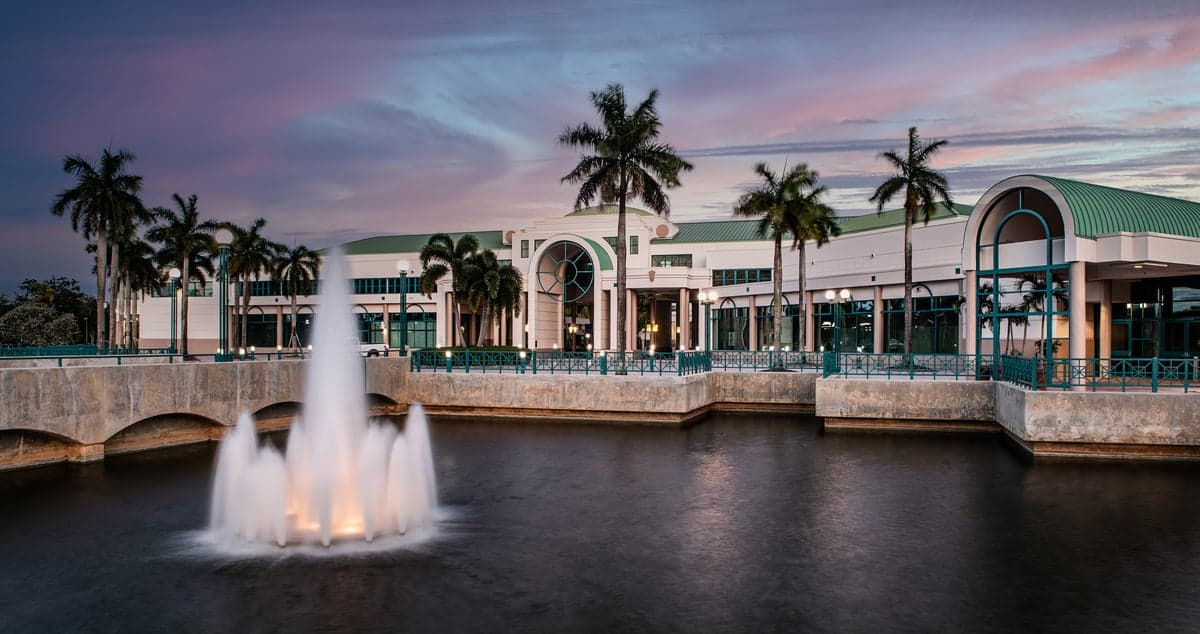
Photo: Wikipedia
Strategic Assessment of Sunrise, FL
Multiple tactical vulnerabilities. Population density, target proximity, or disaster risk are likely compounding. A retreat property and exit planning is required.
What does the Strategic Assessment tell us?
Our Strategic Assessment grades tactical survivability of an area. Major population centers, military targets, fallout zones, natural disasters, and border exposure all drive risk — lower exposure means a more defensible position in a crisis.
This is heavily inspired by Joel Skousen's Strategic Relocation book. Highly recommended you checkout the book ($)What does this tell us?
Our Strategic Assessment grades tactical survivability of an area. Major population centers, military targets, fallout zones, natural disasters, and border exposure all drive risk — lower exposure means a more defensible position in a crisis.
This is heavily inspired by Joel Skousen's Strategic Relocation book. Highly recommended you checkout the book ($)Strategic Pillars

Key Distances
Regional Safe Places
Below is our recommended "safe zones" in Florida and the surrounding area based on our strategic heuristics. For most people, it's unrealistic to live in a “safe zone” full-time due to work, family or other personal reasons. They tend to be more rural. However, many of these areas are perfect for second homes and retreat properties that double as a vacation home or even a short-term rental.

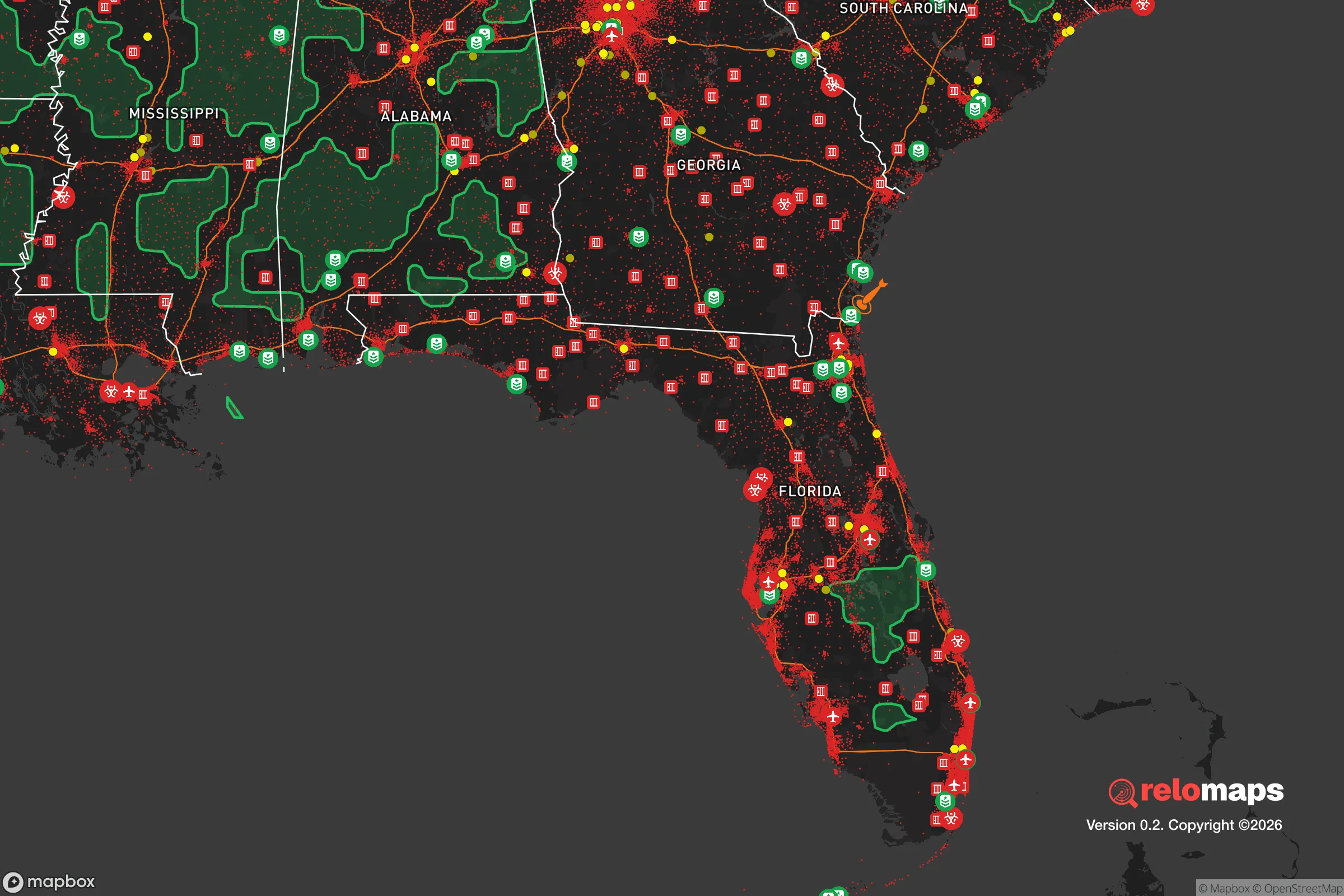


Important Note: For informational purposes only. This does not mean nothing bad ever happens in the green zones. Please use common sense. This is based on public data and modeled with AI. We tried to take a conservative approach but mistakes happen. We update this regularly as new information becomes available.
Solar Generator Recommendations
Backup power matters more here than in safer locations. We've picked three solar generators across budgets and capacity tiers — start with the budget unit if you only need a few essentials, or step up if you want to run a fridge and HVAC for days at a time.

Jackery Portable Power Station Explorer 300
Budget OptionPower on the Go: Weighing only 11 lbs, it's convenient to set up and store with book-sized foldable solar panels

BLUETTI Portable Power Station AC180
Designed for both indoor and outdoor scenarios, AC180 is highly capable as it has a robost capacity and continuous output power.

EF ECOFLOW DELTA Pro Ultra Power Station
Upgraded PickEcoFlow DELTA Pro Ultra is a whole-home energy system designed to grow with your family. Integrated with the Smart Home Panel 2, it scales to meet your evolving energy needs — keeping your home powered, intelligent, and secure through every stage of life.
We earn a commission, at no additional cost to you.
Strategic Assessment Analysis
Sunrise, Florida, sits in a precarious strategic position that demands serious consideration for anyone prioritizing long-term resilience. While its location within Broward County offers immediate access to major infrastructure, that same proximity to dense urban centers and critical chokepoints creates significant vulnerabilities for those planning for civic unrest, supply chain disruptions, or large-scale disasters. The city’s flat, low-lying geography and heavy reliance on external systems make it a location that requires deliberate, proactive mitigation strategies rather than passive acceptance.
Geographic position and natural advantages for long-term stability
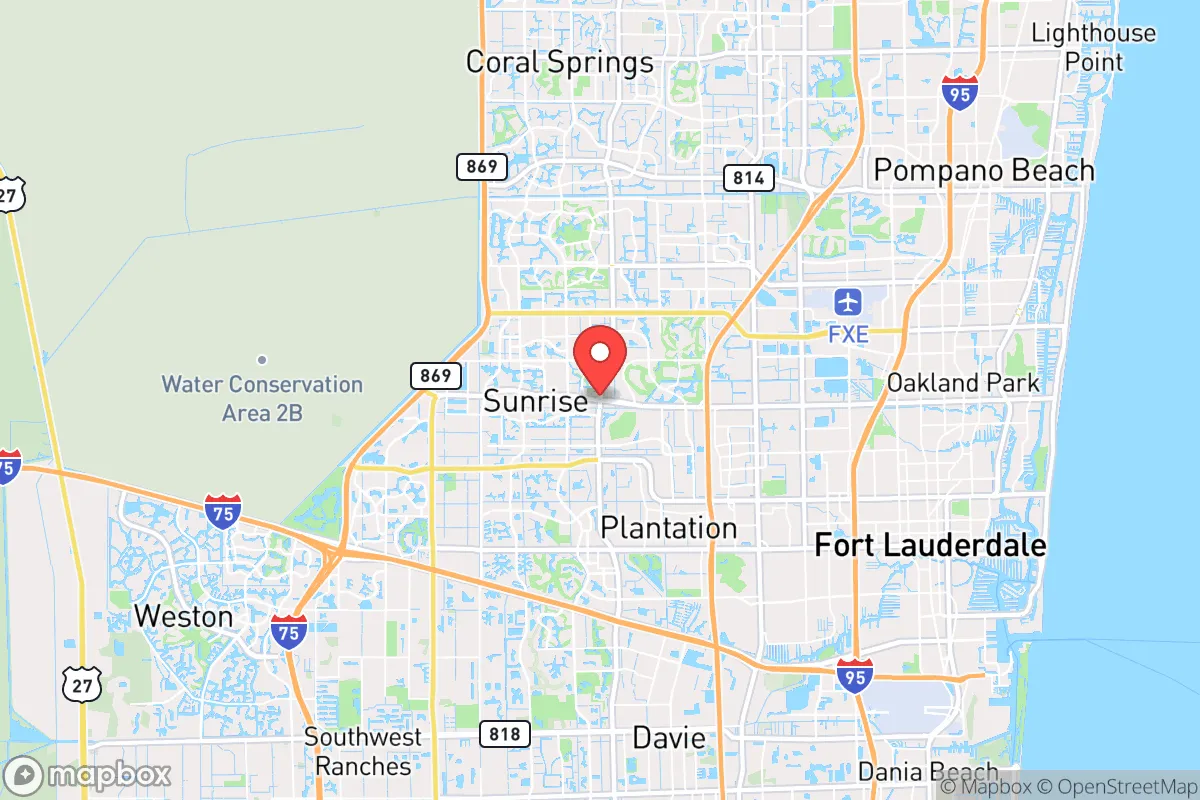
Sunrise’s geographic position is a double-edged sword. On the positive side, the city sits roughly 15 miles inland from the Atlantic coast, placing it outside the immediate blast zone of a port-related incident or a naval target like Port Everglades. This inland buffer also reduces exposure to the most severe storm surge from a major hurricane, though it does not eliminate flood risk entirely. The area benefits from the Sawgrass Expressway (SR 869) and I-595, which provide direct routes to both the Florida Turnpike and I-95, offering multiple egress options if one corridor becomes compromised. Sunrise is also adjacent to the Everglades Wildlife Management Area to the west, a vast, sparsely populated region that could serve as a natural buffer or a potential retreat zone in a worst-case scenario. The city’s flat terrain, while not defensible in a tactical sense, simplifies navigation and reduces the risk of landslides or terrain-related isolation common in mountainous regions. For a relocator, the key advantage is that Sunrise is not a primary target—it is a secondary suburb, not a command-and-control hub like Miami or a military concentration like Homestead.
Risks, exposures, and proximity to fallout-relevant landmarks
The downsides of Sunrise’s location are substantial and demand honest assessment. The city lies within a 20-mile radius of Fort Lauderdale-Hollywood International Airport (FLL), a major civilian and cargo hub that would be a high-priority target in any conflict scenario. Similarly, Port Everglades, one of the busiest cruise and cargo ports in the United States, is roughly 15 miles east—close enough that a conventional or dirty bomb detonation there could produce fallout patterns affecting Sunrise depending on wind direction. The city is also sandwiched between I-95 and the Florida Turnpike, two arteries that would become instant chokepoints during an evacuation or civil unrest event. In a mass casualty event or pandemic scenario, the density of Broward County—over 1.9 million people—means that Sunrise would face severe competition for medical resources, fuel, and food. The city’s population of roughly 95,000 is not dense enough to create a self-sustaining community, but it is dense enough to generate panic and resource hoarding. The proximity to Miami (about 30 miles south) means that any unrest or infrastructure failure in that major city will ripple northward, overwhelming local law enforcement and emergency services. For a prepper, the biggest red flag is that Sunrise is within the fallout danger zone of multiple high-value targets, and its flat, open geography offers no natural shielding from airborne contaminants.
Practical resilience for a relocator: food, water, energy, and defensibility
When evaluating Sunrise for practical self-sufficiency, the picture is mixed at best. The city’s water supply comes from the Biscayne Aquifer, a shallow, porous freshwater source that is highly vulnerable to saltwater intrusion from sea-level rise and contamination from storm surge. During a hurricane, boil-water advisories are almost guaranteed, and in a prolonged grid-down scenario, municipal water treatment would fail within days. A relocator must plan for at least two weeks of stored water per person, plus a reliable filtration system capable of handling biological and chemical contaminants. Food security is another concern: Sunrise is a suburban bedroom community, not an agricultural hub. The nearest significant farmland is in western Palm Beach County or the Redland area south of Miami, both over an hour’s drive under normal conditions. In a crisis, those supply lines would be cut. Gardening is possible but limited by the sandy, nutrient-poor soil and the intense summer heat; raised beds with imported soil and shade cloth are necessary for any serious food production. Energy resilience is a bright spot: Florida gets abundant solar radiation year-round, and rooftop solar with battery storage is a viable investment. However, the flat terrain and dense tree canopy in older neighborhoods can limit panel efficiency. Defensibility is poor. Sunrise is a grid-pattern suburb with no natural chokepoints, no high ground, and a police force that would be stretched thin during any widespread event. Neighborhood watch and community mutual-aid networks are essential, as individual property defense is nearly impossible in a suburban environment. The best strategy for a relocator is to treat Sunrise as a temporary base—a place to ride out minor disruptions—but to have a secondary retreat location further inland, ideally in a rural area with a well, septic system, and defensible perimeter.
The overall strategic picture for Sunrise, Florida, is one of calculated risk. It is not a location that offers inherent resilience or natural defenses, but it is also not a catastrophic choice for someone who is prepared and aware. The city’s proximity to major targets and dense population centers means that any large-scale event will create cascading failures that will reach Sunrise within hours. However, for a relocator who is willing to invest in robust water storage, solar energy, and a strong local network, the area’s infrastructure and access to multiple evacuation routes provide a baseline of functionality. The conservative-minded prepper should view Sunrise as a “gray zone” location—viable only with significant personal preparation and a clear exit plan. If you are looking for a place to hunker down indefinitely, look further west or north. If you need to be in South Florida for work or family, Sunrise is a manageable compromise, but never a safe bet. The key takeaway: do not rely on the system. Assume that in a crisis, you are on your own, and plan accordingly.

* Values derived from national, state, county, city and local statistics and may differ in a specific area. Last updated: 2026-04-19T06:56:41.000Z
Narrative content on this page is AI-generated and may contain mistakes. Verify any details that matter before acting on them.
ReloMaps may earn a commission from affiliate links at no extra cost to you.

